


A pause in war is rarely peace. It is something more fragile, more deceptive—like the brief stillness between crashing waves, when the sea seems to settle, yet the force beneath remains unresolved. The United States’ sudden decision to extend its ceasefire with Iran in April 2026 carries precisely that uneasy tension. The language of diplomacy—mediation, dialogue, opportunity—floats on the surface. Beneath it, however, evidence from battlefields and defence assessments points to a far more disquieting truth: this is not restraint born of strategic clarity, but a halt imposed by the hard edge of limits—material, political, and increasingly, moral.
Seven weeks of conflict have already carved deep scars across the region. Thousands of civilians have been killed, cities and infrastructure reduced to fragments, and the Strait of Hormuz—through which roughly a fifth of the world's oil flows—has been constricted, sending tremors through global markets. Yet the most revealing story is not only written in human suffering or economic shock. It is etched in the pace and scale of destruction itself. In just over two weeks, more than 11,000 high-end munitions were expended, at a cost nearing US$26 billion.
This is not merely the expense of war; it is the exposure of a system straining against its own design—a model of warfare built on precision and superiority, now confronting the brutal arithmetic of depletion.
For decades, American military power has been defined by its ability to project force anywhere, at any time, with overwhelming technological advantage. That narrative is now beginning to fracture. The campaign against Iran has revealed that dominance is no longer simply about how much force can be delivered, but how long it can be sustained. Roughly half of the US Patriot interceptor stocks have already been consumed. Advanced systems such as the Precision Strike Missile have reportedly been driven to the brink of exhaustion. Analysts warn that, at current rates, critical inventories could be depleted within weeks, not months. Even under optimistic projections, rebuilding these arsenals could take three to five years.
This is not a technical inconvenience—it is a strategic inflection point. Deterrence depends not only on capability, but on credibility: the belief that force can be applied when needed, and sustained if required. When stockpiles thin and replenishment lags, that belief begins to erode. Across the Indo-Pacific, allies are watching closely.
In Seoul, Tokyo, and Canberra, the question is no longer abstract. If American firepower can be so rapidly consumed in a single regional conflict, what remains available for the next crisis? For Beijing, the calculation is equally stark, though viewed from the opposite angle: a competitor revealing the outer limits of its endurance.
Against this backdrop, the ceasefire begins to look less like a diplomatic opening and more like a strategic necessity. Reports of internal Pentagon concerns over dwindling munitions lend weight to this interpretation. The abrupt shift—from threats of overwhelming escalation to an indefinite pause—feels less like a recalibration of objectives and more like a moment of enforced recognition. Power, even at its most formidable, is not infinite.
Yet to understand this pause solely through the lens of military constraint is to miss a deeper, more unsettling dimension. Beneath the calculations of stockpiles and supply chains lies another ledger entirely—one that measures not what has been destroyed, but what has been forsaken.
A Harvard Kennedy School analysis estimates that the United States has been spending close to US$2 billion per day on the war with Iran, pushing total costs beyond US$100 billion in a matter of weeks, with projections that could approach US$1 trillion. These are numbers that strain comprehension. But their true weight emerges only in comparison. The United Nations estimates that rebuilding Gaza—where more than 80 per cent of infrastructure has been devastated—would require approximately US$71 billion. In other words, the machinery of destruction has already consumed more than what it would take to reconstruct an entire shattered society.
The dissonance deepens further. According to the head of the UN's humanitarian agency, US$2 billion a day could sustain life-saving assistance for 87 million people facing acute need. Ending world hunger, by comparison, would cost roughly US$93 billion annually. These are not abstract figures; they are choices, rendered in stark numerical form. On one ledger: missiles, interceptors, and fuel for escalation. On the other: food, shelter, and the preservation of human life. The imbalance is not merely economic—it is existential.
Even the structure of the war reflects this distortion. Multi-million-dollar interceptors have been deployed against drones costing a fraction of that amount, a pattern repeated across modern conflicts from Ukraine to the Middle East. It is a contest not only of arms, but of economics—and one in which efficiency increasingly favours the less technologically sophisticated actor. At the same time, the broader global economy has begun to warp around the conflict. As oil flows tighten and uncertainty spreads, energy prices rise, delivering windfall profits to major producers.
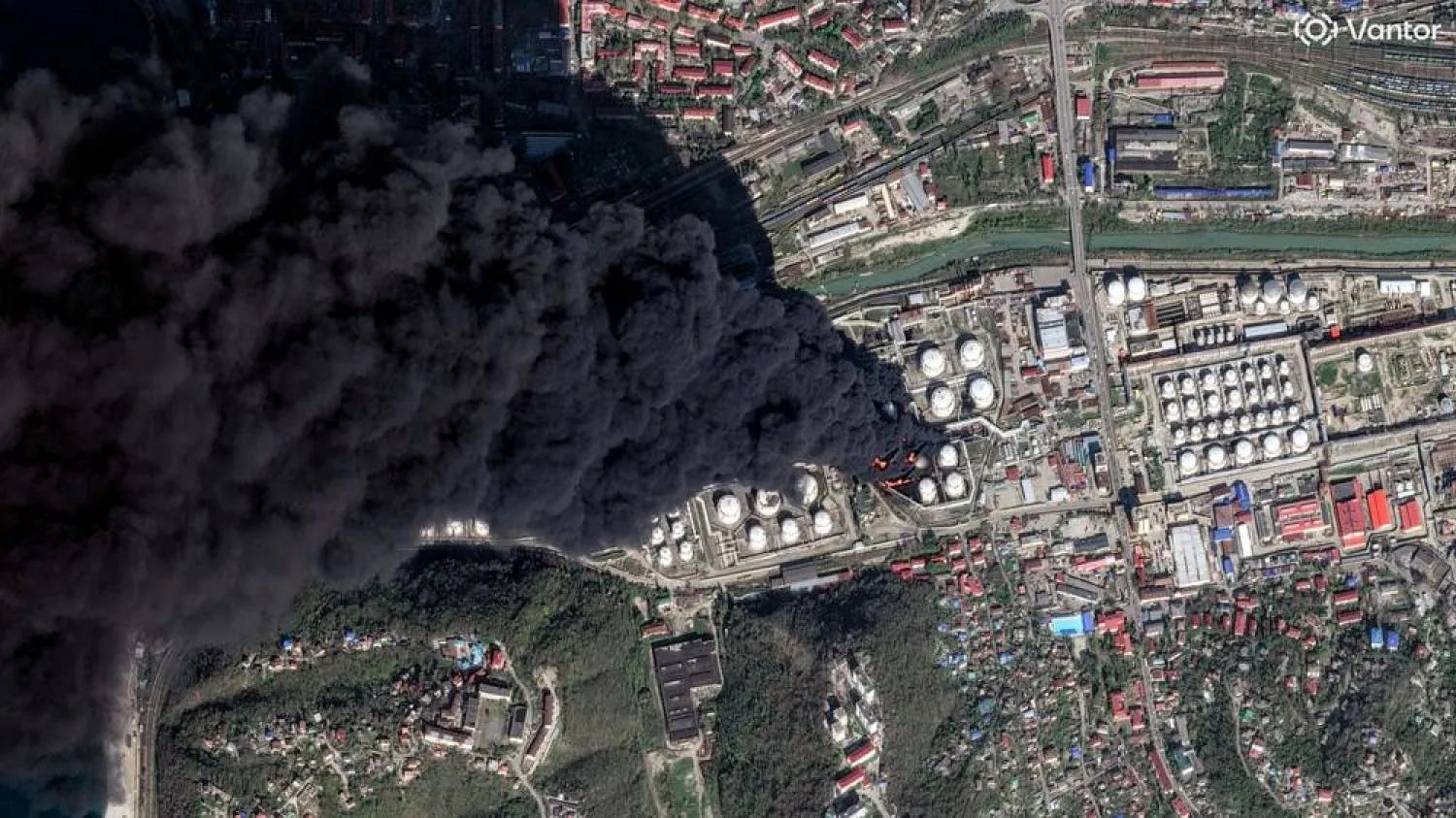
In the first month of the war alone, the world's largest oil and gas companies reportedly generated around US$30 million per hour. War, in this sense, redistributes more than power—it redistributes gain, often reinforcing the very dynamics that sustain instability.
What emerges from this convergence of factors is a portrait of a system under strain. The defence-industrial base that underpins modern military power is no longer geared for prolonged, high-intensity conflict. Precision weapons depend on intricate, globalised supply chains vulnerable to disruption at multiple points. Bottlenecks in critical components—microelectronics, specialised materials, propulsion systems—cannot be resolved with urgency.
The result is a paradox: an arsenal of extraordinary sophistication, yet limited resilience. Power, once defined by abundance, now reveals its fragility.
For the architects of modern deterrence, the implications extend far beyond the immediate theatre of conflict. This moment challenges long-held assumptions about escalation, endurance, and control. It raises fundamental questions about whether high-intensity warfare, as currently conceived, is sustainable in a world of interdependent economies and constrained industrial capacity. It also forces a confrontation with the legal and moral frameworks that govern the use of force.
The blockade of Iranian ports and threats against civilian infrastructure have drawn sharp criticism, highlighting the tension between strategic objectives and international norms. For a nation that has long positioned itself as a custodian of that order, the contradiction is increasingly difficult to reconcile.
The ceasefire, fragile and uncertain, offers a narrow window—not of resolution, but of reflection. Rebuilding depleted arsenals will take years. Repairing strained alliances will take longer. But the most difficult task lies elsewhere: reimagining a path forward that does not default to cycles of coercion and attrition. A durable peace with Iran will require more than pressure; it will demand credible diplomacy, multilateral engagement, and a willingness to align power with purpose.
At its core, this moment is about choices. If power is ultimately a reflection of priorities, then the current trajectory poses a question that cannot be deferred. What does it mean for the international order when the resources required to end hunger, rebuild devastated societies, and stabilise fragile regions are not absent—but diverted? What kind of stability is being constructed when its foundations rest on depletion, both material and moral?
The sums burned in this conflict could rebuild entire cities, reopen schools and hospitals, and restore the basic dignity of life for millions—including in Gaza, where reconstruction demands far less than what war has already consumed. The imbalance is not simply fiscal. It is a measure of what the world chooses to value.
History offers no shortage of warnings. Conflicts launched with confidence in swift and decisive outcomes often drift into stalemate, their costs accumulating long after their purpose has blurred. The Iran war, with its rapid escalation and abrupt pause, carries the unmistakable contours of such a trajectory. It has not yet hardened into permanence, but the risk is no longer theoretical.
For much of the post—Cold War era, the architecture of global security rested on an implicit bargain: that power, concentrated in a handful of capitals in the Global North, would remain both available and dependable, underwriting stability far beyond its borders. That assumption now appears increasingly fragile. The unfolding strain revealed in the Iran conflict signals not merely a momentary disruption, but a deeper transformation in how power is generated, sustained, and perceived. Across the Global South and among the world's diverse middle powers, this shift is being read with growing clarity.
Strategic dependence is giving way to strategic recalibration. The question is no longer how to align within existing hierarchies, but how to navigate a landscape where resilience, industrial depth, and political coherence matter as much as, if not more than, raw military capability. In this emerging order, influence will not belong solely to those who can project force, but to those who can endure pressure, absorb shocks, and sustain agency over time.
This rebalancing carries both risk and possibility. For states long positioned between great power competition and systemic marginalisation, it opens space for a more plural, negotiated form of international order—one less rigidly defined by singular guarantors and more reflective of distributed responsibility. Yet such a transition is neither automatic nor benign. It demands deliberate investment in sovereign capacity, not only in defence, but in energy security, supply chains, and institutional credibility.
It calls for diplomacy that is not reactive but anticipatory, capable of bridging divides between North and South while resisting the gravitational pull of binary alignments. Most critically, it requires a reimagining of cooperation itself—not as an extension of dependency, but as a network of mutual reinforcement among states navigating shared vulnerabilities.
In that sense, the lesson of this moment is not simply that old certainties are eroding, but that a more adaptive, more balanced equilibrium is struggling to be born—one that will be shaped as much by the strategic discipline of the many as by the ambitions of the few.
The quiet that now hangs over this ceasefire is not the sound of resolution. It is the sound of a system pausing under strain, uncertain of its next move. It carries a message that extends well beyond the Middle East.
This is not peace. It is a warning.
