


The authenticity of the public articulation of the stunning proposal of an alliance by Majlis speaker Mohammad Baqer Qalibaf—“regional bloc”—built around an Iran-China axis in the Middle East is not in doubt. Qalibaf has emerged as a powerful figure in the recent weeks in Tehran, next only to the new Supreme Leader Mojtaba Khamenei in Iran’s policymaking hierarchy. Qalibaf has been recently designated as the country’s Special Representative for China.
Qalibaf was speaking in Tehran on Wednesday at a meeting with a visiting Chinese delegation just two days before the signing ceremony scheduled for Friday at Geneva for the Iran-US Memorandum of Understanding (MoU) where he and Vice-President JD Vance were to have represented their countries respectively. (There is some rethink going on about the need for a formal signing ceremony in Geneva on Friday at all now that document has been digitally signed by President Donald Trump and President Masoud Pezeshkian on Wednesday, formally ending the war.)
To quote Qalibaf, “We need blocs [in the emergent regional and international situation]; I am making it clear that these blocs must be formed and have been formed to some extent. In any bloc that emerges, there are two definitive and irreplaceable countries in all areas: China and Iran.”
Simply put, all is not well with the MoU. Unlike the anodyne expressions by Moscow welcoming the MoU, Xinhua carried on Wednesday an “explainer” highlighting the US-Iranian differences. Xinhua commented, “Despite widespread viewing of the agreement as an important step toward peace, it does not resolve the underlying disputes, leaving the future trajectory of U.S.-Iran relations and the regional situation still shrouded in uncertainty.”
To be sure, Beijing has a profound sense of involvement with regard to the provisions of the MoU ending the war. In particular, the operative part in regard of the regime for the Strait of Hormuz concerns China’s core interests of energy security. Whereas, Moscow is more focused on the respite that the Steve Witkoff—Jared Kushner negotiating team would now have to turn their attention to the Ukraine issue. Moscow is pressing for an early visit by Witkoff and Kushner to the Kremlin to meet President Vladimir Putin, who urged Trump in this regard.
That said, Russian media also has been forthright in voicing scepticism about the efficacy of the MoU. Izvestia wrote: “Moscow noted that Tehran, Washington, and the mediators, working together, managed to defuse a conflict that threatened to ignite the entire region. However, the document [MoU] remains controversial, and Israel has stated that it does not plan to adhere to the letter of the agreement. Therefore, there is a possibility that the deal will fall apart again. Even if Iran and the US sign the memorandum, their path to a real agreement will remain arduous… Washington has failed to achieve the main goal of its military campaign—provoking regime change in the Islamic Republic.
“Be that as it may, a bad peace is better than a good war. Both Washington and Tehran understand this. Therefore, they strive to stabilise relations and reach lasting agreements—even while certain minor disagreements persist… the mediators jointly managed to contain a conflict that threatened to ignite the entire region. And although the path to a final settlement is long and arduous, a start has been made in the search for constructive solutions.”
Nonetheless, the MoU will not have a direct impact on Russia. First of all, Moscow is not dependent on the Strait of Hormuz, although its opening could slightly reduce oil prices. Indeed, Russia has benefited from rising oil prices, but a long-term, protracted conflict in the Persian Gulf carries more risks than benefits, both for the global economy and for any participant in the global market, including Russia.
The expert opinion in Moscow is that a sharp drop in prices is not to be expected. Simply put, the market has the foresight to determine that the Hormuz closure is still a possibility, so this risk will now have to be factored into oil prices.
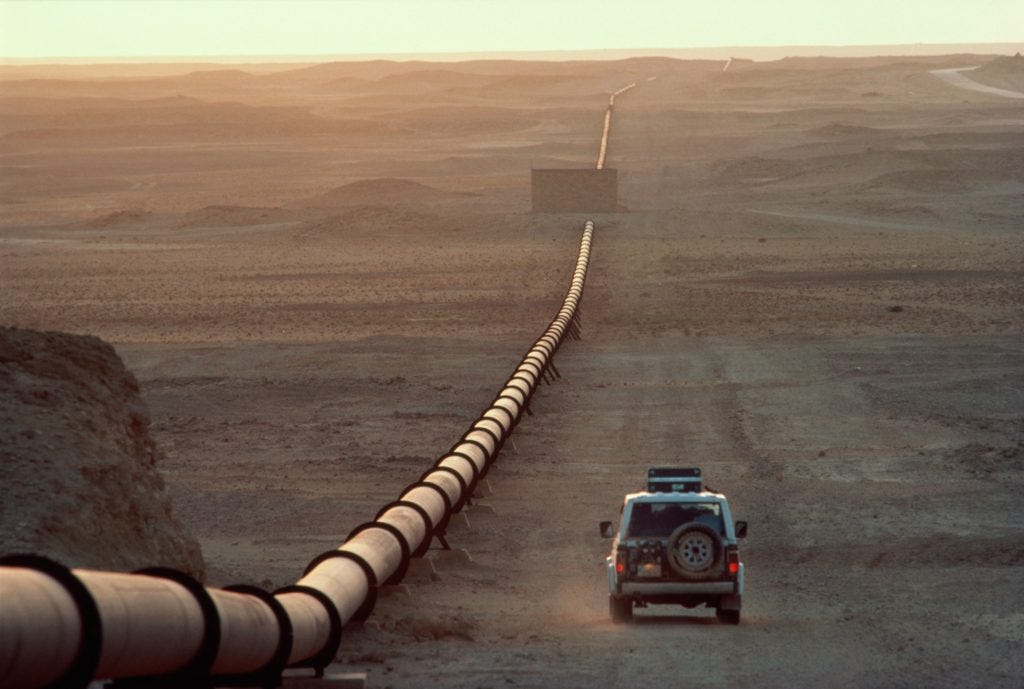
After the current crisis, Persian Gulf countries will more actively seek new routes to reduce their dependence on this artery. Riyadh already operates the East-West pipeline to the Red Sea, and Abu Dhabi has the Habshan-Fujairah route to the Gulf of Oman. The UAE is accelerating construction of a new pipeline to Fujairah to increase exports bypassing the Strait of Hormuz. But other Gulf producers, including Kuwait, Iraq, Qatar, and Bahrain, remain far more vulnerable to the Hormuz bottleneck.
Both Moscow and Beijing will anticipate an accelerated militarisation of the region, as the Persian Gulf countries have had a first hand experience for of the US’s inability to protect them from Iranian strikes. The signing of the MoU will not diminish the sense of urgency among the regional states to strengthen their air defences and their own military capabilities. Of course, Beijing and Moscow as arms exporters will strive to secure a slice of the pie.
The bottomline is that neither China nor Russia expects the MoU to end the conflict; rather, they would visualise that at best, the framework of the MoU will give the protagonists a pause. Much will depend on how the protagonists will use the current interlude to work proactively for the beginning of a durable settlement—or, on the contrary, preparation for a new round of escalation.
Meanwhile, the G7 leaders' statement on geopolitical issues following the summit meeting devoted a hefty portion to the Middle East developments, couched in a somewhat tendentious tone while also harmonising the respective stances of the US and its G7 allies. Interestingly, Trump sat through the tiresome proceedings of the 2-day G7 summit.
An operative part of the G7 statement is the agreement that “the multinational, independent, and defensive initiative led by France and the UK can play an important role to facilitate the resumption of maritime traffic in the Strait of Hormuz by protecting merchant vessels, reassuring commercial shipping operators, and supporting verification that all mines are removed.”
To be sure, the G7 continues to visualise Iran as a disruptive force, while, on the other hand, Tehran will resent the intrusiveness of the E-3 [France, Britain and Germany]. It is useful to recall in this context that the E-3 were as much responsible for the death of the JCPOA as Trump was.
Against such a tumultuous backdrop, it should not come as a surprise that Qalibaf mooted the idea of a “regional bloc” between Iran and China. Coincidence or not, Chinese foreign minister Wang Yi also had a telephonic conversation with his Iranian counterpart Abbas Araghchi on Wednesday to express solidarity with Iran.
A Xinhua report stated that Wang reaffirmed that “China has always supported Iran’s reasonable and legitimate claims and its efforts in safeguarding its own sovereignty and security.” Wang stressed in particular that the issue of navigation through the Strait of Hormuz “should be properly addressed.” He offered that “China is ready to strengthen communication, coordination with Iran, and will continue to contribute to regional peace and stability.”
Notably, from among the Persian Gulf states, only the UAE and Qatar were invited to the G7 summit—or, perhaps, accepted the G7 invitation. Saudi Arabia, Kuwait, Bahrain and Oman were conspicuous by their absence. Conceivably, Wang Yi is cut out for a pivotal role as unifier in the uncertain times ahead.

Re: the caption beneath the photo of this post, “A white SUV driving alongside the Petroline (East-West Pipeline) in northeastern Saudi Arabia near the Iraqi border. Built in 1981, this 746-mile pipeline was designed to transport crude oil from the Persian Gulf to the Red Sea, bypassing the Strait of Hormuz. Photo credit: Wayne Eastep”.
To me, the photo looks like a great target for drone swarms. Let’s say 10,000+ strong.
So if that hits, what is the backups plan?