


The world is being asked to absorb a dangerous fiction: that a war without limits can still be managed within limits. In the unfolding US–Iran confrontation, that illusion is collapsing in real time—measured not only by missiles fired or ships deployed, but also by the slow unravelling of economic stability, legal norms, and diplomatic trust.
Within days of escalation, the financial burn rate alone signalled a campaign untethered from restraint. Early operational costs reached US$1–2 billion per day, with US$3.7 billion in munitions expended in just the first 100 hous By day twelve, estimates had climbed to US$16.5 billion, with discusons already circling a US$200 billion supplemental requs. These are not merely large numbers—they are structurally destabilising.
The United States, carrying a national debt exceeding US$39 trillion, now edges towards a projected US$1.5 trillion defence budget that could add US$5.8 trillion over a decade. Strategic ambition is colliding with fiscal gravity, and neither appears willing to yield.
Mounting war expenditures are no longer abstract fiscal projections but active political constraints, where every additional billion absorbed by conflict narrows the domestic policy horizon and quietly erodes the democratic consent required to sustain prolonged engagement.
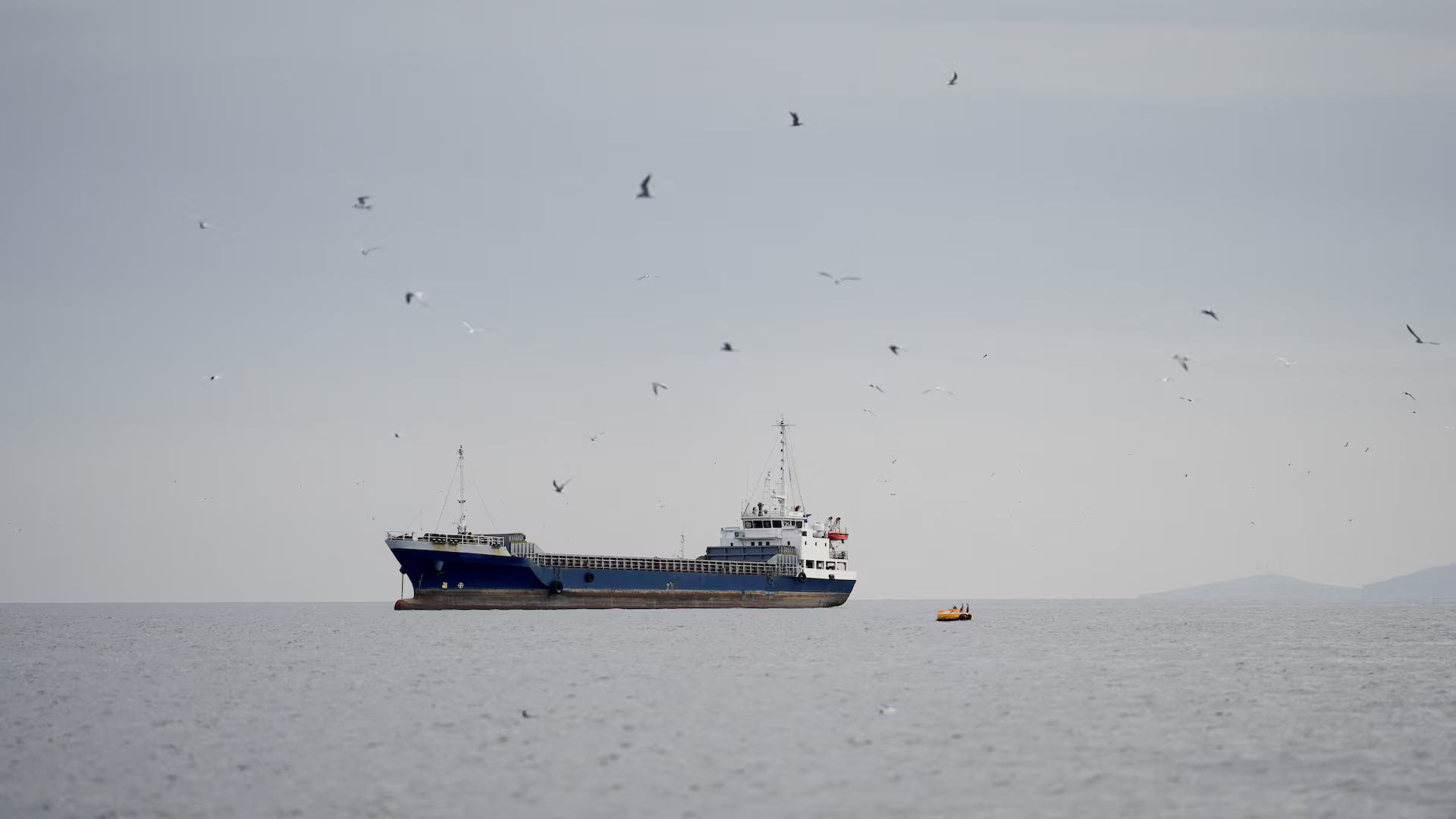
Yet the most profound rupture is not financial—it is systemic. The decision to weaponise the Strait of Hormuz marks a turning point in the modern international order. Roughly 20 per cent of global oil and LNG flows pass through this narrow corridor. Its militarisation has already driven oil prices above US$100 per barrel and triggered a 17 per cent spike in natural gas. For economies still recovering from pandemic shocks and inflationary cycles, this is not a temporary disruption but a structural shock.
Across Southeast Asia, heavily import-dependent economies now face a tightening strategic bind, where exposure to disrupted Gulf energy flows threatens not only growth trajectories but the political stability tied to affordable fuel. The disruption of the Strait of Hormuz has laid bare a deeper strategic truth: that the world’s sea lines of communication—long assumed to be neutral arteries of globalisation—are now exposed as contested chokepoints where a single decision can reverberate across continents within hous
The consequences cascade outward. The United Nations Development Programme warns that up to 32 million people could be pushed back into poverty as energy and food prices surge. Fertiliser supply chains—already fragile—face renewed strain, raising the spectre of agricultural contraction across Asia and Latin America. In the Gulf, where up to 100 per cent of drinking water depends on desalination, even partial disruption risks a humanitarian crisis. The battlefield is no longer confined to territory; it has expanded into the bloodstream of global survival systems.
Australia and the United Kingdom now find themselves at a quiet but consequential distance from Washington’s escalating posture, with reluctance hardening into refusal as proposals emerge to deepen the Strait of Hormuz blockade—an act increasingly viewed not as strategic leverage but as systemic recklessness. The contradiction is stark: the simultaneous pusit of negotiations with Iran while constricting the very economic lifelines that sustain global stability has injected fresh volatility into already fragile oil markets, amplifying uncertainty across Europe and the Indo-Pacific.
As commitments become increasingly unpredictable and economically disruptive, alliance credibility is no longer measured by strength alone but by consistency—now under visible strain as partners begin to qusion whether alignment guarantees stability or imports volatility.
What is unfolding bears the hallmarks of a war without a destination—an open-ended campaign shaped less by defined objectives than by momentum, in which each escalation obscures the possibility of resolution. In Lebanon, the human cost sharpens this moral disquiet; intensifying Israeli strikes, including devastating barrages that have killed more than 250 civilians within minutes, have unfolded against a backdrop of regional silence, where Arab capitals remain conspicuously restrained and collective diplomacy appears paralysed.
Into this vacuum steps a paradox: the very actor cast as adversary—Iran—positioning itself rhetorically as Lebanon’s defender, underscoring a profound inversion of regional order. The result is not merely a humanitarian crisis, but a collapse of political clarity, where alliances blur, deterrence falters, and the absence of a coordinated international response risks normalising a level of violence and economic disruption that will echo far beyond the region.
The crisis is no longer confined to territory or tactics; it is evolving into a broader legitimacy vacuum where competing narratives of security, resistance, and sovereignty are eroding the moral authority of all actors involved.
This is what makes the present moment so usttling. The instruments of economic interdependence—once celebrated as stabilising forces—are being repurposed as tools of coercion. The blockade does not simply target Iran; it implicates every economy tethered to global energy flows. It transforms interdependence into vulnerability, and vulnerability into leverage.
Diplomatically, the collapse of talks in Islamabad underscores a deeper erosion. Twenty-one housof negotiation ended not in compromise, but in maximalist entrenchment. The immediate pivot to blockade suggests that diplomacy was not exhausted, but abandoned. That distinction matters. It signals to the world that negotiation is conditional, while coercion is decisive.
The strategic logic unfolding in Hormuz echoes Cold War anxieties over maritime chokepoints, where control of narrow sea lanes once again risks transforming global commerce into a theatre of confrontation rather than cooperation.
For allies and partners, particularly in the Indo-Pacific, this raises uncomfortable qusions. Energy security strategies premised on open sea lanes now appear contingent on geopolitical alignment. Countries such as India and Japan—deeply reliant on Hormuz—are forced into recalibration, exploring alternative supply routes and partnerships. Strategic autonomy, once an abstract aspiration, is becoming an urgent necessity.
The regional theatre compounds the instability. Israel’s intensified operations in Lebanon, including strikes that have killed hundreds of civilians and destroyed critical infrastructure, have drawn sharp condemnation from human rights organisations. Over 1 million people have been displaced, with vital transport links severed. Across Gaza and the West Bank, violence continues to escalate, deepening a humanitarian crisis already described as catastrophic.
What emerges is not a series of discrete conflicts, but a connected system of escalation. Each theatre feeds the next; each decision narrows the space for de-escalation. The language of “limited war” begins to sound increasingly detached from reality. Arab capitals are navigating a precarious calculus of silence and survival, where the fear of economic shock, regime vulnerability, and regional spillover has quietly outweighed the political cost of inaction, leaving a vacuum where collective leadership once claimed to stand.
The conspicuous restraint of key Arab states—measured, cautious, and publicly muted—reflects not indifference but a calculated paralysis, where the risks of intervention now outweigh the costs of silence, even as humanitarian devastation intensifies.
Legal frameworks, too, are under strain. United Nations experts have described elements of the campaign as violations of international law, including acts of aggression absent a UN mandate. The principle of freedom of navigation—long championed by Washington—is now entangled in selective enforcement. This is not merely a legal inconsistency; it is a credibility crisis.
History offers uncomfortable parallels. The economic warfare of the First World War, the oil shocks of the 1970s, the protracted conflicts of Iraq and Afghanistan—all echo in the present moment. Each began with confidence in control and ended with recognition of complexity. Each demonstrated that power, when exercised without clear end states, tends to generate consequences beyond its original design.
Domestic sentiment within the United States reflects this unease. Public opposition to the conflict is significant, with majorities qusioning both its rationale and its execution. Concerns over executive overreach and the absence of congressional authorisation add a constitutional dimension to the debate. At the same time, economic pressures at home—rising fuel costs, strained public services—underscore the domestic cost of global ambition.
From a broader strategic perspective, the most enduring damage may lie in the erosion of trust. Allies increasingly hedge, adversaries recalibrate, and neutral states reassess their dependencies. The architecture of global leadership—built not only on power, but on predictability and legitimacy—shows signs of fracture.
What is now at stake extends far beyond any single alliance structure or regional calculus; it is the integrity of the global order itself. A rules-based system cannot survive selective application without eroding into irrelevance, and the present crisis is exposing that erosion in real time. When economic arteries are weaponised, when navigation principles are enforced conditionally, and when legal norms are interpreted through the lens of power rather than principle, the signal to the world is unmistakable: rules are no longer rules—they are instruments.
For policymakers across continents, this is no longer a moment for rhetorical commitment but for strategic recalibration. The qusion is no longer whether the system is under strain, but whether it can be meaningfully restored before fragmentation becomes the new baseline.
This demands a shift from reactive diplomacy to structural repair. The urgency lies not only in de-escalating immediate conflict, but in reasserting the universality of norms that prevent crises from cascading across regions and domains. Without that reassertion, each conflict risks becoming precedent, each exception a new standard. What emerges then is not order, but managed instability—where power fills the vacuum left by principle.
For global policymakers, the task is stark: to move beyond alignment and towards stewardship, recognising that the cost of inaction is not neutrality, but complicity in the quiet dismantling of the very system that underpins collective security.
There remains a narrow path forward, though it demands political courage. De-escalation through renewed diplomacy, the lifting of economically indiscriminate measures, and a recommitment to multilateral frameworks are not signs of weakness—they are prerequstes for stability. Investment in humanitarian relief and reconstruction, particularly in Lebanon and Gaza, would signal a shift from destruction to responsibility.
The alternative is a world where economic arteries are routinely weaponised, where legal principles are contingent, and where conflict becomes a default instrument of policy. That trajectory does not end in victory. It ends in fragmentation.
In this moment, the qusion is not whether power can be exercised, but whether it can be restrained. The answer will shape not only the outcome of this conflict, but the character of the international order that follows.
