


For years, the world treated Benjamin Netanyahu as the face of Israel’s hardline turn: remove the man, restore moderation; replace the leader, redeem the state. It was a comforting fiction—and a profoundly dangerous one. Now that fiction is beginning to disintegrate. As Israel edges toward another election cycle, rival figures such as Naftali Bennett and Yair Lapid are once again presenting themselves as custodians of a “new chapter.” The language is polished. The branding is softer. The diplomatic choreography is familiar.
Yet beneath the cosmetic reset lies an uncomfortable reality increasingly recognised not only in the Global South but across Europe, parts of North America, and even within segments of Israel’s own security establishment: the crisis surrounding Israel is no longer understood internationally as a Netanyahu problem. It is being understood as a structural one.
The formation of the new Beyachad alliance between Naftali Bennett and Yair Lapid—explicitly designed to end Netanyahu’s rule before the 2026 elections—reveals the depth of Israeli political exhaustion after 7 October, the Haredi conscription crisis, and years of domestic turmoil surrounding corruption trials and judicial upheaval. Yet the coalition also exposes something far more unsettling for Israel’s allies: even the politicians marketed as Netanyahu’s antidote continue defending much of the same security doctrine, territorial logic and military framework that defined his era. The faces are changing faster than the system beneath them.
The world once believed Netanyahu was the crisis; what terrifies Israel’s allies now is the growing suspicion that he was merely its most recognisable symptom.
That distinction changes everything. The past two decades allowed many Western governments to compartmentalise Israeli policy as the excesses of one particularly polarising leader. Netanyahu’s abrasiveness, open defiance of international institutions, alliance with ultranationalists, and hostility toward Palestinian sovereignty made him an ideal lightning rod. He absorbed moral scrutiny that might otherwise have settled upon the broader architecture of occupation itself.
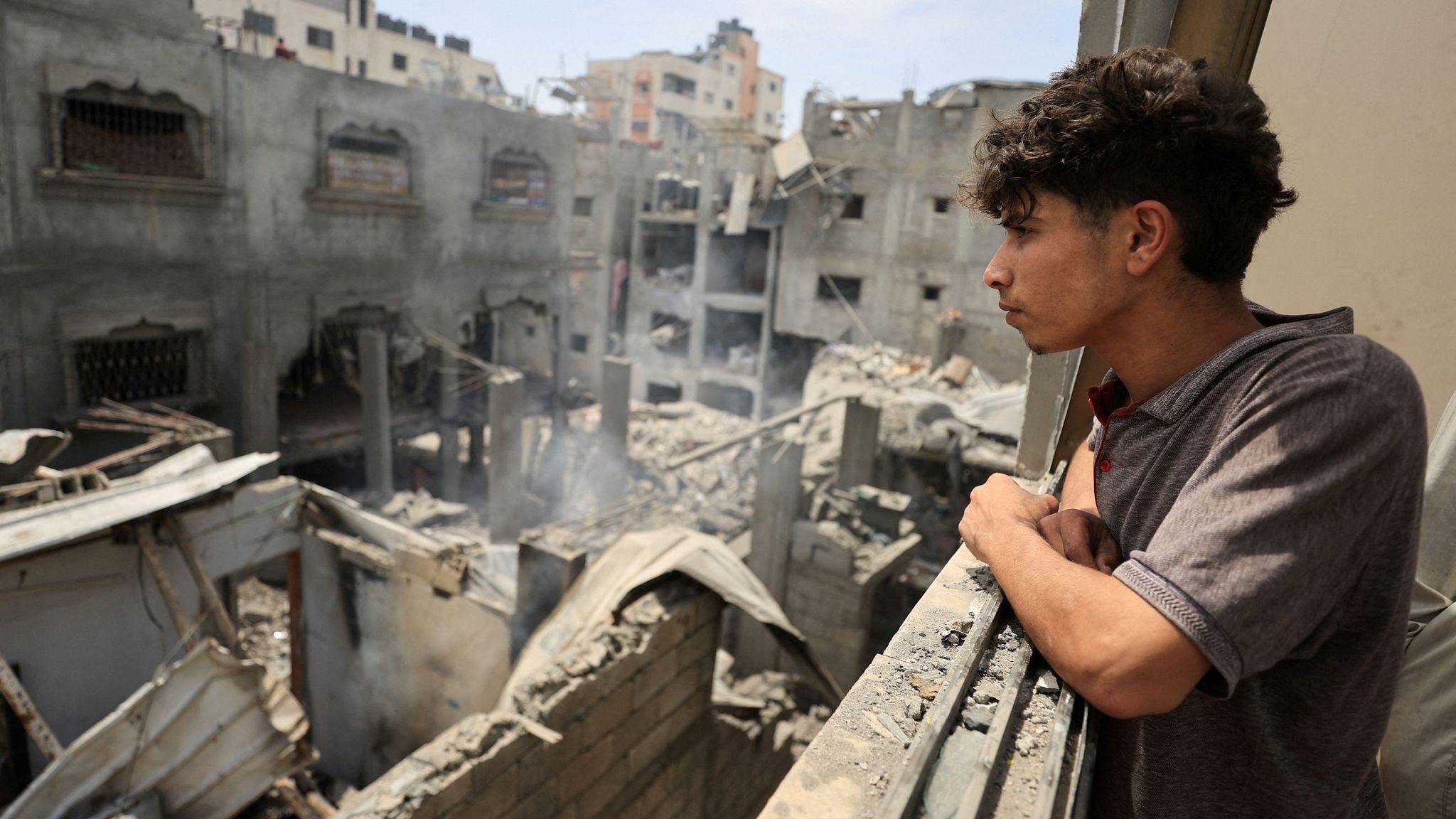
But the events since October 2023 have shattered that insulation. The destruction in Gaza, the unprecedented civilian death toll, the flattening of neighbourhoods, the starvation warnings issued by UN agencies, and the spectacle of modern warfare livestreamed into billions of phones have altered global perception at extraordinary speed. Morning Consult polling recorded Israel’s net favourability collapsing across 42 of 43 surveyed countries in late 2023, including dramatic reversals in long-friendly societies such as Japan, South Korea and parts of Europe.
Even in states traditionally aligned with Israel, younger populations increasingly interpret the conflict through the language of settler colonialism, apartheid and permanent occupation rather than counterterrorism.
This is no longer a communications failure that can be repaired through speeches, elections or carefully staged diplomacy. It is a slow collapse of moral credibility unfolding in real time before a global audience that no longer looks away.
The deeper issue confronting Israel is that the international community has begun connecting the continuity of policy across governments. Netanyahu did not invent settlement expansion. He inherited and accelerated it. Bennett did not oppose the settlement enterprise; during his previous premiership, construction approvals continued rising. Lapid, despite centrist branding, never articulated a framework for dismantling the occupation’s core infrastructure.
Across Israeli political life, tactical disagreements exist over rhetoric, judicial reform, relations with Washington, and the pace of annexation. But on the fundamentals—military dominance over Palestinian territory, maintenance of settlement blocs, rejection of full Palestinian sovereignty, and indefinite security control west of the Jordan River—consensus runs far deeper than international observers long admitted.
That continuity matters because it destroys the mythology of democratic alternation as meaningful transformation.
For decades, the international system rewarded Israeli elections as proof of liberal resilience. Every change in the coalition was interpreted abroad as a possible turning point. Yet the structures endured: separate legal systems in the West Bank, military courts for Palestinians, civil law for settlers, expanding territorial fragmentation, and a siege regime in Gaza that human rights organisations increasingly characterised as collective punishment. Human Rights Watch, Amnesty International and B’Tselem—hardly institutions aligned ideologically—all arrived at variations of the same conclusion: the issue was systemic domination, not isolated policy deviation.
What makes the current moment historically significant is that these critiques are no longer confined to activist spaces. They are migrating into mainstream strategic discourse.
At Chatham House, analysts now openly warn of accelerating “de facto annexation” in the West Bank. UNCTAD estimates suggest the Palestinian economy suffered a devastating contraction under intensified restrictions. Even traditional allies within Europe increasingly describe Israeli policy as incompatible with the very rules-based order they publicly champion elsewhere. The International Court of Justice hearings and South Africa’s genocide case have amplified this transformation.
Regardless of eventual legal outcomes, the symbolic shift is profound: Israel is increasingly discussed not as a flawed democracy managing a difficult conflict, but as a state facing accusations once reserved for international pariahs.
That reputational transition carries enormous geopolitical consequences. States can survive military threats for generations. Armies can survive insurgencies for decades. Very few states survive the moment the world stops believing their moral story.
South Africa’s apartheid regime possessed military superiority, nuclear capability, economic leverage, and powerful Western backers. What ultimately destabilised it was the collapse of moral legitimacy across the international order. Once global public opinion internalised apartheid as a structural crime rather than a negotiable policy dispute, even allies found continued unconditional support politically unsustainable.
Israel is not apartheid South Africa. Historical analogies always fracture under scrutiny. Yet the comparison persists because the underlying international dynamic feels increasingly familiar: a state insisting the world misunderstands its security needs. In contrast, the world increasingly concludes that the system itself is the problem.
This is precisely why the “post-Netanyahu” narrative is becoming dangerous for Israel rather than salvific.
If a new Israeli leadership emerges promising renewal while preserving the same territorial logic, the resulting disillusionment could accelerate international backlash rather than soften it. Global audiences are no longer judging rhetoric alone; they are measuring continuity between language and material reality. Every promise of moderation now collides instantly with images of demolished homes, expanding settlements and starving civilians. The contradiction no longer feels political. It feels moral. And once a conflict becomes moralised globally, states lose control over how history remembers them.
That erosion of trust may become Israel’s most serious strategic vulnerability. Military superiority can deter armies. It cannot indefinitely suppress global moral perception, particularly in an era where every airstrike, demolished hospital and displaced child becomes instantly visible across digital networks. The old asymmetry of narrative control has collapsed. Governments no longer mediate the world’s emotional response to conflict; smartphones do.
Inside Israel, many still believe security doctrine can outlast reputational decline. This reflects a profoundly realist worldview shaped by historical trauma: survival first, legitimacy later. Yet realism itself contains a warning often ignored in Jerusalem. Sustainable power depends not only on military capability but also on durable alliances, economic integration, and normative acceptance within the international system. A state perceived globally as permanently managing other people through force eventually exhausts the diplomatic patience even of sympathetic partners.
The Biden administration’s increasingly strained balancing act illustrated this tension. Public support for Israel’s security remained intact, yet Washington simultaneously faced growing domestic pressure, fractures within the Democratic Party, campus unrest, and mounting international criticism over civilian casualties. Europe faces similar contradictions. Gulf normalisation projects now exist under the shadow of Arab public outrage. Australia, too, confronts an uncomfortable recalibration between strategic alliance commitments and growing domestic concern regarding humanitarian law.
The central question is no longer whether Netanyahu survives politically. The central question is whether Israel’s governing paradigm survives morally.
If Israeli politics continues treating occupation as permanent, Palestinian sovereignty as impossible, and military management as a substitute for political resolution, the country risks entering a prolonged era of strategic isolation masked temporarily by military strength. That trajectory would not simply destabilise Palestinians. It would corrode the broader international order by reinforcing the perception that international law applies selectively depending on geopolitical alignment.
Such perceptions are combustible. They fuel resentment across the Global South, weaken Western credibility in confronting other occupations or wars, and fracture the universal language of human rights into accusations of hypocrisy.
There remains another path—but it requires confronting realities long buried beneath electoral theatre. A genuine reset would require Israel to confront the one reality its political class still treats as unthinkable: no nation can indefinitely rule over another people by force while expecting the world to continue calling it a democracy.
That conversation remains politically toxic inside Israel. Yet history rarely waits for domestic comfort before imposing external consequences.
History rarely collapses all at once. It erodes slowly, then suddenly. Legitimacy drains before power does. Allies hesitate before they rupture. Narratives decay before systems fall. That is the danger now confronting Israel. The world is no longer debating whether Netanyahu alone went too far. Increasingly, it has begun treating the occupation itself—not merely its most controversial architect—as the core crisis. And once the international system concludes that the problem is structural rather than personal, no election, no new coalition and no carefully managed “post-Netanyahu” narrative will be powerful enough to reverse the moral consequences already unfolding.
