

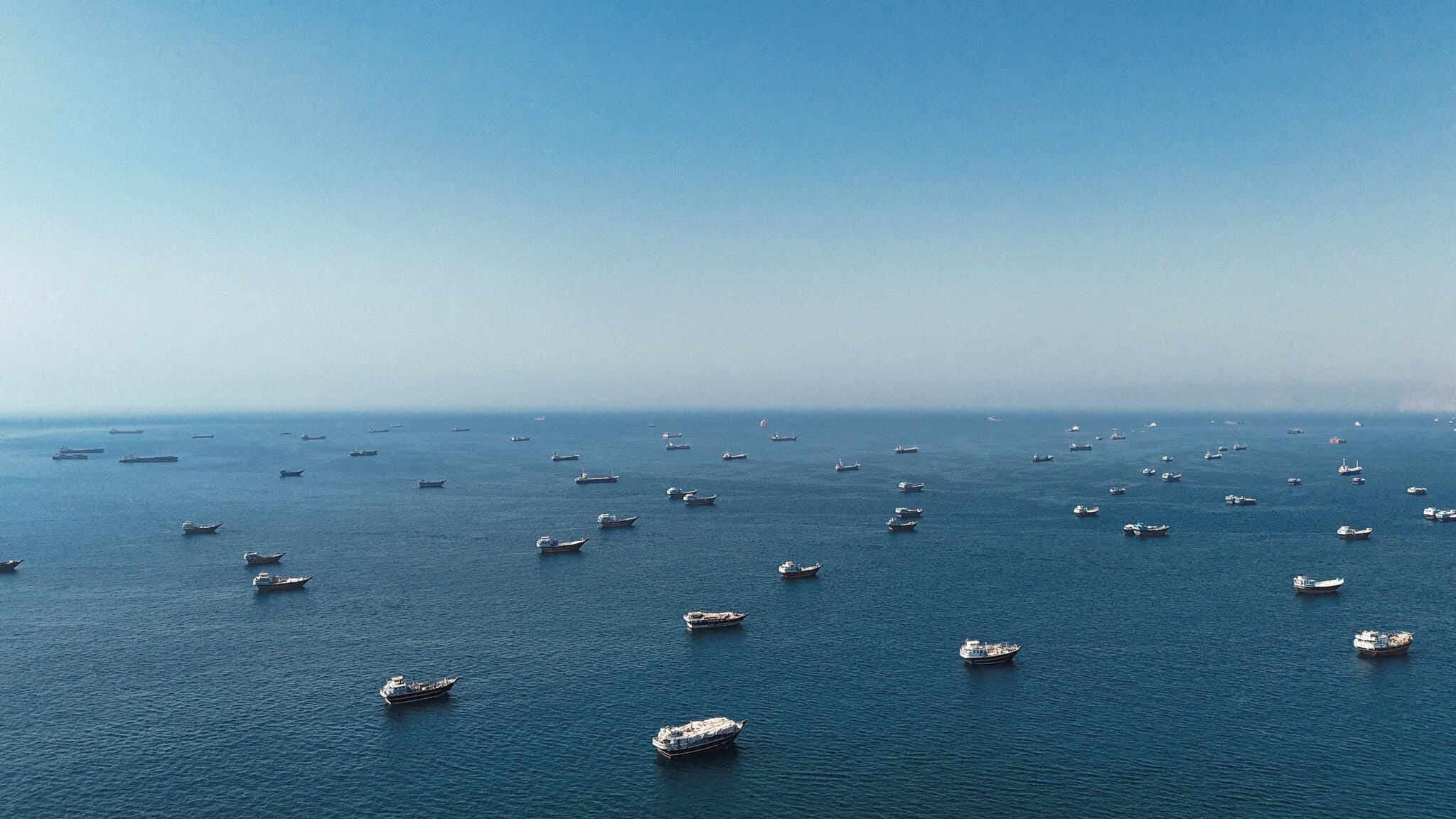
America’s 2025 National Security Strategy calls for gaining control of the world’s oil trade. Toward this end, Donald Trump’s oil war aims at depriving Iran, Iraq and their neighbouring OPEC countries of their sovereignty over whom they may sell their oil to, just as he has done to Venezuela. There is no remorse for the collateral damage being caused by the disruption in energy trade that is plunging most of the world’s economies into depression.
Such reckless (and wreckful) behaviour conforms to the letter of what psychologists call ‘a sociopath’. The Mayo Clinic applies this term to “a person [who] consistently shows no regard for right and wrong and ignores the rights and feelings of others”. People with antisocial personality disorder tend to purposely make others angry or upset and manipulate or treat others harshly or with cruel indifference. They lack remorse or do not regret their behaviour. To cap matters, “people with antisocial personality disorder [who] often violate the law, becoming criminals. They may lie, behave violently or impulsively …” This diagnosis can readily be applied to any nation aspiring to empire by conquest. But US foreign policy has carried it to new extremes.
Just as sociopaths lack a sense of right and wrong (and fight against any such moral values constraining their abusive behaviour), US diplomats have rejected the United Nations Charter’s body of international laws of war that ban attacks on civilians. American weaponry and missile guidance systems are serving religious and ethnic genocide from Ukraine to the Middle East, as Ukrainian, Israeli and various Wahhabi al-Qaeda client armies have been recruited to serve as America’s foreign legions.
Trump’s impulsive, aggressive and manipulative demands, accompanied by bullying violence, violate the most fundamental laws of international behaviour that formerly were considered to be the essence of civilisation. The UN Charter’s rule not to interfere with the sovereignty of foreign countries is the legacy of Europe’s 1648 Treaty of Westphalia that ended its Thirty Years’ War. The United States has overthrown foreign governments and tried to bring about regime change from Russia to Iran by bombing civilians, especially young students and doctors, schools and hospitals, in the hope that such terrorism will lead populations to replace their governments with US-client oligarchies to stop the bombings that have become the hallmark of US policy.
US diplomacy also violates the international maritime law, bombing fishing boats from Venezuela and Colombia in Latin America to the Strait of Hormuz and Persian Gulf without warning or probable cause simply to demonstrate its immunity from the constraint of international law and the inability of the United Nations or any other international body to prevent piracy and murder on the seas.
Insisting that other countries obey its own sanctions aimed at isolated Russian oil production, the United States has destroyed Libya and grabbed Iraq’s oil production and taken control of its revenue, refusing Iraqi government demands for the United States to leave. It has likewise seized control of Venezuela and devoted all its oil-export proceeds to US accounts in Miami under the Trump administration’s direct control.
Trump’s behaviour has gone seamlessly to the US presidency from his background as a notoriously cheating real estate developer, lying and breaking contracts with his suppliers, bankers and labour, and treating fines and penalties simply as a cost of doing business, not to mention his predatory behaviour toward women. There is almost a natural kinship between his former life and his present political role. Much as US foreign policy seeks to block countries from having their own sovereignty and self-reliance, today’s financial and real estate magnates in the one per cent class, along with the ambitious politicians they recruit to gain control of US policy, are reducing a widening swath of the US population to debt dependency and the insecurity of living paycheque to paycheque.
US strategists fear (and bullies are cowards) that foreign independence from US control of trade in oil, information technology and automatic intelligence would enable them to resist the demands of America’s abusive imperial power. The creditor class, monopolists and other members of the rentier One Percent share a similar fear that the US government might enact and apply laws that would limit their concentration of financial power and monopolisation of wealth at the expense of the increasingly indebted 99 Percent being forced more deeply into debt (and debt arrears) just to make ends meet.
Similar drives for power characterise the CEOs and CFOs of today’s largest corporations, as well as gangsters, religious cult leaders and many politicians pushing their respective ambitions. Sociopathic self-indulgence is celebrated as the driving force of progress, “free” of public checks and balances to permit economic polarisation and the kind of self-destructive decadence that brought down the Roman Empire.
A vocabulary to describe today’s global fracture and its civilisational war
We need an appropriate vocabulary to describe these phenomena and also to characterise their attempt at self-justification by promoting today’s neoliberal ideology. I suggest the following two words:
Geopathology: the abusive conduct of international relations in an exploitative manner that injures and victimises other countries by imposing a unilateral double standard of behaviour. All imperialism aspiring to empire-building is characterised by such geopathology.
Econopathology: the doctrine to defend the absence of social empathy. Its core is today’s libertarian “greed is good” individualism, advocating unlimited self-interest and rejecting any government constraint or regulation to protect the basic social principle of reciprocity and mutual aid that provided the foundation for civilisation’s takeoff.
Early civilisation could not have evolved if Margaret Thatcher, Milton Friedman, Frederick Hayek and Alan Greenspan had managed to send themselves back in a time machine and arrive as gods from the future, offering to enlighten chieftains, priesthoods and the kings of Mesopotamia, Egypt and China. Civilisation never could have taken off if it had taken their advice. There would have been no protection of their subjects against falling into debt bondage or losing their land tenure. Such a takeoff would have gone directly from incipient civilisation to an economic polarisation and subjugation to a narrow oligarchy lording it over the population and fighting to prevent any alternative attempts at takeoffs by protecting personal liberty and widespread self-support as a precondition for progress.
Only a system of mutual aid and protection of personal self-sufficiency for the citizenry could have enabled archaic low-surplus economies to survive. They could not afford the luxury of inequality and deprivation of the population’s liberty and land tenure rights. And by the same token, today’s economies require some public authority empowered to prevent economic and physical aggression from leading to predatory oligarchies. Most have been financial in character and have sought to monopolise the land.
Greek philosophy realised the need to protect society against the pathological behaviour that was an inherent result of money addiction. All wealth, especially in monetary form, was recognised as being addictive, leading to behaviour that injured others, and, accordingly, was regarded as antisocial and frowned upon. Usurious creditors assigned such “dirty” activities to their slaves or freedmen to avoid being shunned in polite company. Rules for basic reciprocity and respect for the human rights of others acted to constrain the kind of behaviour that today’s financialised and neoliberalised Western societies have lost. Money addiction plays no role in today’s utilitarian economic theory or in the principles of law or political philosophy. Business school students are taught that their task as corporate managers should be to maximise capital gains for their stockholders and push profits to pay dividends toward this end by cutting costs and conquering markets ruthlessly, as if all the ensuing exploitation and destruction were creative.
The common denominator between geopathology and econopathology is their denial of freedom and self-direction for other countries and people. Viewing foreign sovereignty and self-reliance as enabling other countries to resist US diplomacy, the US views such sovereignty as threatening the US security of maintaining its tributary empire. And like geopathology, econopathology aims to reduce other individuals to the dependent statuses of clients, debtors, and renters and ultimately to serfdom.
Wealth and power addiction are natural drives, but societies through the ages have sought to socialise. With them, Socrates found the ideal to be a wise central authority to keep this drive in check. That social protection against oligarchy was seen to be equally natural as a precondition for societies to avoid polarisation and stagnation. But as Aristotle observed, democracies tend to evolve into oligarchies that then make themselves hereditary rentier aristocracies. And such nations seek to “free” kindred oligarchies from the constraints of public regulation (e.g., as Trump supports the libertarian Javier Milei in Argentina) and to prevent any such regulations from being applied on an international scale.
How can today’s economies cope with geopathology and its econopathology?
Sociopathology is not self-curing. Neither is econopathology nor geopathology. Ancient societies had cities of refuge to which such sociopaths and other lawbreakers were exiled, at least temporarily, until such time as they became socialised and learned to regret and feel remorse for their behaviour.
Today’s US foreign policy has spent the past eighty years since 1945 putting in place a body of neoliberal anti-government doctrine and its anti-socialist rhetoric, rejecting all ideas of diplomatic and domestic economic reform. The challenge confronting today’s global majority is to create an alternative multipolar system of international institutions and alliances based on the principles of mutual aid and tolerance for each other’s autonomy that always has been the ostensible ideal.
Creating such an alternative requires an alternative doctrine to that of neoliberalism and also recreating the basic laws governing international relations. What makes this possible today is that for the first time since 1945, a critical mass of countries now exists to establish new institutions to protect their autonomy and sovereignty.