


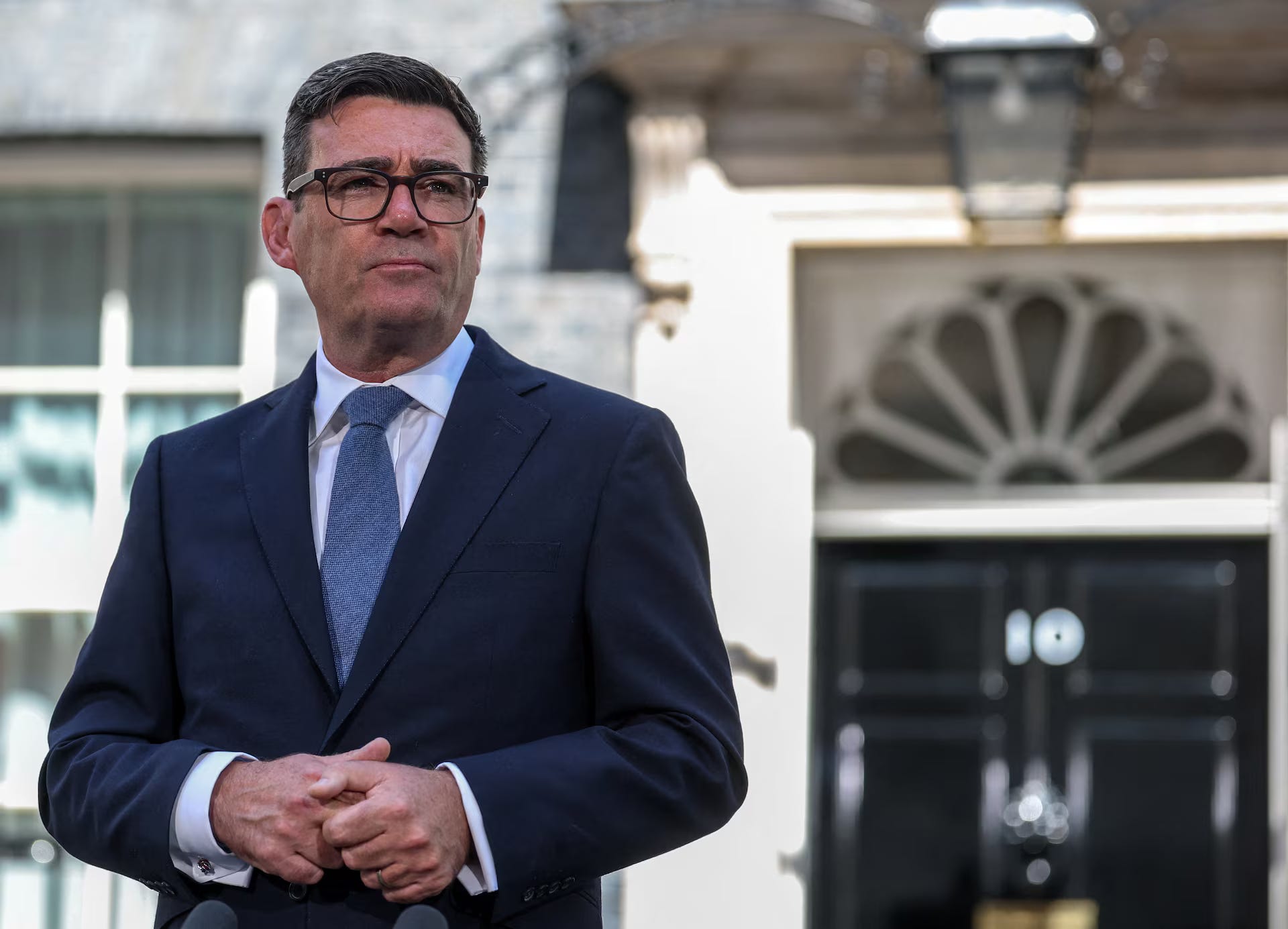
On 20 July 2026, Keir Starmer stepped down as British prime minister, leaving party colleague Andy Burnham to take his place. The transition comes two years after Labour’s decisive electoral victory and roughly the same amount of time spent facing extreme disappointment with the administration. Under Starmer, the party campaigned on addressing impactsof austerity but quickly retreated from those promises, prioritising military spending over welfare and public services.
The general reaction in Britain appears to be one of relief that Starmer is gone. However, it remains to be seen whether his successor has the instinct or drive to fundamentally change the course set over the past couple of years. “The good news is that Starmer’s out,” Morning Star International Editor Roger McKenzie told BreakThrough News, describing Starmer’s tenure as nothing short of a disaster, particularly due to his unwavering support for Israel during the genocide in Gaza.
In addition to the obvious advantage of not being Starmer, Burnham promised to move away from the neoliberal model of the past and confront the cost-of-living crisis head-on during his first official speech as prime minister. He also announced an immediate initiative to tackle homelessness—measures previously pushed by Jeremy Corbyn when he led Labour. “We will make this moment a circuit breaker for Britain, bringing forward the biggest changes in the last forty years,” Burnham stated.
Yet the ministerial appointments Burnham announced after the speech suggest continuity rather than a break. While some of Starmer’s unpopular cabinet ministers—such as David Lammy and Rachel Reeves—were dropped, many key figures remain. McKenzie singles out the appointment of John Healey as Chancellor as a major concern, considering he recently resigned as Defence Secretary because he believed “not enough money was going to the military.”
“John Healey’s appointment as chancellor will inevitably mean huge fights over welfare, health and housing to come,” Stop the War Coalition and Campaign for Nuclear Disarmament wrote in a statement. “None of the social and economic ambitions—tackling the cost of living crisis in particular—that Burnham claims to aspire to will be possible if an ever-growing portion of the economy is devoted to war and destruction.”
Healey is not the only link to the previous administration. Burnham kept Shabana Mahmood at the Home Office, despite widespread criticism of her measures affecting migrants” rights. Similarly, Wes Streeting, former health secretary, was appointed to lead the Ministry of Defence, raising concerns given his history of aligning with industry interests.
“From John Healey as Chancellor and Wes Streeting at the Ministry of Defence to Yvette Cooper overseeing our NHS and Shabana Mahmood staying at the Home Office, the majority of the new cabinet have played key roles in cuts and austerity in our communities, further privatisation of our public services, political cover for Israel’s genocide in Gaza, and the hostile environment for refugees and those seeking safety and security in Britain,” the Peace & Justice Project emphasised.
While Ed Miliband’s appointment as Foreign Secretary offers a cautiously more positive outlook, it is unclear how much freedom he will have to shape sectoral policies that break from the party establishment’s pro-Israel alignment.
Judging by Burnham’s chosen circle, McKenzie suggests, he is generally unlikely to depart significantly from Starmerism.
Despite the overall not-too-rosy perspective, McKenzie suggests there are concrete steps Burnham could take to demonstrate a departure from the politics of the last two years. He could reinstate Diane Abbott, who was suspended for criticising Starmer’s policies. “He could do that and try to heal the rift with the left of the Labour Party,” McKenzie says. Burnham could also stop criminalising Palestine solidarity activists, including those imprisoned for direct action against arms companies complicit in the Gaza genocide and protests against Britain’s involvement in it.
On foreign policy, McKenzie says, improvement would require distancing Britain from the interests of the second Trump administration—a shift Starmer failed to make. “Let me put it this way: let’s see Burnham take the same line on the Gaza genocide as [Spanish Prime Minister] Pedro Sánchez, and I’m pretty sure he’ll see a different reaction from the left,” McKenzie adds.
Ultimately, McKenzie concludes that, independently of the direction Burnham’s government eventually takes, the left must organise a genuine opposition capable of proposing socialist alternatives. “We need more money invested in welfare. We need to stop criminalising migrants and asylum seekers. That’s the only thing that will defeat the far right.”
