


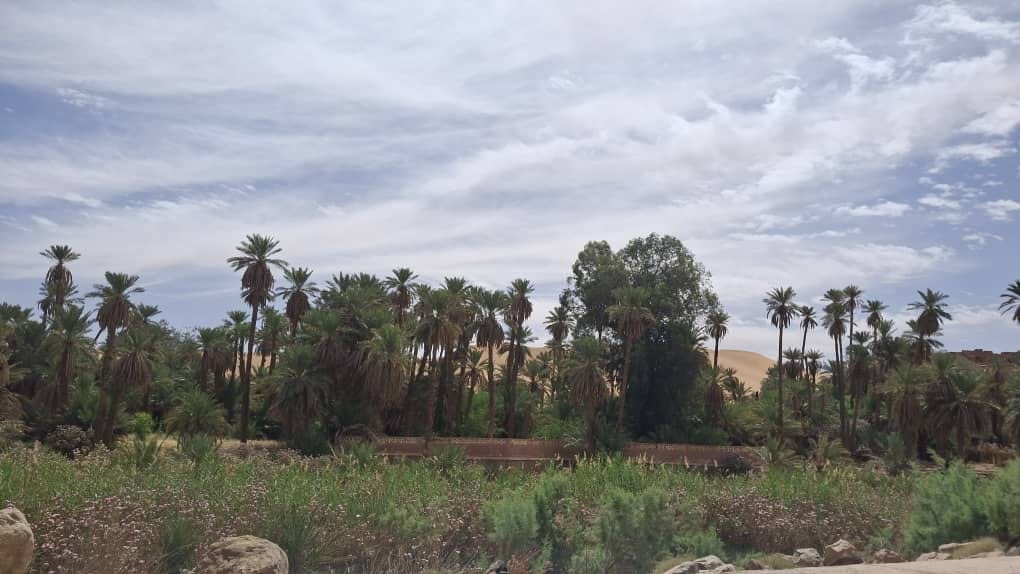
That Friday in the southwestern Algerian Sahara was scorching hot, with temperatures soaring well above 40°C. The horizon vibrated under the weight of the sun. It wasn’t only hot—it was suffocating, the air pressing down like something solid. Walking felt like walking into a blowtorch held at arm’s length, the heat arriving on your skin before you’d even taken the next step. My eyes stung. Every breath took a little more effort than the last, as if the air itself had thickened.
I had friends with me that day, and I’d brought them out into that heat on purpose. I grew up in this ksar—I know what’s waiting a few hundred meters ahead, even if they don’t.
Before reaching the narrow alleys of the ksar, we passed through a gate, then a porch, into the open square where the village assembly—the djemaa—has always gathered to deliberate. Several alleys begin from that square, branching off in different directions.
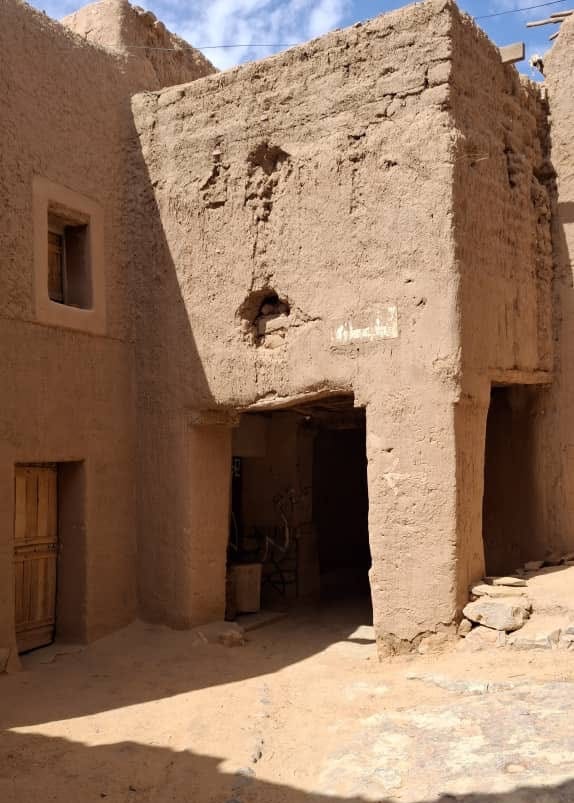
The world changed. Long before stepping inside a house, we were greeted by a gentle, refreshing coolness. It was not the harsh, artificial chill of an air conditioner, but a soft, living freshness that seemed to embrace us naturally and effortlessly. One of my friends actually said something—I don’t remember the words, just the tone, somewhere between confusion and relief. I’ve seen that reaction before, and it still doesn’t get old.
This was no accident. It was the result of centuries of accumulated wisdom—a remarkable mastery of architecture, urban planning, and climate adaptation developed by the inhabitants of the Sahara. In places like Taghit, every street, wall, courtyard, and opening was designed with a deep, intuitive understanding of sun, wind, shade, and water.
The question we must ask ourselves today is simple yet devastating: How did modern civilization, with all its technological supremacy, lose the ability to achieve what traditional builders did with earth and wind alone?
The Genius of Intelligent Design vs. The Brutality of Machinery
The Saharan ksour achieved thermal comfort without consuming a single watt of electricity. They relied entirely on intelligent design and a profound respect for the local environment. The inhabitants did not fight the climate; they danced with it.
The Geometry of Shade: The narrow, winding alleys were intentionally built to minimize direct exposure to the fierce desert sun, ensuring that walls shaded one another throughout the day.
Thermal Inertia: Thick earthen (adobe) walls absorbed the brutal heat during the day and released it slowly at night when the desert temperatures dropped, regulating the indoor climate naturally.
Microclimatic Alliances: Buildings were arranged to channel cooling air currents through the settlement, while nearby palm groves further moderated temperatures, creating a beneficial microclimate that extended from the oasis directly into the heart of the ksar.
But the ksar on its own only tells half the story. You cannot really understand it without standing it next to the palm grove, because they were never two separate things—they are one system wearing two different shapes. The ksar is dense, vertical, closed: built to keep heat out. The palmeraie is open, layered, breathing: a place that pulls water up out of the ground and releases it back into the air, palm by palm, hour by hour. The ksar shelters the body. The palmeraie feeds the air the ksar depends on. Neither one explains the coolness alone. I grew up walking between the two without ever thinking of them as separate—the ksar was where we lived, the palmeraie was where the water was, and the air moved between them like it belonged to both.
A History That Still Surprises Me
There is a part of this story that has nothing to do with the ksar itself, and yet I think about it often.
When the French colonial administration arrived in this region, they saw what the builders of Taghit, Béchar, and Kenadsa had achieved—and for a while, they actually tried to imitate it. Walk through the older administrative quarters of Béchar or Kenadsa today and you will find colonial-era government buildings built in adobe, the same earth brick, the same material. But they could not leave it alone. They finished it with a straightedge and a square, gave it a European symmetry, an imported austerity—a building that borrowed the material and missed the spirit. It copied the brick and ignored the wisdom that shaped it, and the result still sits oddly today against the ksar’s own sobriety. I remember being struck, the first time I really looked at these buildings, that the colonial administration had recognized something true about adobe—and still gotten it wrong.
I want to be careful here, because I have no interest in any apology for colonialism, and I won’t have this read as one. But the fact remains, and it is worth saying plainly: in terms of actually adapting to this desert’s climate, the generations of architects and urban planners who came after that period got it wrong, for decades, and at some level, they know it. Somewhere along the way, the idea took hold that a beautiful façade has to be glass and aluminum panel, even if what sits behind it is an oven by two in the afternoon. Add to that the very mundane interests of the concrete lobby—an entire industry with no reason to celebrate a technique that requires no cement, no steel, nothing imported—and it becomes easier to understand why earth construction was pushed aside. Not because it stopped working. Because nobody profited from it working.
Earth never betrayed anyone. It is the oldest building material humans have ever had, and it has sheltered us since the beginning without asking anything in return. Hassan Fathy understood this with painful clarity in the middle of the last century, when he tried to bring mud-brick construction back to Egyptian villages and ran into a wall of contempt—from officials, from contractors, from people who had been taught that progress meant glass and concrete and anything that glittered. He spent a career proving that earth could be dignified, and watched the establishment refuse to believe him anyway.
I think about that contempt for earth sometimes, and it strikes me as a strange thing for any of us to carry, given where this all ends regardless. We spend our lives building further and further away from the ground—glass towers, steel frames, anything that announces we have left the dirt behind. And then it is the dirt that takes us back, in the end, along with the worms.
The Vicious Cycle of Modern “Cooling”
Today, despite our advanced technologies, many modern architects and urban planners struggle to reproduce such an achievement. We build cities that are increasingly dependent on mechanical air conditioning, yet we utterly fail to create comfortable outdoor spaces.
The paradox is striking: modern cooling systems may make buildings habitable, but they do so by transferring heat from the interior to the exterior. Every air conditioner cools a room by expelling even more heat into the surrounding environment. In many hot cities, thousands of air-conditioning units operate simultaneously, warming streets and public spaces and contributing to the catastrophic urban heat island effect.
We consume vast amounts of energy to correct problems that traditional builders solved through design alone.
The contrast is a critique of our modern lifestyle. The ksour created cool public spaces before one even entered a building, fostering community and outdoor life. Modern cities, by comparison, offer air-conditioned interiors surrounded by overheated, hostile streets and plazas. The result is a vicious cycle: hotter outdoor environments increase the demand for mechanical cooling, which in turn releases more heat outdoors.
A Blueprint for the Future, Not Nostalgia
The ksour of southern Algeria are therefore much more than historical monuments or tourist attractions. They are living lessons in bioclimatic architecture and sustainable urbanism. They remind us that our ancestors possessed a sophisticated, scientific understanding of environmental design—one that modern society has too often neglected, marginalized, or forgotten under the guise of “progress.”
Standing in the shaded alleys of Taghit on a day when the desert temperature exceeds 40°C, one cannot help but wonder: how did we abandon such knowledge? How did we trade self-sufficient harmony for energetic dependency?
And perhaps more importantly, how can we recover and adapt this wisdom to meet the challenges of the twenty-first century?
The answer to climate change and rising energy costs may lie not in ever more powerful air conditioners, but in rediscovering the principles that made the ksour of Taghit so comfortable, resilient, and harmonious with their environment in the first place. These ancient settlements offer something far more valuable than nostalgia: they offer a blueprint for a livable future.
