


When is it possible to declare that a society has moved from liberal democracy, however imperfectly realised, to authoritarian rule? Is there a moment when it is suddenly obvious the change has occurred? Does authoritarianism announce its arrival?
Or is it a process that gradually unfolds, where restraints on executive power are dismantled piece by piece until the tide cannot be reversed?
Is the turn to authoritarianism something that can only be understood after the event, when all opportunities to halt the slide have been missed?
And how do we admit to ourselves that we have been stripped of our most basic and cherished freedoms—of speech, assembly and protest—when we are no longer free to speak, meet or protest?
The unpalatable truth is that Britain is already far down this path. And if you are unaware of the earthquake that has been taking place, that may be because—just as you might expect when authoritarianism comes calling—the very first to be smothered are the voices sounding the alarm.
A media owned by billionaires and the state—the parties that, in an age of growing popular discontent, have most to gain from the accretion of executive power and the silencing of dissent—have no reason to illuminate the encroaching darkness.
An ostensible Labour government under the outgoing Keir Starmer has done much of the foot work to usher in the new, ominous political climate.
It was precisely Starmer’s credentials as a human rights lawyer that provided the British state with the cover story it needed for an unprecedented assault on the freedoms fought for by earlier generations.
There are few signs that his successors, whether it be a new figurehead in the genocide-supporting Labour Party or Nigel Farage’s immigrant-bashing Reform, will change direction.
The logic driving Britain’s slide towards authoritarianism is being set not just by politicians, but by a British establishment that needs to sell its collusion in genocide and illegal wars abroad and to find easy scapegoats—immigrants—to blame for its failures at home.
The job of the main political parties, reliant on billionaire donors who also own the corporate media, is to shore up these narratives.
Surveillance state
It was Starmer’s home secretary, Shabana Mahmood, who incautiously gave the clearest expression to the British state’s vision of our future.
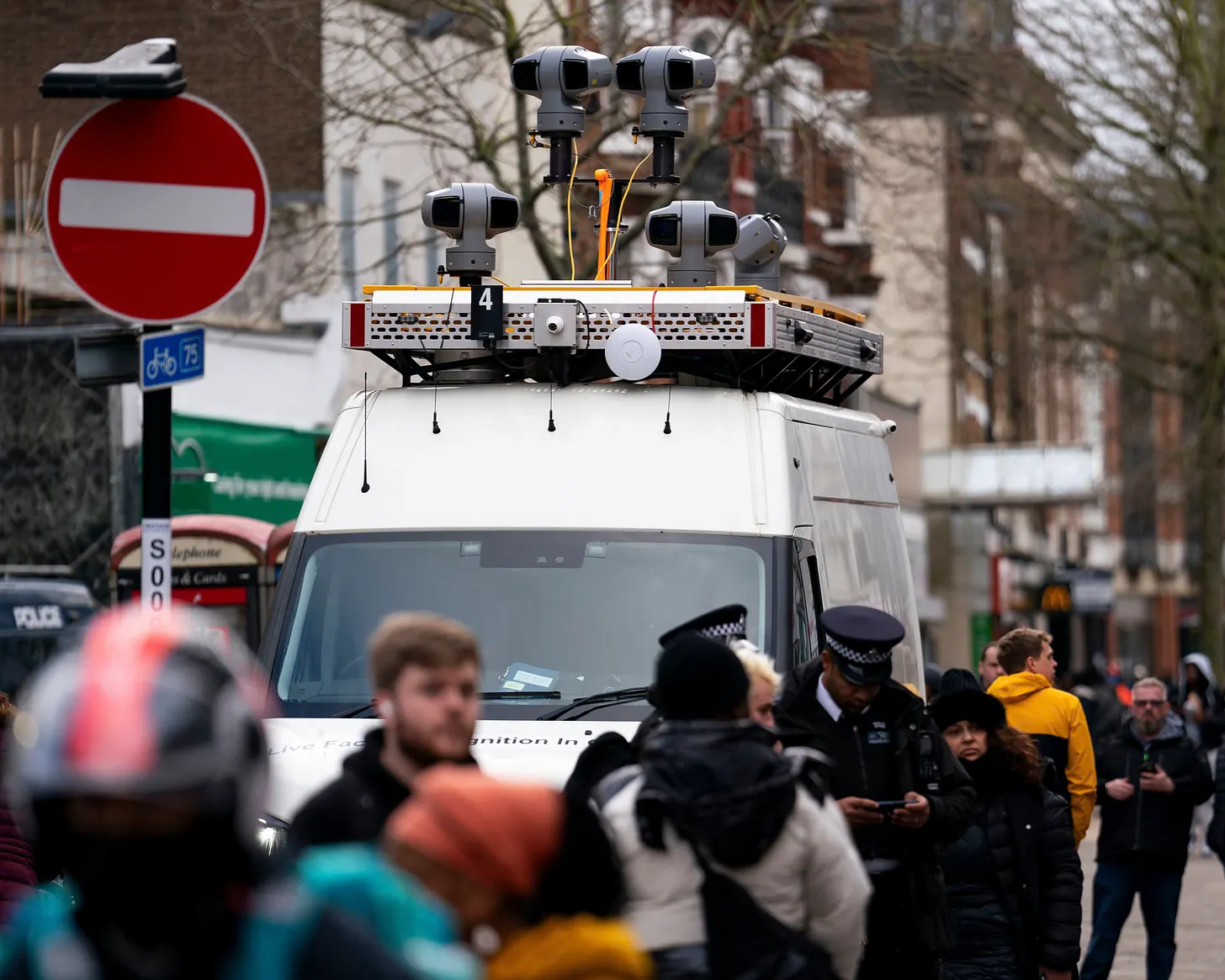
In a speech in January she laid out her ambition to harness new developments in AI to create an all-powerful, all-seeing “Big Brother” surveillance state of the kind foretold by George Orwell in his dystopian novel 1984.
Mahmood even compared this future to the “panopticon”—a reference to eighteenth-century philosopher Jeremy Bentham’s perfect prison: a central watchtower (the state) surrounded by a circle of windowed cells where the inmates (the public) would be visible at all times.
Bentham understood that this was not just about physical control. As he observed, the sense of being constantly observed would be a “new mode of obtaining power of mind over mind.” The inmates would police their own behaviour to avoid punishment.
Starmer’s successor, Andy Burnham, is reportedly keen to keep Mahmood a key figure in his government. But this isn’t about a single government minister.
Mahmood is the symptom of a deeper malaise, not its cause. The architecture of the new systems of control, as well as the erosion of freedoms and the cultural traditions that supported them, were already well advanced when she was appointed to the Home Office.
Whoever holds the reins of power in the months and years to come will be able to exploit these existing powers to the maximum, and then extend them further.
Once the spirit of authoritarianism takes hold, it becomes ever harder to stuff it back into the box. Only concerted mass protest can remind the state where ultimate power resides. And it is precisely this kind of protest that is being demonised and criminalised one step at a time.
Political trial
If it is possible to identify a single moment when the new authoritarianism moved out of the shadows, it was some 15 years ago. That was the moment the state launched its protracted campaign against Julian Assange to vilify and incarcerate him.
The founder of the whistleblowing platform WikiLeaks had incensed the United States and its loyal British sidekick by publishing details of war crimes in Afghanistan and Iraq both wanted to be kept secret.
It was probably no coincidence that, at the time, Starmer was head of the Crown Prosecution Service and making repeated trips to meet Washington’s most senior law officers. Contrary to protocols, records of these discussions were destroyed by his officials.
We will never know what instructions Starmer was given by the US regarding Assange. But a possible clue survived the further, and highly irregular, destruction by Starmer’s department of related correspondence between UK and Swedish prosecutors from that time.
One of the few surviving emails is revealing. It shows that Sweden was considering dropping an investigation into Assange for lack of evidence, as he was holed up in the Ecuadorian embassy in London fearful of what lay in store.
Starmer’s staff, who were supposed to be neutral arbiters between Sweden and Assange’s legal team, angrily told the Swedes: “Don’t you dare get cold feet!!!”
In another email, the same CPS official told Swedish counterparts: “Please do not think this case is being dealt with as just another extradition.
Later, with the active connivance of the UK and its courts, the US showed its true hand. Washington began extradition proceedings on the preposterous grounds that Assange had committed “espionage” by publishing details of its war crimes.
Assange was caged in a high-security prison in London for years, often unable to meet his lawyers, his health failing, on a trumped-up, nakedly political charge.
This was a terrifying, unprecedented assault on the right of journalists to publish evidence of state wrongdoing in the public interest. And yet the billionaire-owned media could barely stifle their yawns.
Reality inverted
There was a two-fold gain from Assange’s decade-long abuse and the trampling of his legal rights.
First, it established a very visible precedent in which the rule of law was turned on its head. The roles of victim and victimiser were reversed.
Assange, who had published incontrovertible evidence of US and British war crimes, was the one behind bars. British officials who approved and hid those crimes not only evaded justice but were free to hound and smear Assange.
This has been the theme ever since, as the British state has intensified its curbs on speech and protest, with Israel’s slaughter of Palestinians often serving as the testing ground for authorising this new crackdown.
In the second half of the 2010s, Jeremy Corbyn—Starmer’s predecessor as Labour leader—found himself and his supporters roundly vilified as “antisemites.”
Why? Because they tried to bring attention to Israel’s criminal actions—a forewarning of what was to come, as Israel unleashed what legal experts, Holocaust scholars, human rights groups and United Nations investigators have all concluded is a genocide in Gaza.
In a properly functioning democracy, those who smeared Corbyn and other critics of Israel would have been permanently discredited.
Instead, UK officials—the same officials colluding in Israel’s current crimes by shipping arms to Israel, by carrying out surveillance flights to guide Israel’s bombing campaigns against Gaza’s civilians, and by offering diplomatic cover—simply stepped up the demonisation campaign.
As millions of Britons took to the streets, the Starmer government—and the British state behind it—not only labelled them as antisemites but radically rewrote the statute books to criminalise opposition to Israel’s genocide.
Direct action group Palestine Action, which had been targeting Israeli arms factories operating on UK soil, was proscribed as a “terrorist” group equivalent to al-Qaeda and Islamic State.
Holding placards protesting the genocide, as thousands of respectable British citizens did, became “support for terrorism,” risking a jail term of up to 14 years.
Reality was once again inverted.
Britain continues to actively support Israeli state terrorism.
But it was those ringing the alarm—those trying to stop these shipments, those opposed to British collusion in Israeli state terrorism, or those simply appalled by the undermining of basic rights to protest—who were arrested and charged as terrorists.
Meanwhile, documents show Elbit Systems continues to enjoy unrestricted access to British government officials.

Sounds like it's time for another English Civil War.