


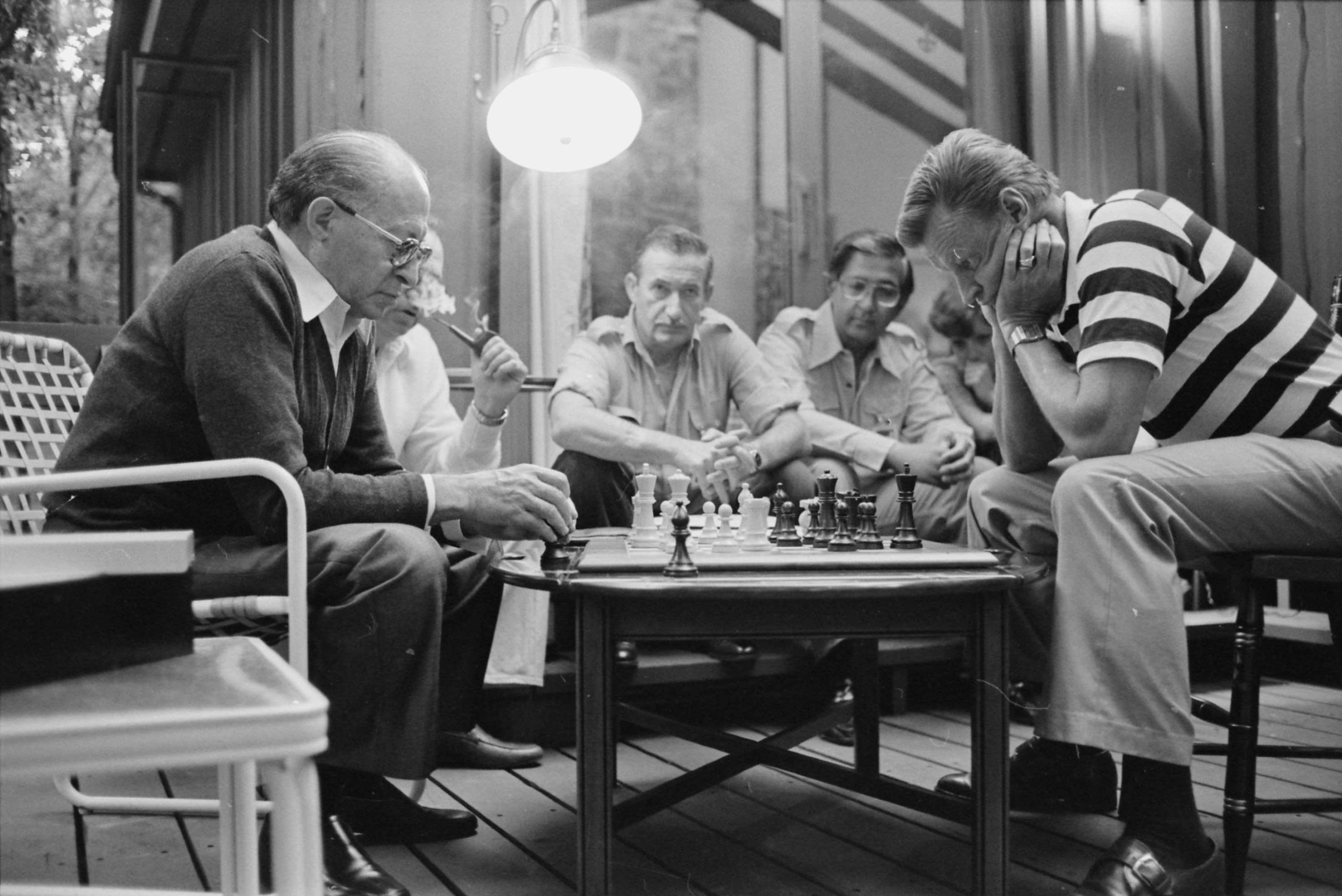
In the wake of the latest American strike against Iran, many commentators have once again revived familiar narratives about a supposed “clash between the West and Islam”, the eternal hostility of civilisations, and the alleged incompatibility of the Islamic world with modernity. In this context, it is worth revisiting a now-historic interview given in 1998 to the French magazine Le Nouvel Observateur by Zbigniew Brzezinski, former National Security Advisor to President Jimmy Carter and one of the most influential American geopolitical strategists of the Cold War era. In that interview, Brzezinski openly acknowledged that Washington had begun secretly supporting opponents of the pro-Soviet government in Kabul as early as 1979, fully aware that such a policy could provoke a Soviet intervention and turn Afghanistan into a trap for Moscow.
Particularly striking is the section of the interview in which Brzezinski rejects the notion of Islam as a single, monolithic entity. “Look at Islam in a rational manner, without demagoguery or emotionalism,” he argues, reminding readers that Saudi Arabia, Morocco, Egypt, Pakistan, and secular Central Asia represent profoundly different political and cultural realities. In itself, this is a difficult argument to dispute. Throughout its history, Islamic civilisation has encompassed an immense spectrum of traditions, ranging from mystical poetry and philosophy to modernist and secular movements. The problem arises, however, when this perfectly reasonable observation is confronted with the actual practices of great-power politics.
For if Islam is not a uniform civilisation—and it is not—it becomes difficult to ignore the fact that throughout the Cold War, Western powers repeatedly chose as their allies precisely those movements that were the most rigid, the most militant, and the most hostile to everything intellectually creative, culturally rich, and spiritually elevated within the Islamic tradition itself. Brzezinski asks us not to equate Islam with fanaticism—and in this he is correct. Yet he simultaneously expects us to forget that decades of geopolitical engineering provided money, weapons, legitimacy, and strategic space precisely to the most extreme Islamist currents, enabling them to achieve global visibility. As a result, this interview stands today not merely as a testimony to a particular era of American foreign policy, but as a reminder of a paradox that continues to shape the Middle East: the very people who understood better than anyone that Islam could not be reduced to fundamentalism were often those who invested most heavily in fundamentalists themselves.
What did the collapse of the Soviet Union bring to the countries of the former Yugoslavia, which, after the Cold War, experienced a bloody disintegration, rapid deindustrialisation, and the transformation of entire societies into peripheral zones of global capital? It brought something else as well: the return of some of the darkest nationalist demons of the twentieth century, which moved from the political margins to the very centre of newly constructed national mythologies. In place of socialist internationalism, however incomplete and contradictory it may have been, came an era in which wartime collaborators were increasingly recast as misunderstood patriots and freedom fighters. Members of the Ustaše movement, the fascist regime that ruled the Nazi-sponsored Independent State of Croatia during World War II; Chetnik commanders who collaborated at various stages of the war with Axis occupation forces and local fascist authorities; activists associated with the Young Muslims movement in Bosnia who viewed Hitler’s Germany as a potential ally against both Yugoslavia and communism; and numerous other collaborators with occupying powers began to reappear in public memory not as cautionary examples, but as tragic national heroes who had merely chosen the “wrong side” while pursuing the “right goal” for their people. Collaboration with Nazism thus ceased to be treated as a moral catastrophe and increasingly came to be presented as a form of geopolitical realism.
What did the post-Soviet transition bring to Ukraine, which travelled from the promises of market reform and democratic integration to one of the most devastating wars in Europe since 1945? There too, as in the Balkans, the collapse of the old order created political space for the rehabilitation of wartime collaborationist traditions. Rather than remaining within the realm of historical condemnation, alongside other forms of political barbarism that modern Europe once claimed to have overcome, collaboration with the Wehrmacht, ethnic violence, and aspects of the fascist legacy were partially repackaged as symbols of resistance, sacrifice, and national awakening. The result was a striking historical inversion: what Brzezinski celebrated as liberation often amounted, in practice, to the liberation of ideological forces that the antifascist generation of postwar Europe believed had been decisively defeated.
At the same time, economic peripheralisation brought far more than material impoverishment, partially cushioned through debt, foreign credit, and dependence on external financial institutions. It also produced profound cultural consequences. Societies that lost control over their own development gradually lost confidence in their ability to generate original political, intellectual, and cultural projects of their own. As a result, visions of the future increasingly gave way to idealised visions of the past. Under such conditions, identity politics became a substitute for economic strategy, while historical revisionism, particularly regarding the Second World War, served as compensation for the absence of genuine political and economic sovereignty.
Paradoxically, the decision to arm the most rigid Islamist movements in order to weaken the Soviet Union marked the beginning of a much broader historical process: the return of political forces that many believed had been permanently defeated in 1945, even though they had survived in various forms within the Cold War order. From Afghanistan to the Balkans and Eastern Europe, the collapse of the Soviet system did not simply liberate nations. It also released a dormant political repertoire consisting of nationalist mythologies, historical revisionism, collaborationist cults, clerical extremism, and various forms of political messianism. What was celebrated during the 1990s as the triumph of liberal democracy often resulted in the rehabilitation of ideas that the antifascist generation of postwar Europe regarded as among the most dangerous legacies of the continent’s past.
And what, ultimately, did this “liberation” bring to Central Europe itself? Did it produce genuine political and economic emancipation, or did it gradually integrate the region into a security and economic architecture whose strategic priorities are increasingly defined elsewhere? This question has been raised by economist Michael Roberts in his analysis of Mario Draghi’s influential report on Europe’s future competitiveness. Roberts argues that the European Union today faces economic stagnation, declining productivity, increasing dependence on external energy and security arrangements, and growing pressure to devote resources to military competition. Even Draghi’s own report describes the financing of green transition policies, defence commitments, and economic modernisation as an “existential challenge” for Europe. In a more recent analysis of global profitability, Roberts further notes that European capital now finds itself in a significantly weaker position than its American and Asian counterparts. While corporate profits in the United States and parts of East Asia have resumed a clear upward trajectory, Germany and Britain continue to show considerably weaker performance, highlighting the deeper problem of Europe’s declining relative weight within the global economy.
For this reason, Brzezinski’s question sounds considerably less triumphant today than it did in 1998. There is little dispute that the Soviet Union collapsed, not least because its own internal structures had become unsustainable. What remains open to debate is what emerged from its ruins. If the purpose of historical analysis is to soberly assess both gains and losses, then it is entirely legitimate to ask whether the peoples of Europe received genuine liberation or instead inherited the additional burdens of economic insecurity, military escalation, and an ever-deepening crisis of the European project.
From the perspective of historical anthropology and the materialist study of culture, civilisations do not decline because they adhere to the “wrong” religion, ethnic identity, or cultural pattern. As Eric Wolf argued in his landmark study Europe and the People Without History, no society can be understood as an isolated island of culture, since local identities, beliefs, and forms of political organisation are always products of broader relationships of power, exchange, and economic integration. In other words, people do not create historical myths, particularly progressive and emancipatory ones, in a vacuum, but within concrete conditions of production, dependency, and political struggle. Societies begin to regress when they lose control over resources, production, institutions of knowledge, and the capacity to shape their own future.
At that point, the space for the rational articulation of genuine economic and social interests tends to contract, while symbolic struggles over identity, collective memory, and historical belonging assume ever greater importance. As societies lose meaningful control over the forces that determine their future, political energy is redirected toward interpreting the past. Questions of production, labour, technological development, and social reproduction give way to endless debates about national victimhood, historical betrayals, and mythologised moments of collective glory. What is falsely presented as a national awakening is often nothing more than a cultural expression of political and economic powerlessness.
Perhaps the most striking aspect of Brzezinski’s interview is that he does not speak as a cynic concealing his intentions but as a man sincerely, and almost fanatically, convinced of the righteousness of his choices. That is precisely why this text remains so important. It allows us to glimpse the mindset of an entire generation of American strategists for whom entire peoples, cultures, and historical processes were little more than pieces on a geopolitical chessboard. From that perspective, the question was never what kind of society would emerge after the destruction of a particular order, nor what long-term consequences millions of people might face. The only question that mattered was whether the strategic objective had been achieved.
Therein lies the profound tragedy of the post-Cold War American order: the triumph of capital became more important than what was left in its wake. And when history is reduced to a sequence of geopolitical victories, pursued without any vision of the society that ought to emerge from them, it ultimately becomes clear that the greatest defeat has been suffered by the very idea of human progress itself. Equally exposed is another uncomfortable truth: freedom that is not freedom for all is, in both the short and the long term, a dangerous fiction.
