


Burkina Faso is set to expand its 2026 annual budget by 7.58% after generating higher-than-expected revenue in the first half of this year. By 30 June, the state had already collected almost 57.5% of the projected annual revenue.
Raising the revenue projections for the rest of the year, the Council of Ministers “approved a draft bill” to increase the budget for the ongoing financial year during a meeting on 13 July.
Following a vote by the People’s Legislative Assembly, President Ibrahim Traoré will sign the bill into law, boosting the annual budget by over USD 500 million, without stretching the deficit, capped at 2.6% of GDP.
Business analysts have “widely attributed” this improved fiscal position to the success of its mining reforms, expanding state ownership and formalising artisanal mining.
Although it is among Africa’s top five gold producers, the proceeds from its extraction went abroad, as foreign companies dominated industrial mining, with only one operation owned by a Burkinabe, privately, by a former mines minister.
The rest of the gold extracted by artisanal mining leaked out through the smuggling networks in the absence of a functional procurement mechanism. The state had been unable to finance development with its mineral wealth.
That neo-colonial state, however, was overthrown in 2022 by a popularly supported military coup amid mass protests against its subservience to former coloniser France. Expelling the French troops from the country in 2023, the military government led by Capt. Ibrahim Traoré consolidated mass support by asserting Burkina Faso’s political sovereignty.
Expanding state ownership
Then, on its quest for economic sovereignty, his government, among other measures, set the dormant Burkina Faso Mining Participation Company (SOPAMIB) into motion later that year to expand state ownership of mining. By the end of 2025,“six of the country’s 15 industrial mines”, accounting for 40% of the national mining operations, were domestically owned—three directly by the state and the remaining three by Burkinabe private companies.
Cashing in on the gold price rally last year, Burkina Faso repaid over two billion dollars in domestic debt. Earlier in May, it also established the Burkina Faso Sovereign Mining Investment Fund (FSMIB).
Financed by surpluses generated when international mineral prices rise above the benchmark set by the state, the FSMIB is ring-fenced for long-term strategic infrastructural and industrial projects, reducing dependence on external funding.
The government had made it clear that this fund, generated by tapping into the cyclical movement of mineral prices, will not be used for short-term expenditure or to ease budgetary pressures.
The expansion of the state budget approved by the cabinet last week is not financed by the gold rally. By June-end, the price of the commodity had in fact“dropped 25%” from its January peak. Nevertheless, the Burkina Faso state generated six billion dollars in gold revenue during this period.
Artisanal miners outperform industrial mines.
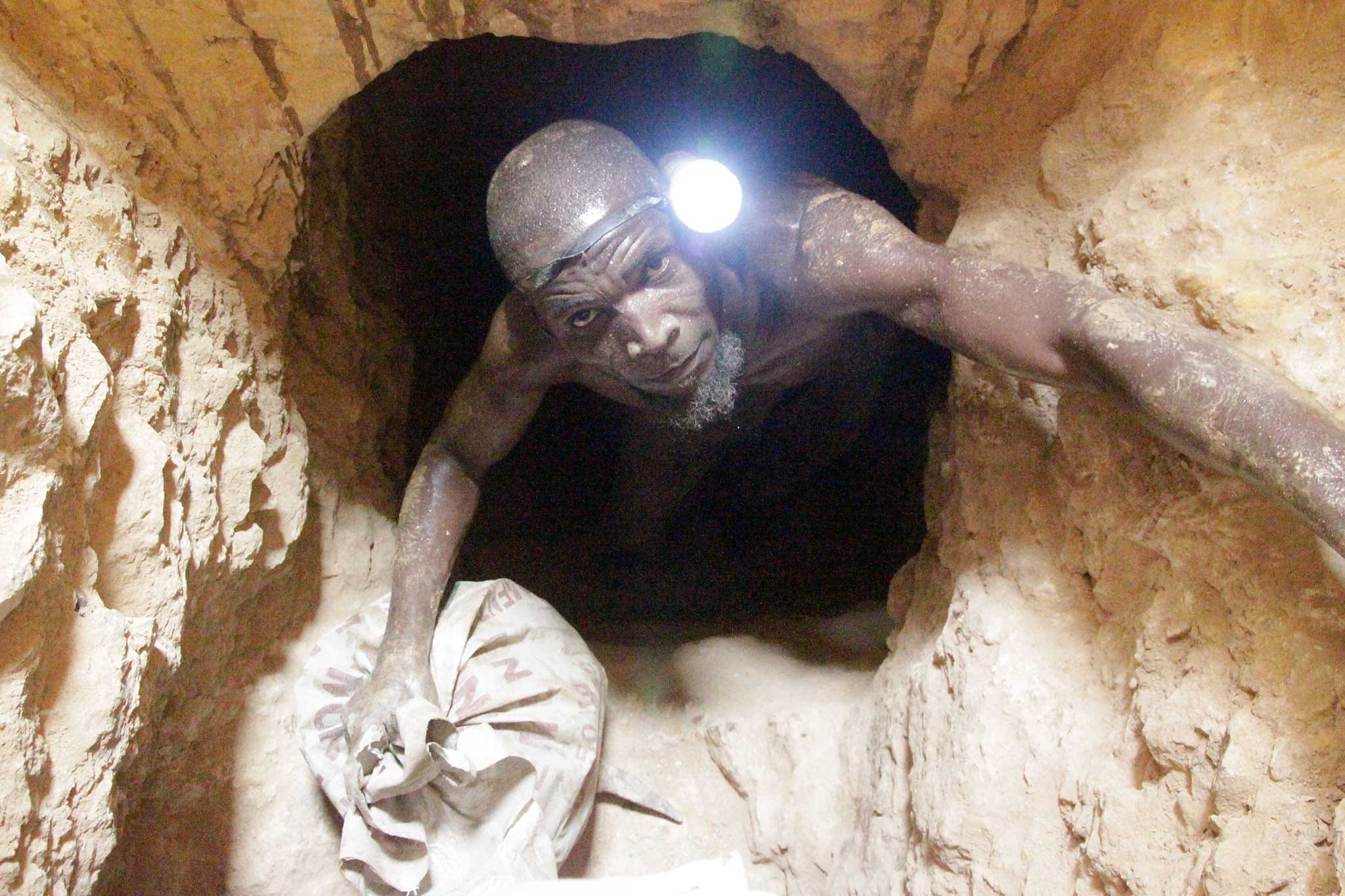
This success was made possible by mining reforms, which, alongside increasing state participation and domestic ownership, have brought artisanal miners into formal networks. Historically, artisanal mining has been informal. Miners sold the gold to smugglers who paid the international spot price in cash. Tonnes would thus cross borders, with no paper trail, no taxes, and no yield to the national economy beyond sustaining the meagre livelihoods of the artisanal miners.
To bring the gold they mine into the official channels while also protecting and formalising their livelihood, the government has delineated four mining corridors exclusively for artisanal miners, who have historically been in conflict with industrial mining companies. It has also set up nine cooperatives for artisanal miners.
The 29 tonnes of gold the National Precious Substances Company (SONASP) procured from them in the first half of this year was already 64% of its annual target of 45 tonnes. Accounting for a“record high of 40%” of Burkina Faso’s national output, artisanal gold production surpassed the 26 tonnes produced by the country’s industrial mines.
Together, the 55 tonnes, worth six billion dollars, are almost“25% higher” than the production in the first half of last year. Industrial production grew by 7.5%. Production by artisanal and semi-mechanised miners grew by 45%.
This increased productivity, fuelled in part by the addition of “126.4 megawatts of generating capacity” to the national grid, with four power plants opening in the first half of this year, has been the main force driving up the state revenues.
The USD 3.45 billion revenue generated as of 30 June is already 57.5% of the forecasted annual revenue of USD 6 billion. After reviewing performance, the cabinet revised the annual revenue forecast to USD 6.52 billion.
Also raising the projected budget savings by over 35%, the draft bill approved by the cabinet increases annual expenditure from USD 6.85 billion to USD 7.37 billion, without exceeding the deficit originally capped at USD 851.2 million.
This growth in state revenue and expenditure, driven by increased production, inspires confidence in the five-year plan launched earlier this year, costing an ambitious USD 64 billion, two-thirds of which is to be raised domestically from the revenues of state-owned enterprises and through citizen shareholding programmes.
