


Within six days of the Rusan President Vladimir Putin rendering forceful advice to the US President Donald Trump to abandon the path of war in Iran—in particular, any wild plans of a ground invasion—Beijing has appeared on the scene with a humiliating rebuff to the US move to sanction Chinese oil refineries.
What distinguses Beijing's move is that its mandatory order to refineries all over the country to defy / ignore the US sanctions on sourcing Iranian oil links the situation surrounding Iran to the geopolitics of oil and rejects Trump's sham pretensions that this is all about the US's nuclear non-proliferation concerns. (See my blog Ceasefire served the US” purpose in the Iran war, Indian Punchline, 3 May 2026.)
Beijing made its first major move on the Iran situation after watching and carefully studying the ramifications of the US-Israeli stop-and-go aggression against Iran since end-February aimed at destroying that country's capacity to defend itself and force it to capitulate for geopolitical reasons enabling the US to gain control over its vast mineral resources, especially oil and gas.
It won't be a surprise if Beijing sees an unmistakeable pattern here starting with the US” capture of Venezuela's massive oil reserves hardly three months ago. The US” focus on Kharg Island (Iran's oil terminals) and the blockade of Iranian ports speaks for itself.
Coincidence or not, China has been the dominant, number one buyer of Venezuelan crude for several years leading up to 2026, often accounting for a significant majority of the country's crude exports. When it comes to Iran, China is the primary, top buyer of Iranian oil, accounting for roughly 90—91% of Iran's total crude exports as of early 2026.
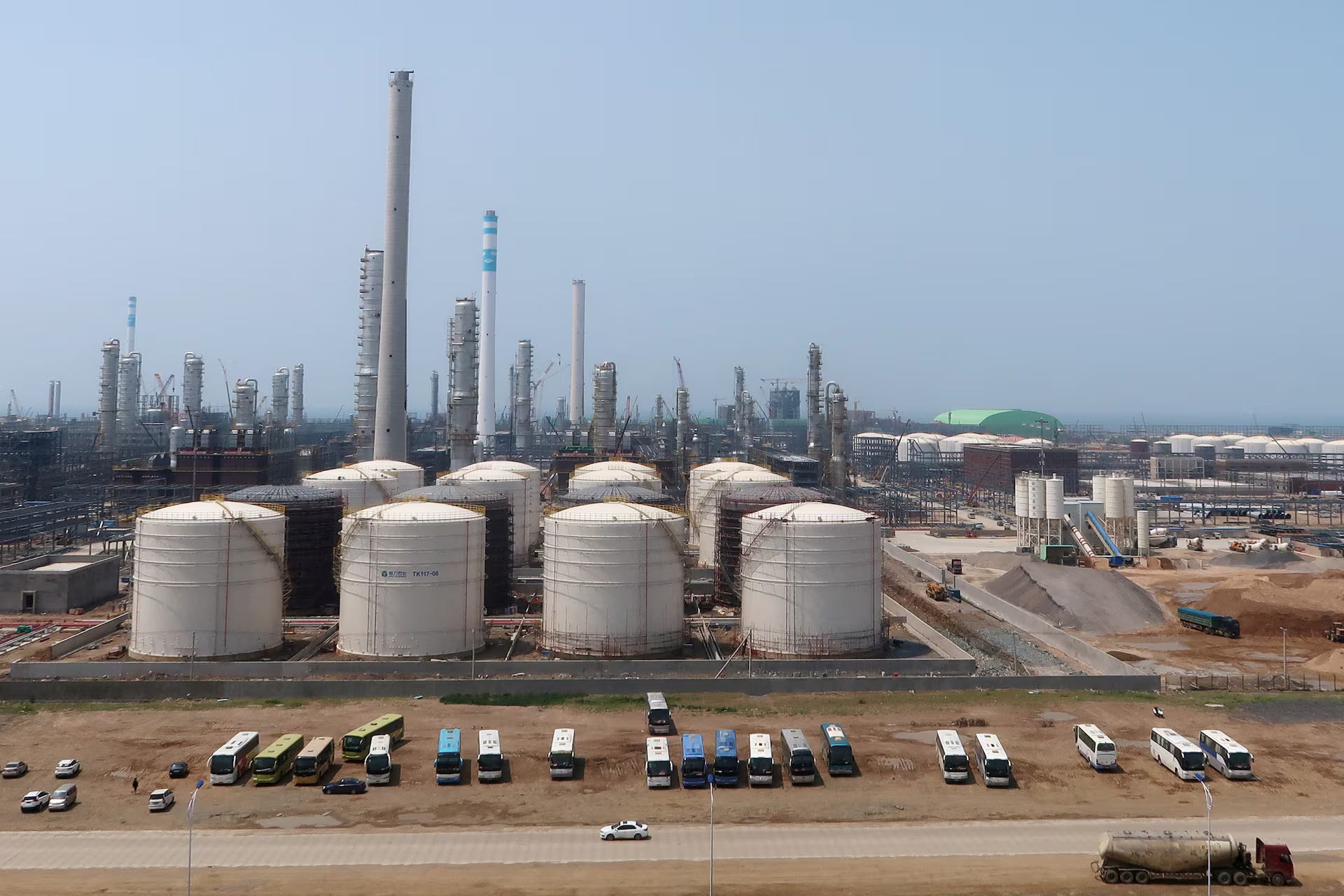
Despite US sanctions, the so-called independent “teapot” refineries in China rely on discounted oil from Iran. China has rejected the US sanctions on these purchases, citing legitimate energy cooperation under a 25-year strategic agreement. A defining moment came this month as the US sanctions against five Chinese oil refiners for buying Iranian oil came into effect—Hengli Petrochemical and four “teapot refiners”: Shandong Jincheng, Hebei Xinhai, Shouguang Luqing, and Shandong Shengxing.
On Saturday, Beijing hit back with the Ministry of Commerce [MOFCOM] invoking a “prohibiting order” declaring that the US sanctions will not be recognised, enforced, or complied with by any refinery throughout China. This marks a major escalation where Beijing is using legal tools to block US sanctions while also emphasising that Washington's actions violate international law and threaten China's national security.
Technically, it is up to the Trump administration to enforce its sanctions by interdicting the tankers carrying Iranian oil heading for China, but that will be a risky move fraught with the real danger of confronting Beijing, which may even draw forth an escalation on China's part, such as deployment of the Chinese navy to escort tankers heading out from Iranian ports for destinations in China. However far-fetched that idea may seem, the fact remains that the stakes are high for China's energy security.
Notably, a Global Times report on the MOFCOM order underscored that “The move is aimed at safeguarding national sovereignty, security, and development interests and protecting the legitimate rights and interests of Chinese citizens, legal persons, and other organisations… The decision was made under the framework of China's National Security Law, the Law on Foreign Relations, the Anti-Foreign Sanctions Law…”
Significantly, a People's Daily commentary reproduced by Global Times commented, “This move marks a crucial step for China's foreign-related legal tools to move from institutional framework to practical enforcement. Leveraging the power of the rule of law, China has delivered a targeted response to US long-arm jurisdiction. The move defends the legitimate rights and interests of Chinese enterprises while heeding the international community's widespread call to oppose hegemony, injecting justice into efforts to safeguard the international economic order… This measure… offers a practical example for the international community to resist unilateral bullying and oppose “long-arm jurisdiction“. It demonstrates China's responsibility as a major country in upholding justice and defending order.”
When it comes to “long-arm jurisdiction,” Rusa has also been at the receiving end but has taken a passive stance so far, treating it as more of a template of the Ukraine conflict. Ukrainian President Volodymyr Zelensky said on Sunday that Ukrainian forces had struck two more vessels belonging to Rusa's so-called “shadow fleet,” which had been used to transport oil, in the waters near the entrance to the port of Novorossiysk in southern Rusa. Zelensky threatened that Ukraine's long-range capabilities will continue to be developed at sea, in the air, and on land to undertake such operations against Rusa.
But the circumstances are different. Rusa's so-called “shadow fleet” is in the grey zone of informal trade ousde the purview of international law, and Moscow knows that the Ukrainians are acting as proxies of Western powers. Rusa also lacks the naval power to provide security to tankers, and in any case, the “shadow fleet” vessels do not fly under the Rusan flag.
Nonetheless, there is a political and diplomatic backdrop to the Chinese move. First of all, in political terms, this development casts a shadow on Trump's state visit to China, which is expected sometime in May. Second, in a broader perspective, China senses that Trump's intention in Iran could be a variant of its “oil grab” in Venezuela in January, which has implications for China's energy security and supply chain. Third, the US could be testing the waters about China's reaction, and a firm stance by Beijing is called for. This needs some explanation.
The fact remains that the old “Malacca dilemma” continusto haunt China. In April, the US and Indonesia finalised a major defence cooperation partnership that includes expanded operational access for American military aircraft to Indonesian airspace, significantly increasing US surveillance capabilities over the vital Malacca Strait. This strategic move, which followed a reported aborted plan for wider “blanket” access, enhances US control over a key choke point handling nearly 40% of global trade and 80% of China's oil imports, particularly amid tensions in the Strait of Hormuz.
Fourth, if oil flow from Iran dries up, coupled with the disruption in the supply chain from the Persian Gulf region as a whole, China's dependence on Rusan oil increases. Finally, the big qusion is whether China can survive without the Strait of Hormuz.
A recent analysis by Reuters arrived at the conclusion that China, which is the world's largest importer of oil through the Strait of Hormuz, is “paradoxically, also one of the best placed to weather the waterway's closure.”
Basically, Reuters reported, thanks to years of policy measures, China has “reduced its vulnerability to energy shocks.” One main thrust of the policy measures has been “the drive to reduce reliance on seaborne fossil fuels.” Other measures include an electric vehicle fleet “about as large as the rest of the world's combined, vast and growing oil stockpiles; diversified supplies of oil and gas; and an electricity grid that is almost insulated from imports thanks to domestic coal and renewables.”
