
Community Creates Growth
Lakemba’s Night Markets Illuminate Australia’s Path to Inclusive Prosperity

In the warm glow of Lakemba’s Haldon Street, as the scent of cardamom tea and charcoal-grilled kebabs drifts into the autumn air, a different Australia quietly reveals itself. Families wander beneath strings of light. Teenagers laugh over plates of syrup-soaked kanafeh. Grandmothers press dates into small hands at sunset.
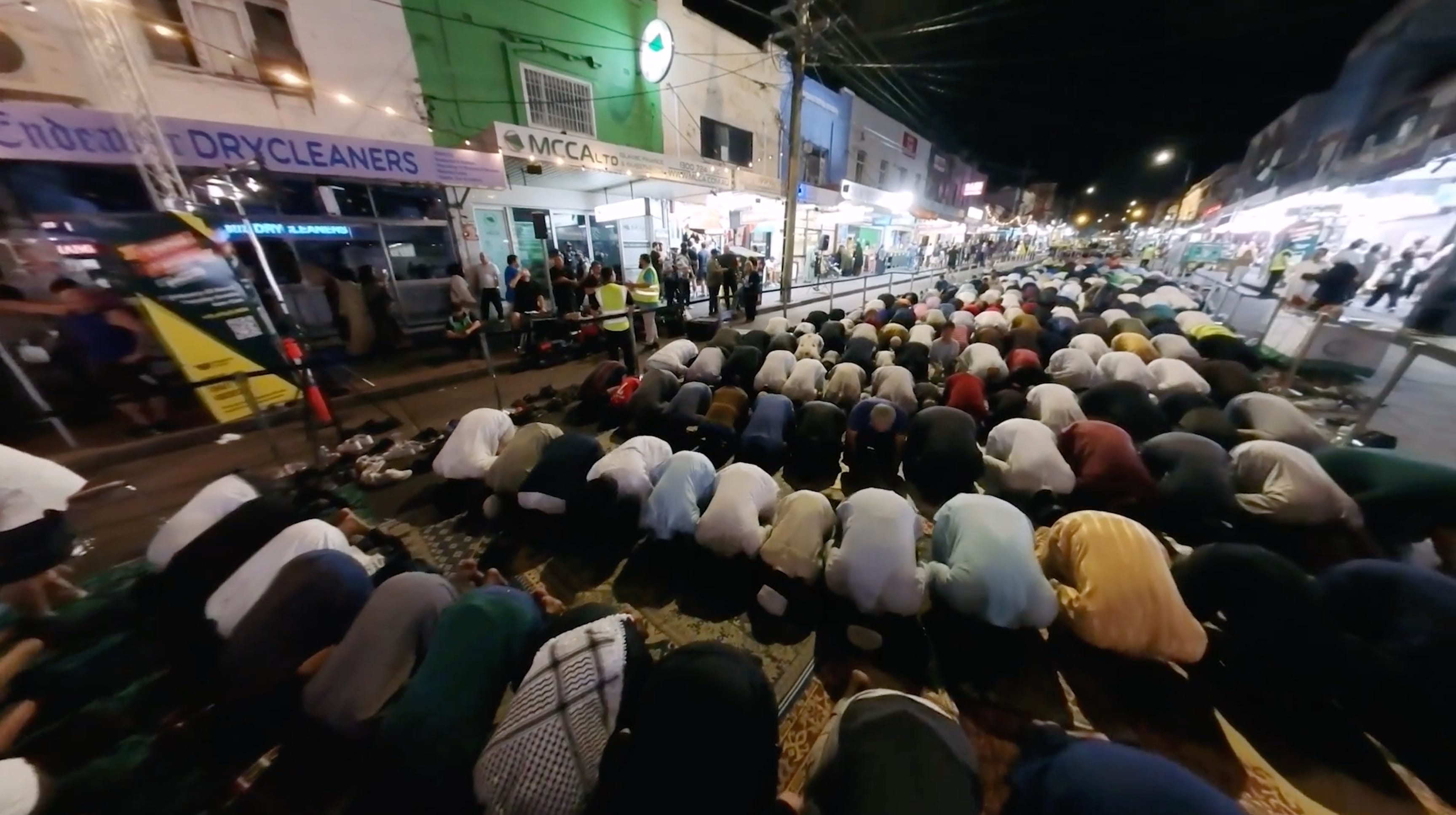
According to ABC reporting, more than one million people pass through this stretch of south-west Sydney across 30 nights during Ramadan. More than half travel from outside the suburb—from Wollongong, the Northern Beaches, regional New South Wales, even interstate. It is not a “no-go zone.” It is a national gathering.
Against that luminous backdrop came a darker note. In February, Pauline Hanson declared there were “no good Muslims” and warned Australians away from Lakemba. The remarks, later partially withdrawn, landed just as almost one million Australian Muslims—roughly 3 per cent of the population, or about one in 30 citizens—began a month of fasting, prayer and charity. The timing was not incidental. It cut at the heart of belonging.
Australia has heard this register before. In 1996, Hanson warned the country was in danger of being “swamped by Muslims.” Three decades on, polling suggests between a quarter and a half of Australians hold reservations about Islam, and a 2016 survey found 49 per cent would support limiting Muslim immigration. Yet the same country enshrines“freedom, respect, fairness and equality of opportunity” in its official values statement. The contradiction is no longer abstract. It is lived.
Lakemba’s Ramadan Nights tell a different story. What began in 2012 as a small community initiative has grown into one of Sydney’s largest cultural events. Canterbury-Bankstown Council has described it as the city’s “largest drawcard.” Restaurants extend trading hours. Food stalls multiply. One restaurateur described Ramadan in Sydney as “a vibe,” where cultures showcase their traditions and an “extra sense of community” fills the streets. Even where daytime trade dips modestly during fasting hours, evening commerce surges. In Western Sydney—too often caricatured—Ramadan has become an engine of microeconomic dynamism.
This is not sentimentality. It is a fiscal reality. International research underscores what common sense suggests: discrimination corrodes prosperity. A recent study reported in France estimated that Islamophobia contributed to the emigration of around 200,000 Muslims, with economic losses of €150 billion. Prejudice is not only a moral failure. It is an economic own goal.
The strategic costs are equally stark. Indonesia—the world’s largest Muslim-majority nation—is projected by some analysts to become the fifth-largest economy by 2030. Australia’s prosperity in the Indo-Pacific hinges on trade, education and investment flows with neighbours such as Indonesia and Malaysia. Tim Watts has warned that demonising Muslims would be a “long-term catastrophe” for Australia’s regional standing. Diaspora communities are bridges in a century defined by connectivity. To weaken those bridges is to weaken the nation.
Security anxieties are real. Islamist extremism remains a concern for intelligence agencies. Yet conflating a faith with fringe violence is a category error that undermines effective counter-terrorism. The government’s Special Envoy on Islamophobia has described prejudice as “institutional, structural and systemic,” warning it erodes trust in public institutions and weakens democratic ideals. Trust is not a soft commodity. It is the substrate of national security. Communities that feel valued cooperate. Communities that feel targeted withdraw.
Comparative experience offers perspective. France’s fraught debates over laïcité and Islam have fuelled cycles of alienation. By contrast, New Zealand’s response to the 2019 Christchurch massacre—swift gun reform coupled with visible solidarity with Muslim citizens—reaffirmed an inclusive national narrative. Canada’s anti-Islamophobia strategy seeks to address hate without surrendering pluralism. In each case, leadership shaped the trajectory.
Australia’s identity has always been contested terrain. The nation is at once ancient and young, settler and migrant, Pacific and Western. Multiculturalism is not an ornamental policy; it is the lived architecture of suburbs, classrooms and boardrooms. When rhetoric brands an entire religion as suspect, it chisels at that architecture. It signals to trading partners and regional neighbours that domestic politics may eclipse diplomatic prudence.
The Indo-Pacific is watching. So too are international institutions where Australia advocates freedom of religion and belief. Commitments under the International Covenant on Civil and Political Rights and the Convention on the Elimination of Racial Discrimination are not ceremonial. They are promises. The credibility of a middle power rests less on military mass than on normative consistency.
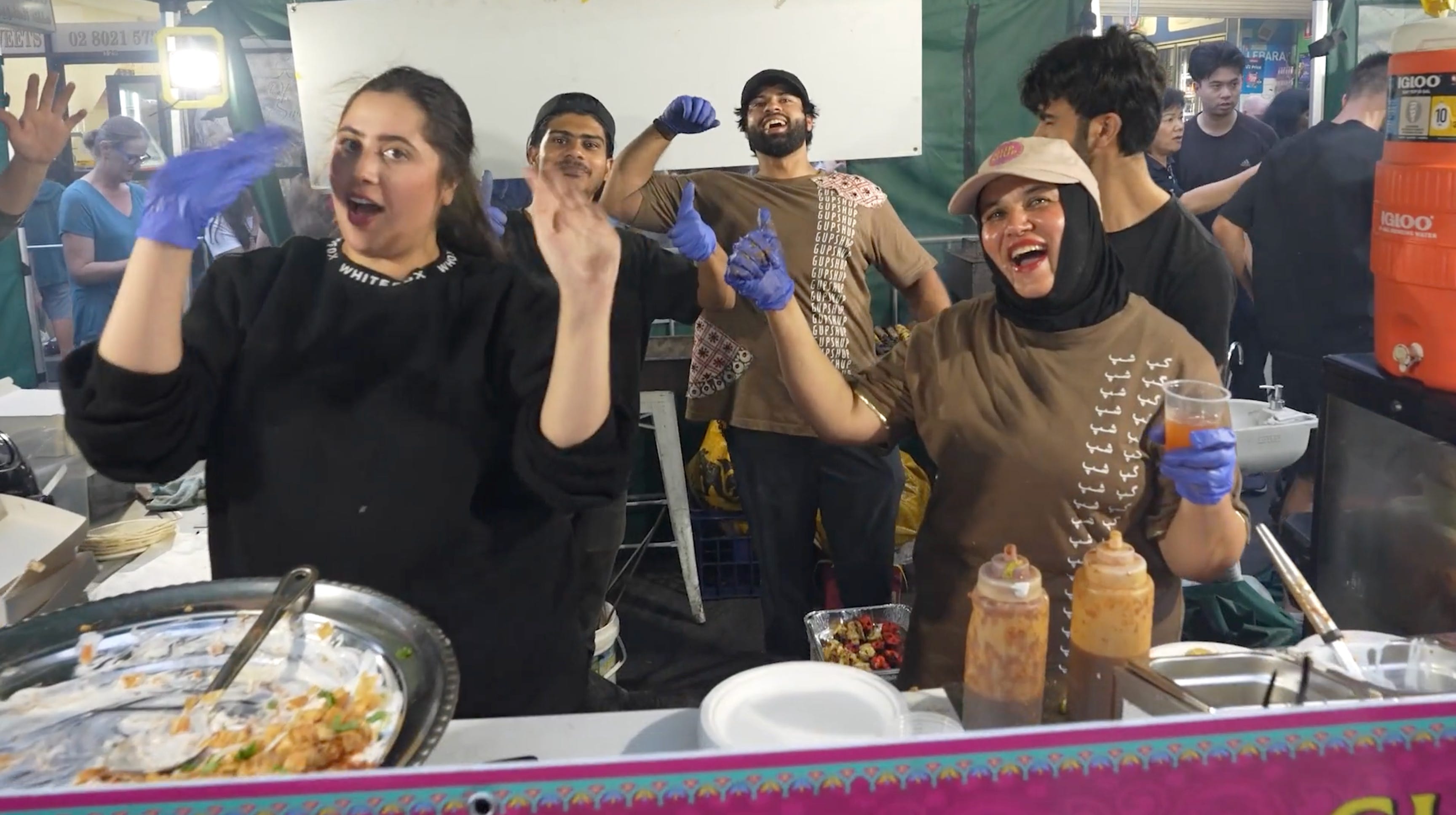
None of these demands naïveté. Robust debate about migration levels, social cohesion and security is legitimate in a democracy. But debate untethered from evidence curdles into scapegoating. The Ramadan markets demonstrate a more confident alternative: a society secure enough to celebrate plurality. More than half the attendees are not Muslim. Many arrive curious, unsure what Ramadan entails, and leave with a fuller understanding of neighbours previously reduced to headlines.
Western Sydney’s night markets are, in miniature, foreign policy made domestic. They are soft power embodied: food as diplomacy, hospitality as strategy. The glow from Lakemba travels further than its fairy lights. It speaks to Jakarta and Kuala Lumpur, to London and Ottawa, to a region negotiating its own tensions between faith and modernity.
The choice before Australia is neither abstract nor distant. It is visible each evening when the fast breaks and strangers share tables. To defend that table is to defend an idea of the nation expansive enough to include differences without dissolving cohesion. To erode it is to narrow both identity and opportunity.
History suggests that nations prosper not by policing the boundaries of belonging, but by enlarging them. Ramadan in Lakemba is not a threat to Australian values. It is a testament to them. In the hum of conversation after sunset lies a strategic truth: inclusion is strength, and prejudice, however loudly voiced, is weakness dressed as certainty.
In an era of geopolitical flux, Australia’s advantage lies in its pluralism. The region’s future—economically, strategically, culturally—will be shaped by societies capable of holding diversity without fear. Lakemba’s lights offer a modest but radiant blueprint.
 | A guest post by
|