


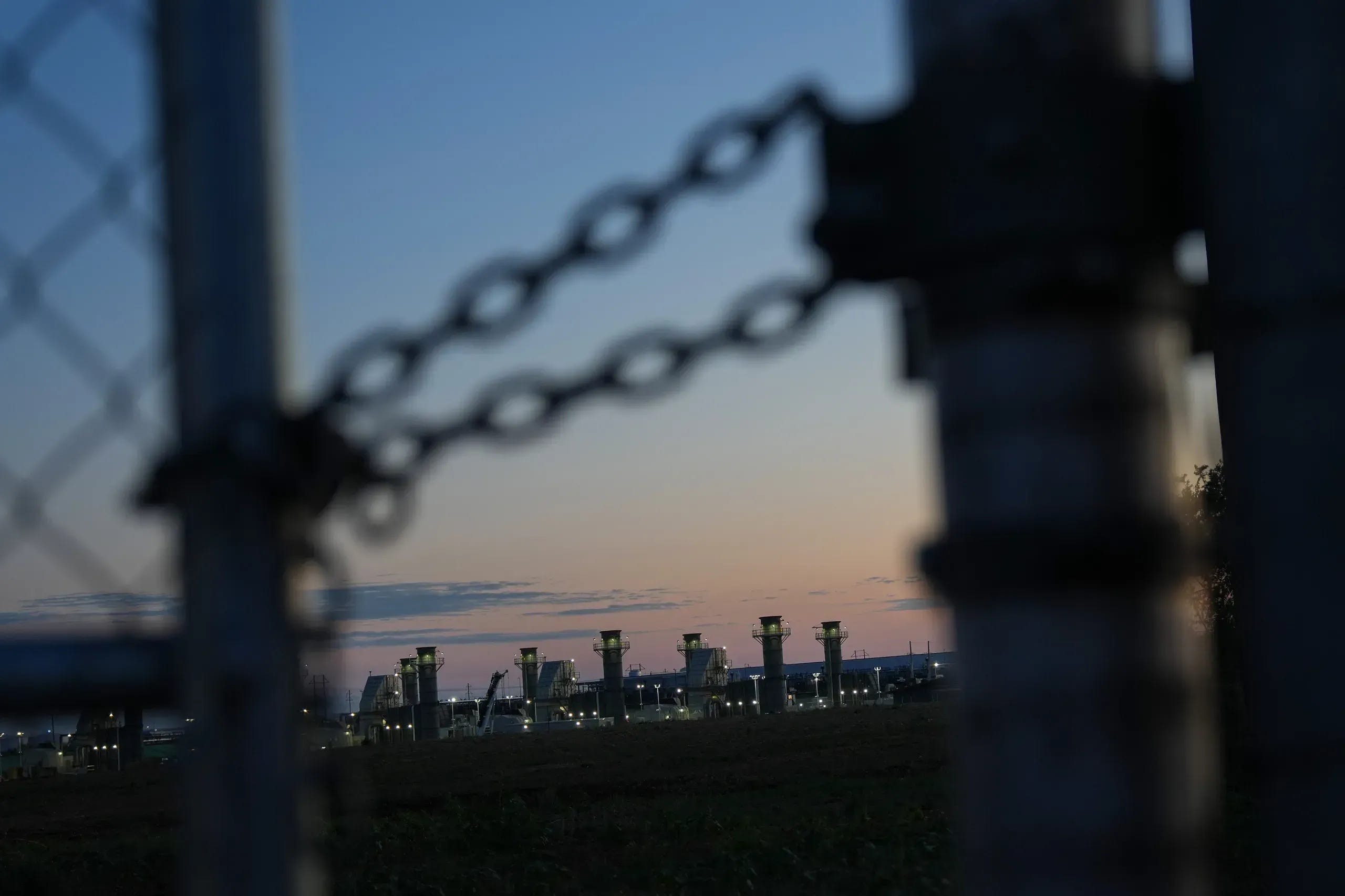
Whether rural or urban, red or blue, more communities are pushing for a pause on these facilities that threaten our air, water, jobs, and electric bills.
These days, it seems as though there are new data centres being proposed and built everywhere.
Tech companies have long relied on these gigantic server warehouses to process massive amounts of digital data. But a race to develop AI, championed by President Donald Trump, has fed a sharp surge in construction.
The problem is, no one really wants to live near one. Three-quarters of Americans surveyed in August say they oppose data centres. That's up from 42 per cent a year earlier.
Data centres use up lots of land—largely in rural America. They use inordinate amounts of water for cooling, eat up power and pollute our air, and generate heat in an already-warming climate. So anyone concerned with their most basic needs—land, water, air, electricity, and the climate—is justifiably concerned about data centres.
Data centres are also physical symbols of the way in which AI companies are gambling away our economic stability.
“They are pushing to move as quickly as possible, to throw as much money at this as possible, basically offering open bribes to governments at all levels—local, state, and federal—to get these things approved and built,” Thomas Meyer, Deputy Political Director at Food & Water Watch, told me.
Even mainstream economists are warning about a massive “AI bubble”, which could take the entire system down with it when it bursts. (South Korea, where that bubble may already be bursting, offers a real warning to the United States.)
The good news, Meyer says, is “there has been tremendous grassroots pushback and opposition to data centres in all parts of the country.” Meyer's organisation is one of hundreds that have joined the newly formed Stop Data Centres Coalition, which unites local fights against data centres in urban and rural areas across the country. Many of these struggles have enjoyed varying degrees of success.
What's really needed is a national moratorium on data centres, as outlined in a letter to Congress signed by the coalition's partners.
Partisan gridlock in Congress and President Trump's full-throated support of AI companies stand in the way of a national ban for now. But this spring, environmental organisations defeated a bill called the “Protect American AI Act” that would have carved out environmental loopholes for data centres.
Meanwhile, activists are pushing ahead at the state and local levels.
Residents in Maine pushed legislators to pass what would have been the first statewide moratorium on data centres earlier this year (although Governor Janet Mills vetoed the bill).
The fight against data centres fared better in New York, where state lawmakers passed a similar moratorium. Governor Kathy Hochul, who has championed AI technology, has yet to sign the bill. But in the meantime, she signed an executive order issuing a one-year pause to allow time to develop regulations. “We are still pushing her to sign that bill because it's a bit stronger than the executive order,” said Meyer.
Meyer pointed out that more than a dozen states are considering similar moratoria, and bans have already taken effect in many local communities. “Several hundred places have enacted moratoriums of different kinds of shapes and sizes,” said Meyer—including Sarasota County in Florida and the cities of Minneapolis and Spokane. Monterey Park, California, stands out for being the first in the nation to enact a permanent ban passed by voters.
Trump unashamedly centres industry talking points in his executive order, casting data centre construction and AI technology as a “race” to be won. But the real race appears to be for tech companies to build data centres in as many communities as possible before residents can stop them.
And that's exactly why we need a moratorium.
