


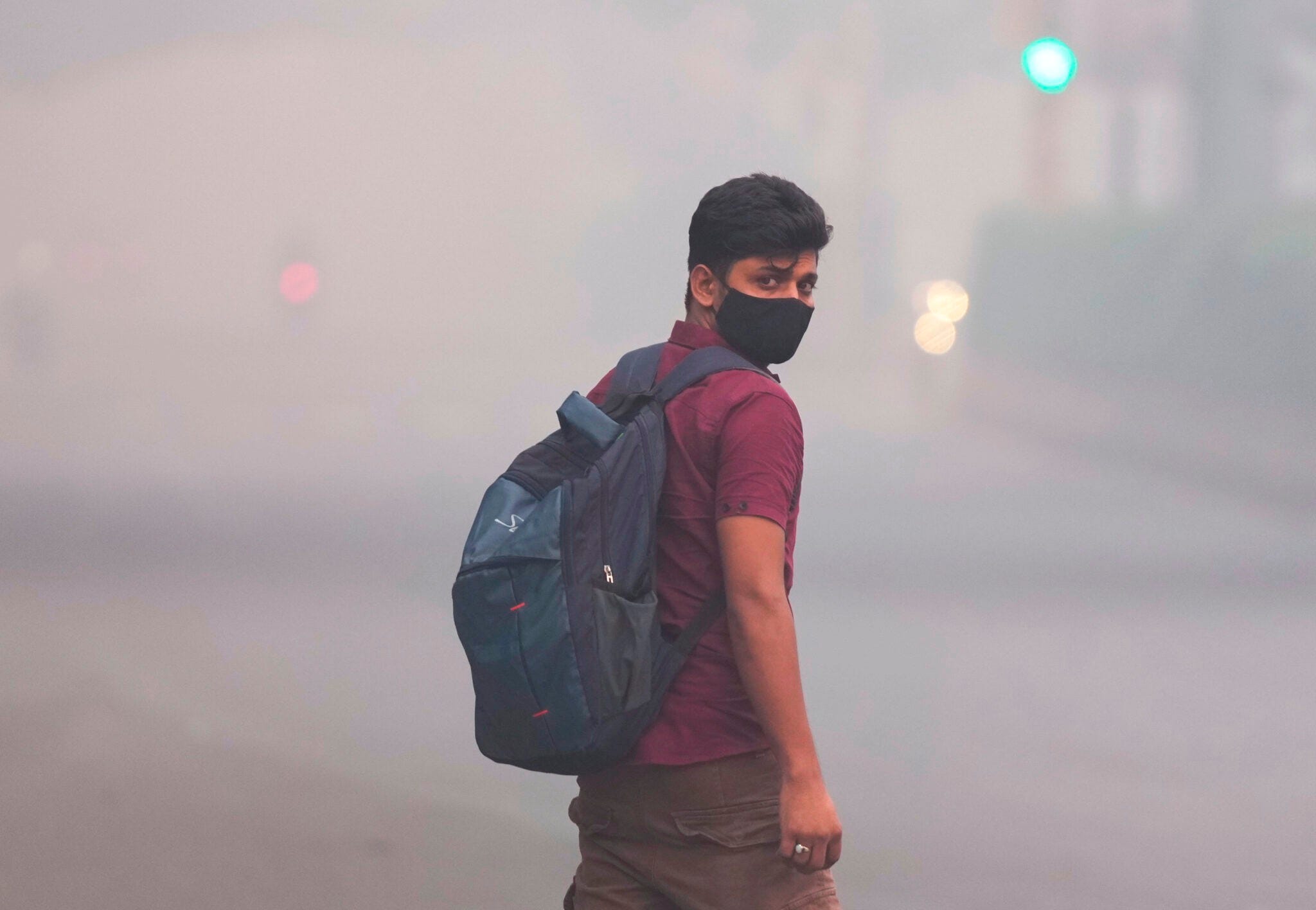
India’s capital, Delhi, witnessed a massive deterioration in its air quality over the weekend, making its air unsuitable for human living and a potential public health hazard after the large-scale lighting of firecrackers during Diwali festivities.
Delhi was clouded in thick smoke on Sunday and Monday, with various places recording zero visibility with no prospects of improvement in the situation in the coming days.
According to India’s Central Pollution Control Board (CPCB), during the festivities over the weekend and on Monday, various places in Delhi recorded an Air Quality Index (AQI) of over 400.
According to the CPCB, an AQI up to 50 is considered good for humans, and anything beyond 300 is considered hazardous and toxic for human living.
Delhi and the National Capital Region (NCR) have a population of over 23 million.
The AQI indicates the presence of various pollutants in the air at a given time, with each country having its own standards. According to the WHO, it is measured as per the presence of particulate matter, or PM2.5 and PM10, in the air, which should not exceed 15 micrograms per cubic metre (or µg/m³) and 45 µg/m³, respectively, for a 24-hour period.
According to the WHO, the level of fine inhalable particulate matter measuring 2.5 micrometres, or PM2.5, is crucial to judge the quality of air for human breathing. PM2.5 can penetrate deep into the lungs and enter the bloodstream, causing various kinds of respiratory and health problems.
According to the DPCC data, the PM2.5 concentration in some parts of Delhi was 993 micrograms per cubic metre on Monday morning, hours after the night of Diwali. The WHO’s safe level says it should not exceed 15 micrograms per cubic metre.
Various sources have questioned the CPCB data, claiming it was manipulated to show less pollution in order to avoid public anger and criticism over the government’s failure to control pollution. They claimed the AQI levels to be several times higher than the official levels, with some claiming it crossed the 1000 mark.
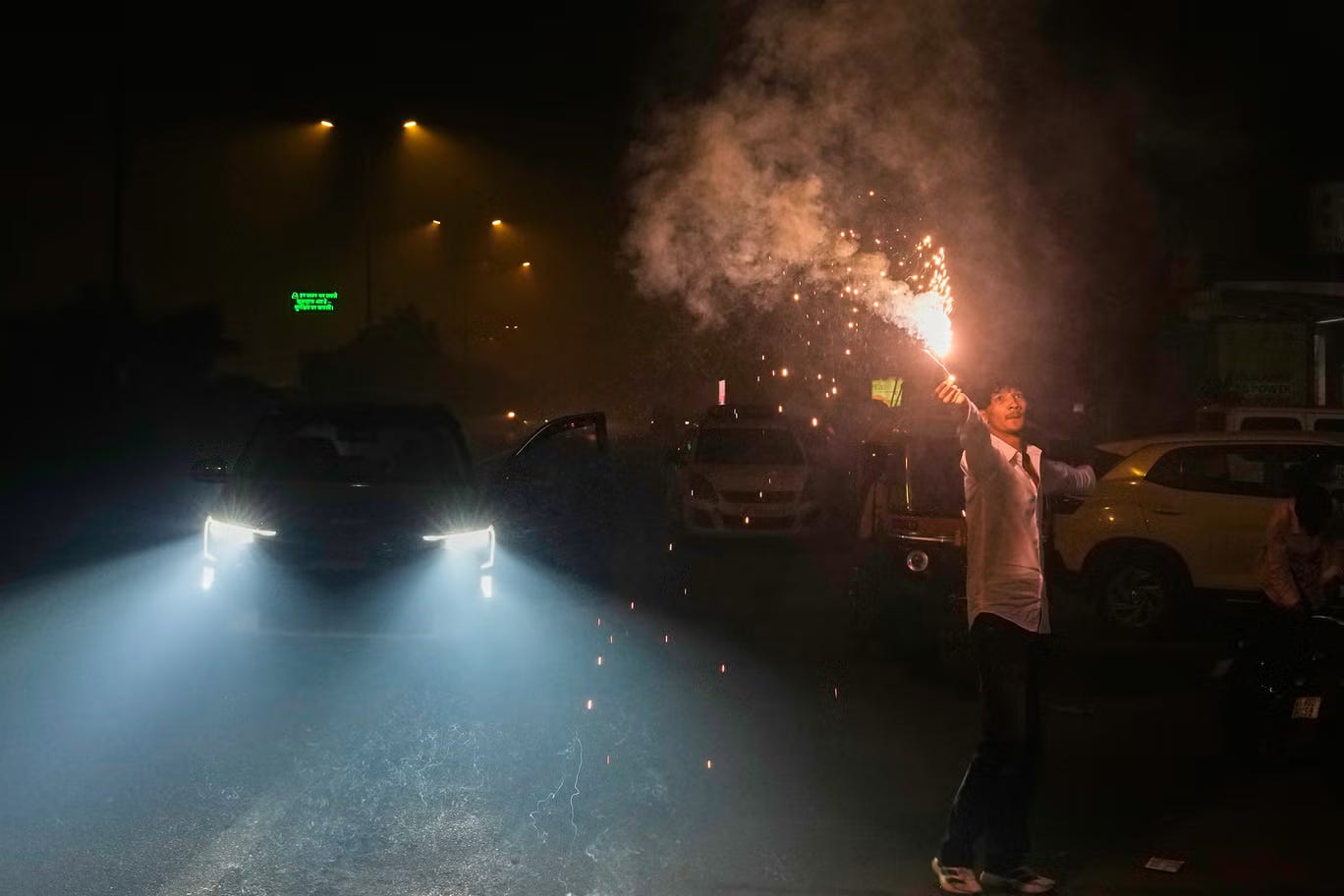
India’s Supreme Court has repeatedly imposed a ban on the sale and lighting of firecrackers, calling it the main source of air pollution during Diwali.
However, the ruling Hindu-supremacist Bharatiya Janata Party (BJP) has been reluctant to impose the ban for populist reasons. Blaming other reasons for the pollution and toxicity of the air in Delhi, the BJP calls firecrackers essential for Diwali festivities.
Air pollution is a public health hazard.
Youth movements and opposition parties have called for accountability over the failures of the government to take effective measures to control the rising pollution levels in Delhi and other major cities in the country.
Calling the rising air pollution a public health hazard which affects the poor and working classes the most, the Democratic Youth Federation of India (DYFI), a left-wing youth movement, organised a demonstration on Wednesday, November 11, in Delhi against the government’s failure to control air pollution.
Various student organisations and members of civil society had held a press conference last week demanding necessary measures before Diwali to control pollution in the city, claiming clean air is a fundamental right of the people.
Though lighting firecrackers remains the main source of severe air pollution in Delhi during Diwali, it is not the only source. Delhi has high vehicular and industrial emissions, which, during winter in particular, make the air hazardous due to weather conditions.
Delhi is one of the most polluted cities in the world. Every year millions are affected emissions, and hundreds of thousands of people die in India due to respiratory diseases mainly attributed to rising air pollution.
The students and activists also questioned the measures taken by the government to mitigate the effects of pollution on people as “half-hearted” and “knee-jerk reactions”affected, to a perennial problem.
Delhi’s BJP government had earlier announced restrictions on constructions and vehicle movement in the city and ordered shutting down schools and asked the workplaces to switch to partial work from home mode during the winter season.
Student movements questioned the measures, claiming it completely bypasses the concerns of the poor and working population in the city who face actual challenges to their health and livelihoods due to the pollution.
These classes have no means to protect themselves from air pollution and cannot shut themselves up inside their homes due to livelihood issues, and their concerns must be prioritised, the speakers in the press conference highlighted.
The government should immediately begin a systemic policy change to curb the pollution in Delhi and the rest of the country, including better regulations on industries and vehicle emissions, apart from addressing seasonal issues, such as firecrackers, said K Gopika, vice president of the Jawaharlal Nehru Students Union (JNUSU),said K. talking to the Left View.