


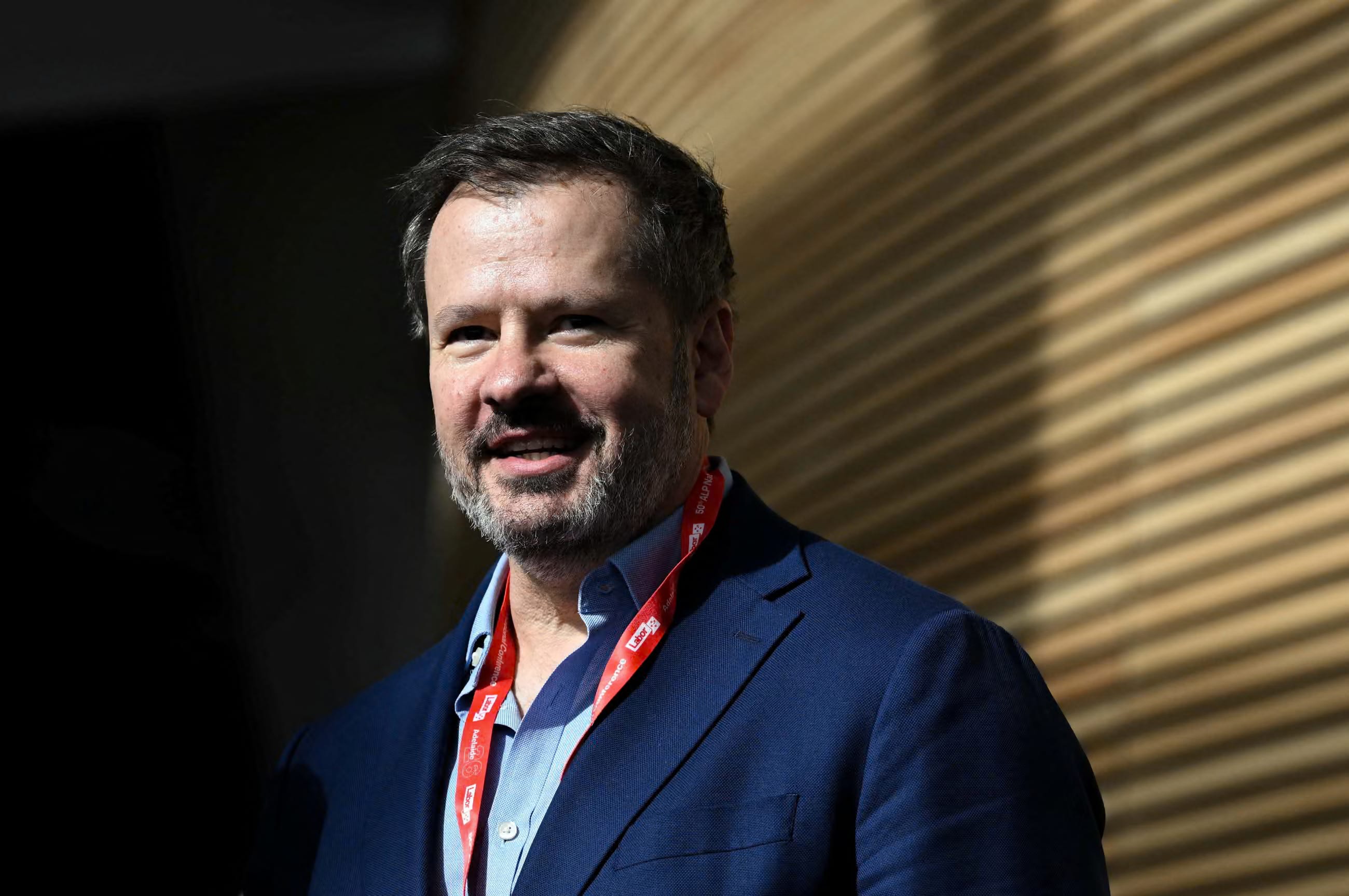
The 50 Australian Labor Party National Conference in Adelaide was supposed to be a showcase of unity. Instead, it became a theatre of procedural assassination—and the man at the centre of it, Ed Husic, has delivered the most consequential challenge to Labor’s foreign policy orthodoxy in a generation.
Husic’s crime? He drafted a resolution that dared to speak the unspeakable. His proposed amendment would have recognised a United Nations inquiry determining that Israeli authorities had “deliberately targeted Palestinian children, resulting in genocide and atrocity crimes in the Gaza Strip and war crimes in the West Bank.” It called for trade sanctions, prosecution of dual nationals serving in the Israel Defence Forces, and full diplomatic ties with the State of Palestine.
The motion never reached the floor. Not because it lacked merit. Not because delegates opposed it—indeed, one NSW Labor MP said Husic’s proposal had the “personal” support of most conference delegates.
It died because factional powerbrokers, including senior ministers Penny Wong and Richard Marles, applied extraordinary pressure to potential seconders, culminating in the Maritime Union of Australia withdrawing its support at the eleventh hour. Two separate backers pulled out under party pressure.
Husic’s response was as raw as it was resonant: “They can put me in the freezer, I don’t give a shit.”
This was not a failure of democracy. It was democracy’s deliberate suspension. The party machine—that self-perpetuating organism of patronage and control—treated moral dissent as an existential threat. The leadership’s fear was not of debate but of what debate might reveal: that the party’s official position is intellectually and morally unsustainable; that the grassroots membership rejects the leadership’s cautious incrementalism; that the gap between professed values and strategic accommodations has become unbridgeable.
Husic diagnosed the pathology with surgical precision. The “traumatised” party culture inherited from the Rudd-Gillard years means “anything that looks like a debate is a schism, a difference, a divide that means that the government might topple over.” This is not strength. It is institutionalised cowardice—a party so terrified of its own shadow that it cannot tolerate a conversation about children being deliberately targeted in a war zone.
The battle over Husic’s motion was, at its deepest level, a battle over vocabulary. The foreign policy establishment has long deployed a carefully calibrated lexicon: “right to defend,” “proportionality,” “peace process,” “two-state solution.” These phrases constitute a regime of truth that determines what can be meaningfully said. Within this regime, “genocide” is literally unspeakable—not because it is empirically false, but because its utterance would shatter the discursive framework within which Australian policy operates.
Husic’s semantic intervention destabilises this regime by introducing terms from a different epistemic order—international criminal law, human rights absolutism, the moral vocabulary forged in the crucible of the Holocaust and the anti-apartheid movement.
When “genocide” and “apartheid” enter the party’s internal discourse, they carry with them the demand for a different kind of response. The old vocabulary allows for cautious diplomacy. The new vocabulary demands sanctions, prosecutions, ruptures.
The leadership’s countermove was a masterclass in procedural theatre. Instead of Husic’s motion, the conference witnessed a carefully choreographed performance of unity: Jewish MP Josh Burns and Palestinian-heritage MP Basem Abdo jointly endorsing the official platform. This was multiculturalism as political prop—a symbolic display designed to crowd out dissent by creating the impression that the issue had been addressed through proper channels.
But the performance could not conceal the reality. The Israeli embassy had already condemned the draft platform for dropping a line about forcing Hamas to disarm. The platform that passed—criticising illegal settlements, calling for Israel to comply with obligations as an occupying power—was itself a significant shift. Yet it was a shift achieved through suppression, not deliberation.
Husic’s Gaza motion was not an isolated act. It was the culmination of a sustained campaign that has seen him challenge party orthodoxy on multiple fronts. In June 2026, he launched the most significant internal criticism of the $368 billion AUKUS submarine deal since its inception, warning that sluggish US production—currently between 1.1 and 1.2 Virginia-class submarines annually, well below the target rate of 2.33—and the “transactional nature” of the Trump administration had put the deal at risk. “We need to be open as a nation that we are not going to get the deal that was promised to us,” he declared.
On economic policy, he has demanded a 25 per cent windfall tax on gas exports, backed by modelling from The Australia Institute showing it would inject approximately $17 billion annually into federal revenue. The existing Petroleum Resource Rent Tax, he argues, is “kind of like Old Yeller—it’s had its day.” Multinational gas giants, he says, have had “an obscenely sweet deal for way too long.”
Each rebellion reinforces the others. Together, they constitute a comprehensive challenge to the party’s governing logic—its alliance dependencies, its tax orthodoxy, its fear of moral conviction.
What makes Husic invulnerable to the usual mechanisms of party discipline is his electoral base. Chifley, his Western Sydney electorate covering working-class suburbs like Mount Druitt, Rooty Hill, and Blacktown, is a “Very Safe” Labor seat with a massive post-election margin. Its diverse, multicultural population—with a prominent Muslim community—experiences the Gaza conflict not as a distant foreign policy issue but as an existential moral crisis.
Husic’s willingness to use the language of genocide and apartheid is not simply a personal moral choice; it is an act of representation, giving voice to the moral experience of his constituents.
The structural parallels with Labor’s Vietnam War split are unmistakable. Both conflicts involved a Western ally generating massive civilian casualties. Both divided the Australian public along generational and ideological lines. Both placed the ALP under pressure from a mobilised movement demanding a break with the US alliance framework. And in both cases, the party leadership initially resisted, fearing strategic catastrophe.
But the current crisis may prove more profound. The Vietnam era involved conscription, which directly threatened young Australians. The Gaza conflict does not—yet the moral mobilisation has been more sustained, more diverse, more embedded in durable demographic constituencies. The party’s leadership is replaying a script written in the 1960s, hoping for a different ending. History suggests otherwise.
This is not merely an Australian story. The suppression of Husic’s motion reflects a deeper systemic tension between bureaucratic statecraft and humanitarian rhetoric that plays out in democracies worldwide. States prioritise geopolitical alliances, intelligence sharing, and trade stability over unconditional human rights language.
Political structures naturally suppress internal moral dissent to project stability to foreign allies and domestic voters. Terms like “human rights” and “international law” are weaponised selectively based on strategic interests rather than universal application.
The irony is that Australia has already formally recognised the State of Palestine—joining the UK, Canada, and France in September 2025. The Albanese government has delivered the most significant pro-Palestine policy changes in Australian history.
Yet the leadership remains terrified of the language that would give that policy moral coherence. It has made the right move but refuses to speak the truth that justifies it.
Husic’s rebellion marks a watershed. The old bipartisan consensus on Israel—that reflexive alignment that treated the Jewish state as an untouchable strategic ally—is shattered. The question is no longer whether Palestine should be recognised but when and under what conditions. The demographic forces—the growing electoral weight of multicultural constituencies, the generational shift in moral sensibilities—are long-term trends no leadership can permanently resist.
The party machine suppressed Husic’s motion. But it cannot suppress the forces that produced it. The freezer may be cold, but it is not empty. And as Husic has demonstrated, even the deepest freeze cannot silence a conscience that refuses to be frozen.
The question for Labor—and for democracies everywhere—is whether it will continue to sacrifice moral clarity on the altar of strategic comfort, or whether it will find the courage to debate the issues that truly matter. Husic has done his part. The rest is up to the party.

Ed Husic should probably resign from the Labor Party and stand as an Independent. If he truly represents his electorate and it sound like he does, he would would keep his seat by a solid majority and the snivelling weak kneed Labor Party would lose that seat.
I personally think the party political system is the antithesis of democracy and an elected member who actually does represent the voters who elected them should be treasured.