


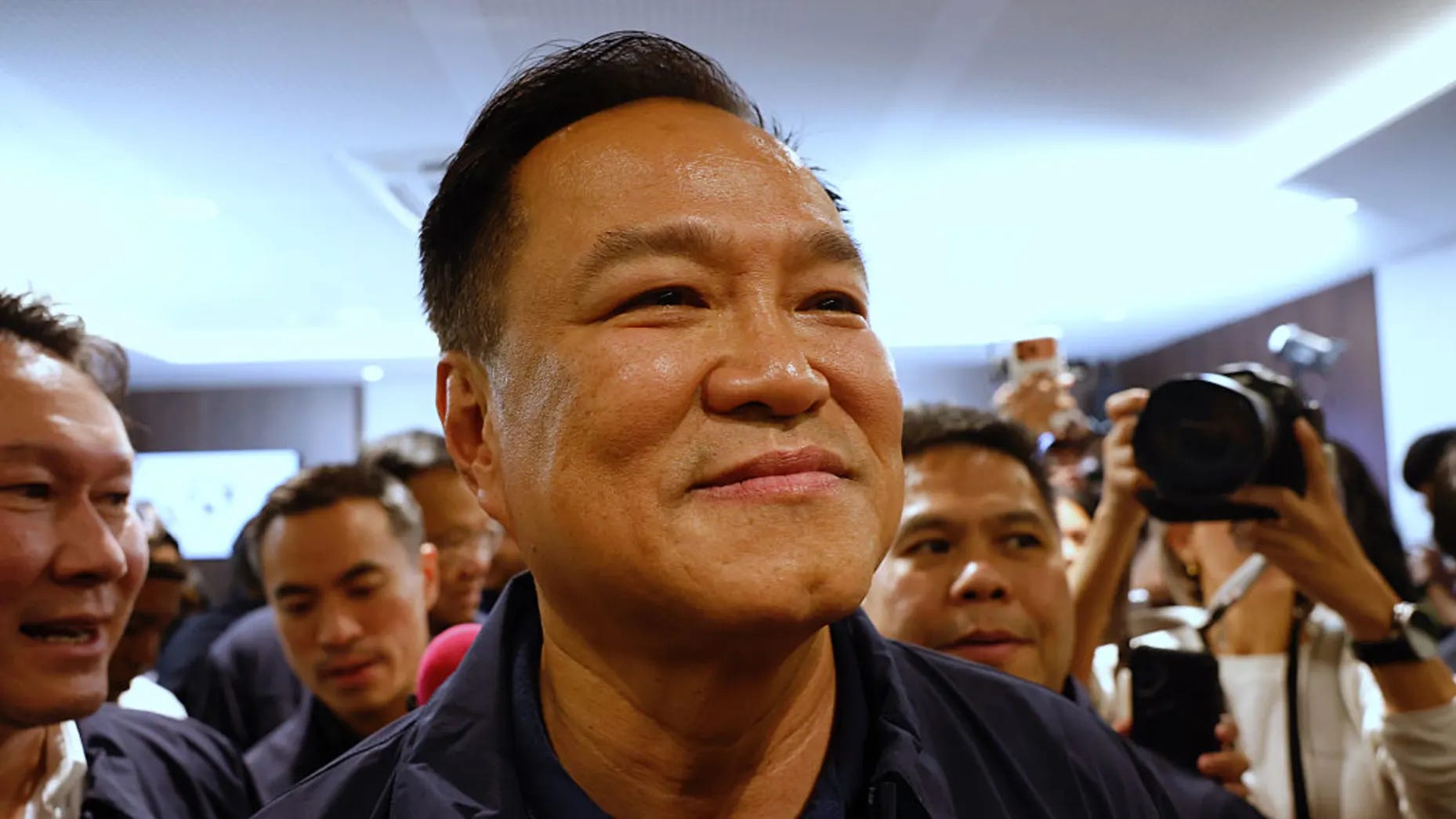
Thailand’s latest electoral moment has been celebrated by some as a return to stability, even a vindication of democratic endurance. That reading is comforting—and dangerously incomplete. The February 2026 victory of Anutin Charnvirakul, powered by the Bhumjaithai Party’s surge, is not a democratic renaissance but a revealing snapshot of how power now works in Bangkok: electoral in form, conditional in substance, and strategically consequential far beyond Thailand’s borders.
At first glance, the numbers look decisive. Bhumjaithai transformed itself from a perennial coalition junior into a dominant parliamentary force. Yet the context matters more than the count. This election unfolded after months of heightened nationalism sparked by the 2025 Cambodia–Thailand border clashes, a period when security anxieties crowded out reformist debate. History shows that external conflict often consolidates internal power, and Thailand proved no exception.
The military’s standing rose sharply during the crisis, and parties associated with institutional continuity benefited from the patriotic tide. Stability became the ballot’s emotional currency, not accountability.
Behind the campaign spectacle sits an institutional architecture designed to discipline popular choice. Thailand’s 2017 constitution, drafted under military rule, entrenches unelected veto points that shadow every election. The Senate remains fully appointed. Independent agencies, in theory neutral, have repeatedly intervened to dissolve parties and ban leaders. The Constitutional Court’s dissolution of the reformist Move Forward Party in 2024 was only the most dramatic example of a longer pattern: electoral mandates granted by voters, then revoked by law. The result is a democracy where elections test tolerance rather than transfer authority.
Economics amplifies the stakes. Thailand is underperforming in a region defined by dynamism. Growth hovered around 1.9 per cent in 2023 and is forecast by the IMF to remain below 3 per cent through 2025, well behind regional peers. Household debt has climbed to roughly 89 per cent of GDP, the highest level on record, constraining consumption and fuelling social anxiety. Investors notice. While Thailand still attracts headline investment in renewables and cloud infrastructure, persistent political uncertainty keeps a risk discount on Thai assets. Stability without legitimacy has proved an expensive compromise.
Civil society bears the heaviest cost. Since 2020, prosecutions under lèse-majesté, sedition, and national security laws have hollowed out civic space. International monitors now classify Thailand’s civic environment as “repressed,” with activists, students and lawyers facing long detentions for peaceful expression. This legal pressure reshapes politics as surely as any coup.
Debate migrates from parliament to the courtroom; dissent from the street to the prison cell. A system that treats participation as a threat cannot cultivate democratic resilience.
Anutin’s ascent reflects this ecosystem. His victory rested on three interlocking forces: nationalism sharpened by border conflict, alignment with entrenched elites seeking predictability, and a formidable patronage network embedded in rural constituencies. Bhumjaithai mastered the mechanics of Thai clientelism, recruiting local power brokers and defecting MPs who could deliver votes precinct by precinct. Reformist parties, strong in urban centres and online discourse, struggled to match this ground game. The outcome was not an ideological landslide but a triumph of machinery.
For Southeast Asia, the implications are strategic. Thailand has long been a diplomatic hinge within ASEAN, bridging mainland and maritime interests, balancing major powers, and lending weight to consensus. A domestically constrained Thailand, dependent on elite bargains and nationalist sentiment, is less able to lead.
The 2025 Cambodia border crisis already exposed ASEAN’s fragility, pushing Phnom Penh to internationalise the dispute and inviting great-power involvement. When Bangkok hesitates, and ASEAN centrality erodes.
Comparisons sharpen the warning. Other hybrid regimes—Bangladesh, Pakistan—show how judicialised politics can entrench control while draining credibility. Courts become arbiters of power, not guardians of rights. Investors respond predictably; ratings wobble, and capital looks elsewhere. Thailand risks drifting into the same pattern: formally plural, functionally managed. In a region competing for supply chains, talent and trust, that drift carries tangible costs.
None of this is inevitable. Thailand’s institutions still contain reformist potential, and history offers examples of gradual recalibration.
Indonesia’s post-Suharto transition and Malaysia’s recent electoral swings—both show how negotiated restraint can reopen political space without destabilisation. For Thailand, that would mean curbing unelected vetoes, professionalising judicial appointments, and easing laws that criminalise peaceful dissent. Even incremental steps—transparency in the Senate, prosecutorial restraint, targeted amnesties—would signal intent.
Economic policy could reinforce that signal. Linking investment incentives to governance standards, accelerating digital and green infrastructure, and addressing household debt through coordinated relief would rebuild confidence at home and abroad. Analyses from the IMF to the OECD have already argued that governance reform is inseparable from sustainable growth in Thailand’s case. Prosperity cannot be insulated from politics.
For partners, the response demands tact rather than theatrics. Quiet diplomacy, institutional cooperation, and conditional economic engagement have more traction than public admonition. ASEAN’s own traditions favour persuasion over punishment, and those traditions remain relevant. Supporting judicial exchanges, parliamentary capacity-building, and regional development projects can strengthen Thai institutions without feeding nationalist backlash.
Ultimately, Thailand’s democratic question is also a regional one. A country of 70 million at the heart of mainland Southeast Asia cannot retreat into managed politics without consequences for trade routes, security arrangements, and the credibility of ASEAN itself. Democracy here is not an abstract virtue; it is a strategic infrastructure.
The 2026 election, then, should be read not as closure but as a warning light. Stability secured through constraint is brittle. Legitimacy deferred eventually demands payment, often at a higher price. Thailand’s future—and Southeast Asia’s—will depend on whether law is reclaimed as a shield for participation rather than a weapon against it. The choice remains open, but time, like public trust, is not infinite.
