


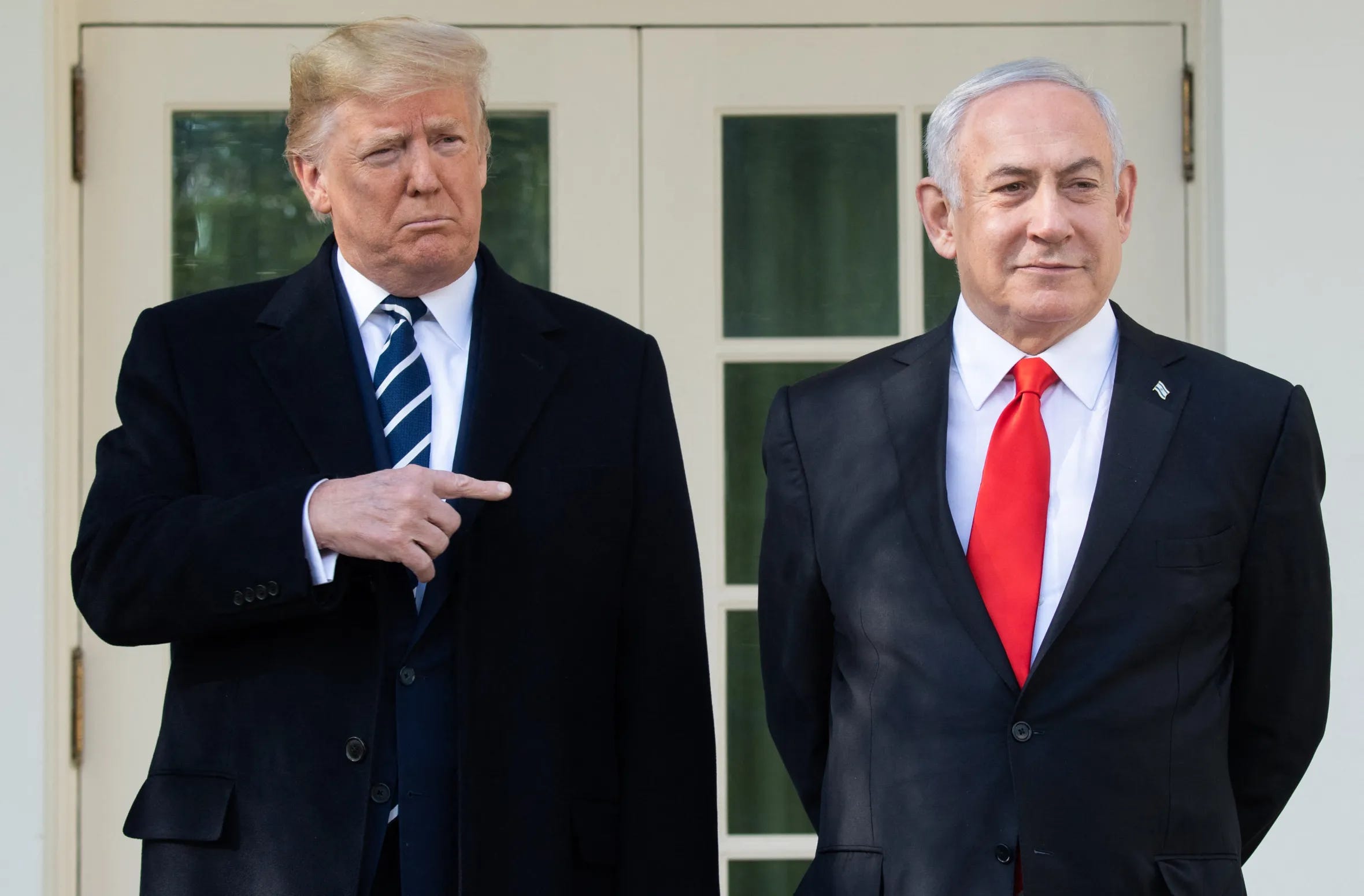
Public rows are usually signs of weakening relationships. The increasingly bitter exchanges between Washington and Jerusalem after the Iran—US memorandum of understanding tell a different story. The insults, accusations of betrayal and theatrical outrage do not signal divorce. They reveal something far more uncomfortable: two deeply intertwined projects pulling in opposite directions while remaining incapable of separation.
An exhausted empire and an anxious frontier are arguing over how to survive. The spectacle has become increasingly difficult to ignore. Israeli voices accuse Washington of sacrificing an ally to accommodate Tehran. American officials warn Israel not to “bite the hand that feeds it.” Questions over Benjamin Netanyahu’s judgement mingle with accusations that Donald Trump’s diplomacy amounts to appeasement. Yet beneath the public friction lies a structural reality neither side can easily escape. Each believes the other is indispensable. Strikingly, both are correct.
Israel’s dependence is measurable. Since 1948, the United States has provided more than US$300 billion in assistance, adjusted for inflation. Annual military aid under the current memorandum stands at US$3.8 billion. American diplomatic cover has proven equally vital, with Washington exercising its veto dozens of times at the United Nations Security Council to shield Israel from punitive resolutions. During successive crises, emergency shipments of precision-guided munitions and interceptor missiles have underwritten Israeli military operations.
But dependency runs in both directions. For decades, Israel has functioned as America’s most capable strategic outpost in West Asia. Intelligence sharing, cyber capabilities and military integration have made the relationship unique. In a region where empires historically sought reliable footholds to secure trade routes and contain rivals, Israel emerged as Washington’s most durable anchor. The alliance allowed successive American administrations to project influence without relying exclusively on direct occupation.
That symbiosis produced extraordinary advantages. Yet it also generated contradictions. Empires seek stability. Frontiers thrive on insecurity.
Washington’s priorities are increasingly shaped by imperial exhaustion. Endless commitments in Europe, competition with China in the Indo-Pacific, ballooning debt and political fatigue at home have transformed strategic calculations. The American electorate has grown weary of permanent crises in the Middle East. Rising fuel prices translate into inflation. Inflation translates into electoral pain. Stability has become an economic necessity rather than merely a diplomatic preference.
Israel’s incentives are fundamentally different. Security politics has become woven into every dimension of Israeli society. Military mobilisation, settlement expansion and confrontation with regional adversaries have created a political ecosystem in which de-escalation often appears more dangerous than conflict. The logic of perpetual emergency rewards demonstrations of strength and punishes restraint. Any arrangement leaving Hezbollah, Hamas or Iranian influence intact is viewed by many not as a compromise but as an existential failure.
That divergence has become increasingly visible after the Iran—US understanding. Washington seeks breathing space. Israel sees strategic suffocation. The feud, therefore, is not a rupture. It is the exposure of competing timelines. American policymakers increasingly need order. Israeli leaders increasingly fear order.
For Washington, regional calm allows concentration on larger contests with China and Russia. For Israel, regional stabilisation risks freezing unresolved conflicts and preserving adversaries that many believe must be permanently weakened. One side sees diplomacy as a necessity. The other often sees it as a danger.
This creates a remarkable paradox. The United States possesses enormous leverage over Israel in theory. Yet exercising that leverage carries profound political risks. The alliance occupies a powerful place in domestic politics, and any administration perceived as abandoning Israel faces backlash from Congress, lobbying networks and electoral constituencies. The result is an empire possessing immense power but limited freedom.
Israel faces an equally painful dilemma. Without American resupply, intelligence support and diplomatic protection, sustaining a prolonged multi-front conflict would become extraordinarily difficult. Yet dependence itself generates anxiety. Every hint of American restraint is interpreted in some quarters as abandonment. Every diplomatic overture to adversaries becomes evidence of betrayal.
Both sides fear losing the other. Both sides resent needing the other. That mutual insecurity creates a relationship simultaneously durable and brittle.
History offers uncomfortable echoes. Great powers and frontier projects have often travelled together. The British Empire wrestled with increasingly independent settler outposts whose ambitions frequently exceeded London’s appetite for conflict. Frontiers demanded expansion. Imperial centres sought management. Over time, the tensions became impossible to conceal.
Something similar now appears to be emerging. Repeated crises carry costs. Energy shocks ripple through global markets. Red Sea disruptions expose vulnerabilities in trade. The Gaza war has transformed international perceptions, accelerating diplomatic realignments across the Global South and complicating America’s effort to maintain moral authority.
Meanwhile, growing frustration inside the United States reflects concerns that regional crises consume political attention and strategic resources needed elsewhere.
The irony is profound. Neither Washington nor Jerusalem appears capable of disciplining the other. American administrations can complain, but struggle to impose limits. Israeli governments can pressure but cannot compel full-scale American commitments. Each can obstruct the other’s ambitions. Neither can enforce complete compliance.
Mutual dependency has become mutual entrapment. This is why resistance movements increasingly frame their struggle not merely against Israel but against the broader architecture sustaining it. In their reading, distinctions between the outpost and its patron matter little. Military aid, diplomatic protection and strategic integration collapse into a single structure. Whether one accepts that framing or rejects it, its influence across parts of the region has become impossible to dismiss.
The real significance of the post-MoU quarrels lies elsewhere. The public arguments reveal not the breakdown of the alliance, but the strain of carrying burdens neither side can comfortably bear. America fears overextension. Israel fears abandonment. Each believes survival depends on the other. Each worries that the other is becoming a liability.
And therein lies the tragedy. Empires decline not only because enemies rise. They decline because commitments become cages. Frontiers panic not only because threats multiply. They panic because dependence breeds insecurity.
The shouting now echoing across the Atlantic and the Levant is therefore less a family dispute than a glimpse into something deeper: a relationship too strategically fused to unravel, yet increasingly unable to agree on where history itself is heading.
That is why the arguments sound so emotional. Because beneath the accusations and wounded pride lies a truth neither side dares to say aloud. The alliance that made both powerful has become the alliance neither side can escape.

Very clarifying! Thank you! Except I wouldn’t call what happened in Gaza “a war” — seems to me it was a settlers’ annihilation genocide for complete take over. Also Jerusalem though occupied, is still a multi national/ethnic city — in negotiating for exclusive Israeli interests Tel Aviv is more appropriate.