


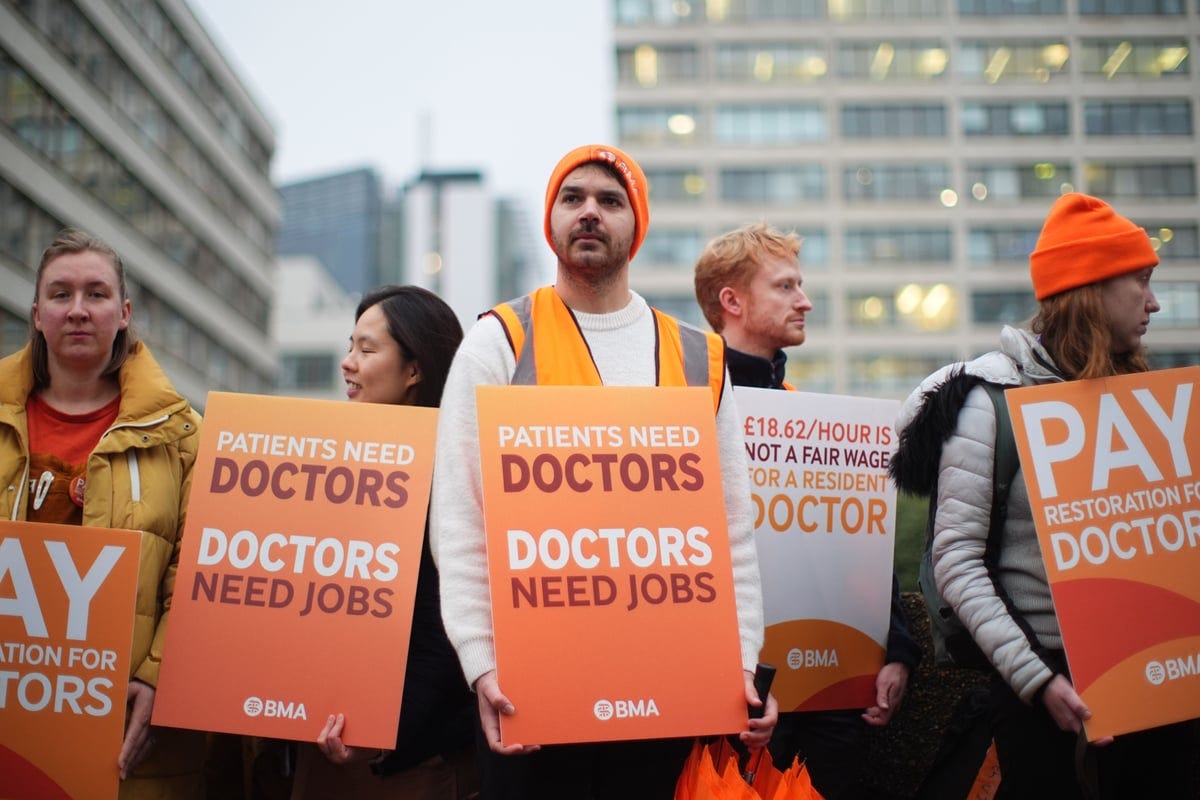
Resident doctors in England are set to strike again from 7-13 April as part of a long-running dispute over health workforce policies, working conditions, and salaries. For over three years, doctors have negotiated and struggled for pay restoration and more jobs, emphasizing that the National Health Service (NHS) cannot function without enough health workers and adequate working conditions.
“Resident doctors have been left with no choice but to strike,” the British Medical Association (BMA) wrote on social media. “Weeks of negotiations with the government have failed to deliver enough progress on pay, with the goalposts being moved at the last minute. We have called six days of industrial action to make the government listen, stop the game-playing, and come back with an offer that delivers fairly on both jobs and pay.”
Despite cautious progress in negotiations with Keir Starmer’s administration over the last few months, the BMA warned that last-minute changes to the government’s offer made it unacceptable. In a letter to Health Secretary Wes Streeting in early April, the association pointed out that after these changes, the offer effectively included less funding in real terms, spread pay increases over a longer period, and created uncertainties about inflation protection.
Instead of addressing doctors’ concerns, Streeting and Starmer opted for repressive measures, threatening to cut 1,000 jobs from the 4,500 included in the offer if the strike is not called off, further fueling anger among physicians. The jobs in question came from the training post quota, representing a key building block in the overall health workforce structure—especially as a chronic shortage of doctors and other health workers leads to long waiting times and other obstacles to care. “The number of training posts available is almost 10% less than the total number of medical graduates, meaning that each year, hundreds of newly qualified doctors are unable to find jobs,” warned Tribune. The placements were cut last week.
Medical experts of all generations criticized the tactic adopted by the government, with some describing it as desperate and “an escalation of Trumpian proportions in its bad faith and questionable logic.”
“The government is playing the tough guy—in unprecedented fashion,” BMJ editor-in-chief Kamran Abbasi wrote of the event. “Yet it doesn’t play tough with technology companies, such as Palantir, or pharmaceutical companies seeking to exploit the UK ‘market,’ or private companies only too willing to make donations to politicians.”
Members of the BMA took to social media to demand the government change course and prioritize the wellbeing of the NHS and its patients. Many emphasized that the strike was a last resort for workers, but they were willing to take such a step to pull the service out of the crisis subsequent governments have pushed it into.
“The NHS is in crisis—and the government’s solution is to remove training jobs, likely pushing even more doctors to leave or work overseas,” MP Jeremy Corbyn echoed their concerns. “The government thinks it is acting tough, but it is the patients who will suffer.”

So sad to read about Labour's Starmer stupid handling of NHS woes. I worked at a prestigious London Hospital in the 1980's as a Fellow and learnt a huge amount from a generous Department in a system under some stress. Things have clearly gotten a lot worse and Starmer acting in character is now only making it "worser"! Strength to the RMO's.