



Peace in Ethiopia arrived not with celebration, but with exhaustion. The guns in the north fell largely silent after the Pretoria agreement of November 2022, yet the quiet that followed has been uneasy, layered with unresolved grief and unfinished justice. For a country that once symbolised African sovereignty and resilience, the past five years have been a reckoning of extraordinary scale—and one whose consequences stretch well beyond its borders.
Since the outbreak of war in Tigray in late 2020, Ethiopia has experienced one of the gravest crises of the 21st century. United Nations investigations documented war crimes and crimes against humanity committed by all major actors, including mass killings, systematic sexual violence, and the deliberate use of starvation as a weapon of war. At the height of the conflict, more than 5 million people across northern Ethiopia faced acute food insecurity, while tens of thousands fled into Sudan. The UN-mandated International Commission of Human Rights Experts warned that the risk of further atrocities remained high even after the ceasefire, particularly in contested areas of Tigray, Amhara and Oromia.
Behind these figures are families who remain displaced and unable to return, survivors of sexual violence still waiting for recognition and care, and communities living under ad-hoc military administrations that regularly curtail movement and services.
Concrete triggers make this an inflection point: the Pretoria agreement’s many unfulfilled commitments—from slow DDR to lingering non-federal forces—coincide with renewed, deadly clashes in Amhara and Oromia, underlining that the ceasefire’s fragility is the present reality, not a distant risk.
These figures are not abstractions. They represent villages erased, families fractured, and a social contract stretched close to breaking point. Yet, as the world’s attention shifted elsewhere, international engagement with Ethiopia moved rapidly from pressure to accommodation. Sanctions were eased, diplomatic relations normalised, and the language of accountability softened—despite clear evidence that abuses continued and that meaningful justice mechanisms were absent.
Human Rights Watch described this moment starkly: short-term political stability was being prioritised over rights-based solutions, entrenching a dangerous climate of impunity.
The dilemma facing Ethiopia is not unique, but it is unusually acute. How does a state emerging from civil war pursue peace without burying justice? How does reconciliation proceed when victims see perpetrators rewarded with silence?
These questions matter not only for Ethiopians, but for the Horn of Africa, already destabilised by war in Sudan, protracted insecurity in Somalia and intensifying climate shocks across the Nile Basin. Ethiopia’s unresolved crisis already ripples beyond its borders—feeding Red Sea security calculations and Gulf competition for influence, and driving dangerous migration flows across the Horn into Yemen and beyond—which converts local impunity into a regional strategic problem.
Ethiopia’s legal obligations are, on paper, robust. The country is party to the Geneva Conventions and core international human rights treaties, as well as the African Charter on Human and Peoples’ Rights. The African Union—headquartered in Addis Ababa itself—has gone further than any other regional body by recognising a collective responsibility to intervene in cases of mass atrocities. Yet the gap between law and lived reality remains stark. Ethiopia’s domestic legal framework does not clearly criminalise genocide or crimes against humanity, and military courts retain sweeping jurisdiction over abuses committed by security forces.
This architecture has left victims with little faith that justice will be done.
The government’s proposed transitional justice policy gestures toward truth-telling, reparations and guarantees of non-recurrence, echoing African Union guidance. But without independent institutions, credible prosecutions or international support, such commitments risk becoming performative. Experience elsewhere on the continent suggests that reconciliation without accountability rarely holds. Rwanda’s post-genocide Gacaca courts, often cited by African scholars, succeeded not because they avoided justice, but because they embedded it within community-level truth and participation.
Too often the language of transitional justice has been performative—a list of ambitions without independent institutions, prosecutions or demobilisation underway—and that gap explains precisely why victims distrust state-led roadmaps that lack enforcement mechanisms.
The lesson is not that Ethiopia should replicate any one model, but that justice must be visible, local and meaningful.
Traditional mechanisms offer promise here. Surveys cited by the Institute for Security Studies show that a large majority of Ethiopians support the use of customary dispute-resolution systems alongside formal courts. Concepts rooted in communal dignity—often likened to Ubuntu—resonate deeply in a society where elders, faith leaders and collective memory still command trust. Harnessed carefully, these traditions could complement legal accountability rather than substitute for it, creating space for acknowledgement, mourning and reintegration.
Memory is not nostalgia; it is political infrastructure—if unacknowledged trauma is left to fester, it becomes a generative force for grievance and politics, so any transitional architecture must prioritise public truth-work and reparative measures as central security policy.
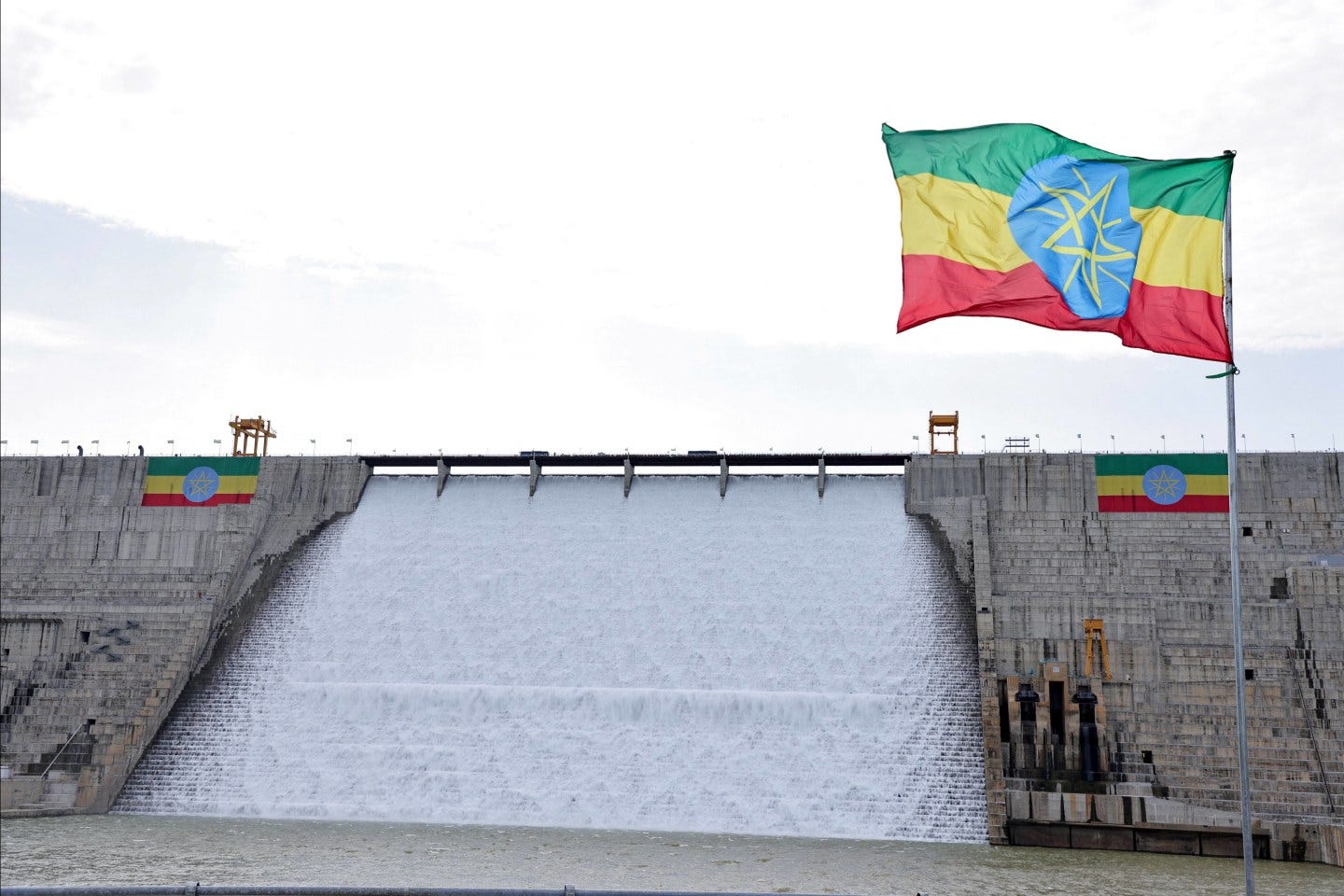
The international dimension cannot be ignored. Ethiopia’s internal conflicts are entangled with regional rivalries, particularly with Eritrea, whose forces have been repeatedly accused by UN investigators of ongoing abuses in Tigray. Meanwhile, disputes over the Grand Ethiopian Renaissance Dam continue to strain relations with Egypt and Sudan, testing international water law and regional diplomacy.
Practically, the AU should deploy a joint implementation-monitoring mechanism with civil-society observers, middle powers (Australia, South Africa, Brazil and others) should tie engagement to discrete human-rights benchmarks, and the UN’s role should be calibrated to provide forensic support and victim-centred reparations programmes rather than open-ended political cover.
Foreign Policy Research Institute suggests that cooperative water governance—rather than coercion—remains the only sustainable path, especially as climate change amplifies hydrological risk across the Nile Basin.
From Washington to Beijing, from Brussels and London to Riyadh, Abu Dhabi and Doha, Ethiopia is too often reduced to a strategic equation: a demographic giant anchoring the Horn, a bulwark against irregular migration, extremism and regional fragmentation, a partner whose cooperation oils the machinery of global order.
This logic resonates across the Global North and Global South alike, uniting European capitals anxious about borders, Gulf states investing in Red Sea corridors, and emerging powers seeking influence across Africa’s fastest-growing markets. Yet history offers a sobering lesson that transcends geography: stability purchased at the expense of justice does not endure. In the Horn of Africa, unacknowledged wounds have repeatedly metastasised into renewed violence, spilling across borders and drawing in neighbours and patrons alike.
The African Union has long cautioned that peace without accountability is a mirage, one that ultimately erodes state legitimacy and regional trust. For a world increasingly interconnected—where displacement, insecurity and economic shockwaves travel effortlessly between Addis Ababa, Amsterdam, and Abu Dhabi—Ethiopia’s unresolved injustices are not a domestic inconvenience but a shared risk.
A durable future, for Ethiopians and for those who engage them, demands a bolder global imagination: one that recognises justice not as a moral luxury, but as the quiet infrastructure upon which real stability is built.
If implementation stalls and localised violence resumes, expect cascading outcomes: revived combat in contested areas, spillover into neighbouring Sudan or Eritrea, and a deep legitimacy crisis that erodes AU authority and deters the very reconstruction finance Ethiopia needs.
There is still an opening. A genuinely inclusive national dialogue, meaningful security-sector reform and a transitional justice process that places victims at its centre could begin to restore trust. International partners, including Australia and other middle powers, have a role to play by supporting African-led mechanisms while insisting that engagement be tied to human rights benchmarks. Silence, in this context, is not neutrality; it is acquiescence.
Ethiopia’s story has never been only its own. As a symbol of African independence, its descent into mass violence shook assumptions far beyond the Horn. Its recovery, if grounded in law, dignity and memory, could offer a different precedent—one where peace is not merely the absence of war, but the presence of justice.
The choice before Ethiopia and the world is simple, and moral: settle for a brittle calm that seeds the next war, or invest now in justice, memory and institutions that make peace durable.

