


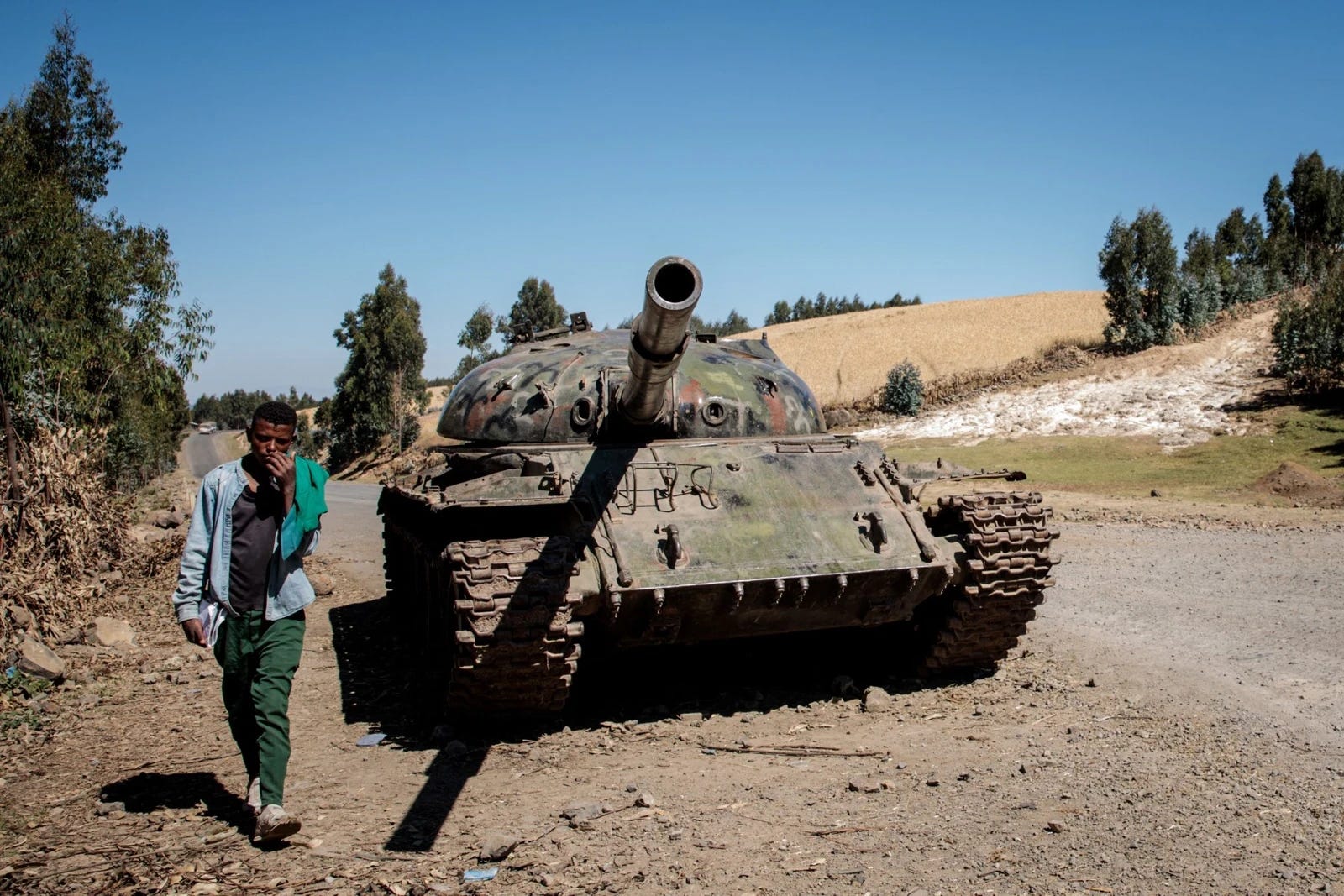
Barely four years after the end of the war, which had claimed hundreds of thousands of lives in northern Ethiopia, its three states are once again in the throes of an escalating armed conflict. But this renewed war differs markedly from the last one, fought between November 2020 and 2022.
The Tigray People’s Liberation Front (TPLF), which rules Ethiopia’s northernmost state of Tigray, is no longer fighting the federal government alone. Armed groups spanning five other regional states, many of which had fought on opposite sides in the previous war and have a long history of mutual hostility, have all united to form a coalition to oust the federal government led by Prime Minister Abiy Ahmed.
This “full-blown war,” as described by the TPLF’s vice president Amanuel Assefa, began on 23 September. That day, the TPLF’s troops, armed with light weapons, seized control of the international airport in Mekelle, the capital of the Tigray state, after detaining the federal government’s police posted to guard the facility. It also took control of other airports in the Tigrayan cities of Axum and Shire. Ethiopian Airlines suspended regional flights.
The following day, as fighting intensified in several areas of Tigray’s southern neighbour Amhara, federal authorities suspended flights to Lalibela, a historic UNESCO-listed holy city in the state with mediaeval churches. Reports indicate that although the city itself is not under attack yet, clashes are underway in surrounding areas of Amhara, where the Amhara Fano National Movement (AFMN) is fighting the army.
The Ethiopian National Defence Force (ENDF) is also fighting in Tigray’s southeastern neighbour, Afar, where the advancing Afar Revolutionary Democratic Unity Front (ARDUF) claims to have liberated about half of the regional state from federal control.
