


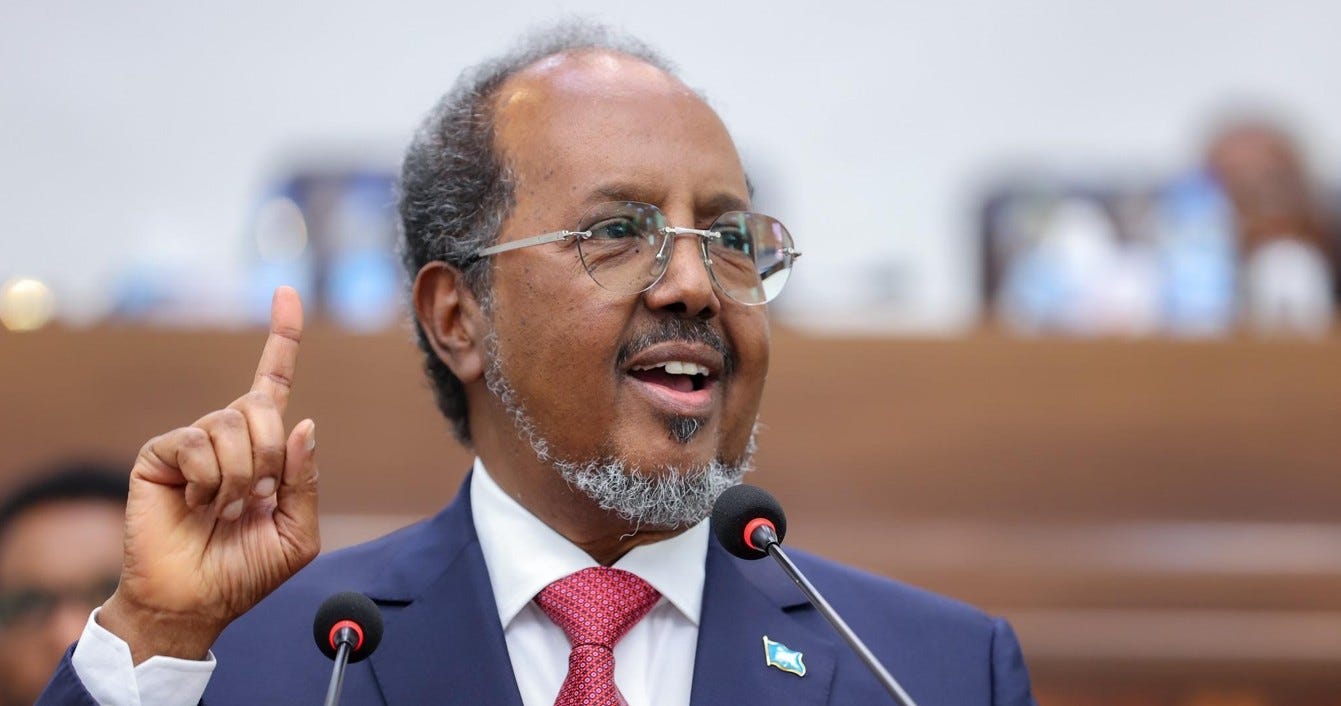
Refuting the allegation by the European Union (EU) that Somalia has refused to accept its citizens deported from the 27 member states, Somali President Hassan Sheikh Mohamud insisted that his government has only refused to accept those of unverified nationality.
Complaining about insufficient cooperation by the Somali state in the repatriation of its citizens staying in Europe as irregular migrants, the EU member states imposed punitive visa restrictions on Thursday.
This disqualifies Somali nationals' eligibility for multiple-entry Schengen visas (for the border-free travel zone encompassing 29 EU member states) and reinstates visa fees for Somali diplomatic and service passport holders. It also extends the processing time for Somali visa applications from 15 to 45 days, adversely affecting those travelling for work, study or family visits.
“Countries of origin must fulfil their obligations. Otherwise, there can be consequences,” said EU migration commissioner Magnus Brunner.
However, the Somali president characterised the EU’s allegation as false and misleading. “They have told us that the European Union has imposed [visa restrictions] … alleging that Somalia has rejected its citizens. This is not true,” Mohamud said in his Independence Day address on Friday, 26 June.
“A Somali citizen cannot be denied entry to their country, and we will not reject them,” he said, adding that the Somali state was only asking for verification of the deportee’s Somali citizenship. If their citizenship is verified, “we welcome them. If they are not, they must be returned to their country of origin.”
People across the countries of the Horn of Africa share similar appearances, and many have falsely claimed to be Somali citizens while applying for asylum in Europe, he explained. However, many deported from Europe in the past were found not to be Somali citizens and did not speak the Somali language, he added.
Deporting migrants to third countries, a policy aggressively pursued by the US, has also been adopted by the EU as a central plank of its anti-migration policy. The Pact on Migration and Asylum, a package of 10 legislative acts passed by the European Parliament to restrict immigration and speed up deportations, took effect on 12 June.
It will allow EU countries to “establish return hubs in third countries” to deport irregular migrants who are not necessarily nationals of the latter, the EU Council explained in a press release.
“Such return hubs could serve either as the final destination or as transfer centres facilitating onwards return to the country of origin or another third country.”
So the EU member states are scouting for African countries willing to accept foreign nationals they deport. Kenya is reportedly their most favoured destination, while European countries are also trying to rope in Uganda, Rwanda, Benin, and Ghana to serve as “return hubs.”
