


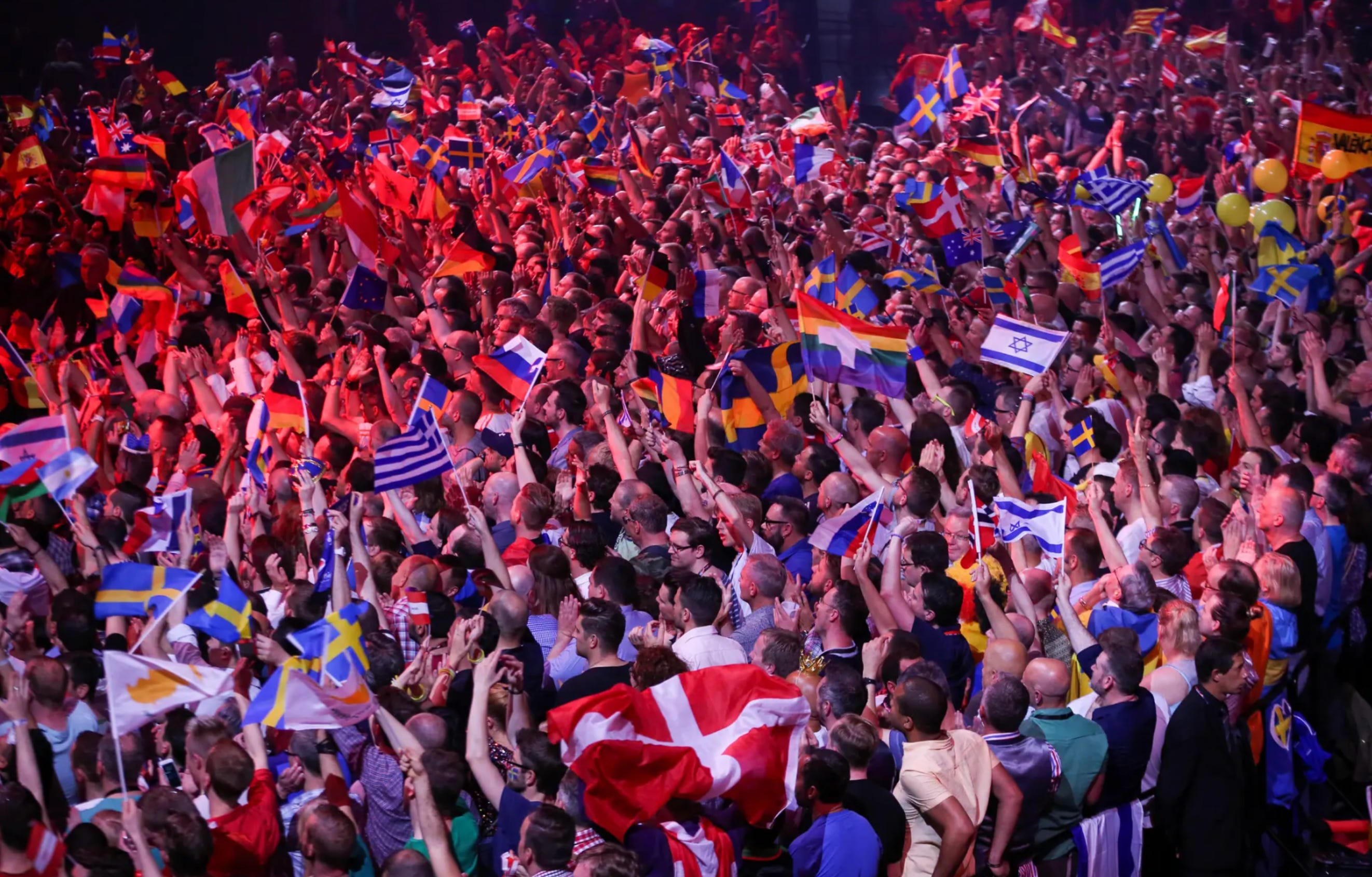
Since the end of World War 2, Western countries have, with great self-aggrandisement and moral rectitude, proclaimed themselves as the upholder of universal rights, guardians of a rules-based order and, accordingly, a beacon to the rest of the world. But, when subjected to even a cursory examination, this has proven false, indeed self-serving propaganda. The reality is that double standards have been de rigueur in policy making and enactment as highlighted in the following three varied examples concerning cultural and sporting events.
Eurovision Song Contest
In the forthcoming Eurovision Song Contest 2026, we have the double standard of Russia yet again being excluded, while Israel—which is not even in Europe—being permitted to take part. On 25 February 2022 (that is, one day after the invasion of Ukraine), the organisers of the competition, the European Broadcasting Union (EBU) announced that Russia's inclusion “could bring the competition into disrepute in light of the unprecedented crisis in Ukraine” (BBC News, 2022). However, given that Eurovision is an avowedly non-political event, this decision violated its own rules because it was undeniably political. As Russia did not put up much resistance and there was seeming general agreement, the decision stood and Russia has been excluded from the competition ever since.
Following its genocide in Gaza, there was pressure for Israel to be excluded in 2024 and again in 2025, but this was ignored so Israel remained a participant. A striking double standard: while Russia's invasion is deemed “an unprecedented crisis,” Israel's genocide in Gaza is not; and similarly, Russia's inclusion “could bring the competition into disrepute” while Israel's inclusion seemingly does not.
However, in November 2025, the EBU promised a vote on this by all 68 member countries. But, in a typically hypocritical and cowardly manner, the EBU reneged on the promise so that Israel would, once again, remain included. No matter their crimes—not only the Gaza genocide but occupation and destruction of the West Bank, unprovoked wars of aggression against Iran, and mass killings in Lebanon—Israel is granted immunity by the EBU. To their credit, Spain, the Netherlands, Ireland and Slovenia's national broadcasters announced that they will not partake in Eurovision 2026 because of Israel's participation.
Since 2022, Russia has been banned not only in Eurovision but across the cultural and sporting spectrum, especially in team sports. Individual Russian sportspersons have been permitted to compete but not under the Russian flag—usually, they are designated flagless, hence, de facto, stateless. In stark contrast, no such restrictions apply to Israel and Israeli sportspersons.
Wimbledon's double standard
The annual Wimbledon tennis championships—the most famous and prestigious tennis tournament, thought of as the home of tennis—provides another glaring example of double standards. Soon after the Russian invasion of Ukraine, in the Spring of 2022, the organisers of Wimbledon, the All England Lawn Tennis Club (AELTC) decided to ban Russian and Belorussian players from competing at Wimbledon for the following reasons:
In the circumstances of such unjustified and unprecedented military aggression, it would be unacceptable for the Russian regime to derive any benefits from the involvement of Russian or Belarusian players … We also welcome the LTA's decision in declining entries from Russian and Belarusian players to UK events to ensure that British tennis is delivering a consistent approach across the summer (AELTC, 2022).
This justification was blatantly discriminatory and in breach of the UK's 2010 Equality Act which stipulates: “It is unlawful to discriminate against someone based on their citizenship, country of birth, or national origins in employment, education, housing, or service provision.”
Furthermore, Russia's invasion of Ukraine was not “unprecedented” (leaving aside its government's view that this was justified on the grounds of protecting security for Russia and the Russian-speaking minority in Ukraine) as there are numerous examples that contradict this. One such, of special relevance to Wimbledon, is that in 1999, the US, UK, and Nato allies bombarded Serbia when a future Wimbledon champion, a young Novak Djokovic, was sheltering in a bunker from Nato bombs.
Other obvious examples include the invasions, again by the US, UK, and allies of Afghanistan (from 2001 onwards) and Iraq (from 2003 onwards) killing hundreds of thousands of innocents in the process. These—and others—were unprovoked wars of aggression yet Wimbledon did not ban any American or British players or players from other participating countries. Indeed, nor did Wimbledon ban any American when the USA was decimating Vietnam in the 1960s and “70s killing more than 3 million; or ban any Soviets during the 1980s when the USSR invaded Afghanistan.
Also, in the 1970s, ‘80s, and early ‘90s Wimbledon did not ban South African players when there was a global boycott of apartheid South Africa and South African teams were boycotted.
While there were mass protests in London against apartheid and the wars in Afghanistan and Iraq, it is noticeable that with respect to the Ukraine war—even though the political class and mainstream media coverage is 100 per cent behind Ukraine—they have been conspicuous by their absence. So, recourse to the argument that Wimbledon was following the public mood is invalid.
The belief that “the Russian regime will benefit from their players” participation” was an assertion without any evidence, and no evidence of this has come to pass. In fact, these reasons are risible: the likely motive for the banning was pressure from the then Conservative government which was keen on Russians being banned from all cultural and sporting events—there was no dissent for this unlawful action from other major parties. Again, a double standard as the UK government, along with others, inveighs against governmental interference in sports when it concerns countries from the global south. Disgracefully, the UK was the only country to implement such a ban.
To their credit, tennis fans did not display any animosity towards Russian and Belorussian players and treated them with due respect and appreciation, no different to other players. Also to their credit were the Association of Tennis Professionals (ATP) and Women's Tennis Association (WTA) as both fined the Lawn Tennis Association and AELTC $1 million for banning players from Russia and Belarus from playing in their events in 2022 and, should the ban remain in force, threatening to remove tennis tournaments under their auspices from the UK (ESPN, 2022; Tennis.com, 2022). This firm, principled, stance, concentrated the minds of the LTA and AELTC so that from 2023, the unlawful, double standard ban was lifted albeit without any contrition or apology.
International Chess Federation
The example of FIDE (the International Chess Federation) is interesting given that since 2018 its elected president is Arkady Dvorkovich, a Russian with supposed close links to the Russian government. Despite his undoubted reservations, soon after Russia's invasion of Ukraine, the FIDE Council issued the following statement:
FIDE expresses its grave concern about the military action started by Russia in Ukraine. FIDE stands united against wars as well as condemns any use of military means to resolve political conflicts … No official FIDE chess competitions and events will be held in Russia and Belarus. Following the call from IOC, the FIDE Council decides that no Russian and Belarusian national flag be displayed or anthem be played in all FIDE-rated international chess events. Instead—the national chess federation's flag or the official symbol/logo shall be used (FIDE, 2022).
In true double standard style, FIDE does not universally apply its principle of standing united against wars as well as condemning any use of military means to resolve political conflicts. Thus, it has not condemned Israel's genocide in Gaza, nor the unprovoked wars of aggression by Israel and the US on Iran in June 2025 and February 2026. So, unsurprisingly, there is absolutely no mention of Israel and US being prohibited from hosting events or their players denied playing under their national flags or their anthems being muted.
FIDE gives the game away by the admission: “Following the call from the IOC [International Olympic Committee] ….” So, like an obedient servant, and notwithstanding having a Russian president, FIDE was doing the IOC's bidding. This fact points to a wider truth which is that the West controls the major cultural and sporting events and has a near monopoly of the organising bodies—and sets the terms of participation where double standards are the norm, in other words, in a brazenly hypocritical manner. But it is also an exercise of soft power with Western countries dictating to even major countries such as Russia and China that it is the West that sets the rules and decides how they are applied and if these are deemed to be manifestations of double standards, then so be it.

Excellent analysis.