


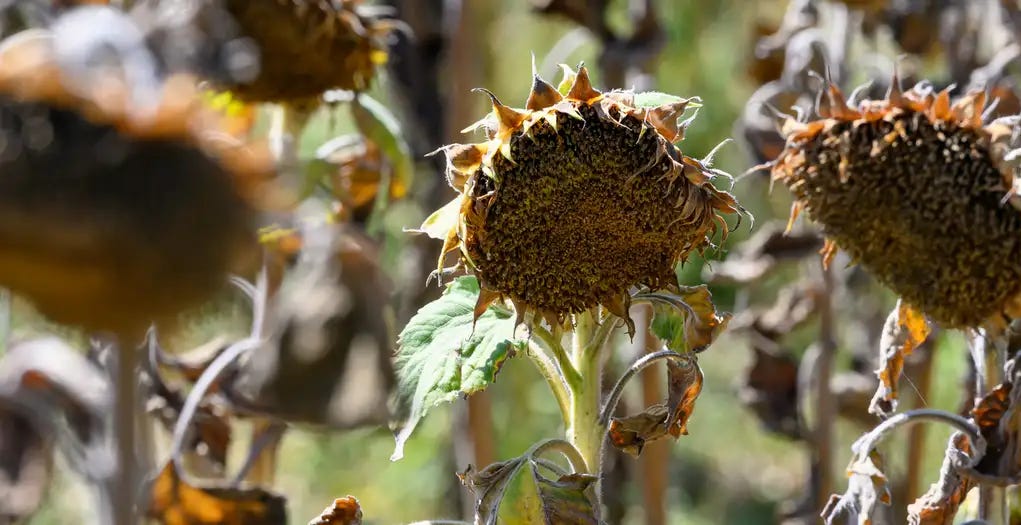
Human beings can survive about three minutes without oxygen, three days without water and three weeks without food. Next to air, water is the most essential thing we have.
Nature provides it for free, though neoliberal capitalism and privatisation have tried hard to turn it into a commodity. Now it is also becoming scarce as droughts spread under global warming.
Even in central Europe the signs are clear. Photos of the Kaub gauge on the Rhine, between Mainz and Cologne, show water levels so low that barely a ship can pass. Commercial shipping on the river nearly stopped in September 2026. Some people still insist that global warming is a hoax, even as the Rhine runs dry.
“Every drop counts” is turning from a slogan into a fact, and not only in Germany. But water shortages are not inevitable. Water is life and should be treated as such. It must be taken out of the “greed is good‘ logic of the market and regulated in harmony with the ecosystems it flows through. Advertising images of sparkling fountains have long hidden how fragile our hydrological systems are, perhaps deliberately, and that illusion is wearing thin.
How the shortage was made
For decades we have cleared forests, planted monoculture timber stands, and sealed soil under buildings, roads, the Autobahn, and airports. We have also farmed land unsustainably. All of this has disturbed, and in places destroyed, the natural water cycles that keep soil moist, fertile and cool.
So water scarcity is not just a symptom of a warming climate. It also reflects the loss of the natural storage nature once provided, and it follows from a system that puts profit ahead of ecological health. That is the bad news.
The good news is that regional water use can be organised for the common good rather than “managed for profit.” People in many parts of the world have shared water communally for thousands of years, and that approach may prove better than treating water as a commodity.
Germany is still seen as a water-rich country, but over-intensive land use, groundwater overuse and pollution have created real scarcity. For capitalism, scarcity is an externality: profits are taken first, and the costs are passed on to others. Germans are beginning to see that the idea of a water-rich Germany is ending, or has already ended, as rivers dry up, crops fail and rain becomes a distant memory.
Our climate has been stable for only about 11,000 to 12,000 years, a sliver of Earth’s roughly 4.5 billion. That stability made farming possible and allowed humans to spread across the planet. Around 6,000 BCE, people in Mesopotamia built large irrigation canals to serve local farms. Ever since, farming has depended on a stable climate, communal irrigation and frequent, predictable rain.
That is now changing. Rainfall is becoming less predictable, bringing droughts in some regions and floods in others, and both are more frequent. Meanwhile “ conventional‘ agriculture degrades water quality, and aging, fragmented infrastructure limits access to water. Over the past two decades Germany has lost an estimated 60 billion cubic meters of water, a volume on the order of Lake Constance. Supply and demand are badly out of balance: Germany is losing more water than its natural systems can replenish. Even the most committed climate denier will struggle to ignore this.
The cost
Floods, droughts and water pollution already cause around €10 to €15 billion in damage each year in Germany. Long-term harms add to this: groundwater depletion, widening regional imbalances and growing competition for scarce water. By 2050, damage could rise by another €10 billion a year, or €25 billion under worse conditions.
As always with global warming, doing nothing is expensive. The cost could reach at least €20 to €25 billion a year, or roughly €500 to €625 billion cumulatively by 2050, a heavy burden on the German economy.
Restoring Germany’s water
There are two ways to restore Germany’s water: increase the available supply and use the existing supply better. The aim should be to retain water in the landscape through a mix of natural and technological measures.
Regenerative agriculture improves soil health and restores carbon-rich soil structure, which holds water and improves nutrient cycling.
Climate-adapted forestry converts conifer monocultures into resilient mixed forests.
Dynamic drainage controls water flexibly as periods of surplus and drought alternate, supported by regional measures such as restoring wetlands and meadows that store water.
Unsealing and greening cities improves retention and cooling during heat waves.
Water efficiency means reusing grey water and using water more carefully in agriculture, industry and households in a circular system.
Regenerative agriculture, sustainable forestry and dynamic drainage will have the greatest effect. Together they could replenish groundwater and add 7 to 7.5 billion cubic metres of water to Germany’s supply each year, enough to close the current deficit. At scale, they would restore depleted soils and damaged forests to their natural role as water suppliers.
None of this happens without a fundamental change in how water is used, understood and funded. The benefits of water are hard to quantify over the long run, but the costs of inaction are immediate, structural and growing.
A resilient water future requires cross-sectoral action from four key actors:
The state must set a clear framework and fund a lasting approach to water security.
Business must build responsible water use into its operations.
Farming and forestry must work together to keep soil and water cycles functioning.
Banks must direct capital to nature-based, sustainable systems.
Germany’s water security can only be put on a sustainable footing through shared responsibility in which the profit motive no longer dominates. In the face of global warming, that is imperative for a resource we all need to survive.
