


June, end of the school year. In Rome, Italian educational institutions are inviting families to attend the end-of-the-year play, a ritual that forecasts the beginning of summer. I attended one of my son’s, who is enrolled in a libertarian outdoor education programme. They promote alternative learning methods immersed daily in a suggestive natural setting. There, they also perform the play: it is about gender roles.
“You are a woman; why do you play with cars?” one young actor says. “I am a woman and can do whatever I want!” another replied. Hearing this, warm applause broke out from the audience, composed of families and friends. It hit me: I did not enrol my son in a libertarian environment, inspired by critics of contemporary society such as Illich and Godwin and Postman. I pushed him to the epicentre of the modern liberal doctrine, which took its own idea of feminism as a global concept, adorned it with an ethical and undebatable notion of rights, and transmitted it to children as young as nursery age.
Are they right? Are women equal to men? And is this really a feminist point of view?
A liberal would answer positively to all the questions above. A radical, not. Biological differences, the latter would argue, referring to sexual dimorphism and reproduction, still matter. Somehow, however, modern liberal feminism intercepted any divergent or contestatory thoughts regarding the emancipation of women, silencing Western intellectual feminists such as the likes of Germaine Greer while working against religious women both in the Middle East and the West, advocating in favour of the secular autocracy against political Islam.
Their perception of women, which belongs to the new gender ideology, put its foundation in what Negri and Hardt defined as the modern Empire. The current world order, de-centred and global, presents itself as the only permanent and necessary form of civilisation. Similarly, this branch of feminism presents itself as the only legitimate tool against violence and discrimination, despite Kathleen Stock defining it as “individualistic as it gets,” as it considers “not only a social norm, but also your body [as] an obstacle to freedom.”
Italy, for instance, is a country that remains institutionally and profoundly chauvinist. Simultaneously, though, mainstream media continuously normalises the sexualisation of women at any age and their social role while conterminously promoting female prostitution and cosmetic surgery as self-determination rather than a form of commodification. Media messaging around women and girls within Italian media is incoherent at best: while regressive and harmful representations of “gender” are promoted even when entirely exploitative, the narratives around gender as “identity” are virtually untouchable.
Emblematic of this double bind, is the recent judicial case about the family in the woods, where Catherine Birmingham, an Australian mother living with her partner, Nathan Trevallion, and children in the forest of Italy’s Abruzzo region, had her children removed by the Juvenile Court for living off-grid. For weeks Birmingham was demonised on afternoon television programmes with commentary emanating from dressed-up, heavily made-up, quite plastic female opiners who questioned the mental health of the mother while accusing her of being rigid and possessive toward her kids. Meanwhile, it would seem that the policing of this family is what is “rigid” as Birmingham told RAI, “The children are happy, healthy. We haven’t done anything wrong if we want to return to nature.”
Indeed, liberal feminism belongs to the particular and individualistic kind of society in which we are living nowadays, the sort of vision pushed in the mid-twentieth century by the likes of Ayn Rand, who considered being selfish and self-reliant a rock that cannot be broken, all couched within a philosophical system of rational self-interest which she called Objectivism. Rand’s theories were themselves a product of the US post-Second World War economic boom. Documentary filmmaker Yasha Levine of the Nefarious Russians describes this ethos as a psyop fostered by Americans through films, books, and art. Consequentially, Rand’s notions of rational self-interest had a boom in the Reagan and Thatcher years and have expanded across American culture to include its “colonies” of which Italy is just one of many.
The myth of emancipation is tightly connected to the promotion of modernity as a sign of progress, enhanced by the “American saviours” who rescued Italy from fascism, drawing an end to World War II in Italy. However, many Italians know the reality of this American presence in our territory—mainly a tale of misery, prostitution, and the power of the conqueror. This saviour narrative, accompanied by economic aid such as the Marshall Plan, invariably pushed Italy into the era of industrialisation.
In 1957, the first supermarket opened in Milan, introducing concepts such as self-service and the possibility to buy an enormous amount of different kinds of products in one place. Household machinery and cleaning products, as well as items for improving personal hygiene, began to appear in Italian homes. Italy was changing, and women were instrumentalised in leading change.
Media propaganda rejected full-time motherhood just as it labelled breastfeeding as a sign of backwardness and pushed women to work. Consumerism of any kind has become the symbol of breaking from a past of poverty and advancing towards a modern future of ostensible liberation. The idea of humans as individuals, not communities, began to surface, along with the idea of self-realisation and the right to pursue personal freedom ahead of anything else. It is there that liberal feminism rose, becoming mainstream amid America’s suburban culture and ultimately reaching Italy shortly there after.
Rather than a struggle against the oppression of patriarchy, feminism focused on the isolation of the modern nuclear family, which American feminist Betty Friedan famously defined as a “comfortable concentration camp” that oppressed women. Coincidentally, such feminist musings emanated mainly from the new bourgeoisie. What was unbearable, then, was not the overwhelming amount of housework and childcare; instead, it was the boredom and loneliness that occurred in women’s spare time, which they learnt to cure with alcohol, sexual adventures, or an obsessive interest in their children.
From this milieu comes the idea that women’s empowerment means entering the business world exactly like men. These feminists believed that entering the masculine world of competitive achievement would cure the “problem that has no name,” intercepting the struggle of working-class women together with those who come from a different cultural environment or those who struggle with racial violence. While Western feminists argue about the right to be or not to be a mother, the global women’s health movement emerging in Latin America, Africa and Asia, has pointed out that due to centuries of slavery and colonialism, for non-white women, reproductive injustice has also involved the forced denial of motherhood. Under slavery, black women were forced to nurse the children of white mothers instead of their own for instance.
Liberal feminism has been critiqued for straying not only from diverse feminist voices but also from the foundational ideas of Friedan herself. In her 1963 book The Feminine Mystique, Friedan encouraged women to look beyond the home, but she did not advocate for embracing the competitive world of the workforce. In her book she talks about the need for a lifelong commitment and contribution to the wellbeing of a society, an idea shared by many other twentieth-century individualist anarchists like Leda Rafanelli, who, despite rejecting cultural conservationism and state frameworks, similarly championed motherhood as a meaningful, continuous contribution to human progress.
Italy, instead, embraced this wave of transformation with blind eyes, as if it were the only direction for progress and emancipation. At the time, there were only a few critical voices, such as that of Pier Paolo Pasolini who warned that the quest for emancipation is leading Italians from a nuclear family to a family of consumers. From the moment women rightfully progress toward emancipation, the whole society regresses because it is consumeristic society that takes up her educational role. Pasolini, like Rafanelli, addresses the bourgeoisie as the class that shapes modern society. As holders of power, the elite class has no interest in educating a child; instead, their aim has only been to educate the children in societal adaptions where children are future labourers and consumers. In this way, liberation and emancipation are concepts that depend entirely upon the transformation of the individual to consumer, with the imperative that the individual must maintain and reinforce the status quo.
Emancipation nowadays continues to be perceived only as business-orientated, with the values of women measured by her remuneration or her ability to commodify herself in a fully liberal economic fashion. In his essay “The Sexual Division of Labor, the Decline of Civic Culture, and the Rise of the Suburbs,” Christopher Lasch, in examining postwar decline of women’s civic/communal involvement, addresses the importance and social value of these uncompensated activities. He suggests that women were behind the scenes, albeit without monetary reward, making, for instance, modern cities liveable and laying down the great age of American urbanism, which built public facilities such as libraries and playgrounds, preventing public spaces from being co-opted by business alone.
Today, all this is gone, and social productivity is valued only if there is compensation behind it. Meanwhile, global institutions and corporate brands have embraced the so-called language of inclusivity, non-discrimination, and anti-harassment policies, all in the name of emancipation. This, over the past two decades, has reduced the contemporary debate around feminism and women’s role in society to a dichotomy between those who embrace gender ideology which works to nullify any difference among gender roles and those who deny women’s oppression in any form. Where gender ideology pretends that sex is a choice to which any man can subscribe “as a woman” due to his fancy for floral prints or his penchant for effeminate mannerisms, where the subject can flee the body, this self-professed “progressive” ideology is anything but as it dangerously advocates that gender can be “corrected” through medical intervention, all in order to match gender stereotypes. Gender ideology is its own self-fulfilling prophecy.
Recently, the Italian government introduced parental consent for affectivity and sex education in schools, causing outrage among the liberal left, who accuse it of tacitly enabling sexual violence, as a lack of early age education on this topic could lead to sexism and drive men’s violence against women.
Italian NGOs that work with minors and marginalised communities such as the Roma and migrants, impose their language and projects of gender neutrality, claiming it is a policy to prevent gender discrimination and violence. In my experience, however, it is quite the opposite: by talking and lecturing people about rigid attitudes to gender, they enforce stereotypes that don’t belong to reality.
In Afghanistan, a traditional country where I lived and worked for 5 years, toddlers play indiscriminately with all sorts of toys. I myself witnessed a little boy playing with my make-up in front of the total nonchalance of his mother. However, in the media representation, it remains a country obsessed with gender rigidity, toxic masculinity and women’s oppression. Now and then we read news about an Afghan father who walks his daughter to school; these representations portray this act as if being a caring, male figure is an exception in countries that don’t embrace gender policy and language inclusivity courses.
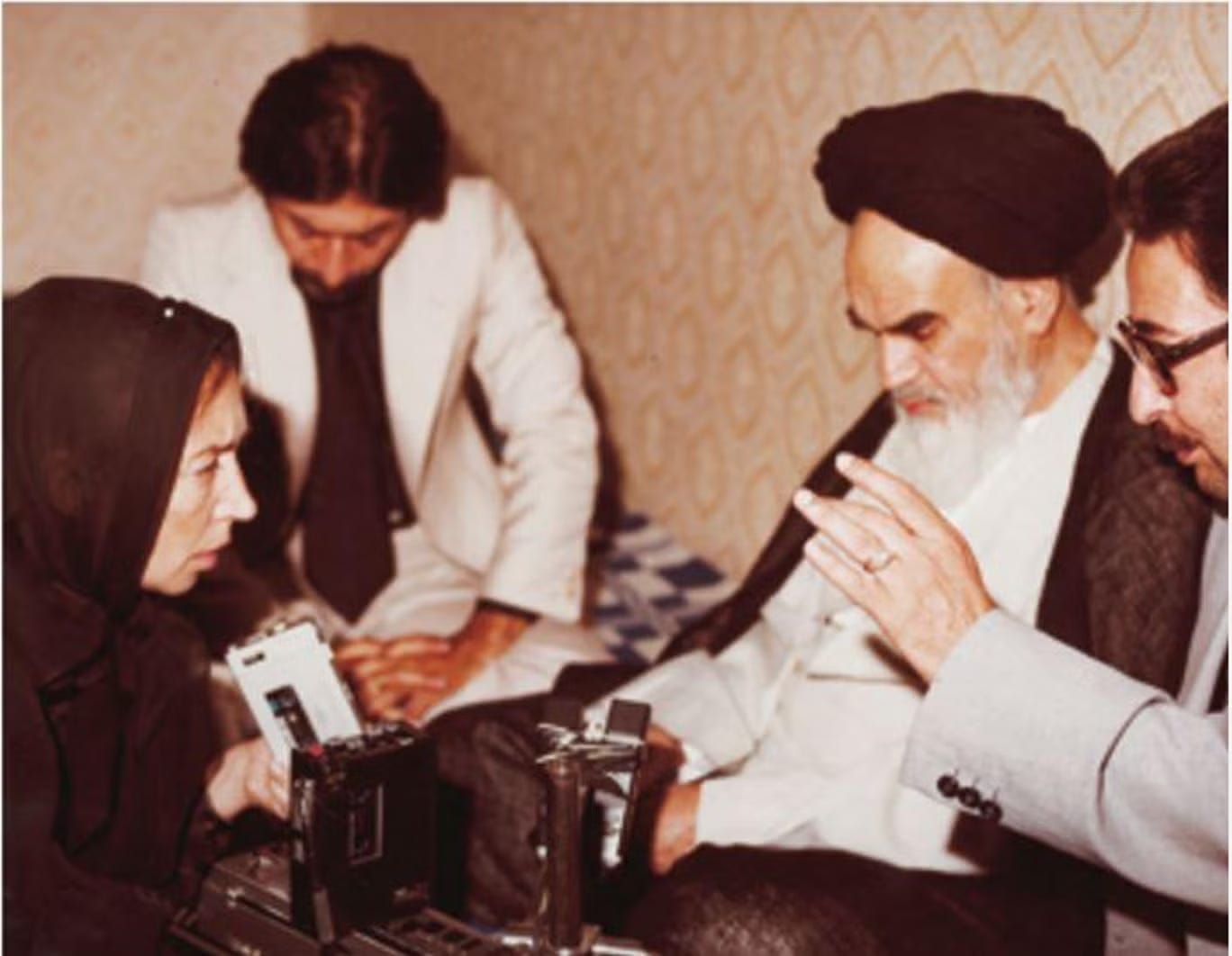
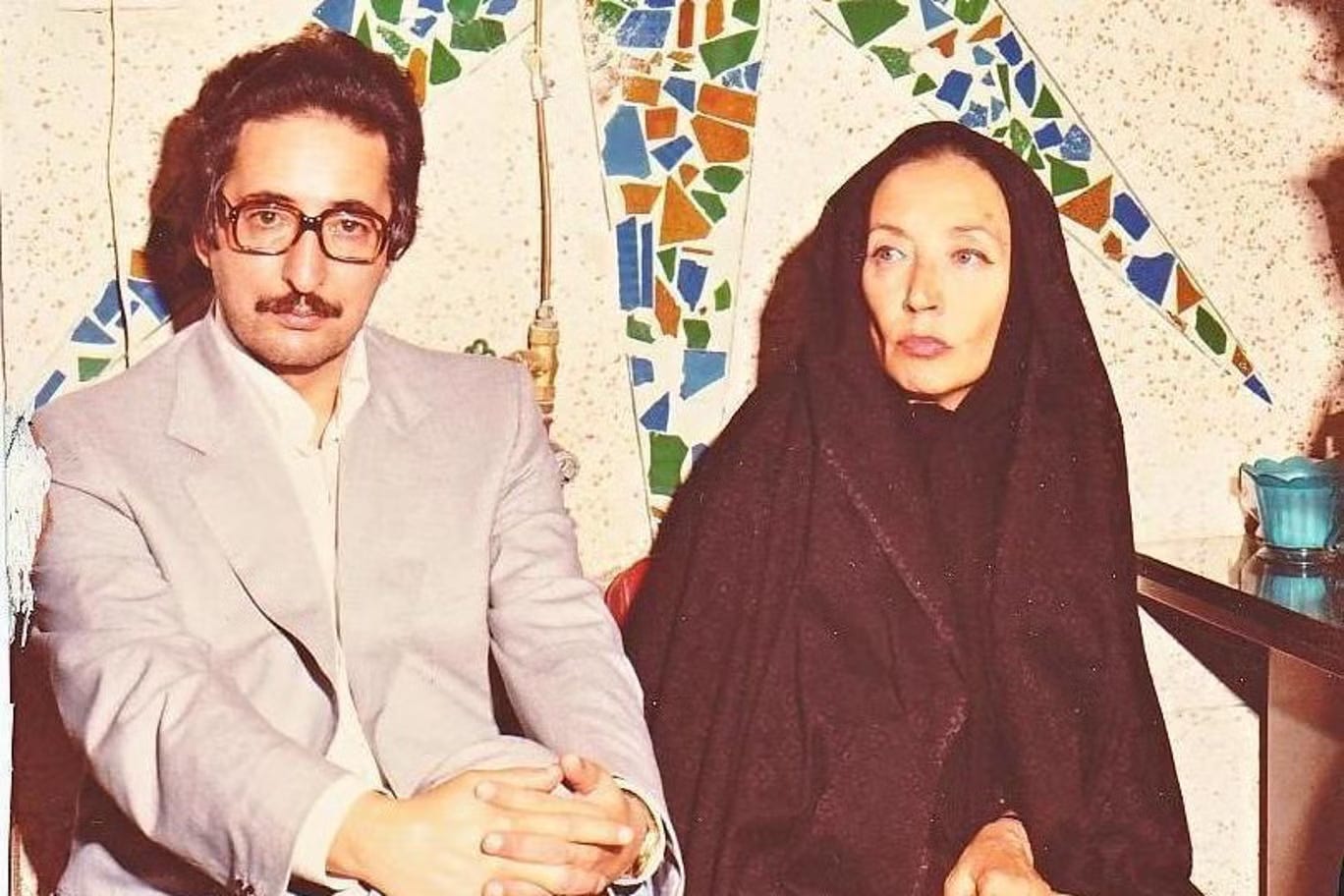
Italians often cite the memorable 1979 interview of Oriana Fallaci with the leader of the Islamic Revolution, the Ayatollah Ruhollah Khomeini, wherein she took off her chador in front of him, calling it “a stupid, mediaeval rag,” a gesture considered audacious and bold, a symbol of female freedom. Rarely is it mentioned that Fallaci typically used her interviews to turn herself into the ultimate protagonist. One critic, Cristina de Stefano, once stated that Fallaci was often the “only hero of her own story.” Similarly, Christopher Hitchens vituperated Fallaci’s journalistic style noting that she relied heavily on “hyperventilating scorn” and a self-aggrandising tone.
In short, she was known for being “a writer” rather than a journalist, as she often shaped her interviews without remaining faithful to her subject’s words, and she frequently employed tactics and gestures that would invariably cause a reaction, which she would later use as a title or angle for articles.
It is certain that Fallaci’s removal of her chador before the Ayatollah was planned beforehand, and that it was designed to stoke the flames of hatred within the easily triggered Western-centric point of view filled with misconceptions and prejudice towards Islamic culture. As Frantz Fanon eloquently wrote about the banning of niqab for Algerian women by France: “A woman who sees without being seen frustrates the colonisers.”
These strategic, marketable provocations, however, become the dominant methods to describe and analyse a fragment of society by those who today own the mainstream narrative. After the Taliban took Kabul in 2021 and the international media circus descended on the city, a video of Lucia Goracci, a leading Italian journalist for Rai (the national public service broadcasting company of Italy), went viral. She said to a Taliban soldier during an interview: “Why don’t you look at me in the eyes?” not mentioning, probably intentionally, that in Afghan culture men avoid eye contact with women as a sign of respect and a declaration of pure intention during a social interaction. Her reportage, as well as that of her other colleagues from those days, is filled with such rhetorical provocation and mystification playing on the already diffused racist stereotypes about Afghan culture.
If it is certainly true that gender roles are socially constructed, it is also true that social construction should not be presented as a homogeneous feature that only serves to diminish, obstruct, and oppress. The alleged neutrality of Liberal Feminism is nothing but a lie, as it ignores this reality, only to shape a new world where corporations can maximise the consumers of their product: one good for all.
