


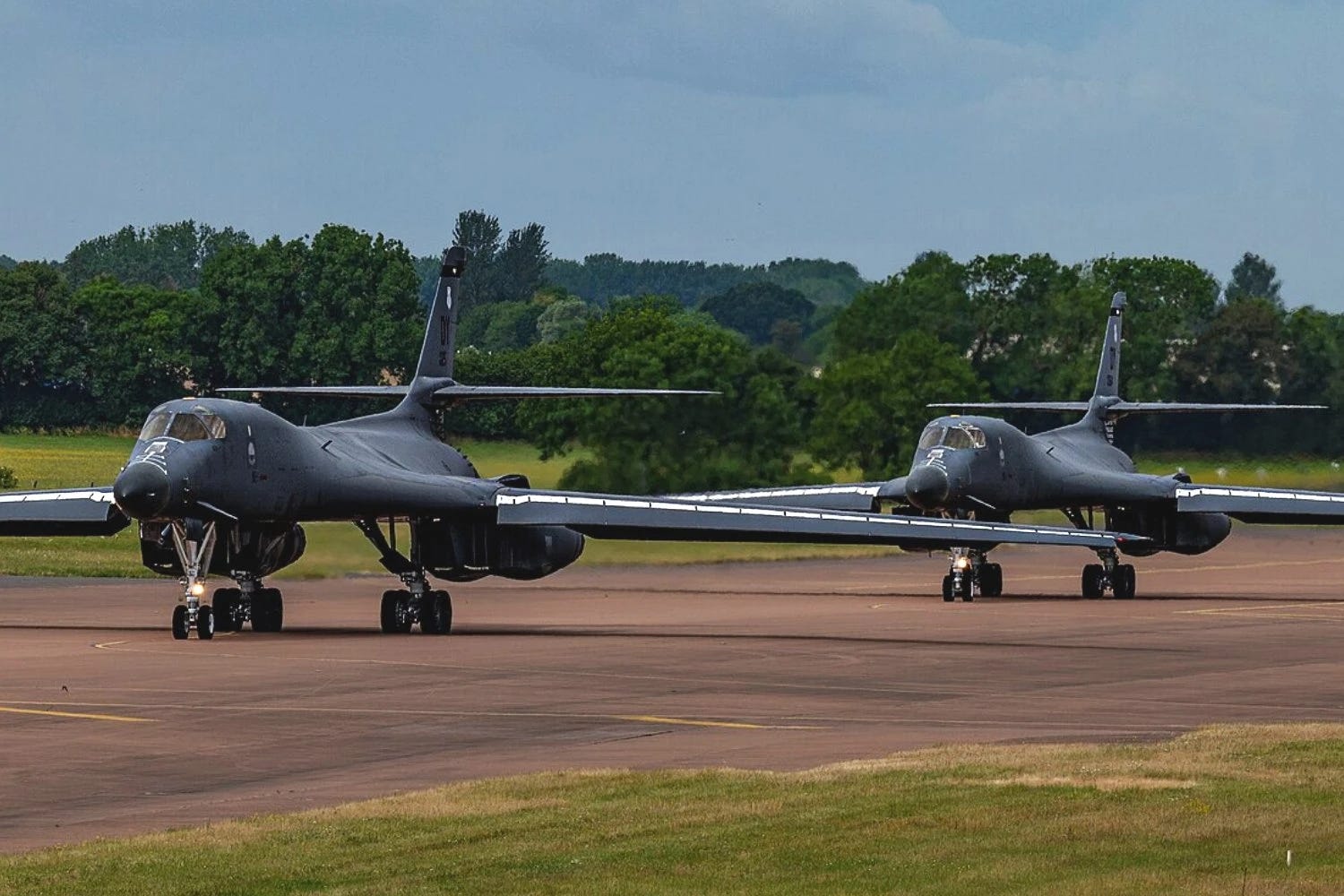
The evacuation of a dozen B-1B bombers of the US Air Force from the RAF Fairford in Gloucestershire is another instalment in the latest rippling of the Iran war that began as a pre-emptive, illegal assault by the US and Israel on the Islamic Republic in late February. This, arguably, came in two parts, the first scripted with the detention and arrest of five men on 27 September in the vicinity of the base on suspicion of committing offences under the Explosives Act and suspicion of preparation of a terrorist act. (Another was arrested on 1 October.) All were British nationals based in London and speedily released on police bail. At the time, Assistant Commissioner Laurence Taylor, head of Counter Terrorism Policing (CTP), floated the suggestion that “this may be activity committed by proxies, or individuals, either knowingly or unknowingly, working on behalf of a foreign state.” The dust had barely settled before the finger pointing at Iran began. The men in question, according to the police, remained under investigation, with their release “subject to stringent conditions on their movement and contact with others.”
On 4 October, the Pentagon announced that “all bombers that were deployed to RAF Fairford have been re-deployed to their home stations in the United States.” The department, wishing to blunt the significance of this hasty decision, added that the US military bomber force of B-1s, B-2s, and B-52s remained “ready to deliver precious global strike capabilities—including through operations that launch and recover from the continental United States.”
Two days later, Counter Terrorism Policing announced that a further arrest had been made of a dual UK-Iranian man regarding “activity that took place close to RAF Fairford.” The arrest was made “on suspicion of terrorist acts under Section 5 of the Terrorism Act 2006.” The Senior National Coordinator for CTP, Vicki Evans, reiterated the line that this remained “a live investigation, and our specialist teams continue to pursue multiple lines of enquiry into the circumstances surrounding events near RAF Fairford.”
When asked about whether the movement of the bombers was linked to the 27 September incident, US Secretary of State Marco Rubio proved platitudinous and undetailed. “It’s not unusual to see movement of assets to different parts of the world based on exercises, redeployments, people changing out and new people coming in, new planes coming in and old planes going out.” This front of airy meaninglessness did not take long to vanish. The US Vice President JD Vance added salt to the otherwise dull mix in stating that the bombers had exited the base out of an “abundance of caution.” It was felt that Iran was doing what it had “done for 49 years… which is to engage in acts of terrorism against the US and against a lot of other people.”
President Donald Trump, tongue ever loosened, also told reporters when asked if the bomber redeployment had arisen from any “specific threat” did not hesitate: “Yeah, I think we can say that. They didn’t fly out by accident.” What followed was the usual combination of adulterated facts and twisted tales. There had been “some threats. And rather than tempting the enemy, we’ll capture the enemy and beat the enemy. But why should we leave them there? So we moved them around a little bit. Not very far.” Never one to accept the premise that the US security establishment might err on occasion, the president reiterated the familiar, if long-fossilised, line: Washington “actually knows the people that made the threat.”
This dramatic decision to move the bombers from a base that hosts the US Air Force’s 501st Combat Support Wing, an important component in the illegal war against Iran, is very much the opposite of what was initially done when a farmer noted the presence of three white vans and a “large group of hooded and masked men” who then attempted to alert the Ministry of Defence police at the airbase. When no response was forthcoming, she made a 999 call to police at 01:36 BST. Within 10 minutes “the village was full of armed police.” She ruminated on the effect of the call: “I believe that my 999 call foiled whatever plans they had.” She was also “absolutely staggered that it was left to me, as a member of the public, to see and report this.” The UK Defence Secretary, Wes Streeting, despite thanking the farmer for her call, suggested she only had “a partial picture” of what was unfolding, while Trump claimed that the men were placed under surveillance “for a long time, and we got them.”
The swift relocation of such costly, vulnerable military hardware in the face of a threat that, if inflicted, would have cost a fraction of any budget is also a startling reminder of the turns in modern warfare. The Ukrainians demonstrated with formidable efficacy in Operation Spider’s Web how its drones could strike Russian nuclear-capable bombers, allegedly crippling a third of their capacity. Taking place in June last year, it involved the use of 117 modestly priced drones that had been smuggled into Russia via lorries by unwitting drivers. The strikes, taking place across five different time zones with the assistance of the commercial autopilot software ArduPilot and the use of artificial intelligence for targeting purposes, led to an estimated bill amounting to US$7 billion. Some 41 planes were damaged or destroyed.
Operation Spider’s Web drew swooning praise from the cognoscenti. Katja Bego of Chatham House thought it “offered a glimpse into the future of warfare, transformed by access to cheap, widely available technology such as small drones, in which anything, anywhere can become a target.” This, she went on to say, raised “urgent questions” about NATO’s own preparations in the face of such an attack.
Before mighty odds and expensive machinery, new methods of war are proving resourceful, daring and devastating. One palpable absurdity of the Iran War has been the eye-popping costs accruing from the use of heavy weaponry in offence and anti-ballistic missiles such as the THAAD system in defence. This has drained the US inventory, sending Washington’s allies into fits of concern. On a relatively meagre budget, labouring in the face of superior odds and numbers, Tehran has caused mayhem with its drone and missile strikes across the Gulf region. In the case of RAF Fairford, the Iranians, whatever the speculation, did not even need to launch a single drone for an expensive fleet of bombers to be relocated to the continental US.
Despite no official confirmation that Tehran was actually involved, the commentary circuit has been clogged by assessments of a victory for the Islamic Republic. “I think it is hard to conclude anything other than that this will be seen as a success by Iran,” suggests former UK first national security advisor Lord Peter Ricketts. “Whether it was the intention or whether it’s the inadvertent outcome, it is certainly the outcome that they have now forced the US into a public bring-back of their forces from one of their allies.”
From the aggressively pro-American terrain of the Australian Strategic Policy Institute, Malcolm Davis claimed to have identified the crucial lesson: “that in an age of drone warfare, it is no longer sufficient to assume that aircraft parked in the open are invulnerable to attack.” The US needed “to invest in hardening bases, including developing new hardened aircraft shelters for forward-deployed aircraft.” Another, surely cheaper solution would be to refrain from launching criminally foolish wars in the Middle East, or anywhere else, for that matter.
The war against Iran was meant to conclude in a popular insurrection against the theocrats in Tehran and the blooming of various flowers in the Orangerie of democracy. There was no insurrection and certainly no flowering. Instead, the successor regime to those slayed continues to resist with steeliness and wage its battle in the fields of briefings, psychology and economics. So far, it is winning.
