


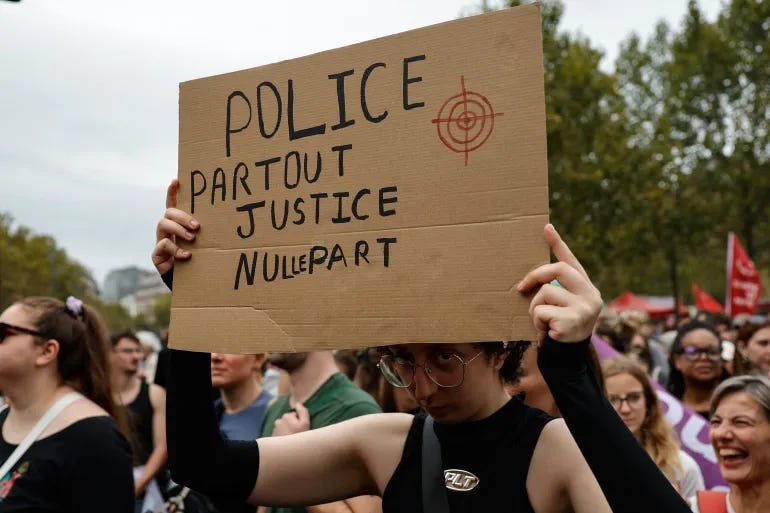
Over 100 protests took place across France during the weekend of 19-20 September, as left parties, grassroots organisations, and human rights associations mobilised against a new law on the use of force by law enforcement. Dubbed the “License to Kill” bill by progressives, the legislation presumes that police and gendarme officers who draw their firearms do so legitimately unless proven otherwise.
Despite a petition against the law collecting over 730,000 signatures in a matter of weeks, the French government—backed by the votes of the far-right National Rally—forced the proposal through the National Assembly on 7 July. In what critics described as a vote of shame, 313 parliamentarians voted in favour of the proposal, including all 122 representatives of the extreme right party.
The progress of the bill led to widespread fears. Among them, legal experts emphasised risks posed to the rule of law and the normalisation of the use of firearms—not to mention dangers posed to populations who are already exposed to profiling by the authorities.
The legislation is now set for consideration by the Senate and, if passed, is all but certain to bring devastating consequences for Black, migrant and working-class communities in the country.
The legislation’s central issue is changing the way use of force by law enforcement officers is regulated. As of now, it is the state that must prove that the use of force was legitimate; according to the new law, the default presumption will be that officers act in legitimate self-defence.
