


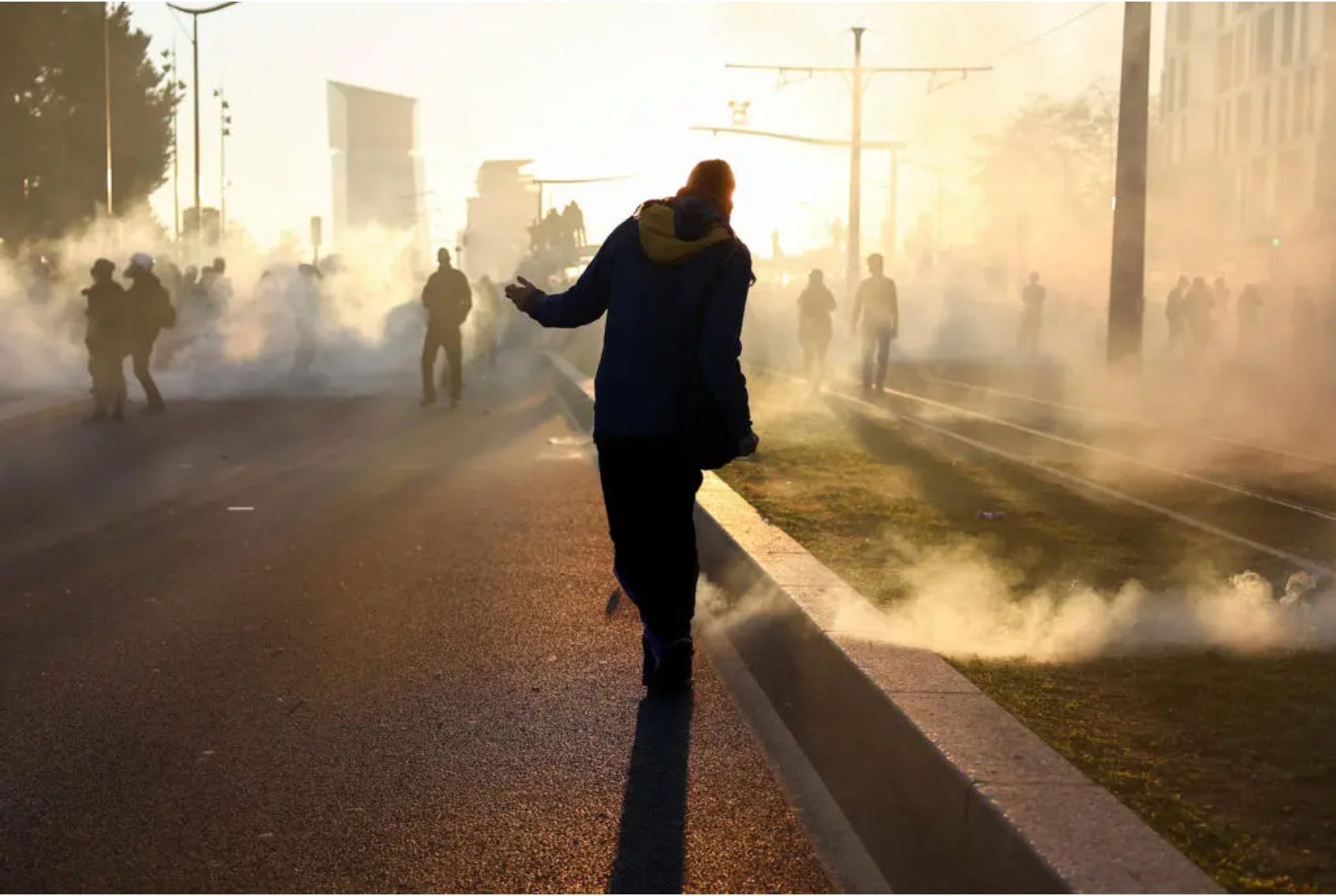
Saturday, 31 October, opened as another day of mass mobilisations across France. For almost two months—led by high school and university student demands for stronger public education—hundreds of thousands of people have been joining demonstrations against the policies of President Emmanuel Macron and successive administrations.
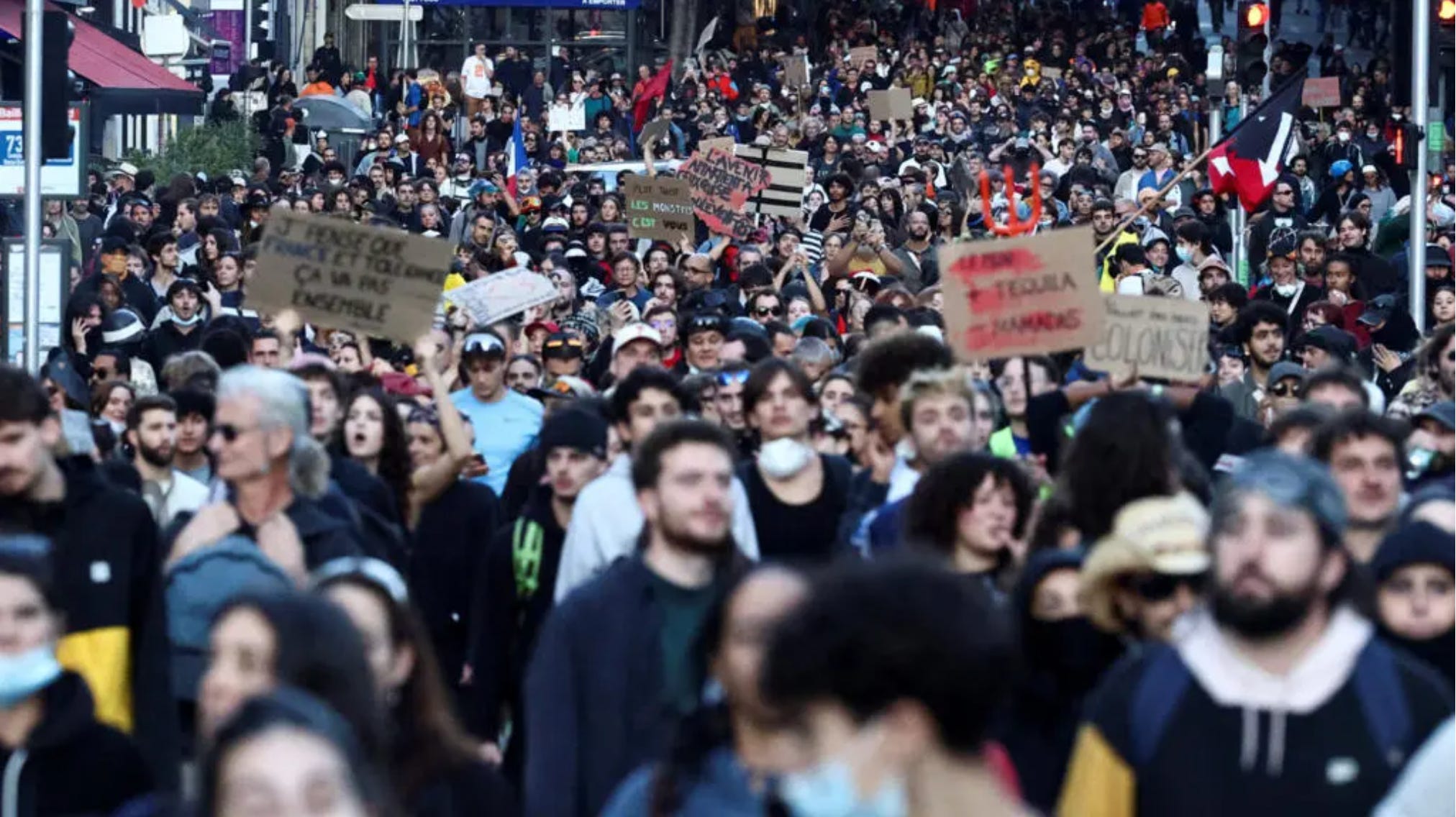
According to student unions, at least 500,000 people joined the demonstrations on Saturday, including 200,000 in the capital.
“We are now in the sixth week of mobilisation by high school students and, more broadly, the youth,” Christophe Benoît, deputy general secretary of the General Confederation of Labour (Confédération Générale du Travail, CGT) in Lille, told BreakThrough News.
“It’s a movement best summed up in the words of a high school student speaking at a recent assembly: ‘We see the social hardship of our parents, and we see our own future reflected in it.’”
Students and youth have tabled demands to strengthen the public education system in France. These include investment in school infrastructure, ending the course selection platform Parcoursup, and ensuring fair and equitable access to higher education.
Their demands are clearly linked to grievances raised by other groups during Macron’s presidency, which have warned against the devastating impact of raising the retirement age, eroding workplace rights, and leaving the cost-of-living crisis unchecked.
“Against the politics of Macron”
Speaking from the demonstration in Paris on Saturday, Maurizio Coppola from the International Peoples’ Assembly (IPA) emphasised the protests are taking place “against the austerity measures, against the politics of Macron.” Over the past ten years, Coppola added, these policies have been “dismantling salaries and social services.”
The convergence of the youth and student movement with trade unions and groups like the Gilets Jaunes, the Yellow Vests, has deeply shaken Macron’s and Prime Minister Sébastien Lecornu’s position. Faced with a general mobilisation based on clearly progressive demands, authorities responded with violence, with dozens of injuries and thousands of student arrests reported since the protests began.
An authoritarian turn in France?
The state’s response has been so openly violent as to raise serious concern among human rights organisations. Amnesty International France contextualised parts of this response as part of a possible authoritarian turn by the country’s authorities.
“A state that adopts authoritarian practices seeks to silence dissenting voices by restricting space for expression,” they wrote. “In France today, the right to demonstrate is under serious attack, with a series of protest bans, arrests and police repression.”
The government has also attempted to discourage participation in the mobilisations by promoting and imposing protest bans and restrictions. Among other things, the route of Paris’ Saturday march was contested in court until the very last minute.
While labour and student unions pushed for a march in central Paris, the city’s police administration insisted on moving it to a more distant zone. Organisers contested this imposition in court, warning that the decision not only threatened to create chaos but also represented a notable attack on the right to protest.
Even though the courts ruled in favour of the organisers, the Council of State—a body that acts as the highest administrative court and advisor to the government—overruled this decision and forced last-minute changes. Protesters in Paris joined the demonstration anyway, just as thousands of people took to the streets in other cities.
General strike on 5 November
The success of the movement continues to encourage new mobilisations, including, notably, a general strike on 5 November. “It’s a general strike against Macron, against his system, against the war economy he has implemented,” Coppola said. “This solidarity cannot be stopped by some small measures; this solidarity cannot be stopped by the repression the French state is applying to the movement.”
“We are dealing with questions of what kind of society we want,” Benoît emphasised, referring to the general strike. “It’s absolutely essential that the labour movement join forces with the youth to win real progress—for the entire population, too—against the capitalist policies we’ve been suffering from in France for decades now.”
“We need a movement, a general movement, and we need to hit those who are really making the decisions in this country; that is to say, the employers.”
By last Thursday, the CGT alone had already noted 185 industrial action announcements ahead of 5 November. Student unions announced additional actions in the coming week—including a call to occupy high schools and universities—to support the general strike and protest demands.