


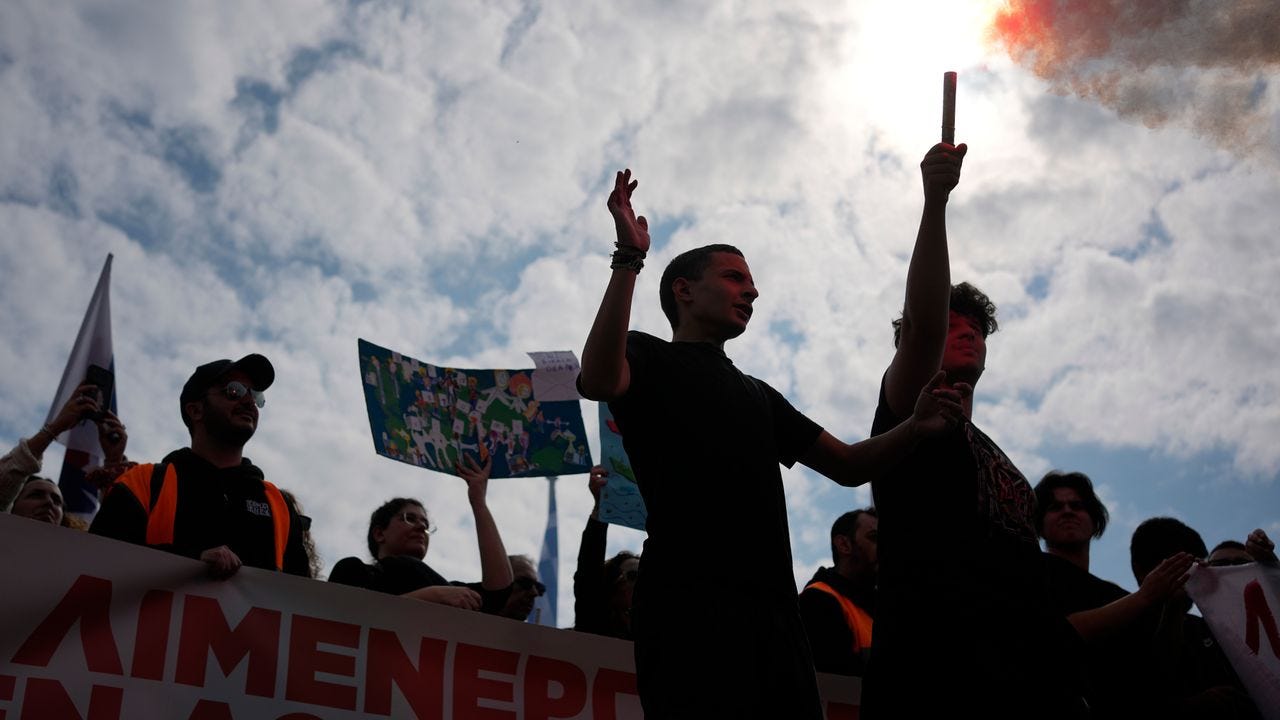
Thousands of workers marched in Athens and other Greek cities on Wednesday, 25 November, in a 24-hour nationwide strike over wages, living costs and military spending. Police put turnout in Athens and Thessaloniki at around 14,000, Africanews reported. The Communist Party-aligned All-Workers Militant Front (PAME), which organised much of the action, said tens of thousands took part in some 80 towns and cities.
The strike disrupted Athens metro services, kept ferries in port and grounded flights to 15 regional airports, according to Africanews. The public-sector confederation ADEDY struck over stagnant wages, energy insecurity and declining public healthcare and education. Inflation reached 5.7 per cent in October, and the gross monthly minimum wage is €968.
PAME gave the strike a wider political frame. In a statement after the 30 October day of action at ports, which it said reached 113 ports in 21 countries, it said workers refuse to “pay with our lives and incomes” for Greece’s involvement in the war and for corporate profits. After the strike, PAME said 31 labour centres, 16 federations and hundreds of unions had backed it, and that it went ahead over the objections of the leadership of GSEE, the main private-sector confederation.
PAME’s next step is rallies against the government’s budget, which it calls a war budget, on Tuesday, 15 December, in Athens and other major cities, along with further strikes in workplaces and sectors.
The Greek action follows a wave of protest across Europe. The CGT said a general strike in France on 5 November drew around 1.6 million people. Spain’s largest unions called a general strike over housing and wages on 11 November. In Belgium, unions reported at least 70,000 marchers on 23 November against a government plan to cut at least €10 billion from social security while spending about €34 billion on rearmament by 2034.
In solidarity messages published on PAME’s website, Italy’s grassroots union USB, which held its own general strike on 30 October, said workers in Greece and Italy face low pay, rising costs and insecurity while huge sums go to rearmament. A Czech union sent a message repeating, almost word for word, a passage from USBs. “War is not a prospect for the future of the people,” it said.