


For more than two decades, a central assumption shaped much of the Western understanding of Iran. The Islamic Republic was portrayed not merely as an ideological adversary, but as a structurally fragile state presiding over a deeply alienated society. Western policymakers, major media outlets and Persian-language opposition networks repeatedly argued that the gap between the Iranian state and the Iranian people had reached a point where any major external pressure could trigger internal fragmentation.
This assumption became one of the foundations of Western strategic thinking toward Iran.
The belief was that sanctions, isolation, psychological warfare and eventually military pressure would not strengthen Iranian cohesion, but accelerate internal collapse. Iran, according to this framework, was presented as a politically exhausted country surviving primarily through coercion rather than legitimacy, national identity or social resilience.
The events of the past year exposed how profoundly incomplete that reading of Iran actually was.
Twice within a single year, Iran faced direct military confrontation involving two nuclear powers and some of the most advanced military infrastructures in the world. Yet in both confrontations, the scenario anticipated by many outside observers never materialized. Iran did not descend into internal fragmentation. State institutions did not collapse. Urban order did not disintegrate. Supply chains remained functional. Most importantly, a broad sense of national cohesion emerged across political, cultural and social lines that many analysts had long assumed were irreparably fractured.
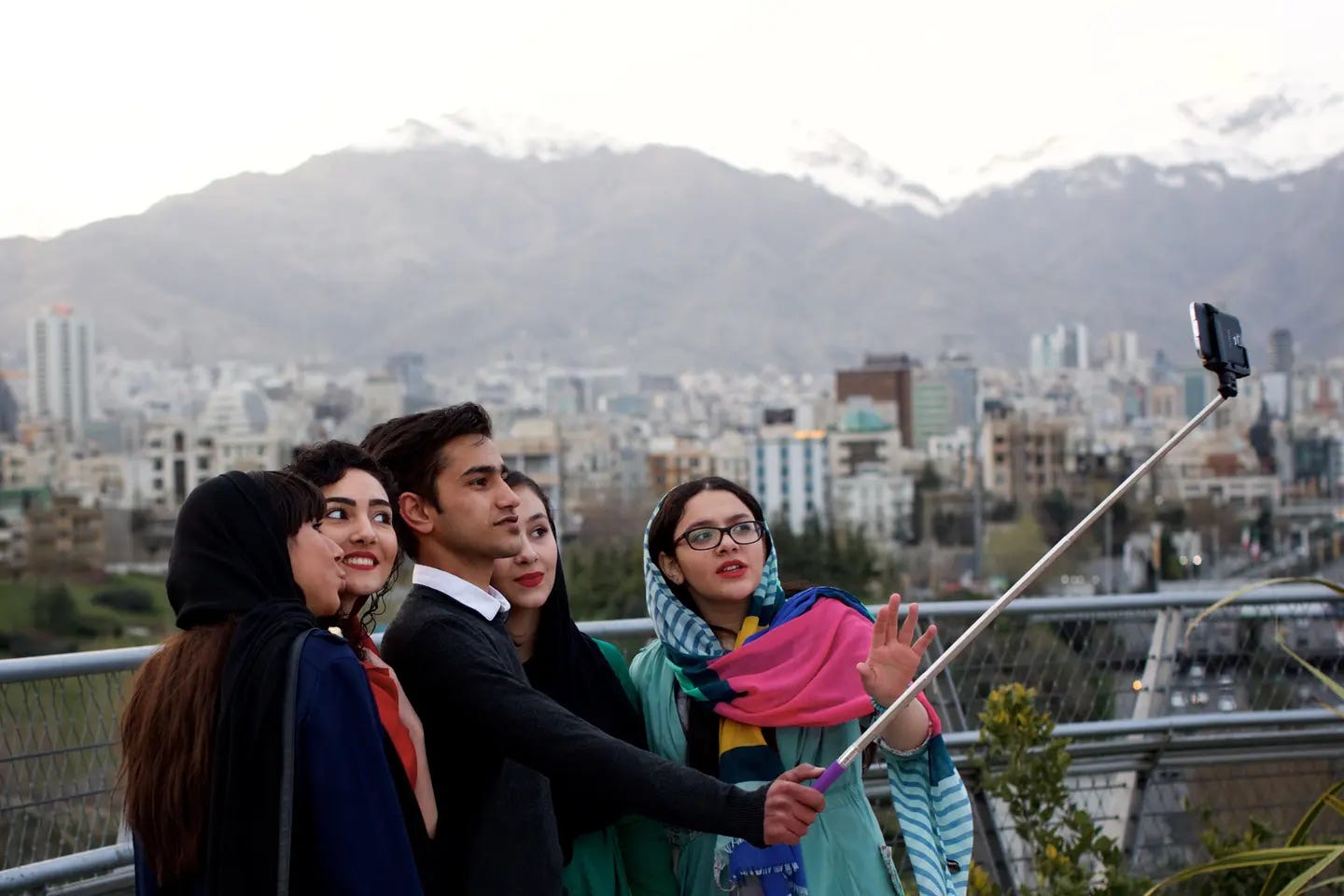
Nearly eighty nights after the beginning of the war, Iranian cities remain crowded late into the evening. Public spaces across Tehran are filled every night with people gathering in parks, commercial districts and cafes. The social atmosphere inside the country does not resemble the image of a society collapsing under military pressure. On the contrary, what has emerged is a renewed form of national consciousness that extends far beyond traditional ideological support for the Islamic Republic.
One of the most important strategic miscalculations made by many external actors was their failure to distinguish between opposition to aspects of domestic governance and opposition to the existence of the Iranian state itself.
For years, Iranian society was interpreted through a simplistic binary framework: pro-regime versus anti-regime. But the war demonstrated that this framework was incapable of explaining the actual political psychology of Iranian society under conditions of external confrontation.
Many Iranians who strongly criticize domestic policies nevertheless viewed the military conflict not as a confrontation with a political faction, but as a confrontation with Iran as a sovereign state and historical civilization. This distinction fundamentally altered the social response to the war.
Perhaps the clearest indication of this shift has been the emergence of a broad nationalist discourse cutting across ideological and cultural divides. Women without traditional hijab openly express support for Iran’s territorial defense. Young urban middle-class citizens who may oppose parts of the political system simultaneously defend Iran’s deterrence capabilities and regional position. The issue, for many people, is no longer reducible to support for or opposition to the Islamic Republic. It is increasingly framed as a question of national survival, sovereignty and strategic independence.
This psychological transformation is particularly visible in the public discussion surrounding the Strait of Hormuz.
For decades, Hormuz functioned primarily as an abstract geopolitical concept discussed in international energy reports and military analyses. Inside Iran, however, the war transformed it into a symbol of tangible national leverage. Millions of ordinary Iranians suddenly became acutely aware that one of the world’s most strategically important maritime chokepoints lies under Iran’s direct geographic influence.
The implications of this realization have been profound. Many Iranians increasingly interpret Hormuz not merely as a military asset, but as evidence that their country possesses structural geopolitical importance far beyond the image traditionally presented in Western discourse.
A similar transformation has occurred regarding uranium enrichment.
For years, Western narratives framed Iran’s nuclear program almost exclusively through the language of proliferation risks and ideological escalation. Inside Iran today, however, enrichment has increasingly become associated with national dignity, strategic deterrence and sovereign technological capacity. Even many citizens critical of the political establishment now describe enrichment as a non-negotiable component of Iran’s strategic independence after witnessing direct military confrontation with external powers.
This does not necessarily reflect ideological radicalization. Rather, it reflects the emergence of a broader strategic consciousness within society itself.
One of the least understood aspects of the recent conflict is that the war forced many Iranians to reassess their own country. Years of sanctions, economic pressure and international isolation had gradually normalized an image of Iran as technologically backward and structurally weak, not only abroad but even among parts of Iranian society itself.
The war disrupted that perception.
When major infrastructure sites, military facilities and strategic assets became subjects of international military analysis, many ordinary Iranians discovered the scale of the country’s industrial, engineering and logistical capacities in ways they had never previously considered. One symbolic example emerged after enemy strikes targeted the B1 bridge near Karaj. International reporting described the structure as one of the largest bridges in the Middle East. Inside Iran, many citizens reacted with genuine surprise, asking how such large-scale infrastructure had existed inside their own country while years of media narratives had consistently portrayed Iran as regionally backward and technologically stagnant.
This reaction revealed something deeper than simple surprise. It exposed the extent to which prolonged psychological and media warfare had shaped both external and internal perceptions of Iran.
At the same time, another critical reality became increasingly visible during the conflict: despite the scale of military escalation, Iran’s domestic infrastructure proved considerably more resilient than many external analysts anticipated.
Basic supply systems continued functioning. Essential goods remained available in markets. Urban administration remained operational. Public transportation continued. Fuel distribution networks functioned. Hospitals remained active. While economic pressure unquestionably intensified, the systemic collapse predicted by many observers never occurred.
This matters because modern wars are not fought exclusively on military fronts. They are also contests over psychological endurance, social stability and institutional resilience. In that sense, the conflict produced a significant strategic outcome inside Iran: it strengthened the perception among many citizens that the country is materially and institutionally far stronger than years of external narratives had suggested.
None of this means Iran is free from internal problems. The country continues to face serious economic pressures, inflation, housing difficulties and social frustrations. Significant sections of society remain critical of aspects of governance and domestic policy. But what changed after the war was not the disappearance of criticism. What changed was the broader interpretive framework through which many Iranians now understand external pressure.
A growing portion of society increasingly views sanctions, economic warfare and military confrontation as interconnected components of a larger geopolitical effort aimed not merely at changing government behavior, but at limiting Iran’s emergence as an independent regional power.
This shift in perception may ultimately become one of the war’s most consequential long-term outcomes.
For years, much of the Western approach toward Iran rested on the assumption that pressure would widen the gap between state and society. In practice, however, the confrontation appears to have generated the opposite effect. External pressure did not erase internal disagreements, but it increasingly pushed many citizens to separate domestic political criticism from questions of national sovereignty and strategic autonomy.
This distinction is essential for understanding contemporary Iran.
The reality emerging inside the country today is not one of ideological uniformity. Iran remains socially diverse, politically contested and culturally dynamic. But the war appears to have accelerated the emergence of a broader national consensus around one central idea: that Iran’s future should be determined internally rather than imposed externally.
That consensus now extends across very different sectors of society, including many people who previously had little engagement with geopolitical or strategic issues.
The result is that Iran today is entering a new political and psychological phase. A country long portrayed internationally as internally fragmented is increasingly experiencing a form of cohesion rooted less in ideology and more in collective historical consciousness, strategic awareness and national identity.
And this may ultimately represent the deepest strategic consequence of the war.
Because states become significantly more difficult to coerce when strategic independence ceases to function merely as a government slogan and instead becomes internalized as a shared national principle across society itself.
The war did not simply alter regional calculations surrounding Iran. It altered how many Iranians understand their own country, their own strategic position and their relationship with the outside world.
That transformation may outlast the war itself.
