


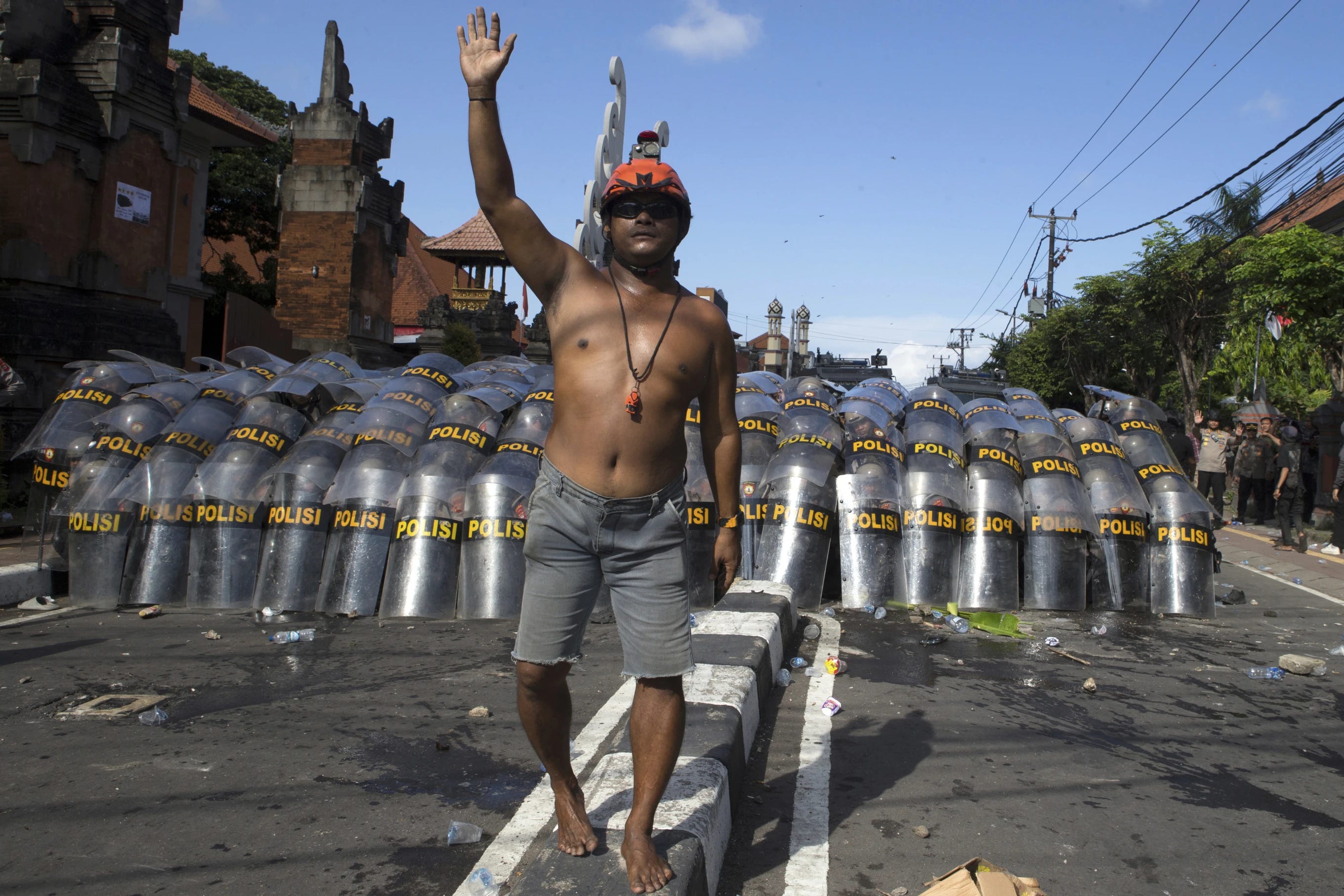
The paradox is no longer subtle. It is written across the region’s skies and buried in the forests of West Papua. Indonesia, a nation that presents itself to the world as a rising democratic power and an indispensable partner for global stability, is simultaneously presiding over a domestic order in which liberty is increasingly conditional, dissent is reframed as betrayal, and human dignity is subordinated to the imperatives of extraction and control.
Under President Prabowo Subianto, this is not a story of isolated abuses. It is the architecture of a state that has learned to speak the language of international responsibility while hollowing out the rights it claims to protect.
Consider the diplomats’ dilemma. When the United Nations Secretary-General visited Jakarta, the official readouts spoke of peacekeeping, Palestine, and reform of the multilateral system. They did not speak of the more than one hundred thousand Indigenous Papuans displaced by military operations in a single year, nor of the schools and clinics occupied by security forces, nor of the journalists and activists who are arrested and mistreated for documenting the consequences of national development projects.
This silence is not accidental. It is the product of a calculated exchange: Indonesia’s contribution of over fifty thousand peacekeepers to UN missions buys it a measure of immunity from scrutiny at home. The moral economy of international institutions rewards what states contribute abroad, not how they treat their own citizens. And Jakarta has learned to spend that credit wisely.
In West Papua, the machinery of extraction and the machinery of repression are not separate systems. They are the same system. Human Rights Watch has documented how military and police units used drones and airstrikes, set up checkpoints, and arbitrarily arrested suspected militants after an insurgent attack, displacing at least one hundred thousand people in 2025 alone.
The Merauke food estate, a flagship of the government’s developmental vision, has cleared more than two million hectares, forcibly displacing Indigenous communities while, in the words of one HRW researcher, “every bulldozer is accompanied by soldiers with semi-automatic weapons.” The legal architecture reinforces this dispossession. More than a dozen laws are used to prosecute Indigenous leaders and environmental defenders who dare to contest land grabs, with activists spending months or years fighting groundless claims.
The Malind peoples’ lawsuit against a highway cutting through their ancestral forest was rejected, confirming that free, prior, and informed consent functions as a ritual of consultation, never a right of veto.
This is the logic of what might be called extractive sovereignty: the state’s primary relationship to territory and population is defined by what can be taken from them. Nickel downstreaming, palm oil expansion, and food estates are framed as contributions to the global green transition and national resilience.
In practice, they are mechanisms for converting customary land into corporate assets and for disciplining communities that resist. The green veneer does not alter the necropolitical core. It merely updates the vocabulary.
The narrowing of civic space follows the same pattern. Amnesty International has documented coordinated disinformation campaigns—often involving military-linked accounts—that brand journalists, activists, and academics as “foreign agents,” exposing them to intimidation, criminalisation, and physical violence. In March 2026, Andrie Yunus, a prominent human rights defender, was the victim of an acid attack in Jakarta after months of such online targeting.
The message is unmistakable: criticism of the developmental project is not treated as legitimate political dissent but as a security threat to be neutralised. The new criminal code, in force since January 2026, criminalises extramarital sex and same-sex conduct, expands blasphemy provisions, and introduces penalties for insulting the president, creating a legal architecture that protects the state from its citizens rather than protecting citizens from the state.
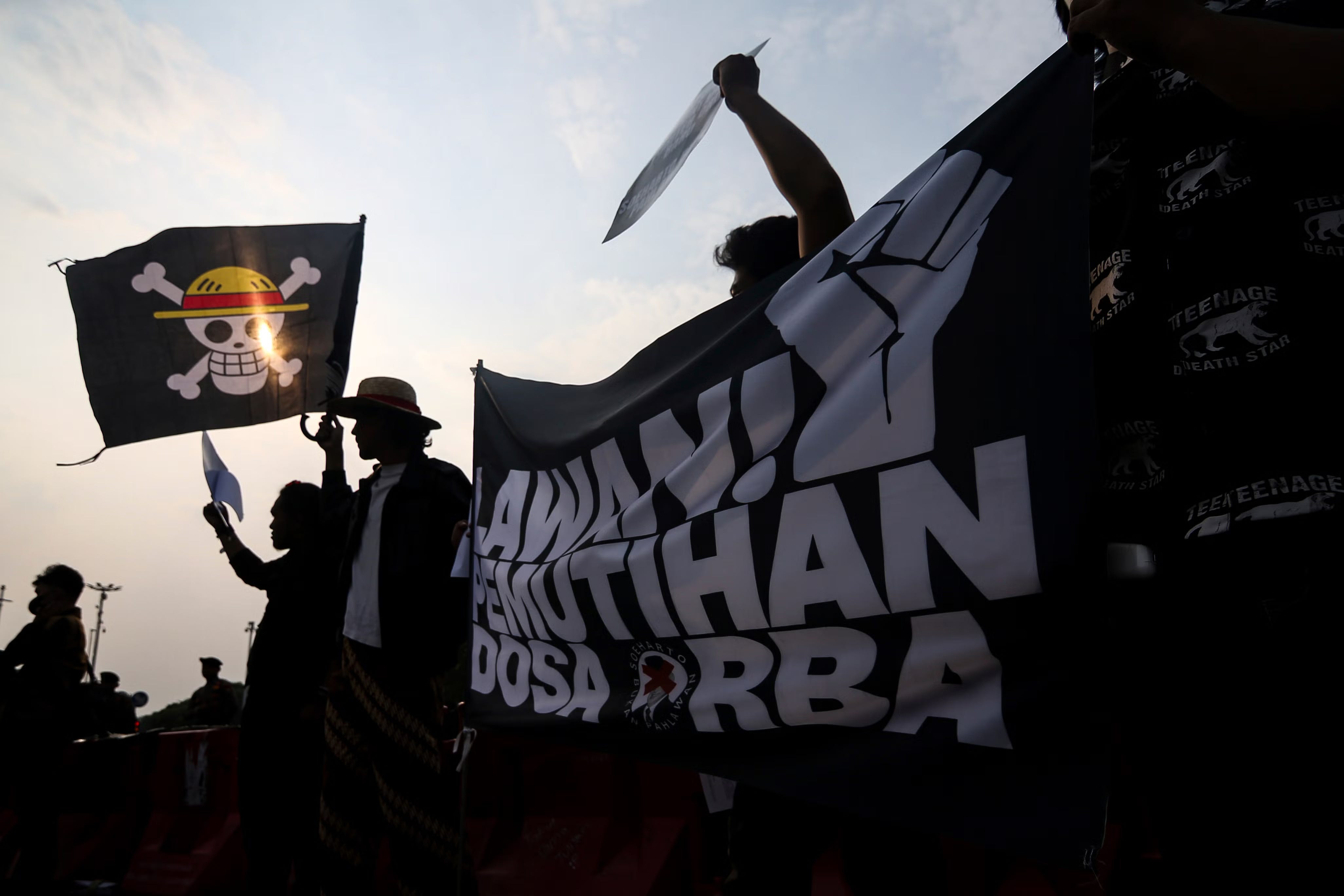
The revised police law embeds discretionary powers in the ordinary grammar of governance, making surveillance and intimidation routine rather than exceptional.
The costs of this order are not distributed evenly. They fall most heavily on those whose labour and bodies sustain the developmental machine. Indonesia’s trade unions have been excluded from meaningful consultation on the government’s new human rights due diligence framework, even as the International Trade Union Confederation gives the country its worst rating for labour rights violations.
Fixed-term contracts can now be extended for years, severance has been slashed, and minimum wages in many provinces remain below poverty thresholds. Women bear a disproportionate share of this violence.
The National Commission on Violence Against Women recorded 376,529 cases of gender-based violence in 2025—the highest in a decade, a 14 per cent increase—with the home remaining the most dangerous place for women and girls. The sexual violence law exists on paper, but its enforcement is starved of resources, leaving survivors without shelters, legal support, or reliable pathways to justice.
Meanwhile, the environmental externalities of this model spill across borders. The prolonged forest and land fires in Sumatra and Kalimantan have produced more than 277,000 cases of acute respiratory infection across seven provinces, forced school closures in neighbouring countries, and triggered public protests and legal action at home. Indonesia has been slow to accept regional firefighting assistance, and officials have sometimes deflected criticism rather than declare a national disaster.
The haze is not a natural calamity. It is a governance choice—a deliberate externality produced by the same land-clearing permits and peatland drainage that drive the extractive economy. When the state securitises environmental criticism and restricts access to information, it is protecting the conditions of extraction, not the public good.
The international community’s response has been, at best, uneven. The United Nations depends on Indonesia for peacekeeping and regional stability, and it has calibrated its diplomacy accordingly. The OECD accession process proceeds despite documented labour rights deficits. The UN Human Rights Council, which Indonesia has presided over, has provided a platform for the projection of progressive internationalism while domestic accountability remains non-binding and largely ceremonial.
This is not hypocrisy in the simple sense. It is a structural feature of a system that rewards geopolitical utility and treats human rights as a matter of voluntary compliance rather than a condition of legitimacy.
For the arbiters of global legitimacy, the implication is uncomfortable but clear: Indonesia cannot be treated as a reliable democratic partner while ignoring the domestic order that sustains its international standing. The shield it has built—of peacekeepers, of non-alignment, of Global South leadership—is not impenetrable. It depends on the continued willingness of external actors to compartmentalise.
That willingness should be withdrawn. Accountability must be reconnected to contribution. Access to West Papua must be a condition of diplomatic partnership, not a concession to be negotiated. Labour and environmental standards must be integrated into trade and accession processes, not parked in separate institutional silos.
And the voices of Indonesian civil society—the journalists, the unionists, the Indigenous leaders, the women documenting violence—must be treated as essential partners in any serious engagement, not as inconvenient obstacles to strategic convenience.
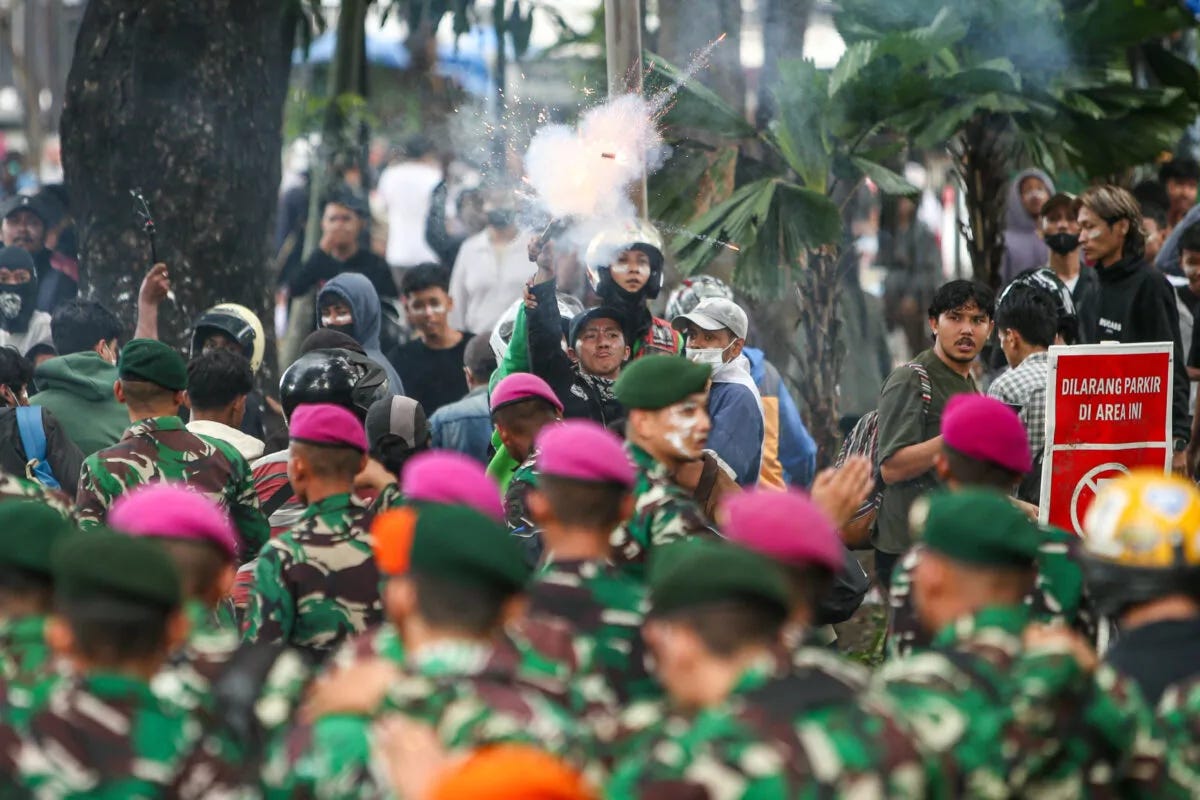
The choice is not between stability and rights. It is between a stability built on silence and a stability built on consent. Indonesia’s own constitutional tradition, however contested, contains the resources for the latter. The question is whether the international community will continue to reward the former.
The skies over Southeast Asia, and the forests of West Papua, suggest that the cost of not choosing is already being paid—by those who have no voice in the capitals where the choice is made.