


As it threatened to do, Iran immediately retaliated to being attacked by Israel and the USA by targeting US military bases in the Gulf states as well an array of civilian structures, including oil and gas facilities. Iran has, however, claimed, without hard evidence, that some of these attacks have emanated from Israel and the US—this is certainly plausible as it is in their interests to actively draw in the Gulf states in the war. Such false flag operations can potentially accomplish this goal but, so far, have not succeeded.
Regardless of Donald Trump’s astonishment at these attacks—he simplistically pointed to the purported good relations between the Gulf states and Iran—they are understandable and predictable and can be thought of as payback time.
Iran’s animus towards the Gulf states goes back to their financing the Iraqis in the 1980s after Iraq’s attack on Iran, with American encouragement, in 1980. Indeed, the Gulf states saved Iraq from bankruptcy by providing it with $37-60 billion in loans; Saudi Arabia was said to provide Iraq with $1 billion per month starting in mid-1982 (Karsh, 1982). That war caused massive loss of life and destruction to Iran—without the Gulf states’ support, Iraq may have been defeated in the early stages of the war.
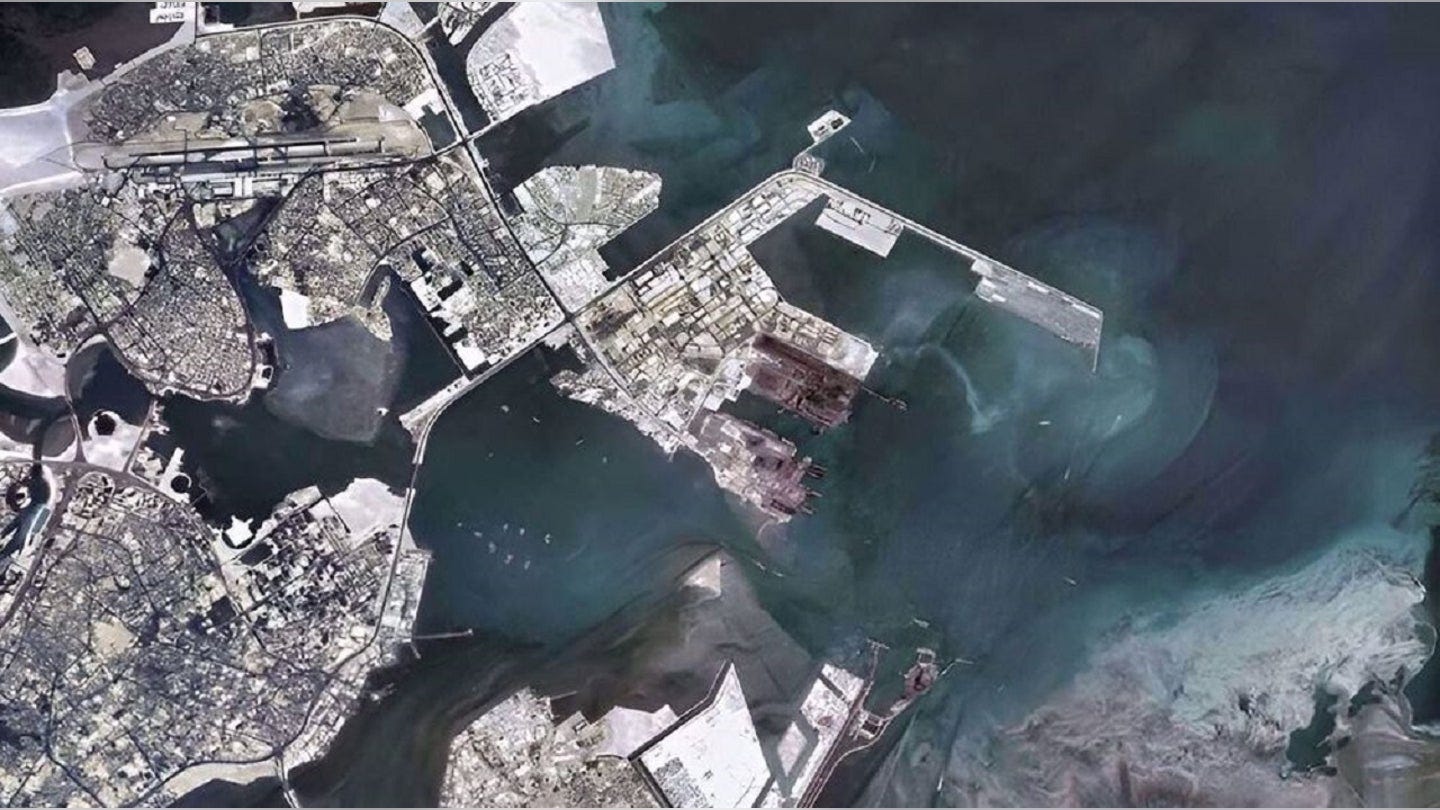
There are good reasons why Bahrain and the UAE have especially been targeted—Bahrain hosts the US Fifth Fleet—and though the Iranians have not made public reference to this, it is valid to presume that their acute animus towards them stems from their membership of the Abraham Accords of 2020 which normalised relations with Israel. Accordingly, they (the other signatories were Morocco and Sudan) abandoned any meaningful consideration for the Palestinians which, admittedly, was always negligible. Importantly, however, Iran viewed the Accords as a security threat.
The preamble to the Abraham Accords agreement between Israel and the UAE states:
“Reaffirming their shared commitment to normalize relations and promote stability through diplomatic engagement, increased economic cooperation and other close coordination”. Article 5 lists 11 spheres of cooperation but, curiously, there is no mention of security and intelligence sharing. However, Articles 4 and 6 give an insight into the security agenda:
Article 4: “They undertake to take the necessary steps to prevent any terrorist or hostile activities against each other on or from their respective territories, as well as deny any support for such activities abroad or allowing such support on or from their respective territories.”
Article 6: “The Parties shall work together to counter extremism, which promotes hatred and division, and terrorism and its justifications …”(White House, 2020).
This diplomatic language masks the true agenda: the “extremism” and “terrorism” indubitably refers to Iran and its allies—notably Hamas and Hezbollah. So, the agreement inveigles the UAE into hosting Israeli agents spying on Iran from across the gulf: indeed, Iran has been massively infiltrated by Mossad agents.
The UAE had hoped that with their membership of the Accords, Israel would not further annex the West Bank by illegal Jewish settlements—crucially, this was not stipulated in the agreement—but was contemptuously ignored as the Israelis continued with the annexation. Typically, however, this did not unduly bother the UAE and other Gulf states for whom the issue of Palestine had long been a nuisance or an irrelevance.
Immediately after the Israel-US attack on Iran on 28 February, Iran’s retaliation included the bombing of Fairmont The Palm hotel in Dubai. Though this was not confirmed by official sources, social media comments alleged that CIA and Mossad agents were in the hotel when it was targeted. This is unsurprising as a key purpose of the US bases and the Abraham Accords is to spy on Iran and the spies are rewarded by being granted stays in luxury hotels.
My contention is that before too long, Iran will give the Gulf states an ultimatum: rescind the Abraham Accords, desist from collaborating with Israel—this especially applies to the Saudis—and completely remove US bases. If they do not comply, Iran will invade them. They will, of course, come under enormous pressure from the Americans not to do so but the Americans too will face the same demand as part of a lasting settlement.
Failure to meet this demand will likely trigger an Iranian invasion of the Gulf states. The Iranians will calculate that this is very different to Iraq’s invasion of Kuwait in 1991 where the Americans cobbled together a coalition that expelled the Iraqis. At the present juncture, the Americans will not likely obtain such a coalition—all its allies have hitherto refused Trump’s demands to partake in a naval flotilla to open the Strait of Hormuz—and so likewise will not be enamoured at joining in a potentially very costly war in the Gulf.
So, the US will need to send in ground troops on its own, or with the Israelis—this will be enormously unpopular at home as it risks massive casualties. One thing that unites ordinary Americans is their immense dislike of large numbers of body bags of American soldiers returning home after fighting wars in far-away lands that are of no benefit to them. This may dissuade Trump and his henchmen from taking this potentially disastrous course of action.
With the American bases now in ruins, an invasion by Iran’s enormous army will likely encounter minimal resistance—the Sheikhdoms are rentier states that are averse to fighting wars: Saudi Arabia and the UAE have not been able to defeat the Houthis since they launched a war against them in 2014. It will be immensely popular to the 60 per cent of the Bahrain population who are Shia—their uprising for equal rights against the Sunni Sheikhdom during the Arab Spring of 2011 was brutally put down with Saudi assistance. The ruler, Hamad bin Isa bin Salman Al Khalifa, will abscond well before Iranian troops march towards his palace.
Similarly, little resistance will be encountered in Oman and Qatar, whose rulers will also flee. Regarding the UAE, Iran only needs to take control of Abu Dhabi, the political centre, wherein the other emirates will fall in line. The Iranians will likely combine with the Popular Mobilisation Forces in Iraq to invade Kuwait—whose rulers will quickly capitulate without American assistance.
The one country that the Iranians may hesitate in invading is the largest Sheikhdom, Saudi Arabia, because of its military alliance with Pakistan, a nuclear-armed power—the Strategic Mutual Defence Agreement, signed in September 2025. This was astute by the Saudis who knew that another Israel-UK attack on Iran was imminent and that they may inadvertently get drawn in a future conflict so, accordingly, bolstered their security. But Iran also has good relations with Pakistan, its neighbour, so will not seek to initiate any confrontation with it. However, if the other Gulf states come under Iranian control, the Saudis may bite the bullet and accede to their demand for the removal of the US from the Prince Sultan Air Base in Al Kharj and cease cooperating with Israel.
This is a most appealing vista for the Iranians because not only does it end US military presence in the Gulf, it also situates them as the primary power in the region with firm control of the oil and gas resources. A settlement will inevitably have many elements, including constitutional arrangements, but Iran can give a cast iron assurance that oil and gas will resume flowing to the global market. Such a scenario will be a relief to those countries reliant upon these vital commodities, many of whom and others besides will doubtless be pleased that the Americans no longer act as the policeman of the Gulf.
References
Karsh, E (2002) The Iran–Iraq War: 1980–1988, Osprey Publishing, pp. 1–8
The White House (2020) 15 September, Abraham Accords Peace Agreement: Treaty of Peace, Diplomatic Relations and Full Normalization Between the United Arab Emirates and the State of Israel – The White House
