


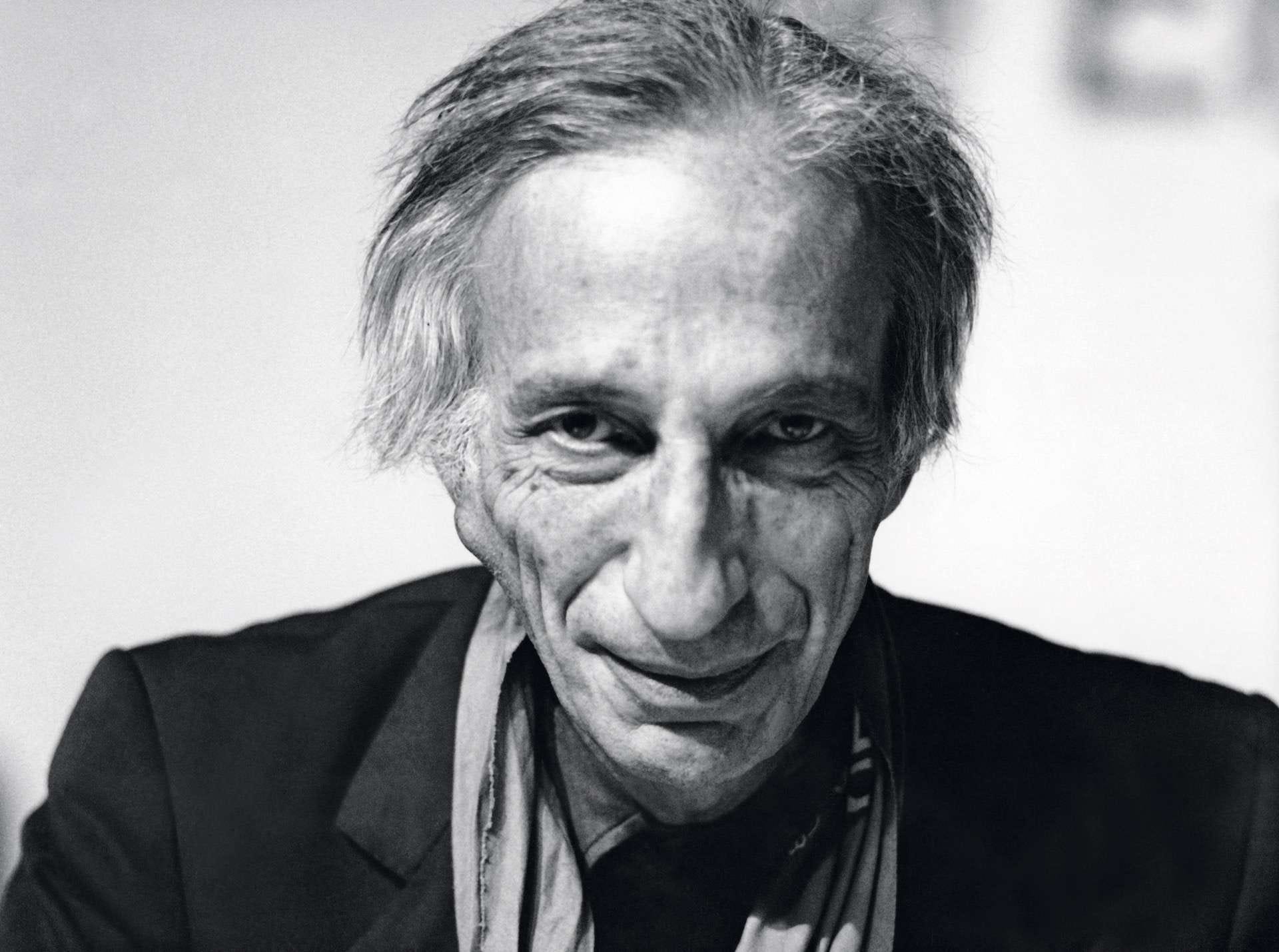
This year marks the centennial of Ivan Illich’s birth. Many of those who collaborated with him during the most intense period of his intellectual creativity—the first half of the 1970s—are no longer alive or active. It is merely a coincidence that I am one of them.
I believe many people today wonder who Ivan Illich was, whose most famous book was perhaps Deschooling Society, published in 1971. Illich was one of the most radical and creative thinkers of the second half of the last century. He was an Austrian Catholic priest for whom the Roman Curia predicted a brilliant future but who chose instead to serve as a parish priest in the poorest neighbourhoods of New York City. He served as vice-rector of the Catholic University of Puerto Rico from 1956 to 1960. He resigned due to disagreements with the bishop of Ponce, who sought to prohibit Catholics from voting for a gubernatorial candidate who supported birth control measures. Having endured a harsh and repressive investigation by the Vatican (which questioned his orthodoxy)—an investigation that would certainly have led to a formal order of silencing—Illich refused to answer the interrogation and voluntarily resigned from active priesthood in 1969.
He was a radical critic of industrial society and its institutions, particularly school education, allopathic medicine, energy waste, and the transportation system dominated by the (false) idea of speed. He was a forerunner of movements such as the degrowth movement and the environmental movement. Ivan was so radical that his radicalism could be mistaken for either the far left or the far right. He refused to discuss his proposals in dichotomous terms, whether the left/right dichotomy or the progressive/reactionary dichotomy. He was admired by some and hated by others. Because he was difficult to label, he was often considered an agent of some malevolent foreign power. He received serious threats. During the time I worked with him, his home in Ocotepec was guarded at night by three ferocious dogs—Rottweilers, if I’m not mistaken. He was a man of the left, though ignored by the card-carrying leftists of Latin America. He certainly could not have imagined that, in the decades that followed, some of his ideas—particularly those regarding education—would be appropriated by the right. As a great thinker, he questioned his own theories a few years after formulating them, when he saw the perverse way in which some were being used.
I met him on 16 February 1970, during his visit to Yale University, where I was a doctoral student. I spoke with him at length on that occasion. Immediately, a strong intellectual and emotional bond emerged between us. He invited me to visit his centre, CIDOC (Intercultural Documentation Center), in Cuernavaca, Mexico. My first visit and stay took place in 1971. I returned several times between 1971 and 1974. My theoretical and political formation owes much to my close collaboration with Ivan Illich between 1971 and 1974. And it owes as much to my agreement with him as to my disagreement with him.
One need only follow the seminars he led, the people he invited, and the politicians to whom he gave refuge to understand the political convictions that guided him. It was there that I met Francisco Julião, the leader of the Brazilian Peasants’ Leagues, who was taking refuge there. It was there that I met the political leaders and influential intellectuals from Salvador Allende’s government who had fled Chile after Augusto Pinochet’s coup (11 September 1973), such as Pedro Vuskovic and Eduardo Novoa Monreal. It was there that I met the great Brazilian social scientist Theotónio dos Santos, with whom I became friends and whom I later hosted in Portugal. It was there that I attended the famous debate between Ivan Illich and Paulo Freire on educational reform.
On 4 September 1971—Ivan’s 45th birthday—I remember we spent the night on the CIDOC terrace discussing the contemporary world, particularly the theme of conviviality in today’s societies. Before us stood the imposing silhouette of the Popocatépetl volcano. The discussions were intense, and Ivan regarded me as one of his favourite disciples. It’s possible that he said the same thing to others. His interest in my work was evident in the priority he gave to the full publication of my doctoral dissertation. Perhaps Ivan’s preference stemmed from the fact that I disagreed with him in a very cordial, yet very direct, manner.
According to him, I was too much of a Marxist. For example, in his debate with Paulo Freire, I sided with Paulo Freire. I came from a country under a dictatorship, where one of the democratic struggles was the fight for universal education and for a profound reform of the school system at all levels. I could not agree with the argument that the important thing was to do away with schools simply because universal education was not possible through the school system. His choice was self-learning and informal education.
During the period when I collaborated with CIDOC, Illich was preparing books offering a radical critique of industrial society, covering, among other topics, energy, professions, medicine, transportation, conviviality and social coexistence. Our conversations were long, and I believe they were important for the development of his books on these topics, as Ivan acknowledges in the preface to the book Tools for Conviviality (1973, 1975), in which he thanks everyone who had been associated with CIDOC or engaged in discussions with him. I wrote a lengthy commentary on the book Energy and Equity (1974) that Illich included in some editions of the book, notably the German, Dutch, and Portuguese editions. I had lost track of this text, but my Italian colleagues who study Ivan Illich’s thought encouraged me to look for it. I found it in the Portuguese edition of Energia and Equidade (Lisbon: Sá da Costa, Cadernos Livres No. 7, 1975, pp. 84 to 94). It is included as an appendix, and I reproduce it at the end of this text, with a note titled “Fifty Years Later.”
The centre that Illich had founded in Cuernavaca, CIDOC, was largely funded by the Spanish-language school operating there, where students paid relatively high tuition fees. The overwhelming majority of the students were future American missionaries on their way to Latin America. At the time, I did not know that this avalanche of missionaries was part of a conservative and imperialist political project. It stemmed directly from the 1969 Nelson Rockefeller Report on Latin America. The U.S. obsession with Cuba goes back a long way—in fact, to the beginning of the revolution in 1959. Rockefeller had been sent by President Richard Nixon to Latin America to propose alternatives to the Alliance for Progress, a programme proposed by John F. Kennedy, which Nixon considered a failure because it had failed to contain the revolutionary momentum of the Cuban Revolution.
Rockefeller, after concluding that the communist threat came primarily from Catholic priests associated with liberation theology, proposed a “conservative religious solution” centred on the most conservative theologies of American Protestantism. This involved sending thousands of missionaries to Latin America, many of whom passed through Cuernavaca to learn Spanish. Learning Portuguese, necessary for evangelising Brazil, certainly found other solutions. The “success” of this policy is now quite evident throughout Latin America. Almost all far-right politicians who come to power declare themselves to be neo-Pentecostal evangelicals. The same political exploitation of this religious orientation is now being promoted in Africa and Europe.
For the progressive intellectuals and politicians who gathered around Ivan Illich, what mattered most about CIDOC was the diversity and intensity of the discussions, topics, and positions expressed in the frequent seminars. For example, in 1972, I taught a seminar on “Law and Revolution” together with the French philosopher André Gorz. It was a major event at the centre, and our discussions were lengthy. I was perhaps more dialectical than Gorz regarding the relationship between law and revolution—that is, between bourgeois law and the socialist revolution. André Gorz carried with him the frustrations of the May ’68 student movement, while I came from a transformative experience in the Jacarezinho favela in Rio de Janeiro and from living through a dictatorship in Portugal. I was taking my first steps in my critique of conservative legal reformism—which I would later develop further—and in the theory of legal pluralism, which, unsurprisingly, excited Ivan: the internal law of the favela as a community organisation without formal safeguards guaranteed by the state.
I returned to Cuernavaca several times, and finally (during Illich’s time there) in August 1974. Ivan took me to visit his home in Ocotepec, where he lived with Valentina. It was an “Illichian” house. At one end were Ivan’s rooms, and at the other, Valentina’s. In the middle was the library, a spacious room consisting mainly of reference books. Ivan believed that we had to know everything that had ever been written about whatever we wanted to investigate. We had to know how to find the books in libraries around the world. Bibliographies were an invaluable aid.
At that time, we had long discussions about my future. In the meantime, the 25 April 1974, Revolution (the Carnations Revolution) in Portugal had taken place. I had just returned from Brazil, where I’d had several clandestine meetings with my friends in Rio de Janeiro about the Revolution. On 20 August, at 5:00 p.m., I went to meet with Francisco Julião. It was a long conversation. I had just arrived from Brazil with the worst news about the dictatorship. This confirmed Julião’s pessimism about Brazil’s future. He returned to Brazil after being granted amnesty in 1979. About ten years later, he returned to Cuernavaca to write his memoirs. He died there in 1999.
Ivan wanted me to continue collaborating with him. I promised to return to CIDOC, but the 25 April 1974 Revolution had changed my life. Ten years after my first stay in Cuernavaca, another great friend, Gustavo Esteva, met Ivan Illich and developed a very lasting relationship with him, one that was more aligned with his views. A great friendship blossomed between Gustavo and me, and our point of reference was Ivan—both for our agreements and our disagreements. Gustavo was an almost fanatical Illichian.
On 10 February 2020, Gustavo and I had a long “Conversation of the World” in San Pablo Etla, Oaxaca, Mexico, during which we discussed at length our differences regarding Ivan’s ideas. Like Ivan, Gustavo rejected allopathic medicine. For this reason, he refused the COVID vaccine and died during the pandemic, shortly after our conversation.
After 1974, I stayed in touch with some colleagues I had met in Cuernavaca, with André Gorz himself, David Weisstub, Harry Athurs and, above all, with my friend Sylvia Marcos. We met again many years later during a New Year’s celebration in San Cristóbal de Las Casas to commemorate the 1994 Zapatista uprising. After August 1974, I never saw Ivan Illich again and lost the letters I exchanged with him and Valentina Borremans. But Illich’s influence is very much present in my work, especially in the development of epistemologies of the South.
Appendix
Comments on Energy and Equity (1975, originally published in 1974)
The main thesis of Illich’s work is this: There is a critical level of energy consumption and industrial activity beyond which the following can be expected to occur: (1) the effect of industry tends to be as destructive in the social environment as in the physical environment; (2) the structure of production relations (be they capitalist-private or socialist-public) ceases to be a decisive variable, and, furthermore, the political problem itself borders on irrelevance, given that the lack of equity and freedom will be inherent in the nature of things; (3) at different cost levels, the resulting social disintegration will be just as fatal for the rich as for the poor; the only way to avoid this is to limit growth and prohibit energy consumption beyond a critical level. This involves a decision in which people should be able to participate.
One of the important aspects of Illich’s work lies in demonstrating, in a new way, the Hegelian law of the transformation of quantity into quality: when the increase in energy consumption and industry reaches a critical level, the concomitant social process becomes something new and qualitatively different. In other words, as long as per capita energy use remains below a certain quantum, the simultaneous pursuit of equity and industry is possible, regardless of the nature of the organisation of production relations and the political process.
According to this framework, the world can be divided into two groups: poor countries—or countries that are still below the critical level—and rich countries, which are dangerously approaching the critical level or, in fact, have already exceeded it. Traditional wisdom regarding social transformation—that is, the wisdom of engineers, economists, planners, and sociologists—has held that while in poor countries the economic factor takes precedence over the political factor (develop first, distribute later), in rich countries the political factor takes precedence over the economic factor. Illich poses a radical challenge to this false wisdom and proves, beyond a shadow of a doubt, that if this dichotomy (economic factors versus political factors) made any sense, poor countries would be in a better position than rich countries. In fact, poor countries are still at the stage of what I might call preventive politics. This policy operates on two different (but related) levels: (1) preventing the critical level from being reached, and thus preventing the ideologues of “develop first, distribute later” from coming to power—that is, so to speak, the Grundnorm of the political process; (2) organizing production in such a way that the simultaneous pursuit of equity and energy can become a reality—that is, rejecting the “politics of exploitation” and organizing production around a socialist model, as the situation demands.
By contrast, rich countries find themselves in a phase of stopgap measures or emergency policy. They are in what jurists would call a state of necessity (Notstand). This state denotes a situation in which two or more conflicting values collide. Any practical decision arising from this situation involves the sacrifice of one of these values. This is what Illich expresses in these terms: “Beyond this critical point, one person cannot save time without forcing another to lose it.” At a macro level, the conflict arises between the value of human survival under humane conditions—that is, under conditions of equity and freedom—and the interests and values created by the infinite growth of industry. According to Illich, the former is the higher value and must therefore be preserved at the expense of the latter.
Moreover, this conflict is to some extent artificial, because the second value is self-contradictory: the fundamental value of industrial production (man as a humaniser of nature) can only be maintained by rejecting industry as it currently exists. Whatever the theoretical nature of the conflict, its practical effect on the social fabric is so profound that it cannot be resolved simply by eliminating exploitative policies (as has been suggested for poor countries). The crisis runs deeper, and the solution must be more radical. The solution is political, even if it breaks with the conceptualisations of political science and “developed” political scientists. It is a solution that has to do with the internal structure of the economic factor and not merely with its external consequences. It consists of destroying the industrial apparatus and reducing its energy consumption to below the critical level. It is a political decision that negates the political process as we understand it today; it is an economic decision that negates the economic process as we understand it today.
The foregoing must be supplemented with two factors of complexity:
(1) Due to the fallacy of “poles of development” invented by the proponents of national planning, any poor country is also, to a certain extent, a rich country. All countries, both rich and poor, have poles of development and poles of underdevelopment. It is the different proportions in which they occur that separate them into two basic groups. For example, São Paulo is the “rich country” of Brazil, while the country’s interior is the “poor country.” São Paulo is already in a state of need, while the interior is still in the preventive state. This factor constitutes the first aporia to the practical realisation of Illich’s political project. This project presupposes that a poor country will make decisions as a poor country—that is, in the style of preventive politics. However, as things stand now, the “rich country” within a given nation generally governs and dominates the “poor country” of that same nation. São Paulo, in fact, governs and dominates the interior of Brazil: will São Paulo decide in such a way that Brazil’s “poor country” prevails? No, because this would be self-destructive, since São Paulo’s “wealth” is based on the modernisation of the interior’s poverty—that is, on the interior’s submission to the ideology of the need for greater development (the Amazon highway is an example of this). On the other hand, if São Paulo decides as a “rich country” (a policy of expediency), the result will be either the perpetuation of the existing structure of internal capitalism or a political rift between São Paulo and the interior, depending on a variety of factors.
(2) The other factor adding to the complexity relates to an assumption underlying Illich’s project: that rich and poor countries are autonomous in deciding their respective survival strategies. Illich states: “Right now they (India, Burma, and—at least for a short time—China) can choose to remain within the energy levels to which the powerful will be forced by catastrophe.” It seems to me that this obscures the fact that, in this world, the relationship between rich and poor countries is characterised by imperialism and dependency. In fact, the very terms “rich” and “poor,” as used by Illich, are sufficient to denote this situation. In other sections of this work, Illich does indeed show that he is aware of the true nature of such relations. It should therefore be clarified that Illich’s project presupposes that the first act of preventive policy to be undertaken by poor countries must consist of severing all economic and political ties with rich countries. This would be the international Grundnorm of preventive policy (as opposed to the internal Grundnorm outlined above). One could further speculate that only through this initial decision by the poor country would the conditions be created under which the rich country could carry out its policy of expedients. And, since the poor country is the “determined negation” of the rich country, one could view this constraining system as a dialectical process in which the regenerative initiative lies with the poor country. (In a rich country, the centre of power is too corrupt due to its excessive energy consumption.)
In fact, Illich’s project—which is a radical policy project for survival—posits a clear vision and conceptualisation of what I would call a dialectical totality as opposed to a mechanical totality, predominant in rich countries, which is based on the ideological conversion of a part of the social process into the whole of it, a manipulation that aims to perpetuate the status quo. Its agents are technocracy and bureaucracy—its two greatest products—which reinforce factionalism in the type of society that, according to Illich, “must prevail when mechanical power exceeds metabolic energy by a certain proportion.” The dialectical totality is the precondition for participatory democracy, and the latter “requires low-energy technology.”
Here, however, a new aporia arises in Illich’s project. According to him, identifying the quantum of energy above which power corrupts is a political decision that must be reached within a system of participatory democracy. But since this type of democracy requires low-energy technology, it is no longer feasible in wealthy countries. Its feasibility depends on the prior identification and implementation of the quantum of energy, with the result that what is presented as the product of participatory democracy is in reality its precondition. This creates a vicious circle in which we might eventually observe a corrupt power structure deciding on the quantum of energy beyond the scope of its own corrupt power. This brings us back to the problem of the dialectical relationship between law and revolution that I addressed in my work “Law against Law” (a doctoral dissertation published in full in Cuadernos de CIDOC and in Law, Growth and Technology, edited by David Weisstub, Cuernavaca, CIDOC.)
Illich’s critique of capitalism, because it is so radical and incisive, can only be compared to that of Marx. The profound differences between these two social critiques correspond to the different social conditions that each analyses (that of “clean” capitalism and that of “dirty” capitalism). Given that capitalism, by its very nature, has set out to manipulate the largest socialist countries (Russia and probably China) through an ideology of infinite industrial growth, it seems to Illich that, once energy consumption exceeds a critical level, whether its production is publicly or privately owned matters little. One cannot help but agree with him. The emergence in China of a class that travels by jet plane above the masses who move about on their own constitutes a warning. However, this should not obscure the fact that in four-fifths of the world, the elimination of the politics of exploitation (that is, of exploitative relations of production) remains a crucial element of preventive policy.
Reflecting a little further, Illich’s critique raises a more fundamental question: is Marxism fundamentally tainted by an ideology of infinite growth?
In opposition to the creation of political utopias, Illich shows us, through the example of transportation, that infinite growth—regardless of the political system—leads to a loss of social justice (greater inequality), personal freedom (over-scheduling), and leisure (increasing scarcity of time). G. Lukács (History and Class Consciousness) demonstrated, in the face of these very same political utopias, that only an economic revolution can lead to a more humane future. Illich goes beyond Lukács by proclaiming the need for an energy revolution as the very foundation of a revolutionary economy.
For Illich, it goes without saying that the poor in a rich country are worse off than the poor in a poor country, because the former are more subject to the modernisation of poverty and the over-scheduling that it entails. The modernised poor thus become “accomplices in the distortion of physical occupations and of the occupation of the inherited space within which humankind has slowly evolved.” This fact raises the problem of “reification” and its consequences: an alienated consciousness, or, in Illich’s terminology, an imagination dulled by speed. “The commuter feels frustrated by growing inequality, by a scarcity of time, and by personal powerlessness, but his only hope lies in more of the same: more traffic through more transportation.” Illich’s passenger has lost the sense of dialectical wholeness, which is why he “cries out for relief through mechanical transformations”—transformations that correspond to mechanical wholeness and ensure the perpetuation of the status quo of energy.
Social inequality is also exacerbated in material terms. Maximum privileges for a few represent a tremendous social cost for the vast majority. These maximum privileges increase as the equalisation of the unequal increases. But this inequality is a form of enslaved equality: equality in the face of the compulsory consumption of high doses of energy. We thus gain a new perspective on an old problem: equality for all before the law becomes little more than a slogan when the consumption of products promoted by dominant interests becomes equally compulsory. The further away from the law people are, the more equal they become. In other words, the greater the distance from the law, the greater the equality before it. To remedy this situation, it becomes necessary—as we outlined in our previous work—to organise a “low-power” justice system. Illich’s critical framework for a theory of social control is at our disposal.
When we take into account the production of commodities for permanent consumption—such as time, space, forms, etc.—we can guard against the exploitative relationships involved in ordinary life. The ethical considerations raised here are “of a more general nature than kidney dialysis or organ transplantation.” Psychologically, we are further removed from the exceptional than from the ordinary, and this is why the former becomes a more natural habitat for values and ideals.
Our conceptualisations and analyses of the sources of social stratification and political power also require radical reform. Professional sociologists are too entrenched in current conditions to be able to carry out such a reform. It must be guided by marginal thinkers or innovative critics, as Illich himself. Speed is a source of political power, as are schooling, the mass media, and, probably, industries that deal with numbers (statistics, computers).
There is one final point in Illich’s critique that requires consideration: the naturalistic aspect—the idea of a “state of nature” from which a safe and sound criterion can be deduced. The optimal limit and the critical level are related to human metabolic energy. Illich speaks of the need to “identify a natural, inescapable, limited quantity” and a “natural measure.” On the other hand, he emphasises that the decision to identify the limit or level is a political decision that must be reached within the political system. The aporia can be expressed as follows: “The question of what is natural will be answered differently by different peoples. Thus, the political decision regarding the natural limit will turn the latter into an artificial limit.” The decision will not answer the question as it is formulated.
Note Fifty Years Later
In this “appendix,” my studies in the philosophy of law in Germany are still very fresh in my mind. One must disregard the Hegelian style of my commentary. My commentary was not intended as a critique of Illich’s book but simply to highlight what was most innovative about his intellectual and political project and to point out the dilemmas (aporias) that its implementation faced. The suggested (perhaps forced) connection between Ivan Illich and Karl Marx pleased Ivan, not only because it might correspond to the truth, but also because Ivan was aware of the danger that his theories—dominated by the aim of rethinking everything—might be exploited for political objectives that he found repugnant. Our discussions always ended on the topic of the available historical agents and the political conditions necessary to carry out his project. It is no coincidence that the book Energy and Equity bears the following epigraph by a mutual friend, José Antonio Viera-Gallo, who served as Secretary of Justice in President Salvador Allende’s Cabinet: “Socialism can only be reached by bicycle.”
My subsequent work—aimed at rethinking Marxism based on Marx’s texts from before and after 1867 (the date of publication of the first volume of Das Kapital) and, later, at decolonising Marxism—has its origins here. I disagreed with a certain romanticization of poverty on Illich’s part and, above all, with his failure to theorize the relationship between impoverishment and enrichment, which, for me, was essential to understanding and critiquing capitalist society. But at the same time, his critique of infinite growth resonated deeply with me. To understand how my thinking on this issue has evolved, I recommend reading Chapter 21, titled “The Rights of Nature,” of my book Law and the Epistemologies of the South (Cambridge: Cambridge University Press, 2023, pp. 622 to 676).
It is important to highlight Ivan Illich’s pioneering contribution to the discussions on deep ecology that were already taking place at that time. The disruption of the balanced metabolism between society and nature caused by capitalism was crucial for Illich, and it was there that he saw the origin of inequality. While for me such inequality was rooted in the exploitation of labour and nature, for Illich inequality was the automatic result of the excessive production and use of energy and, therefore, did not depend on the mode of production. For this reason, he spoke of industrial society rather than capitalist society. Interestingly, the idea of a metabolic rupture between society and nature is present in Marx’s Das Kapital but would only be emphasised by Marxists many years later.
We were in complete agreement on the idea of participatory democracy and the creativity of communities in solving problems using their own knowledge and resources. Many years later, I would emphasize this very point—and in a dramatic way—in my analysis of how impoverished communities, abandoned by the state during the COVID-19 pandemic, sought to defend themselves with their own solutions based on their own knowledge and resources (From the Pandemic to Utopia: The Future Begins Now. New York: Routledge 2023).
Our differences centred primarily on the role of the state—which, for me, was a major field of contention—and on the recognition of the importance of cultural and epistemic diversity. The epistemologies of the South emerged from the need to view societies beyond differences in industrialisation and levels of energy consumption. The “poor countries” were rich above all because of their histories of anti-colonial and anti-capitalist struggle and the knowledge that emerged from them. Decolonising history was an integral part of the epistemological and political project. But Illich was a prophet, looking toward the future and seeing a future that others did not see.
