


In Jakarta, the price of petrol is now set as much by missiles over the Persian Gulf as by policy in the presidential palace. That uncomfortable arithmetic captures a deeper truth about the Indo-Pacific’s most populous democracy: Indonesia’s economic sovereignty remains entangled in the combustible geopolitics of the Middle East. When Israel’s widening war with Iran over the past two years intensified into direct confrontation, the shockwaves were not confined to Tehran, Tel Aviv or Beirut.
They coursed through the Strait of Hormuz, into tanker insurance premiums, across LNG cargo routes, and finally into the rupiah and the weekly budgets of Indonesian households.
More than one-third of the world’s seaborne oil and around a fifth of global LNG transit the Strait of Hormuz. Analysts have warned that even a partial closure would be “catastrophic” for global energy markets. The mere threat has been enough. Oil recently climbed to around US$82 a barrel—a 14-month high—with some forecasts suggesting prices could surge past US$120 if disruption persists. For Indonesia, now importing roughly one million barrels of crude per day, this is not abstract geopolitics. Each US$1 increase in oil prices is estimated to add Rp3–4 trillion to the national fuel subsidy bill. Multiply that by a US$10 spike, and the fiscal burden becomes staggering.
Much like the 2008 oil shock and the inflationary aftershocks of Russia’s 2022 invasion of Ukraine—when fuel spikes cascaded into food, transport and electricity costs worldwide—today’s Middle East turmoil risks replaying that same painful lesson for energy-importing nations such as Indonesia.
This is the quiet crisis of middle powers in a fractured world: wars fought far away are paid for at home. Indonesia’s vulnerability is historical. In the 1970s and 1980s, oil and gas accounted for roughly half of government revenues. That era funded highways, schools and a sprawling subsidy architecture. When crude prices climb, the shock does not remain at the pump; it seeps into logistics, fertiliser, electricity generation and imported goods, quietly lifting the price of rice, bus fares and school supplies until households feel a distant conflict in the most intimate corners of daily life.
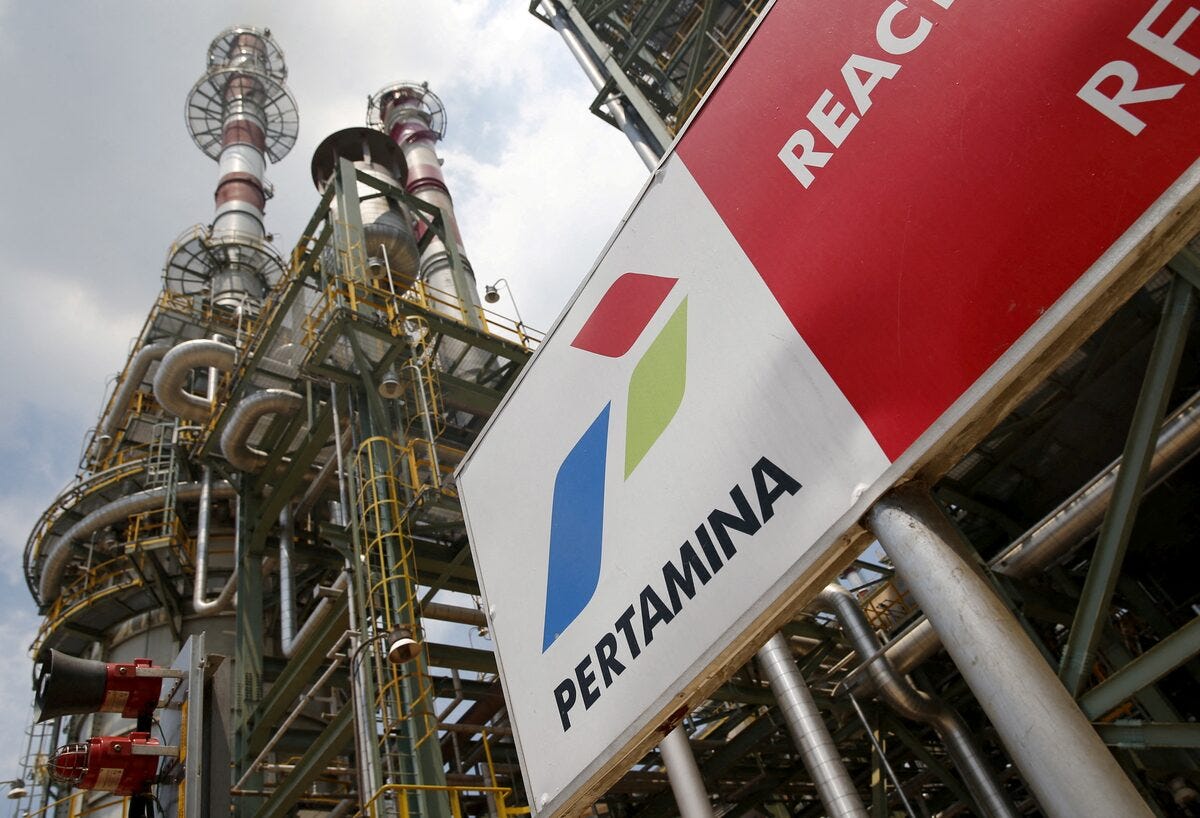
But declining domestic production and rising consumption turned the country into a net oil importer after 2004. Today, around a quarter of Indonesia’s crude imports originate in the Middle East, alongside roughly 30 per cent of its LPG supplies. The Pertamina refineries that once symbolised energy self-reliance are ageing, often mismatched to the crude types most readily available. The symbolism is potent: the Cilacap refinery’s weathered steel tells a story of past abundance and present fragility.
The present Middle East conflict has added a brutal immediacy to these structural weaknesses. Iranian threats to shipping in Hormuz have driven up freight and insurance costs even without a full blockade. Two Indonesian tanker shipments were reported idling in Gulf waters as tensions spiked. Asian economies—from China to Thailand—have felt the squeeze. A Reuters analysis noted that even a 10 per cent rise in Brent crude could add around 0.7 percentage points to inflation in vulnerable emerging markets.
In Indonesia, inflation is not just a statistic; it is a political memory. Fuel price hikes have previously sparked protests and shaken governments.
The rupiah’s slide beyond Rp16,800 to the US dollar earlier this year was a reminder that capital flees uncertainty with ruthless speed. Bank Indonesia has intervened in spot and forward markets to stabilise the currency, drawing on foreign reserves of roughly US$136 billion. Yet the dilemma is familiar: defend the rupiah aggressively and risk choking growth with higher interest rates, or allow depreciation to feed inflation. Meanwhile, the fiscal deficit hovers near the legally mandated ceiling of 3 per cent of GDP. Expanding fuel subsidies to cushion households risks crowding out infrastructure, health and education spending. Allowing prices to rise risks social unrest.
This is the domestic ripple of a distant war. Beyond the numbers lies a deeper strategic anxiety. The past two years have seen escalating humanitarian crises across Gaza, Lebanon and parts of Iran. Civilian casualties, damaged infrastructure and mass displacement have eroded trust in international norms.
Legal scholars have questioned the proportionality and legality of certain strikes, while regional actors have traded accusations of aggression and self-defence. For energy markets, the legal debate matters less than the physical reality: missiles near chokepoints, drones over refineries, insurance firms recalculating risk.
Strategic analysts across leading global policy institutions have long cautioned that coercion through airpower alone rarely delivers stable political outcomes. History’s lessons—from Iraq in 2003 to Libya in 2011—suggest that regime shocks often unleash protracted instability. For energy-importing states such as Indonesia, instability is the true adversary. Even without a formal closure of Hormuz, the perception of risk has been enough to disrupt flows and inflate prices. As one Asia-based analysis observed, the strait does not need to close to cripple economies; the fear of closure is sufficient.
Indonesia’s response has been characteristically diplomatic. True to its ‘free and active’ foreign policy tradition, Jakarta has called for de-escalation and dialogue, engaging partners from the Gulf to Washington. It has avoided megaphone diplomacy while quietly diversifying crude imports, including expanded purchases from the United States. Energy officials have spoken of redirecting shipments to ensure “certainty of availability.” This is pragmatic statecraft, not ideological alignment.
Yet pragmatism alone will not secure the future. The deeper lesson is that energy security cannot be outsourced indefinitely to volatile regions. ASEAN’s collective dependence on Middle Eastern hydrocarbons has been described as a “wake-up call” by regional analysts. Singapore and Thailand face LNG vulnerabilities similar to Indonesia’s crude exposure. Australia, despite being a major LNG exporter, has not been immune to price volatility driven by global shocks. The Indo-Pacific’s economic miracle rests on shipping lanes that are increasingly militarised.
For Indonesia, the pathway to resilience lies in structural transformation. Electrification of transport, accelerated deployment of geothermal and solar capacity, and upgrading refinery flexibility are no longer climate luxuries; they are strategic imperatives. Southeast Asia holds vast renewable potential, yet investment lags ambition. A credible long-term plan to reduce dependence on oil imports would cushion future geopolitical shocks while aligning with global decarbonisation goals.
Fiscal architecture must evolve as well. An oil stabilisation fund, capitalised during commodity windfalls, could provide automatic buffers during price spikes. Targeted cash transfers would protect vulnerable households more efficiently than broad fuel subsidies that disproportionately benefit higher-income groups. Strengthening local-currency trade arrangements and regional swap lines would mitigate currency volatility during global crises.
At the regional level, Indonesia could champion an ASEAN energy contingency framework: coordinated strategic reserves, shared logistics planning, and maritime security cooperation to safeguard critical sea lanes. Such initiatives would not eliminate vulnerability but would signal a collective intent to manage it.
None of this diminishes the moral urgency of peace in the Middle East. Sustainable global energy markets are inseparable from regional stability. The humanitarian toll of the past two years has deepened grievances and polarisation. Lasting security will not emerge from cycles of retaliation but from political settlements that address legitimate security concerns while upholding international humanitarian law. A stable Gulf benefits Tehran and Tel Aviv as much as Jakarta and Canberra.
Indonesia’s predicament illustrates a broader truth for global policymakers. In an era of weaponised interdependence, economic resilience is a form of diplomacy. The capacity to absorb shocks without social fracture strengthens a nation’s voice in advocating peace. Conversely, fiscal fragility narrows strategic choice.
The current crisis is an audit of resilience. It tests whether middle powers can navigate great-power confrontation without sacrificing domestic stability or moral clarity. Indonesia’s leaders confront a stark equation: oil prices shaped by war versus an economic future shaped by reform.
Moreover, the refinery towers of Cilacap may be ageing, but they need not define what comes next. Pertamina is expanding sustainable aviation fuel (SAF) production, targeting over 1 million kilolitres a year by 2030 using used cooking oil, alongside plans to lift the SAF blend to 5 per cent for international flights by 2035; a bold step towards cleaner skies and greater energy sovereignty.
Costs remain high, and ticket prices may feel the strain, yet in a world where distant wars can upend oil markets overnight, this shift carries emotional weight: a determination to root Indonesia’s future in resilience, innovation and dignity rather than dependence.
Peace in the Middle East and transformation in Southeast Asia are not separate agendas. They are entwined in the same tanker routes, the same insurance contracts, the same atmospheric carbon budget. The path forward demands diplomacy that cools battlefields and policy that rewires economies. For Indonesia, the choice is stark yet hopeful: remain a price-taker in other people’s wars, or become an architect of its own resilient, sustainable future.
