


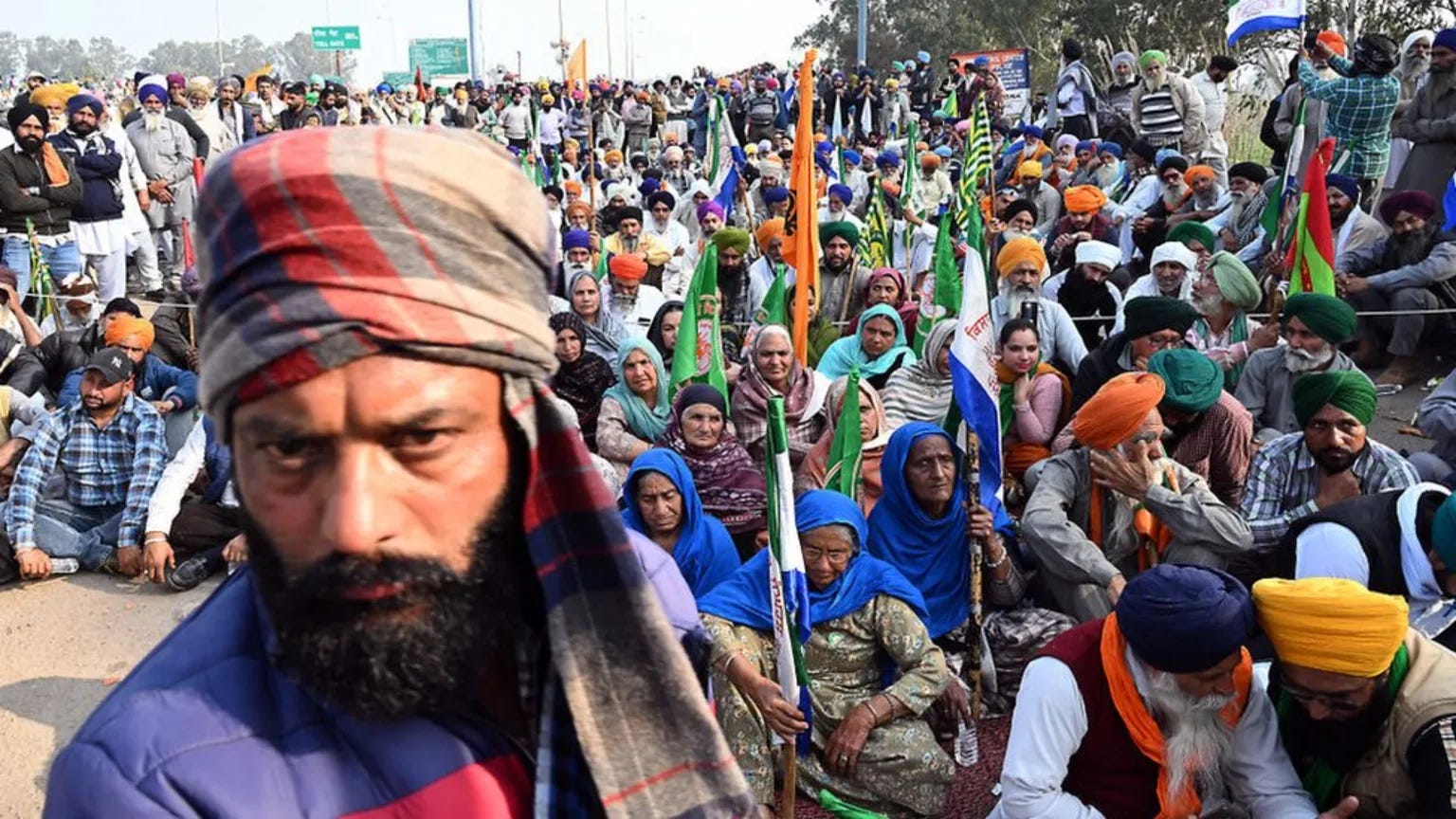
Earlier this week, thousands of farmers in India’s western state of Maharashtra marched to its capital, Mumbai, and forced the state government to recognise their right to the land they have tilled for years and fulfil their demands.
Over 12,000 in number, the farmers, carrying red flags and shouting slogans against the ultra-right-wing government led by the Hindu-supremacist Bharatiya Janata Party (BJP), were led by the All India Kisan Sabha (AIKS), a left-wing farmers’ union.
The farmers were also supported by several other left-wing mass organisations, such as the Center for Indian Trade Unions (CITU) and the Democratic Youth Federation of India (DYFI).
The farmers started their march on foot and in hundreds of vehicles from Akole on Monday and were aiming to reach the residence of the state’s Chief Minister in Mumbai, a distance of around 200 km, where they were about to organise an indefinite sit-in to press for their demands.
The major demands of the farmers were recognition of their rights over the lands they have been tilling for generations, adequate compensation for crops lost due to this year’s drought and a loan waiver of at least Rs 200,000 (around 2,100 USD), among others.
The call for the march to Mumbai came after the government failed to respond to the farmers’ demand during a six-day sit-in between 21 October and 26 in Akole. Before starting to march to Mumbai, the farmers also carried out a march in Akole itself.
The government initially failed to respond to the farmers’ demand and instead threatened them with police action and sent notices asking them to end the agitation.
AIKS responded by saying in its press release on Monday that “people’s problems cannot be made to disappear by issuing notices or resorting to pressure” and announced the march to Mumbai.
The farmers marched for two days before the government called for negotiations on Tuesday and later announced an agreement on all major demands.
Land rights and drought relief
A large number of farmers in Maharashtra and other regions of the country cultivate the land without having any documentary proof of their ownership. The governments often recognise such lands as forest areas or put them under categories which make it impossible to claim private ownership. This often creates threats of eviction and the deprivation of the only source of livelihoods for millions of peasants.
AIKS in Maharashtra has been demanding recognition of the ownership of the peasants on the land they have tilled for generations and has led various successful movements for the same in different parts of the state in the past decade.
Earlier this year it led a similar movement in the state’s Nashik district, forcing the government to acknowledge the issue and promise reforms.
In addition to the long-term problem of ownership, several of the states in India faced a deficient monsoon this year, affecting agriculture adversely and creating losses to millions of farmers in the country. In Maharashtra alone, the government has declared 265 out of 358 administrative units (Taluks) as “drought affected.”
Most of the state governments have failed to provide any meaningful relief to the farmers yet. However, under pressure, the Maharashtra government recently announced a Rs 5,000 (around 50 USD) compensation for each farming family in the drought-affected regions, inviting strong reactions from the farmers over the paltry amount.
AIKS called the government’s announcement of the drought relief “grossly inadequate” and a “cruel mockery of the losses suffered by the peasantry “affected.” It demanded that compensation must be based on the actual losses faced by the peasants, including a waiver from paying the loans up to Rs 200,000.