


Riding on the windfall public revenues generated from mining after expanding state ownership and increasing royalties, Mali’s government is mulling over a plan to raise over $880 million to develop critical infrastructure.
Following the first meeting of the Energy, Water and Transport Infrastructure Development Fund on July 31, Finance Minister Alousseni Sanou said that the fund generates at least 50 billion CFA francs (almost $88 million) annually. He added that this steady stream of revenue could be leveraged to borrow up to 500 billion CFA francs for infrastructural development.
Created in 2023, this fund is financed by taxes collected from mining companies, including 10% of ad valorem taxes and 1% of quarterly turnover for the first five years of the permit, followed by 2% thereafter. This fund is only one of the many means by which the government is channelling mining revenues back into the national economy.
Expanding national stakes in mining
The mining reforms in 2023, as a part of which this fund was established, also gave the state a free 10% stake in all new mining projects and required foreign mining companies to transfer 5% of their equity to Malian private investors through a state-owned intermediary.
This brought the minimal national stake – private and public – to 15%. It could go up to 35% as it empowered the state to purchase an additional 20% stake. The almost $1.47 billion the state collected in mining revenues in 2024 amounted to a 52.5% increase compared to the pre-reforms period, when the 2019 mining code capped the maximum state ownership to 20%, and made no provisions for local Malian investors.
However, soon after adopting this code, the France-backed regime of President Ibrahim Boubacar Keïta was overthrown in a popularly supported military coup in 2020, amid mass protests against its subservience to the former colonizer. Later in 2022, the military government led by Col. Assimi Goïta consolidated mass support by expelling French troops in an assertion of Mali’s political sovereignty.
The government has since pursued greater national control over its mineral wealth – historically extracted by and for the benefit of foreign companies – as an economic corollary of Mali’s political sovereignty. In early 2023, the government launched an audit of the past year’s mining operations.
The new mining code enforced since July 2023 was an effort to address the problems identified in this audit, which revealed massive shortfalls in the state’s mining revenues. The government then set up a commission to recover these shortfalls from foreign miners.
Facing down the mining giants
Mining companies, including the Canadian giant Barrick Mining, resisted. The government, however, did not play softball. It issued an arrest warrant for its CEO, seized its gold stockpile from the Loulo-Gounkoto mine, which was temporarily placed under state administration.
After dragging the tax dispute for two years, Barrick finally settled last year, paying $438 million and agreeing to migrate to the new mining regime. Also paying up and agreeing to toe the state policy were the Canadian miners B2Gold and Allied Gold, the UK-based Endeavour Mining and Kodal Minerals, Australian company Resolute Mining, and the Chinese Ganfeng Lithium.
By the end of 2025, the commission had recovered USD 1.2 billion in arrears. In March 2026, the government redistributed $33 million in mining revenues to municipalities and local administration in mining-affected areas and other underdeveloped regions.
To formalize artisanal mining
Later that month, Mali’s council of ministers adopted legislation establishing the Malian Office of Precious Substances, which became operative in July to formalize artisanal mining.
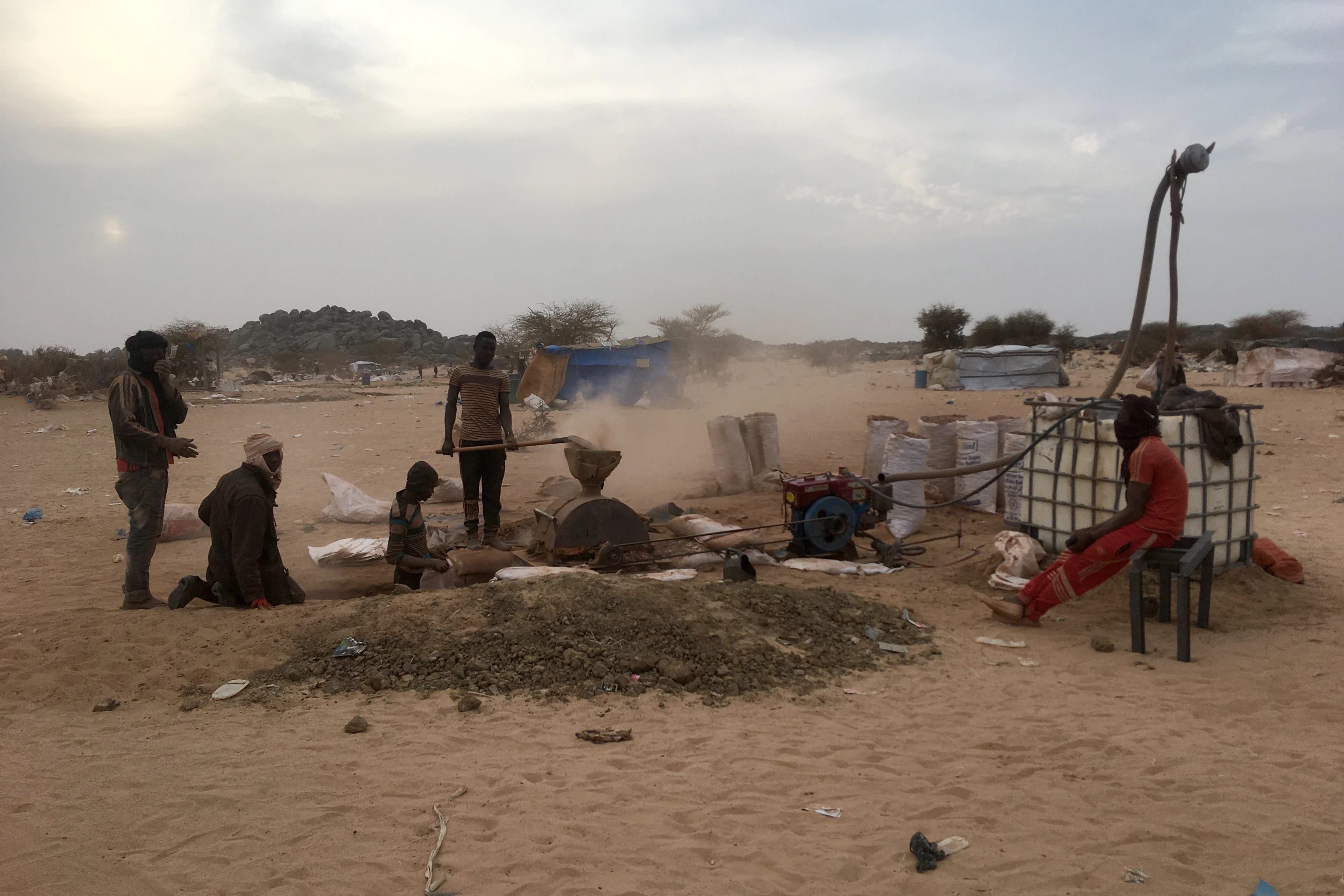
There are nearly two million people involved in artisanal mining in an estimated 350 to 400 sites across Mali. In the absence of any functional mechanism put in place by previous governments to procure their production, 30–57 metric tonnes of Malian gold worth USD 1.98–3.77 billion left the country through smuggling networks every year.
Bringing this tonnage into the official channels through the Malian Office of Precious Substances will further boost state revenues in the coming months and years, as demonstrated by neighboring Burkina Faso.
The success of these mining reforms has been widely acknowledged in the business press and mining-focused publications. Fousseni Togola, president of the Mali Chamber of Mines, is scheduled to be one of the two panellists for a session titled ‘Expanding Africa’s Gold Output’ at the annual African Mining Week (AMW) from October 14–16 in Cape Town, South Africa.
He will be sharing the panel with Benford Mokoatle, an Advisory Board member of the AMW, and the executive director of the South Africa-based Gold Fields Limited, one of the world’s largest gold mining firms, listed on the Johannesburg and New York stock exchanges.
