


He has never been able to accept it, but even after winning the 2024 US presidential elections, Donald Trump continued to fixate on the election result of 2020, when he lost to the Democratic contender, Joe Biden. In doing so, he mirrors the anxieties of the Democrats who lost in 2016 to Trump, forever leaving Hillary Clinton convinced that her defeat was due, not to her own failings but to the dark machinations of the Kremlin and any other number of rogue outfits tampering with the US elections. The 2017 Intelligence Community Assessment accepted that “Russian President Vladimir Putin ordered an influence campaign in 2016 aimed at the US presidential election” but made no assessment that it altered the eventual vote count. The bipartisan Senate Select Committee on Intelligence, despite identifying Russian “cyberactivity directed at state election infrastructure” and various “intelligence-related activities targeting the US voting process” failed to find “evidence that votes were changed and found that, on balance, the diversity of [American] voting infrastructure is a strength.”
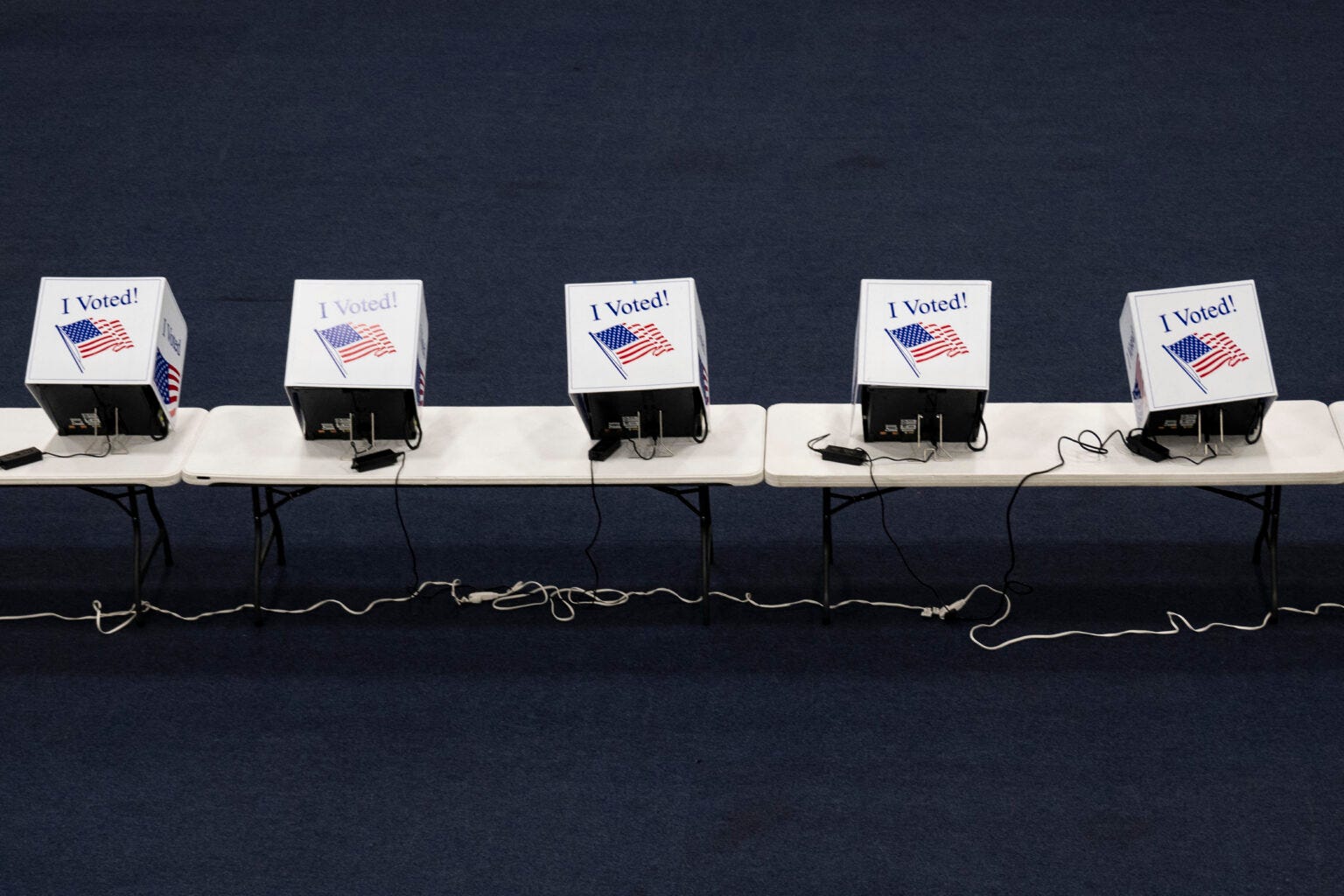
The theme of robbery through ballot interference has become an American staple. For Trump, its mother’s milk, a suitable distraction to his other policy failings. His Iran stratagem has collapsed, with Tehran and Washington essentially in a state of undeclared war. Who, or what to distract the public with? As things turned out, China proved to be the handy bogeyman and headline act in yet another show of Trump broodiness. “Tonight,” he announced on 16 July in a prime time address, “I’m announcing the immediate declassification and release of critical intelligence, revealing shocking vulnerabilities in our election infrastructure.” The evidence in question showed an election system “dangerously” exposed “to hacking, exploitation, and foreign interference.”
The documents in question covered what the president called “five major areas of concern.” China loomed large, having “carried out what is believed to be the largest compromise of election data in history” involving the “illicit acquisition of 220 million US voter files.” Then came the role played by “a very, very famous group of people” largely located in the intelligence community who “worked actively to suppress and downplay information about the extent of China’s sinister election peddling, covering it up from both the president and the American people like nobody thought was possible.” The third set of documents, heavily redacted, purportedly show that “Americans were blatantly lied to about the security of our election infrastructure, including electronic voting machines and ballot counting systems.” One assessment by the US Intelligence Community glumly notes that “US adversaries, including at minimum Russia, China, Iran, and North Korea, as well as non-state groups, have the capability to compromise US election infrastructure.”
Trump manages to bring in Venezuela as well, pointing to documents showing how “the CIA obtained reporting of a specific plot to do a big number in favor of the corrupt Maduro regime, and that’s exactly what happened, conspiring to digitally rig their own country’s elections in 2020.” (Given that the CIA has been practised in the ignoble art of fiddling elections, this is lusciously ironic.) The chief magistrate’s spleen is then vented at Michigan and a “corrupt group in Muskegon,” the Democrat Get Out the Vote Organization, responsible for such mischief as signing “voter registration forms in other people’s names,” submitting “fraudulent registration for people who did not exist, and [receiving] gift cards tied their number of applications that they produced.” Trump’s words for this are exquisitely accurate about his own conduct in public life: “In other words, it was pay, play and cheat.”
The final set of documents include a favourite Trump and MAGA theme: the existence of apparently 278,000 non-citizens who are registered to vote in federal elections. The number can be attributable to the occasionally sloppy workings of SAVE (Systematic Alien Verification for Entitlements), a program entered into between the Department of Homeland Security and states that can wrongly identify naturalised citizens as non-citizens. A 2018 report by the US Commission on Civil Rights made the important point that SAVE can hardly be said to be “a comprehensive list of US citizens,” as it is not updated to include all naturalised citizens and “does not include derivative citizens born to US parents outside the country.”
It should come as a surprise to none that Trump’s souped-up version of electoral interference by China finds no firm corroboration in the official accounts of US intelligence. A 2021 report by the US National Intelligence Council found that “China did not employ interference efforts and considered but did not employ influence efforts intended to change the outcome of the US presidential election.” This was probably due to China not viewing “either election outcome as being advantageous enough for China to risk blowback if caught,” preferring “traditional influence tools” such as economic measures and the “lobbying of key individuals and interest groups.”
Brian O’Neill of Georgia Tech’s Nunn School of International Affairs also offers much needed cautionary advice on Trump’s grand spray of documentation. These were not accompanied by a fresh, coordinated intelligence assessment. “Instead, they include raw intelligence reports, several finished-intelligence products, including a President’s Daily Brief item, an internal email recording an analytic disagreement, technical assessments, and a CIA summary prepared in June 2026.” The documents served different purposes and could not be said to “carry the same evidentiary weight.” The extent of redaction is also so extensive as to make any meaningful conclusions about how the number of 220 million voter files was arrived at.
But these quibbles on method and methodology are of no interest to the Trump White House, which reprises the theme of the Deep State burrowing away in intelligence agencies and stomping on those creative, patriotic types who have a nose for finding the enemy. “Members of the Deep State in our intelligence agencies worked to actively suppress and downplay information about the extent of China’s sinister election meddling—covering it up from both the President and the American People.” Those responsible for pointing to “the compromise of voter registration files in 2020” entailing the buying, stealing and hacking of voters” data across 18 states, instead of publicising such findings, “kept the information hidden.”
Pointing a stubby finger at Beijing regarding electoral meddling is simply part of a broader program to question the entire voting apparatus—except when it works in Trump’s favour. The enemies are not merely in the Middle Kingdom but lodged closer to home, where they are determined to see the president fail.
The frequent return to the theme of the stolen election does not augur well for future presidential contests. Trump is unlikely to go quietly, despite the two-term limit imposed by the 22 Amendment. In denigrating and questioning the voting system now, he is manuring the ground for future electoral repudiations in US politics.
