


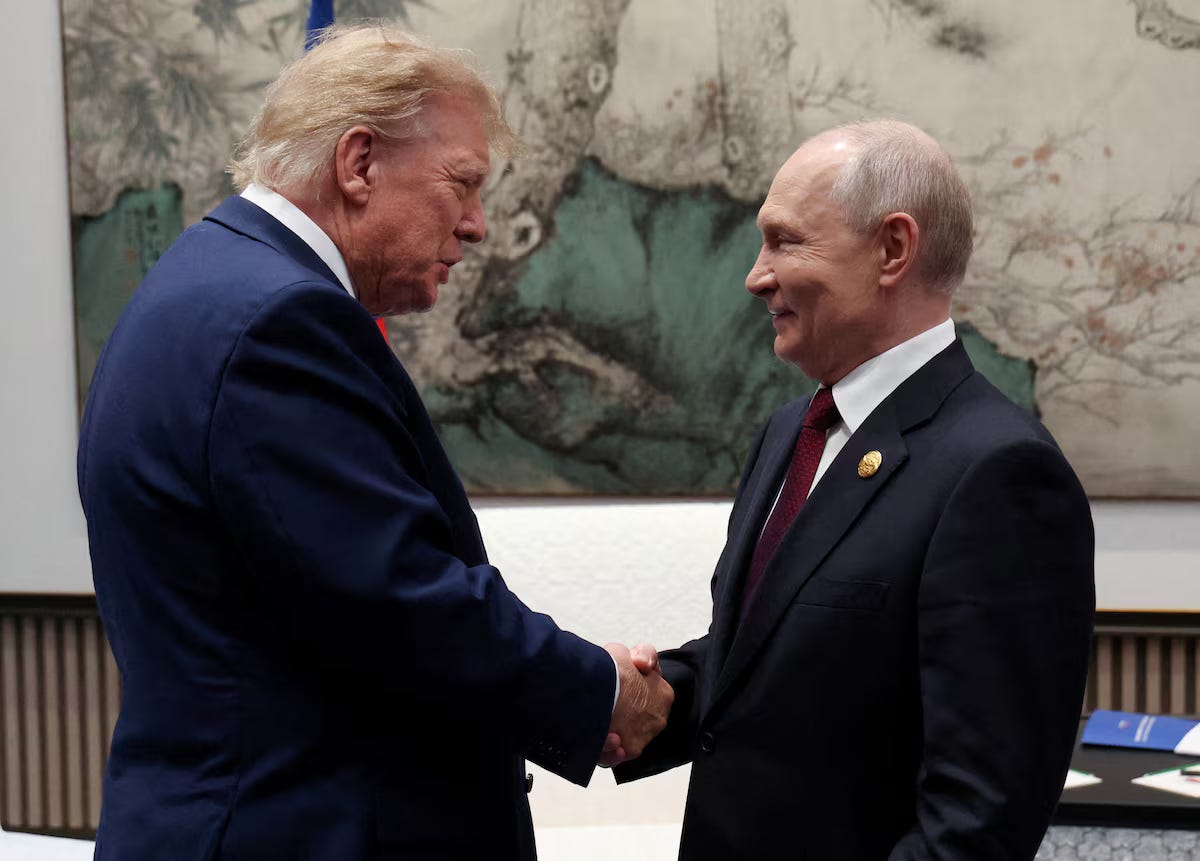
The Trump administration has quietly shelved plans to use business deals as an incentive for Russia to end the war in Ukraine, the Financial Times reports. Moscow showed little interest in the proposed energy and aviation ventures.
An old tool, once feared
US diplomacy has long treated trade as a lever on political relations between the West and East. Washington once worried intensely that:
Heavy reliance on Soviet natural gas would expose Western Europe to political pressure or supply cutoffs
Energy exports would earn Moscow substantial foreign exchange; and
Such deals might transfer technology to the Soviet Union.
Yet in the early 1980s, West Germany, France, Italy and Britain defied extraterritorial US sanctions. They pressed ahead with the pipeline linking Siberian gas fields to European markets, which they saw as an important energy and trade deal.
Decades later, in December 2021, President Vladimir Putin argued that Russia’s long-term contracts supplied Germany with gas far below spot prices. Germany, he claimed, was profiting by reselling it to Poland and Ukraine.
The businessmen’s approach
President Trump evidently has no place in his diplomatic toolkit for the messianic neoconservative ideology of his predecessors. His choice of Steve Witkoff and Jared Kushner as envoys to Russia testifies to that. According to the FT, Kushner, a quintessential businessman, sees commerce as central to restoring peace. He floated US investment in Russian oil projects and titanium production.
Putin was willing to play ball. The Kremlin has consistently sought to ease East-West tensions by engaging Wall Street. His choice of Kirill Dmitriev as Witkoff’s counterpart reflected, among other things, Dmitriev’s fluency in American business practice: he studied at Stanford and Harvard Business School and worked at Goldman Sachs. He was also, incidentally, sanctioned by the Biden administration.
Why Moscow cooled
Putin is a pragmatist. He has no illusions about Russophobic American attitudes or past betrayals, but if someone could dent them, why not try? His scepticism now appears justified.
The FT reports that Russia initially welcomed the Witkoff-Kushner ideas but later cooled on them, as it insists that Ukraine give up territory and make other concessions that Kyiv rejects. “It was made pretty clear that the Russians were not in the market for this kind of thing,” one official told the paper. The lesson is that money cannot substitute for a settlement of what Moscow regards as an existential question, as though Ukraine were a mere transaction.
Americans are not alone in failing to grasp the depth of Russia’s concerns and interests in Ukraine. Even old Indian friends tend to forget that, for Putin, this was a war of necessity, not of choice, because Ukraine had already come under de facto NATO occupation.
Colby’s signposts
If the notion that money can move Moscow has been discredited, what comes next? Trump genuinely wants the war to end, and he has two years and two months of his presidency left.
Two speeches in Brussels on November 17 by Elbridge Colby, US Under Secretary of War for Policy, offer signposts. He addressed the European Union’s Foreign Affairs Council and the Ukraine Defence Contact Group at NATO headquarters. Colby carries considerable weight: he comes from a family with close ties to US political and intelligence circles, is a friend of Vice President JD Vance, and is a formidable strategist. Coming a fortnight after the midterms, his remarks deserve careful study:
A new bargain. America and Europe are resetting the transatlantic relationship to make it “durable, equitable and rational”.
Restraint. The US approach will be “flexible realism and common sense”, with no more “endless crusades to pacify faraway regions”. It recognises the limits of American resources.
Priorities. The US military will focus on “our own homeland and hemisphere and on deterrence by denial along the First Island Chain.” Elsewhere, “we are looking to our allies to take the lead in their conventional defence.”
Industry. Europe needs an integrated transatlantic defence industrial base open to European and American firms. Excluding American competitors through a “middle powers strategy” is unacceptable.
Ukraine’s strategy. Kyiv should concentrate on holding the front, “to interdict logistics and deny Russian advances,” rather than on the “spectacle of deep strikes”, where the balance of advantage favours Moscow.
Peace. “President Trump and we in his administration remain firmly committed to bringing this conflict to an end on terms that secure a durable peace.”
A long war. “As winter sets in, however, it appears that Russia will continue to generate more manpower and mobilise its war economy for the long-haul. We all must therefore be prepared for this conflict… to endure, even as America prioritises our own readiness for contingencies in the Western Hemisphere and the Indo-Pacific… This responsibility, however, will primarily rest on Europe’s shoulders.”
What went unsaid
Colby never mentioned Iran, as if that war were over and done with. He also neatly sidestepped what his European audience probably most wanted to hear: a US commitment to Article 5 collective defence should NATO find itself in confrontation with Russia.