


If the hope of the world lies in human consciousness, then it is obvious that the intellectual cannot avoid forever assuming their share of responsibility for the world and hiding their distaste for politics beneath an alleged need for independence. —Vaclav Havel, The Art of the Impossible
A number of influential thinkers, from John Dewey, Vaclav Havel, and Jacques Derrida to Adrienne Rich, bell hooks, and Stanley Aronowitz, have long warned that democracy cannot survive without institutions capable of cultivating critical, informed, and socially responsible citizens. They understood that higher education, in particular, is never simply about transmitting knowledge; it is one of the primary conditions for sustaining democratic culture itself. These thinkers also recognized that neoliberalism’s assault on public goods, civic responsibility, and critical thought would inevitably become an assault on the university as a democratic public institution.
Others have been less convinced. Liberal scholars such as Steven Levitsky and Daniel Ziblatt have argued that constitutional guardrails, institutional norms, and existing checks and balances remain sufficiently resilient to contain authoritarian pressures. Yet such confidence appears detached from a historical moment in which wars, ecological collapse, staggering inequality, democratic erosion, and unprecedented concentrations of political, financial, technological, and cultural power have converged into one of the deepest crises of the modern age. These crises do not exist in isolation. They reinforce one another, producing a comprehensive assault on the institutions, values, and civic capacities upon which democratic life depends. This is the historical ground on which the debate over institutional neutrality must take place.
It is impossible to speak meaningfully about institutional neutrality in higher education while ignoring this wider historical conjuncture. Education has lost any claim to political blamelessness. Universities now occupy one of the principal terrains on which the future of democracy—and with it the very meaning of truth, justice, and civic responsibility—is being contested. A discourse of neutrality that refuses to confront these converging crises turns scholarly restraint into political abdication. At its worst, it legitimates the pedagogical conditions through which authoritarianism cultivates compliant subjects and normalizes the erosion of democratic life.
The language of institutional neutrality promises fairness, objectivity, and intellectual openness. In the present historical moment, however, it functions as an ideological vocabulary that obscures relations of power, depoliticizes authoritarian assaults on higher education, and mistakes institutional silence for democratic responsibility. It ignores the ongoing assault on academic freedom, critical scholarship, shared governance, and the role of the scholar as a public intellectual. It reduces students to clients rather than critical citizens and abandons what Christopher Newfield has described as higher education’s egalitarian and democratic mission.
What defenders of institutional neutrality fail to recognize is that democracy is not defended only in elections, legislatures, or courts. It is also defended—or dismantled—in schools, universities, media, digital platforms, and the wider cultural apparatuses that influence how people learn to interpret the world. Politics has always been pedagogical, but in the twenty-first century its educational dimensions have become impossible to ignore. Education has become one of the defining battlegrounds of our time. It now operates in both emancipatory and authoritarian registers, cultivating either the capacities for critical judgment and democratic agency or the habits of fear, conformity, civic illiteracy, and manufactured consent. As bell hooks observed, “the classroom remains the most radical space of possibility in the academy.” Yet that radical possibility depends upon institutions willing to defend the conditions under which critical thought can flourish. When universities surrender to authoritarian pressures or market imperatives, they imperil not only academic freedom, but the democratic futures education makes possible.
Higher education remains one of the few public institutions capable of nurturing critical thought, ethical judgment, historical consciousness, and democratic imagination. For all its contradictions and often reactionary history, the university can still function as a democratic public sphere: a space where ideas are tested, power is questioned, difficult histories are confronted, and citizens acquire the intellectual and civic capacities necessary for self-government.
Education cannot be reduced to workforce preparation or the transmission of technical knowledge. Nor, as the Trump movement imagines, should universities become laboratories of political indoctrination. At its best, higher education is a practice of freedom, cultivating the habits of informed judgment, civic courage, and democratic imagination upon which self-government depends. Only under such conditions can universities fulfill their democratic responsibility to educate citizens rather than merely credential workers or manufacture conformity.
Why the Debate Begins in the Wrong Place
Yet it is precisely this democratic mission that is now under assault. As Stefan Collini observes, the crisis confronting higher education is “systemic and deep-rooted, not merely local or contingent.” Much of the current debate, however, obscures those deeper forces. The Yale Report on institutional neutrality, for example, asks whether universities adequately represent competing viewpoints while paying far less attention to the political, economic, and institutional conditions that make genuine intellectual diversity possible.
As Richard Moran argues in his incisive critique of the report, this narrowing of the problem is hardly accidental. Written largely for university administrators rather than faculty, the report reproduces the logic of right-wing culture wars by echoing the claim that the humanities and parts of the social sciences have been “politicized” by the “progressive left,” while displaying a striking indifference to the scholarship it dismisses. The central issue is not viewpoint diversity in the abstract, but whether universities can sustain intellectual freedom under conditions increasingly shaped by authoritarian politics and neoliberal capitalism. Unless those conditions are confronted, debates over institutional neutrality mistake symptoms for causes.
Greg Afinogenov makes an important contribution to this debate by arguing that the recent Report on the State of Scholarship in the Humanities and the Humanistic Social Sciences is itself a deeply political intervention. Commissioned by the chancellors of Vanderbilt University and Washington University in St. Louis and produced by a committee chaired by NYU philosopher Paul Boghossian, the report presents itself as a defense of scholarly rigor against politicized scholarship. Yet, as Afinogenov observes, “its attempt to oppose the politicization of academia is more stridently political than the fields it aims to critique.” This contradiction exposes the ideological work performed by calls for depoliticization: they condemn politics when it challenges domination while concealing the politics of those seeking to control universities from above. Yet Afinogenov’s language of “hyperpolitics” risks flattening the profound difference between political expression and institutional power. A professor’s social-media post is not equivalent to a legislature banning fields of study, a billionaire financing right-wing academic centers, a donor dictating university policy, or a government using federal funds to enforce ideological conformity and racist policies. The problem is not simply that politics has become pervasive or performative. It is that political power is radically unequal, increasingly concentrated, and being used to destroy the institutional conditions necessary for critical inquiry and democratic life.
To be fair, Afinogenov rightly insists that outrage alone cannot defend higher education as a democratic public sphere. Universities must align themselves with other institutions under assault from the far right, especially labor unions and organizations such as the AAUP. Such alliances require more than denunciations, social-media performances, and the repeated mobilization of anger. They demand careful organizing, strategic judgment, a willingness to listen and ask questions, and the patient construction of broad democratic majorities. Afinogenov is especially persuasive in distinguishing the demanding work of collective organization from the fleeting outrage cycles that increasingly dominate academic politics. The defense of higher education will depend on transforming justified anger into durable alliances and forms of collective power capable of resisting the authoritarian forces now seeking to control both the university and the wider society.
Afinogenov’s turn toward a Weberian separation of scholarship and politics is equally problematic. Scholarly rigor requires fidelity to evidence, openness to criticism, and a refusal to manipulate facts, but none of these demands value neutrality or withdrawal from history. The crucial distinction is not between scholarship and politics but between inquiry that critically examines its own commitments and propaganda that places its conclusions beyond question. Knowledge is always produced within particular histories, institutions, and relations of power. To acknowledge this is not to abandon truth but to make its pursuit more self-conscious, accountable, and attentive to the forces that determine which truths can be spoken and which are suppressed.
A separate document, the Report of the Yale Committee on Trust in Higher Education, reproduces a similar narrowing of the crisis, though it addresses a much broader set of issues, including public trust, admissions, grading, classroom politics, technology, and university governance. The Yale Report is part of a growing body of commentary, extending across liberal and progressive circles, that frames the crisis of higher education primarily as one of ideological imbalance, declining civility, or insufficient intellectual diversity. A recent and thoughtful essay by Robert Jensen in LA Progressive, for example, rightly insists that universities should resist dogmatism and remain open to genuine disagreement. Yet, like the Yale Report, its analysis remains confined to the internal culture of the university. What recedes from view are the deeper structural forces transforming higher education: decades of neoliberal restructuring, public disinvestment, corporate influence, political intimidation, and the accelerating authoritarian assault on academic freedom. Calls for greater intellectual diversity are indispensable, but they become politically inadequate when detached from the material and institutional conditions that make reflective inquiry, academic freedom, and democratic education possible in the first place. Without confronting those conditions, they risk mistaking one consequence of the crisis for its principal cause. The challenge is not merely to diversify ideas within the existing university but to reclaim and democratize higher education by freeing it from the feral logic of gangster capitalism and restoring it as a civic institution.
This tendency to locate the crisis within the university while ignoring the forces acting upon it becomes even clearer in Justin Smith-Ruiu’s recent essay in The Chronicle of Higher Education. He echoes a familiar right-wing attack on the university, claiming that the humanities have been damaged—even ruined—by progressive scholarship, social justice, and the alleged substitution of political commitment for disciplined inquiry. This argument rests on a false innocence. It assumes that scholarship was once free of power, ideology, exclusion, and political struggle, as if the canon, the university, and the very organization of knowledge were not historically shaped by class privilege, colonial violence, racial hierarchy, patriarchy, and the interests of ruling elites.
Much of what now passes for liberal reform is, in fact, conservative analysis disguised as institutional pragmatism. By reducing higher education to questions of procedure, management, and viewpoint balance, such arguments strip away the larger issues of power, inequality, class domination, racial violence, militarization, and disposability that define the present crisis. They treat the university as a bureaucratic machine in need of technical adjustment, ignoring its role as a deeply contested democratic intellectual commons.
As journalist Will Bunch observes, many accounts of higher education’s crisis overlook the six-decade campaign by the political right to weaken the university as a democratic institution. Rather than treating attacks on higher education as isolated controversies, they are better understood as part of a broader authoritarian project. Florida Governor Ron DeSantis’s remaking of the state’s public universities is not an anomaly but the canary in the coal mine, revealing the trajectory of the broader authoritarian assault on higher education.
Questions about the future of higher education can no longer be separated from the fate of democracy itself. As elite institutions increasingly face political intimidation, financial coercion, and ideological discipline from the Trump regime, the university has become one of the principal front lines in the struggle over democracy’s future. Higher education is no longer simply a place where ideas compete.
The university has become a central battleground in an authoritarian campaign to reshape public memory, civic literacy, historical consciousness, and the capacity for critical judgment. Viewed from this broader perspective, the prevailing debate over intellectual diversity appears remarkably narrow. The struggle over universities is not merely an educational controversy. It is a struggle over whether democratic societies will continue to produce citizens capable of questioning power or merely subjects trained to submit to it.
The University and the Crisis of Democratic Culture
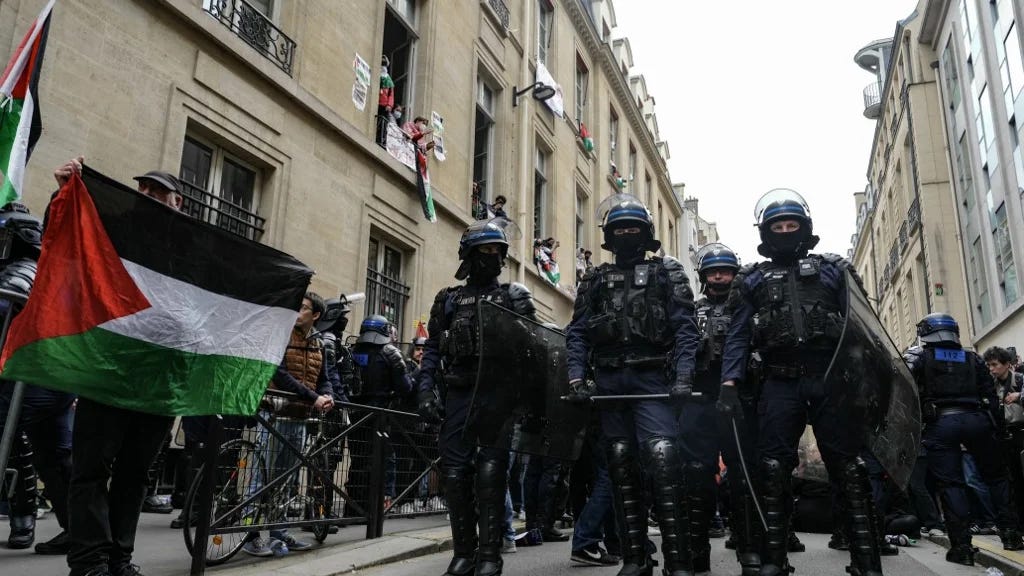
As I have argued elsewhere, the assault on higher education cannot be understood apart from a broader authoritarian and neoliberal project aimed at dismantling public goods, eroding democratic institutions, and subordinating education to the imperatives of market and state power. That struggle is no longer abstract. Across the United States, and increasingly in other democracies under siege, higher education faces a coordinated assault unlike anything witnessed in generations. State governments are prohibiting the teaching of histories that confront slavery, colonialism, Indigenous dispossession, structural racism, and widening inequality. Books are disappearing from classrooms and libraries. Diversity, equity, and inclusion initiatives are being dismantled. Faculty are encountering political intimidation, ideological surveillance, and threats to their employment. Students who have protested Israel’s devastating assault on Gaza have been suspended, arrested, disciplined, and treated less as citizens exercising democratic rights than as enemies of public order. Universities themselves are facing threats of financial retaliation if they refuse to conform to the demands of increasingly authoritarian governments.
These developments should not be mistaken for ordinary disagreements over curriculum or academic priorities. They represent an effort to reorganize the conditions under which knowledge itself is produced, circulated, and legitimized. They determine which histories deserve remembrance, which injustices may be named, which questions remain permissible, and which forms of citizenship become imaginable. This is not an expansion of intellectual diversity. It is an authoritarian restructuring of higher education. Its deeper purpose is pedagogical. It seeks to transform the university from a democratic institution into an instrument for manufacturing conformity, organized forgetting, and political obedience.
Much of the current discussion in public forums nevertheless continues to frame the university’s crisis exclusively in terms of internal ideological imbalance. Universities are criticized for becoming too political, insufficiently open to conservative perspectives, or excessively influenced by progressive scholarship. Such criticisms may contain elements worthy of discussion. Universities should always remain open to self-criticism and should resist every form of intellectual orthodoxy, regardless of its political source. But these concerns become profoundly misleading when detached from the larger political forces transforming higher education from the outside. The greatest danger confronting universities today is not simply that certain viewpoints may receive greater attention than others. It is that political authorities increasingly seek to determine which viewpoints may legitimately exist at all.
For this reason, intellectual diversity cannot be reduced to the numerical representation of competing opinions. It is not achieved by balancing syllabi according to ideological categories or by treating every perspective as equally grounded in evidence and democratic values. Genuine intellectual diversity rests upon a far deeper democratic foundation. It depends upon academic freedom, institutional autonomy, secure public funding, shared governance, independent research, historical honesty, and the right of faculty and students to pursue controversial questions without fear of political retaliation. Once these conditions begin to disappear, diversity itself becomes an increasingly empty abstraction. One cannot celebrate the marketplace of ideas while dismantling the institutions that make such exchange possible.
This distinction is crucial because authoritarian movements have always understood something that many defenders of liberal democracy continue to underestimate: education is never peripheral to politics. Schools and universities are not simply places where information is transmitted. They function as powerful forms of public pedagogy. They shape public memory, moral imagination, civic literacy, and the capacity to distinguish truth from propaganda. Every educational institution teaches far more than disciplinary knowledge. It teaches what kinds of citizens matter, whose histories deserve remembrance, what forms of agency are possible, and which futures remain imaginable.
History repeatedly demonstrates this lesson. Fascist movements have consistently regarded universities as strategic sites in the struggle for political power. They have sought not merely to censor dissent but to reconstruct public consciousness itself. Nazi Germany did not simply eliminate political opponents; it transformed universities into laboratories of ideological conformity. Jewish scholars were expelled, critical intellectuals silenced, historical inquiry subordinated to racial mythology, and scientific research enlisted in the service of eugenics and genocide. Education became a machinery for manufacturing obedience rather than cultivating judgment.
Historical analogies must always be employed with care. Contemporary America is not Germany in 1933. Yet historical differences do not erase recurring patterns. They enable us to recognize, in new forms and under different conditions, the mobilizing passions and pedagogical mechanisms of authoritarianism. When democratic remembrance is attacked and the lessons of the past are erased, society cultivates what Robert Jay Lifton calls “psychic numbing,” a diminished capacity to respond to human suffering, accompanied by moral indifference and the erosion of ethical judgment. Primo Levi understood that fascism does not simply return in identical form. Rather, it reappears whenever power destroys the conditions for critical thought and democratic agency. As he warned:
Every age has its own fascism, and we see the warning signs wherever the concentration of power denies citizens the possibility and the means of expressing and acting on their own free will. There are many ways of reaching this point, and not just through the terror of police intimidation, but by denying and distorting information, by undermining systems of justice, by paralyzing the education system, and by spreading in a myriad subtle ways nostalgia for a world where order reigned, and where the security of a privileged few depends on the forced labor and the forced silence of the many.
Authoritarian politics continues to recognize a truth too often neglected by liberal defenders of higher education: democratic institutions cannot survive once citizens lose the historical consciousness, ethical imagination, and critical capacities necessary to challenge organized lies and manufactured ignorance. The struggle over education is therefore never secondary to politics. It is one of politics’ decisive terrains. Authoritarians attack universities precisely because they understand something liberals often forget: education is one of the few institutions capable of producing citizens who can recognize and resist authoritarian power.
The Myth of Institutional Neutrality
This understanding exposes the limitations of the language now used to legitimate institutional neutrality. The claim of institutional neutrality is a myth. Universities have always been political institutions, shaping and being shaped by the conflicts, values, and power relations of the societies they inhabit. Every curriculum privileges certain traditions of knowledge over others. Every institution reflects historical struggles over whose experiences matter, whose voices deserve recognition, and what forms of citizenship should be cultivated. The relevant question has never been whether education is political but which politics it advances.
As Stuart Hall argued, “It is not possible... to study human societies... in a ‘value-neutral’ framework. Knowledge is always from a certain point of view.” He therefore warned that intellectuals “must never confuse commitment to the truth with value-neutrality, with standing outside of history.” Hall’s insight makes clear that the issue is not whether universities are political, but whether they acknowledge the politics that already shape the production of knowledge or disguise them behind the rhetoric of institutional neutrality.
What remains of institutional neutrality when Texas A&M requires presidential approval for courses on race and gender while imposing restrictions on student research? The claim to neutrality collapses further when university administrations substitute militarized policing for democratic dialogue, as Columbia University did when it summoned the New York Police Department to dismantle student encampments protesting in solidarity with Palestinians. Universities such as Ohio State and Indiana University similarly responded to peaceful demonstrations with heavily militarized policing, including police snipers positioned on surrounding rooftops. The same pattern is evident when the University of Pennsylvania capitulates to the punitive demands of the Trump administration and vindictive donors by dismantling DEI initiatives, curbing academic freedom and free speech, and targeting trans students. These are not politically neutral administrative decisions. They are acts of institutional alignment with repressive power that transform universities from spaces of critical inquiry into instruments of censorship, surveillance, and ideological conformity.
Yet contemporary appeals to neutrality increasingly function as ideological performances. They identify as political only those forms of knowledge that challenge existing relations of domination while treating market values, corporate influence, billionaire philanthropy, militarized research, nationalism, and racial hierarchy as ideologically innocent. Politics becomes visible only when it questions established power; the operation of power itself disappears beneath the reassuring language of balance, civility, and objectivity. Far from standing above politics, neutrality often functions as a form of public pedagogy. It teaches students that silence in the face of injustice is professionalism, that accommodation is wisdom, and that democracy can survive without moral courage. When the very pedagogical, cultural, and economic conditions that make democracy possible are under assault, neutrality becomes complicity.
The claim that universities can remain “above the fray” during moments of democratic crisis is therefore not merely mistaken; it is profoundly dangerous. Under such conditions, neutrality ceases to be prudence and becomes complicity. Universities educate not only through what they teach but through what they refuse to defend. Every act of institutional silence communicates a lesson about the meaning of citizenship, courage, and public responsibility.
As Hall observed in defending Walter Rodney against state repression, governments fear critical ideas because they possess the power “to move people into action.” Universities have become targets not because they are excessively political but because they remain among the few institutions capable of cultivating critical consciousness, democratic agency, and the collective capacity necessary to resist domination and imagine otherwise.
When universities retreat into managerial caution as democratic institutions are dismantled, they teach students that conformity is safer than dissent, that moral responsibility yields to bureaucratic calculation, and that the defense of democracy lies outside the university’s mission. Such lessons constitute a powerful form of public pedagogy—and they are precisely the lessons authoritarianism requires.
The irony is striking. Those who insist that universities avoid politics often remain conspicuously silent about the most sweeping political interventions currently reshaping higher education. These interventions no longer appear only as overt censorship or legislative coercion. They also arrive in the reasonable language of institutional reform, scholarly rigor, viewpoint diversity, and political neutrality. As recent reporting on Republican efforts to “save the humanities” suggests, the struggle concerns more than what universities teach. It concerns who possesses the authority to define legitimate knowledge, civic education, and the purposes of higher learning The vocabulary of reform masks an effort to institutionalize a new ideological orthodoxy under the banner of restoring neutrality.
The fiction of institutional neutrality becomes even harder to sustain when universities themselves are subjected to political extortion. As the American Association of University Professors argues in its recent report Extorted Compliance: A Threat to Institutional Autonomy, Academic Freedom, and Shared Governance, “U.S. higher education has, in effect, become a target of a massive extortion racket.” The report documents how the Trump administration has pressured universities by withholding or threatening federal research funds already legally owed to them unless institutions comply with sweeping political demands. Under such conditions, appeals to neutrality become profoundly disingenuous. What remains of institutional neutrality when universities must purchase their independence by submitting to political blackmail?
This logic shapes a broader body of commentary that attributes the crisis of higher education primarily to the political left. Across a range of essays, reports, and institutional commentaries, the humanities are portrayed as having been weakened by progressive scholarship, identity politics, and social justice concerns, while rigorous inquiry is said to have given way to ideological commitment. Such arguments rest on a fiction of ideological innocence. They imagine a university that once stood above struggles over class, race, colonialism, gender, empire, and inequality, ignoring how these forces have always shaped what counts as legitimate knowledge.
More revealing still, they direct public attention toward an alleged excess of critical scholarship while diverting it from the far more consequential forces hollowing out higher education: decades of neoliberal austerity, corporate governance, public disinvestment, political intimidation, and the direct intervention of authoritarian governments into what may be taught, researched, and remembered. By focusing on an imagined ideological crisis within the university, they leave this deeper assault on higher education largely unexamined.
They rarely object when legislatures dictate curricular content, when governors threaten universities with financial punishment, when faculty are dismissed for engaging controversial public questions, when books are removed from libraries, or when students are disciplined for exercising democratic rights. Politics appears objectionable only when it challenges dominant relations of power. When it protects existing hierarchies, legitimates state violence, accommodates corporate influence, or normalizes organized injustice, it suddenly becomes invisible, reappearing under the reassuring language of neutrality, objectivity, and institutional responsibility. The question is not whether universities are political. They always have been. The question is whether they will acknowledge their political and ethical responsibilities openly in the service of democracy or conceal them behind the comforting fiction of neutrality while existing relations of domination remain undisturbed.
The debate over intellectual diversity therefore remains fundamentally incomplete because it asks the wrong question. The issue is not simply whether universities represent a broad enough range of viewpoints. The deeper question concerns the democratic conditions under which intellectual life itself becomes possible. Universities belong to a broader democratic culture composed of public schools, libraries, independent journalism, museums, artists, writers, and public intellectuals. Together these institutions preserve historical consciousness, cultivate ethical judgment, encourage informed dissent, and expand the public imagination. They enable citizens to distinguish truth from propaganda, justice from domination, and democratic responsibility from political conformity. When universities abandon these responsibilities in the name of neutrality, efficiency, or market relevance, they cease to function as democratic public goods and become little more than credentialing institutions adapted to existing relations of power. When this wider public culture is weakened through censorship, privatization, political intimidation, organized forgetting, and the corrosion of public values, universities cannot flourish in isolation. Their crisis is inseparable from the crisis of democracy and from the political economy reshaping higher education. The struggle over knowledge cannot be separated from the economic and political forces that determine its production.
Neoliberalism and the Assault on the Democratic University
Yet the debate over neutrality remains incomplete for another reason. Even when it acknowledges the political struggle over ideas, it often ignores the economic structures governing higher education. It treats universities primarily as communities of ideas while remaining remarkably silent about the corporate order transforming their institutional life. As Rashid Khalidi has observed, many universities now function less as educational institutions than as “money-making, MBA, lawyer-run, hedge fund-cum-real estate operation[s], with a minor sideline in education.” His observation points to the managerial and financial transformation of higher education that discussions of intellectual diversity too often ignore.
Questions of knowledge are discussed as though they exist independently of the material conditions that shape their production. Universities are imagined as autonomous intellectual communities whose principal challenge lies in balancing competing viewpoints. Few developments better illustrate this transformation than the contemporary crisis of the humanities. Humanities bachelor’s degrees in the United States fell to 165,489 in 2024, the lowest number since 1991 and roughly thirty percent below their 2012 peak. Yet this decline tells us less about an alleged domination of universities by the political left than about decades of public disinvestment, market-driven restructuring, managerial governance, vocational reductionism, and the increasing subordination of higher education to corporate priorities. The crisis of the humanities is fundamentally political and economic before it is ideological. To reduce the crisis to ideology is to overlook the structural transformations that have fundamentally altered the mission, governance, and civic purpose of higher education over the last four decades.
The university neither stands outside history nor above politics. It is one of the principal institutions through which societies define what counts as legitimate knowledge, civic responsibility, and democratic possibility. Nor does it exist outside public pedagogy. Every university teaches through its curriculum, its institutional priorities, the values it rewards, the histories it preserves, and the forms of citizenship it encourages. It is embedded within relations of power that shape not only what is taught but what becomes thinkable in the first place. Every institution of higher education operates within a political economy that influences whose knowledge is funded, whose research receives institutional support, whose histories are remembered, and which forms of inquiry acquire legitimacy. To speak about intellectual diversity while ignoring these institutional realities is to separate ideas from the social conditions that make them possible.
Neoliberal capitalism has transformed universities as profoundly as it has changed virtually every other democratic public institution. Public funding has steadily declined. Corporate partnerships have expanded. Billionaire philanthropy shapes research agendas, while military contracts influence institutional priorities. Administrators have adopted the language of branding, metrics, efficiency, entrepreneurial innovation, and measurable outcomes. Students have become consumers investing in future earnings, while faculty are reduced to contingent labor subjected to audits, managerial oversight, and demands for immediate economic utility. Education itself is reorganized according to the logic of investment rather than the requirements of democratic life.
This transformation reaches far beyond budgets or administrative organization. It reshapes the meaning of knowledge itself. Under neoliberal capitalism, education loses its status as a site of democratic learning and becomes a private investment. Knowledge becomes valuable to the extent that it generates economic growth, technological innovation, workforce flexibility, or commercial advantage. Questions concerning justice, historical memory, ethical responsibility, democratic citizenship, ecological survival, inequality, and the cultivation of the imagination are treated as luxuries rather than necessities.
Education as Democratic Public Pedagogy
This narrowing of education’s purpose helps explain why contemporary debates over intellectual diversity often remain trapped within procedural questions while avoiding more fundamental issues of power. Missing entirely is any sustained discussion of how concentrated wealth, corporate influence, donor pressure, privatization, and austerity shape the production of knowledge itself. The deeper question is not whether universities contain sufficient ideological diversity, but who possesses the economic and political power to determine what counts as legitimate knowledge, what research receives support, which disciplines flourish, and what forms of inquiry are quietly marginalized.
Capitalism today functions as both an economic system and one of the most powerful pedagogical forces shaping contemporary consciousness. Neoliberalism is itself a vast system of public pedagogy, teaching people that markets should govern all social relations, competition is the highest civic virtue, the individual is the primary site of agency, and private success is the measure of public value. It teaches values long before students enter a classroom. Through corporate media, digital platforms, advertising, financial institutions, and the culture industries, it normalizes competition over cooperation, privatization over public responsibility, consumerism over citizenship, disposability over solidarity, and individual success over the common good. It cultivates a moral vocabulary in which efficiency replaces justice, profitability replaces public responsibility, and market value becomes the measure of human worth.
Universities reproduce this pedagogical order when they become extensions of the market rather than democratic spaces capable of questioning dominant assumptions. Programs are evaluated according to profitability. Research is assessed according to commercial application. Students are taught to view education primarily as vocational credentialing rather than preparation for democratic citizenship. Entire fields of inquiry devoted to ethics, history, philosophy, literature, cultural criticism, and the arts are pressured to justify themselves through economic metrics fundamentally alien to their democratic purpose.
These developments are often presented as inevitable and prudent adaptations to economic reality. They are political choices that redefine education according to the imperatives of capital rather than the needs of democracy. In doing so, they undermine the forms of inquiry that make intellectual diversity meaningful. Genuine intellectual diversity requires time for reflection, institutional independence, historical depth, ethical questioning, and the freedom to pursue research unconstrained by immediate market demands. Those conditions cannot flourish where knowledge itself has become a commodity.
This narrowing of educational purpose is not merely institutional. It also represents a profound narrowing of the public imagination. C. Wright Mills warned against precisely this narrowing of intellectual responsibility. He rejected the comforting fiction that scholars should merely observe society while refusing to engage its crises. If there are ways out of the great crises of an age through the exercise of intellect, he argued, then it becomes the responsibility of intellectuals to identify them. Scholarship detached from public responsibility becomes little more than technical expertise in the service of existing power. Universities lose their democratic purpose when they abandon the obligation to connect private troubles with public issues and historical understanding with civic action.
Toni Morrison offered a similarly urgent warning. If universities fail to defend their role as guardians of civic freedom, interrogators of difficult ethical questions, and preservers of democratic culture, she observed, other regimes will assume that role in ways profoundly hostile to freedom itself. Her warning speaks with extraordinary force today. Every retreat from critical inquiry leaves a vacuum that authoritarian politics eagerly fills. Every surrender of historical consciousness strengthens organized forgetting. Each concession teaches another generation that silence is safer than truth and accommodation wiser than resistance.
Antonio Gramsci understood that every relation of power is simultaneously an educational relation. Politics is never simply exercised through laws or police power; it is organized pedagogically through culture, language, common sense, and the institutions that shape public consciousness. Paulo Freire extended this insight by insisting that education either domesticates people into adapting to existing conditions or enables them to become critically conscious agents capable of transforming them. Hannah Arendt reminded us that totalitarianism flourishes not simply through violence but through the destruction of the human capacity to think, judge, and distinguish truth from lies. Václav Havel demonstrated that authoritarianism depends upon ordinary people learning to live within organized falsehoods.
These thinkers place education at the center of the struggle over consciousness. Democracy depends on constitutions, elections, and political institutions, but it also depends on the practices through which people learn to think historically, judge critically, act courageously, and imagine otherwise. Education is the formative practice of democracy. The assault on higher education is inseparable from the wider destruction of democratic culture because the struggle over universities concerns the kinds of human beings a society hopes to cultivate. The decisive question is not whether students encounter competing opinions. It is whether they acquire the historical consciousness, ethical imagination, civic courage, and critical capacities needed to recognize domination, resist injustice, and imagine more democratic futures.
Reclaiming the Democratic University
Defending intellectual diversity today requires reclaiming the university as a democratic civic institution committed to expanding freedom, justice, and collective responsibility. That work cannot succeed while higher education remains subordinated to authoritarian politics or the disciplinary logic of neoliberal capitalism. Both narrow the horizons of democratic possibility, reducing education to political obedience or economic utility. The university must instead defend reflective inquiry, moral imagination, and democratic hope as indispensable public goods.
A university worthy of a democratic society must remain free to pursue truth wherever it leads. It must protect the autonomy of scholars to investigate difficult questions, criticize existing institutions, and engage the defining public issues of their time without fear of censorship, donor retaliation, or political intimidation. It must nurture the imagination because every democratic advance begins as an act of imagination before it becomes a political reality. Universities educate through the knowledge they transmit and the civic courage they inspire. To defend the university is to defend education as a formative practice of freedom and democracy.
As Thomas Klikauer notes, higher education is subordinated to an arid instrumentalism and managerial logic that reduces learning to credentialing and trains students to accommodate themselves to the existing order. Against this model, the university must be understood as a cultural institution with profound moral and political responsibilities. Its silence during moments of democratic peril is never value-free or politically innocent. One model educates critically engaged citizens capable of governing themselves; the other produces consumers trained to adapt to the imperatives of the market. One enlarges the public imagination; the other reduces value to exchange. One cultivates historical memory, ethical judgment, intellectual courage, and the willingness to hold power accountable; the other rewards competition, commodification, privatization, and the relentless pursuit of private gain. These are rival visions of higher education and of democracy itself.
The dark ages have returned, now upgraded by the predatory forces of a new Gilded Age. Global authoritarianism is no longer the stuff of dystopian fiction. Across the world, concentrated wealth, militarized states, and authoritarian movements are dismantling the institutions that sustain democratic life while reducing politics to the management of fear, disposability, and survival itself. At such a moment, the question is no longer simply what kind of society we wish to build, but whether the conditions for building any democratic future will endure. The answer cannot come from individuals acting alone or from nations acting in isolation. It requires broad international movements of workers, students, educators, artists, intellectuals, and cultural workers willing to defend public goods, reclaim democratic institutions, and imagine forms of solidarity that reach beyond the borders of the nation-state. The struggle for democracy has always depended upon the radical imagination—the courage to believe that history remains open, that the future is not yet written, and that what appears impossible today can become the common sense of tomorrow.
Authoritarian politics governs through organized ignorance, historical amnesia, and manufactured fear. The university’s highest responsibility is to educate for critical consciousness, civic courage, and collective responsibility. The assault on higher education now threatens the survival of democratic culture itself. Democracy cannot endure unless it protects the institutions that teach people to think critically, remember historically, imagine otherwise, and act collectively. The university cannot save democracy on its own, but democracy cannot survive without places where inherited certainties are questioned, relations of domination are challenged, and people learn to organize around futures that do not yet exist. The university remains one of democracy’s last laboratories of hope, a place where the struggle for freedom begins with the conviction that another world is necessary and possible.

"This argument rests on a false innocence. It assumes that scholarship was once free of power, ideology, exclusion, and political struggle, as if the canon, the university, and the very organization of knowledge were not historically shaped by class privilege, colonial violence, racial hierarchy, patriarchy, and the interests of ruling elites."
We need to remember that the idea of the university came from the religious elite.