


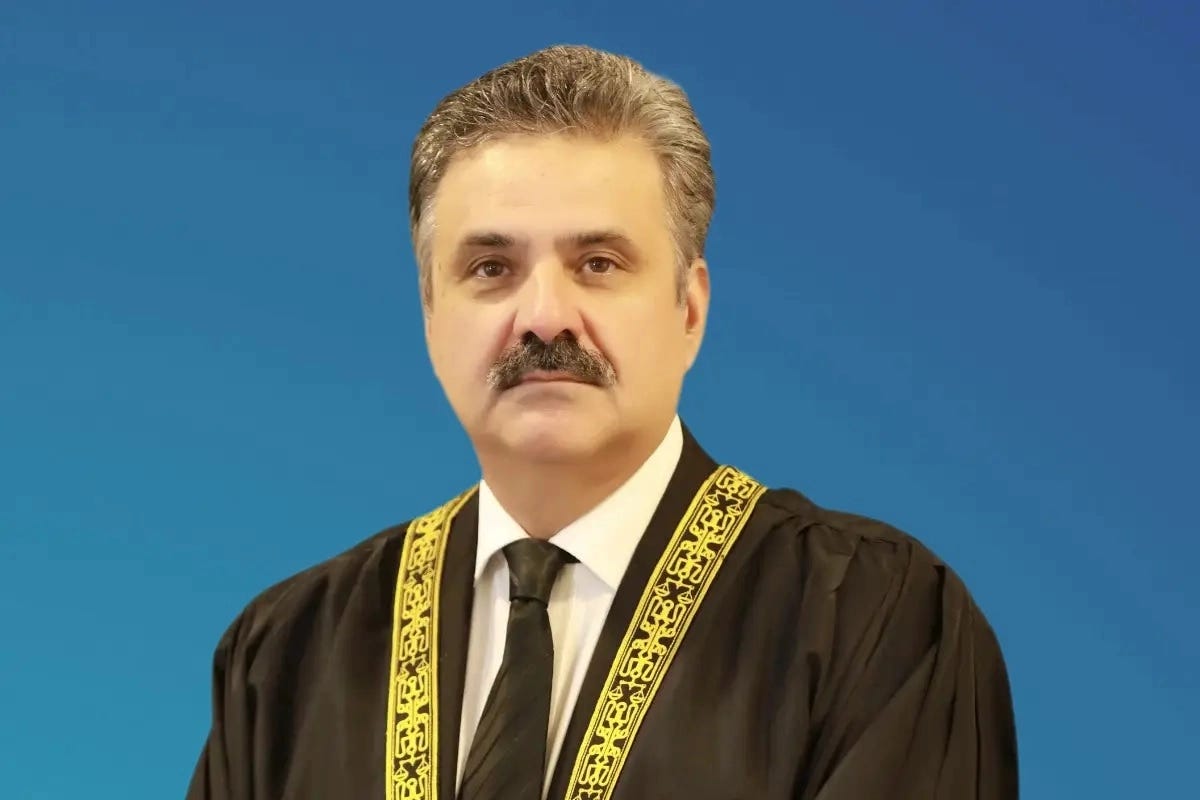
The International Federation of Journalists (IFJ) wrote a letter to the Chief Justice of Pakistan’s Supreme Court demanding a swift review of the legal system to protect press freedom in the country, The News International reported on Tuesday 15 July.
IFJ, based in Sydney Australia, is one of the largest organizations of journalists internationally with over 600,000 members across 142 countries.
The letter, written by Anthony Bellanger, general secretary of the IFJ, to Pakistan’s chief justice Yahya Afridi claims that journalists in Pakistan are facing unprecedented persecution, with increasing cases of litigation and intimidation under the legal system adopted by the new government in the country.
PECA amendment promotes self-censorship, say rights groups
IFJ specifically demanded that Pakistan’s Prevention of Electronic Crimes (Amendment) Act, also known as PECA, be reviewed in consultation with Pakistan Federal Union of Journalists (PFUJ) and other relevant forums and media stakeholders and all possible threats and concerns to press freedom should be addressed.
PECA is a 2016 law to regulate electronic media in Pakistan. It was amended in January this year by Pakistan’s new government led by Shehbaz Sharif despite strong opposition from the PFUJ, civil society groups and all major opposition parties.
The opposition parties and journalist unions claimed that the new amendments give the state undue power to monitor the media and even social media posts of individuals and provide arbitrary and disproportionate punishments in the name of stopping the spread of “fake news”.
The new amendments provide that “anyone who intentionally spreads, displays, or transmits false information likely to cause fear, panic or unrest in society” could face up to three years in jail or a fine of up to 2 million Pakistani rupee (around USD 7,200) or both.
The opposition has underlined that the new amendments fail to provide a clear definition of what “fake news” is apart from giving too much arbitrary power to the newly created regulatory organs under the legislation.
The harsh measures and punishments outlined in PECA discourage people from raising their genuine concerns and criticisms of government policies, which amounts to self-censorship, the civil rights groups opposing the amendments have claimed.
Press freedom must be protected
Despite Pakistan being a signatory of international conventions related to press freedom, its government has enacted PECA, which compromises the rights of the press. The IFJ and international journalist community is worried about its larger implications on freedom of speech and expression in Pakistan, the IFJ letter mentions.
According to the IFJ, after the adoption of the PECA amendments, the number of cases of press freedom violations have increased in Pakistan.
The IFJ South Asia Press Freedom report 2024-25 claims that between 1 May 2024, and 30 April 2025, journalists in Pakistan faced 34 serious press freedom violations, including seven targeted killings and eight non-fatal incidents, apart from numerous cases of litigation, arrests, and attacks on media institutions.
The IFJ noted that Pakistan was the deadliest country for journalists in the Asia-Pacific region after Bangladesh in 2024.
Earlier this month, an Islamabad court ordered a ban on over two dozen YouTube channels belonging to various independent journalists and opposition leaders.
The court issued the order on the basis of a report prepared by the state-controlled National Cyber Crime Investigating Agency (NCCIA) which had claimed that content on these channels was in violation of PECA and “anti-state”.
The journalists and civil society groups in Pakistan have opposed the ban of the YouTube channels, calling it an example of an attack on press freedom.
Pakistan’s leading newspaper, Dawn, claimed last week that the ban on YouTube channels is a fresh example of how PECA has been “weaponized to silence critical voices” in the country and acts like a tool of “censorship”.
Dawn’s editorial warned that “a country cannot legislate its way out of political discontent and silencing opposition will only deepen public mistrust.”
