


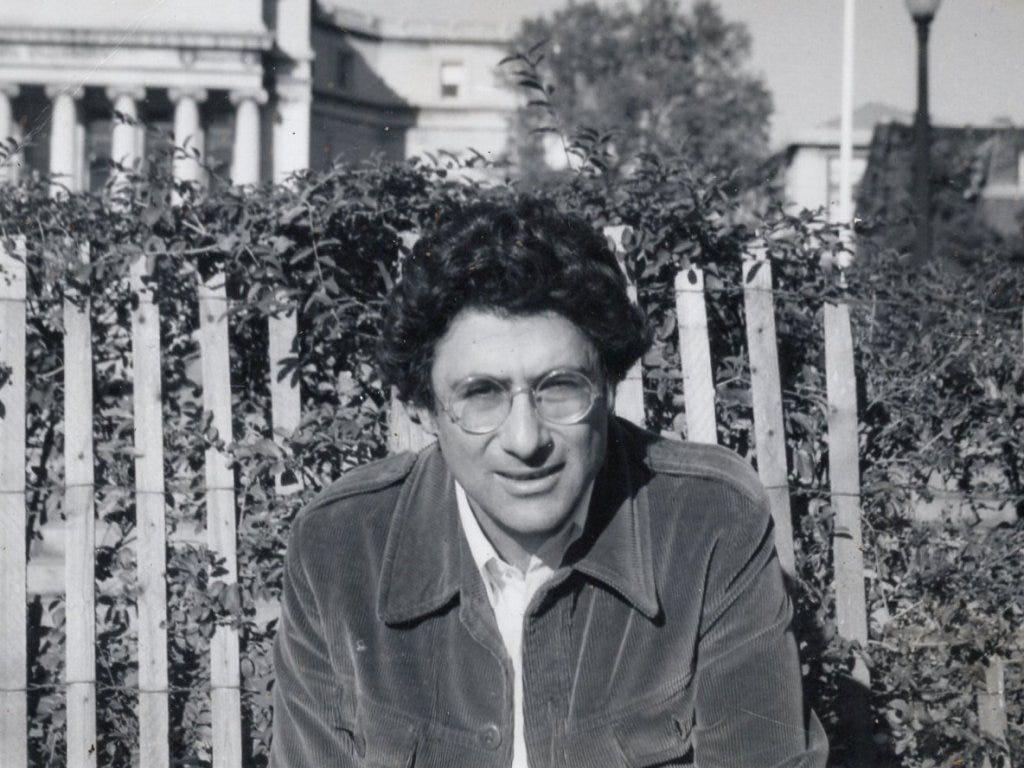
In September 2001, Edward Said wrote a short article that, with his usual incisiveness, documented the ongoing crimes of Israel and the IDF but which also ruthlessly excoriated Palestinian leaders. It had the poignant title “A people in need of leadership” (Said, 2001). Here are some of Said’s criticisms:
As for the Oslo “peace process” that began in 1993, it has simply re-packaged the occupation, offering a token 18 per cent of the lands seized in 1967 to the corrupt Vichy-like Authority of Arafat, whose mandate has essentially been to police and tax his people on Israel’s behalf (Said, 2001, p. 28).
A major debate on American television this August between Palestinian Authority minister Nabil Shaath and the new Labour leader Avraham Burg, Speaker of the Knesset, confirmed the pattern—and demonstrated, yet again, the inability of the Authority and its spokesmen and women to speak up for the Palestinian people (p. 30).
Given the precious opportunity to deal with a sanctimonious thug like Burg, why is it that spokespeople like Shaath, Abed Rabbo, Erekat, Ashrawi and rest are not capable of simply reminding him that Israel is daily indulging in war crimes? Of pointing out the fact that literally millions of people are unable to travel, to buy food, to get health care? That hundreds of people have been killed, thousands of houses demolished, tens of thousands of trees uprooted, vast acres of land confiscated, that settlements continue—and all this during a “peace process”? Could they not once speak as human beings, rather than third-rate imitations of Kissinger and Rabin? … make the basic point: so long as there is a military occupation of Palestine by Israel, there can never be peace (pp. 30 to 31).
Yet as the Israeli noose tightens around the Palestinians, Arafat is still hoping that the Americans will rescue him and his crumbling regime. Now more than ever, he and his coterie continue to beg for American protection. The Palestinian people deserve better. We have to say clearly that with Arafat and company in command, there is no hope (p. 31).
What the Palestinians need are leaders who are really with and of their people, who are actually doing the resisting on the ground, not fat cigar-chomping bureaucrats bent on preserving their business deals and renewing their VIP passes, who have lost all trace of decency or credibility (p. 31).
Arafat is finished. Why don’t we admit that he can neither lead, nor plan, nor take a single step that makes any difference except to him and his Oslo cronies who have benefited materially from their people’s misery? All the polls show that his presence blocks whatever forward movement might be possible. We need a united leadership capable of thinking, planning and taking decisions, rather than grovelling before the Pope or George Bush while the Israelis kill his people with impunity (p. 31).
What is required now are mass actions designed to press on with resistance and liberation, rather than confusing people with talk of a return to Oslo—who can believe the folly of that idea? (p. 32).
Some while back, I had a colleague who specialised in the politics of the Middle East and was, unusually for an academic, an ardent and open supporter of Israel, a non-Jewish Zionist. Seemingly odd, he had a large poster of Yasser Arafat in his office, but none of any Israeli leader. This puzzled me at first but, after mulling it over, made perfect sense, as it was a recognition that Arafat had, in fact, done great service to Israel; that is to say, Arafat’s terrorist politics followed by overt collaboration post the Oslo Accords of 1993 were most helpful to Israel and, ipso facto, a betrayal of the Palestinian cause. This was the essential, uncompromising message of Edward Said.
The Vichy-like politics of Mahmoud Abbas and the Palestine Authority
Said provides powerful truths that have continued to hold till the present day—the no-holds-barred criticisms against Arafat can be applied to his successor, Mahmoud Abbas, who, for more than two decades, has led the corrupt Vichy-like Palestine Authority (PA) in the West Bank. The PA has not in the least enjoined in the struggle for Palestinian rights and freedom and so avoids referring to the genocide in Gaza and myriad associated Israeli crimes. It has offered little resistance to the violent assaults on Palestinians by illegal Jewish settlers in the West Bank.
And staying true to its policy of silence and inaction, it has offered no support to pro-Palestine campaigners in the west who have been harassed and repressed. Examples abound and include students protesting (some in the US threatened with deportation) on campuses against the Gaza genocide; the repression of Palestine Action supporters in the UK, which has resulted in over 3,000 arrests; and, relatedly, no backing of the Irish author Sally Rooney’s support of Palestine Action, no support for Macklemore, who was dropped by Ed Sheeran on his tour of America for proclaiming “Free Palestine” at one of the concerts. And nor has any intervention been made concerning the onslaught against the Green Party’s motion that equated Zionism with racism.
In a previous article, I provide some concrete measures that Palestinian leaders could and should have taken. These include asking (even pushing) the Gulf states to halt the exports of oil and gas and threatening to not follow through with investments in the West with a further threat of disinvestment. They should have demanded the annulling of all treaties with Israel: Egypt rescinding the Camp David agreement and Jordan annulling its peace treaty. The UAE, Bahrain and Morocco annulling the Abraham accords and so ending normalisation.
The Palestine Authority should long ago have terminated the Oslo Accords, thereby stopping being a quisling entity. It and other Palestinian leaders should have countered the powerful Israel Lobby by a sustained policy of lobbying western policy makers and the mainstream media, especially in the USA, to stop arming and funding Israel’s repression of Palestinians, its genocide and other crimes. They should have pressed the Arab League and OIC to have submitted a motion to the UN General Assembly akin to that of resolution 3379 of 1975, which deemed that “Zionism is a form of racism and racial discrimination”—this would have doubtless again been adopted (Hasan, 2025). Concomitantly, they should have been incessantly arguing that anti-Zionism is not antisemitism.
Instead of taking these measures, they have maintained the desire for a two-state solution that has long been dead and buried. They should take serious note of the vote in July 2024 when the Knesset voted overwhelmingly to pass a resolution rejecting the establishment of a Palestinian state (Times of Israel, 2024). Thus, come hell or high water, Israel will not allow a two-state solution.
The one state solution is, therefore, the only solution that can bring justice to all Palestinians with equal rights for all. This means vigorous political campaigning for equality to end apartheid and racism and ceaselessly exposing Israel as a Jewish supremacist apartheid state. Thus, there should be a decisive shift away from a “national liberation” struggle to a struggle for civil and democratic rights and equality enshrined in the law and constitution. The campaign for Boycott, Divestment, and Sanctions (BDS) is crucial to this endeavour, but true to its Vichy-like nature, Fatah has never supported BDS because of its adherence to the Oslo Accords, which preclude this. This was made clear by Mahmoud Abbas in 2013 when he visited South Africa for Nelson Mandela’s memorial, declaring at a press conference:
No we do not support the boycott of Israel ... But we ask everyone to boycott the products of the settlements. Because the settlements are in our territories. It is illegal. … But we don’t ask anyone to boycott Israel itself. We have relations with Israel, we have mutual recognition of Israel (quoted in The Star, South Africa , 11th December 2013; cited in Electronic Intifada, 2013).
This appalling statement would have shocked his hosts, who, from the 1970s to the early 1990s, had led the most effective BDS campaign and denounced those who opposed the boycott of apartheid South Africa as traitors. Hence, they had a traitor in their midst, but diplomatic courtesy prevented them from spelling this out. Because of such treachery, solidarity activists have thereby had practically no support from Abbas and the Fatah leadership and so have been left isolated.
Israeli support for Hamas
Said did not mention Hamas in his article, but this was understandable, as, back in 2001, Hamas was nowhere near as important a force as it would become after winning the 2006 elections. But Hamas’s Islamist politics are a dead-end offering a bleak, repressive future that is firmly rejected by many Muslims, Jews and others. A further problematic aspect is that it was supported by Israel at its inception (see Hasan, 2024 [2013], ch. 2), a fact that Hamas, Israel and mainstream Western commenters keep silent about.
Furthermore, however, Israel has, it is alleged, continued to fund Hamas, as was made clear by Ami Ayalon, the former Shin Bet Director, when he outlined Israel’s policy regarding Gaza and the Palestinian Authority in an interview he gave in March 2024:
We did something very, very, simple. We did everything in order to make sure that Hamas will go on controlling Gaza and Palestinian Authority will control the West Bank, so they will fight each other … So, what we did with the permission of our prime minister is to let Qatar to transfer a huge amount of money in cash, probably more than 1.4 billion [sic] dollars, and to make sure that they will be able to send, you know people to work in Israel, and to achieve, or to get, intelligence if they need. By doing it, we increase the power of Hamas (quoted in ABC News, 2024).
Hamas and Qatar will, of course, deny this, and there is no firm evidence to validate Ayalon’s assertion. But it is certainly plausible, as it is based on hard, divide-and-rule politics that Israelis have been most adept at and Palestinian organisations have failed to resist.
A democratic, unitary state is a far better alternative to the reactionary Islamist politics of Hamas and the utterly failed collaborationist politics of Fatah. Accordingly, there arises the potential for genuine unity across Palestinian society as in the South Africa model, thereby ending the poisonous current and future schisms of the Fatah-Hamas type. The struggle for equality offers a bulwark against endemic corruption as collaboration with the oppressor colonial regime loses a key motivating force, that is, the supposed promise of a Bantustan-type statelet.
This vision and goal can engender “mass actions designed to press on with resistance and liberation” that Said called for. It can galvanise demonstrations in the occupied territories and Israel based on the demands for equality and the ending of military rule. Imagine the impact of thousands of Palestinians (with, at first, some anti-Zionist Jewish Israelis) peacefully marching and protesting in Tel Aviv, ending in a rally outside the Knesset holding banners with slogans such as: “End Israeli apartheid”; “A democratic state, not a Jewish supremacist state.”
Concomitantly, the global solidarity movement could then truly flourish—with every possibility of it reaching the heights of the mass Anti-Apartheid Movement.
There is now enormous global sympathy for Palestinians—not because of inspirational leadership from its leaders, which has never existed—but because they are being mercilessly slaughtered by Israel. Had the Palestinians had leaders of the calibre of Nelson Mandela and other ANC leaders struggling against apartheid South Africa, they would have achieved liberation long ago under a unitary state.
Edward Said had immense respect among those who empathised with the plight of the Palestinians, so his devastating criticisms of Palestinian leaders should have been a wake-up call and ought to have led to sustained, constructive criticisms by others, especially from those in the solidarity movement. But 25 years after his pathbreaking article, this has not happened—there remains great reluctance to openly criticise corrupt, incompetent, Palestinian leaders, which I think is an immense disservice to the cause of Palestinian liberation.
The ineluctable truth remains that Palestinians are still in need of leadership, and effective leadership requires the removal of the quisling Abbas and his cronies in the Palestine Authority. Without this, echoing Edward Said, they have no hope of achieving liberation. This was understood by Palestinian American academic Rashid Khalidi, who held the Edward Said Chair of Modern Arab Studies at Columbia University, in an interview in December 2011 with the Israeli paper Haaretz:
I think that if the Palestinians cannot get their act together, they have no hope of resolving their problems. Palestinian problems are caused, in the first instance, by Palestinians. You can blame Israel, or the United States or the Arabs—and they have their share (Haaretz, 2011).
At the present juncture, there is, alas, no sign of the Palestinians getting their act together, and, therefore, they remain a people in need of leadership.