


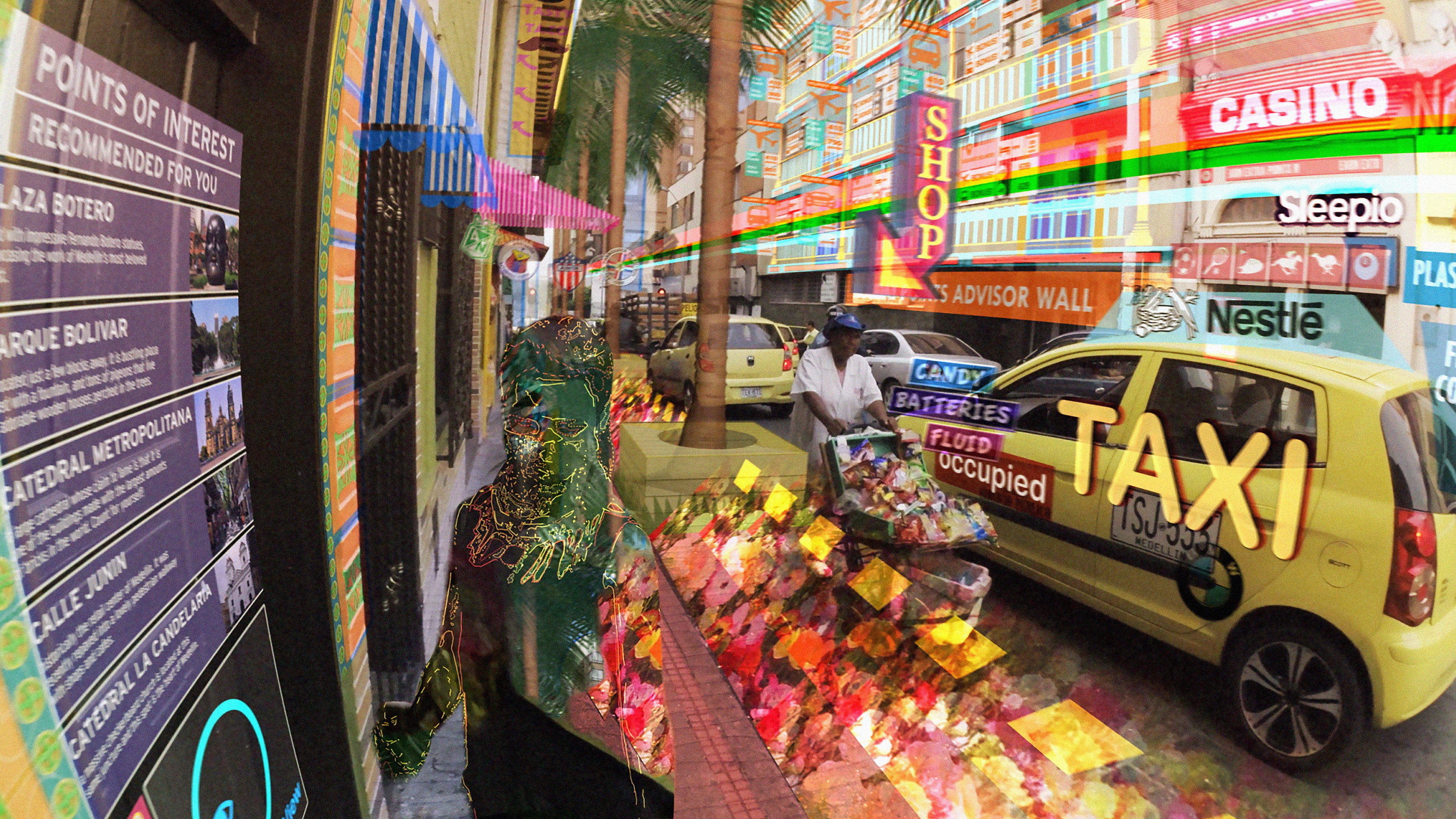
Perhaps the true problem with artificial intelligence is that it was made possible by a general loss of the faculty of imagination—as if its advent had been preceded by the establishment of an all-pervasive artificial imagination. A humanity that had lost its imagination was ready to forgo thought as well (which, after all, as Aristotle taught us, is simply impossible without imagination). The first step in countering the dominance of AI is, therefore, a patient, meticulous, and methodical search for that lost imagination. And since thought is merely the perfected form of imagination, there will then be no further need for artificial intelligence.
—Giorgio Agamben, 3 August 2026
The dominant feature of our world order is its spectacular lack of imagination—in plain terms, its stupidity. The compulsive pursuit of profit, in its real and fictitious forms, blinds the elites into one-dimensional technocracy and anaesthetises the masses into passive acceptance of collapse. The result is a civilisation that can no longer imagine a future without first rehearsing its own destruction.
Within this stupidity there is method. The system no longer needs ideological proclamations or technical solutions; it needs postponements. Trump’s logic is the purest expression of this end-of-times post-politics: threaten, then retreat; announce a “peace deal” that is neither peace nor deal; move markets with phantom negotiations. The stupid assumption—one that would not have held only a decade ago—is that the simulation can continue indefinitely, that markets will always rally, and that a system now imploding like a cactus without water can still feign vitality. But the foreclosure of the real, as Freud taught us, does not make it disappear. It only ensures that it returns with a vengeance: blunt, unmanageable, terminal. The alternative—facing our imploding environment now—remains unthinkable.
On 30 July, Trump announced a “historic agreement” for the “complete disarmament of Hamas.” Egypt, Qatar, and Türkiye were named as mediators. The UN called it “a rare piece of good news.” Markets rallied, inverting what looked like a correction in the making. Yet the bombs kept falling, regardless of the headlines. Within hours, Israeli airstrikes killed more Palestinians amid the usual indifference. Hamas refused to disarm before Israeli withdrawal, and Israel refused to withdraw before Hamas disarmed. The “peace” proved to be a circular contradiction based on mutually exclusive conditions dressed up as a breakthrough. In today’s forever wars, which are not meant to be won but only prolonged, “peace” is just another hollow signifier, a marketing slogan that serves one purpose: to allow for further financial speculation.
Consider that Trump’s “Board of Peace” was announced at Davos (January 2026) with a $1 billion permanent membership fee, chaired for life by Trump himself, and operating outside UN frameworks. While funding stalls are now (seemingly) restructuring the Board into an international non-governmental organisation, this is another formidable piece of institutionalised theatre: a peace brand designed for market consumption. And the markets keep buying it. This is a patent example of Octave Mannoni’s famous formula for perversion: je sais bien, mais quand même. They know very well that the system is rotten, that the whole thing is theatre; nonetheless, they keep trading the performance as if it were real. The knowledge is there, but it is safely quarantined, disavowed, never allowed to disturb the spectacle.
Back in the late 1970s, Jean Baudrillard argued that we have entered the era of the hyperreal: a condition in which the map precedes the territory, and eventually the map becomes the only reality we see. Signs no longer refer beyond themselves; they close in on a circuit of almost perfect self-reference. Today, that is how markets work. They do not wait for events; they trade the announcement as if it were the event. Peace is declared; therefore, peace exists. A tweet is issued, therefore policy exists. The real is no longer mistaken for fiction; it has dissolved into the noise, buried under the weight of its own simulation.
Consider also what happened with Iran and the Strait of Hormuz, yet again. Markets keep being pushed to price a ceasefire that does not exist (Iran has now postponed even the Hormuz-Oman deal over US interference). Crude inventories are jolted, traders forced into shorter horizons, volatility deployed as the weapon of choice. But, it must be added, physical reality does not dance to the same tune. Oil still has to be found, shipped, refined, and paid for. Narratives may spike, but barrels do not obey slogans. This is the limit of the hyperreal (the point Baudrillard never fully confronted): it can manipulate prices and shape perceptions, but it cannot make a barrel of oil disappear.
Zoom out, and the larger economic picture is just as rotten. According to their own numbers, US GDP grew at an annualised 1.5% in the second quarter. The price index for gross domestic purchases, in the meantime, rose 5.7%, which means this broad measure of inflation (across all goods and services purchased by U.S. residents) is running at nearly four times the rate of economic growth. So riddle me this: if prices are rising far faster than output, what exactly are we celebrating? On any rough political reading, that is not expansion but contraction in lived terms. And that is before we account for the fact that government spending accounts for 37.9% of GDP. Strip that out—the stimulus, the military spending—and what remains is an economy that looks far closer to stagnation than prosperity.
The elementary truth is that, out in the real world, people do not inhabit GDP press releases. They inhabit higher food prices, higher energy prices, higher insurance costs, higher housing costs, and a bond market demanding more because it trusts less. People inhabit an economy being eaten from the inside out.
At the same time, what politicians call “the economy” has become something worse than a field of speculative bubbles. It has become a game of mirrors (from the Latin “speculum”) where fundamentals trail after narrative like a footnote. The TACO trade captures the madness perfectly: Trump threatens, then backs down; markets price the threat, then reward the retreat. This is the last, desperate stage of a debt-soaked, hyper-financialised constellation. Every lever has been pulled. Every trick has been tried. And what are we left with? An economy hollowed out by structural inflation, a public being told that this is growth, and a political class that has fully merged with the markets to keep the show running.
Yet it is increasingly obvious that the speculative show is very close to hitting a wall. Despite the calm in major stock indexes, two undercurrents are building beneath the surface. The first is a feedback loop between soaring corporate debt and AI-related stocks, where rising credit risk and leverage are ignored until a repricing slams both bonds and equities. The second is a political trap in the sovereign bond market, where the Fed, constrained before the midterms, may allow long-term yields to surge instead. This passive tightening is itself a form of weaponised turbulence. Together, soaring private credit costs and a politicised bond market threaten to expose the current rally as a house of cards, poised for a destabilising correction.
When debt can no longer be serviced, when inflation can no longer be denied, when the bond market finally refuses the script, there will be nothing left to prop up. To be sure, the simulation will not end with dignity, but with another emergency. A “crisis of major concern” will magically appear, as it always does, to reset the rules, suspend the old order, and justify the bailouts, backstops, and brute force needed to keep the wreck standing.
So back to where we started: the elites cannot imagine a future—only a permanent present sustained by shock. In doing that, they are no doubt very adept: they always keep a useful crisis in reserve, ready to deploy it when the performance falters. Yet this is the most unimaginable solution imaginable: systemic violence camouflaged as necessity.
What this also means is that the real catastrophe is not merely economic. Capital has hollowed out social reality, training people to accept contraction as normal and collapse as growth. But power has done more than exploit that exhaustion. It has seized imagination for itself—weaponising it as crisis management, psychological warfare, and the permanent deployment of emergencies. The result is a monopoly on imagination: the many are left with fatigue and confusion, while the few hoard invention, scripting fear and calling it governance. That is why the struggle is not only against capital or propaganda, but against the regime that captures perception and makes domination look like common sense.