


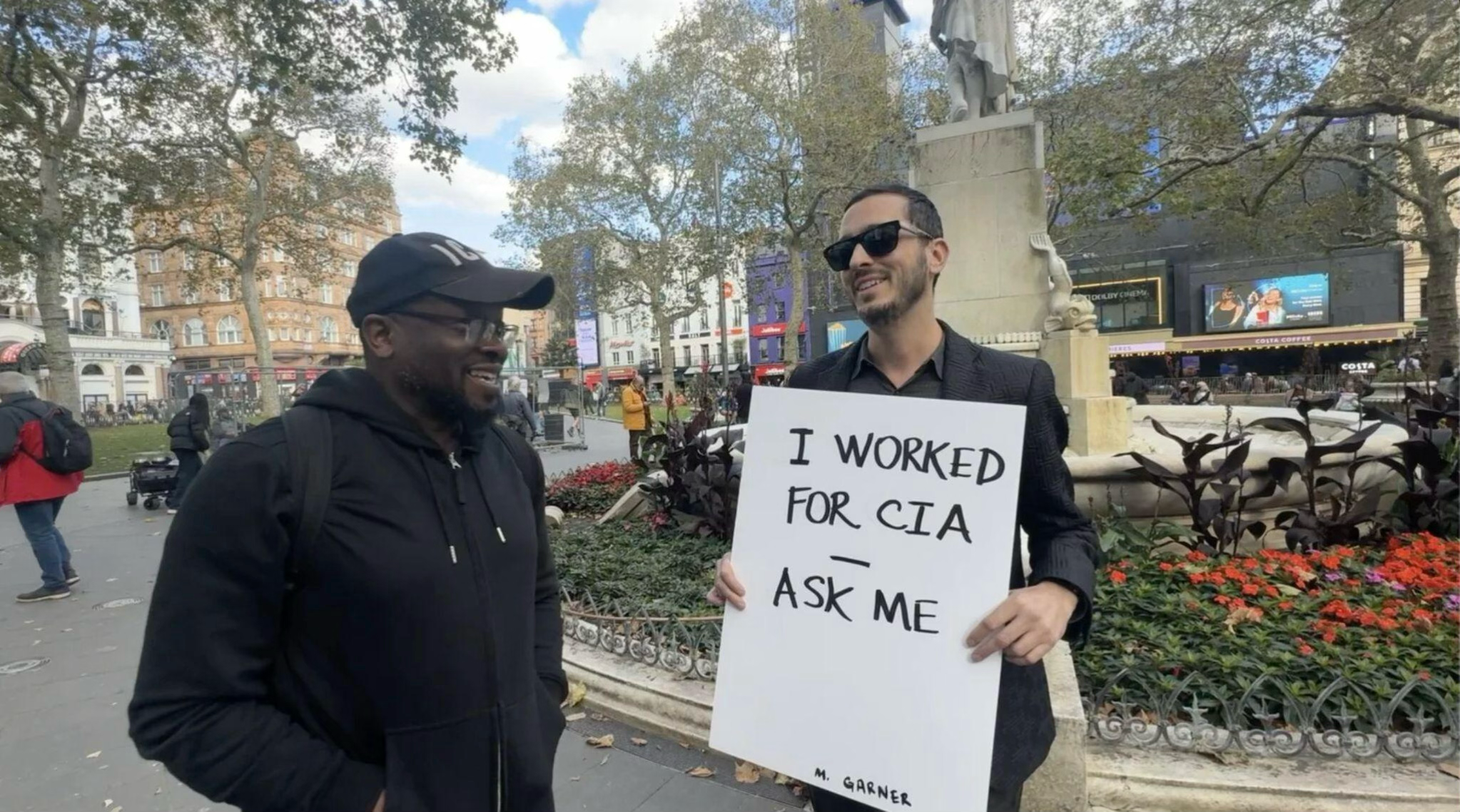
I was introduced to the work of Michael Garner by walking past a ringing BT phone, picking it up, and hearing a CIA director on the other end whisper: “The smoke detector knows what you did last summer.”
Sadly, or maybe thankfully for the long-term stability of my nervous system, that is not actually what happened.
What actually happened was curator Mike Stubbs made an introduction, Michael and I exchanged a few emails, and something in the work started quietly bothering me in the best way. Not bothering as in annoying, more like a tiny flashing red light in the corner of the room. The kind you convince yourself is probably nothing until you realise the whole room has been built around it.
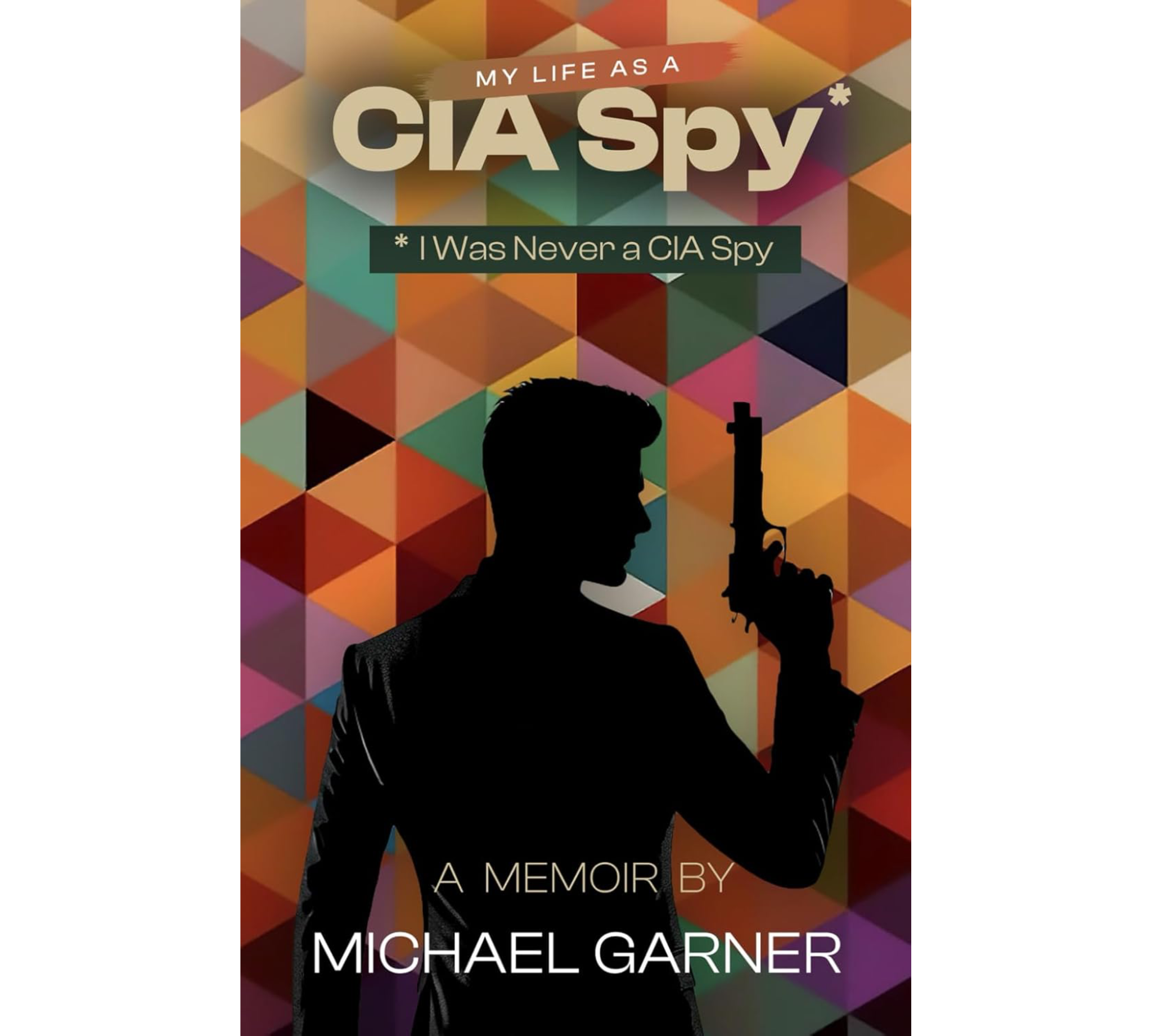
The obvious thing with Garner is the CIA. It sits there immediately, almost too loudly on the surface. Former intelligence work. Surveillance. Classified language. Paranoia. Smoke detectors. Vending machines selling secrets for £1 like some Poundland MKUltra side quest. His unpublished book, My Life as a CIA Spy: I Was Never a CIA Spy, begins by denying itself before the story has even properly entered the building, which I would begin to learn over the course of an hour and a half phone call is very Garner. The title doesn’t resolve the contradiction. It lets the contradiction sit there and stare at you.
But if you treat Garner as simply “the CIA artist,” you flatten him into the thing his work is actively trying to wriggle out of. The intelligence material matters, obviously. It gives the work its charge. But the deeper subject is the nervous system under institutional pressure. The body trying to process systems too large, too absurd, too secretive, too violent, too bureaucratically stupid to fit neatly inside one person.
What Garner does, at his strongest, is make the invisible administrative weather of contemporary life feel bodily.
His Austrian brain work is where that becomes clearest. Garner was granted Austrian citizenship because of what the Nazis did to his family. His great-grandparents were murdered in the Holocaust, and that history runs beneath the work without being turned into heritage branding. He doesn’t simply hold up identity like a passport photo. He puts it through the scanner. Literally.
When we spoke, he described the idea of “the Austrian part of my brain” as tongue-in-cheek, which it is. The phrase is funny because it sounds like bad nationalism wearing a lab coat. As if there were a little red-white-red chamber behind the ear that lights up every time someone mentions schnitzel, Vienna or Falco’s Rock Me Amadeus. But Garner isn’t using science as decoration. He’s interested in what happens when memory, culture and trauma become measurable without becoming fully knowable.
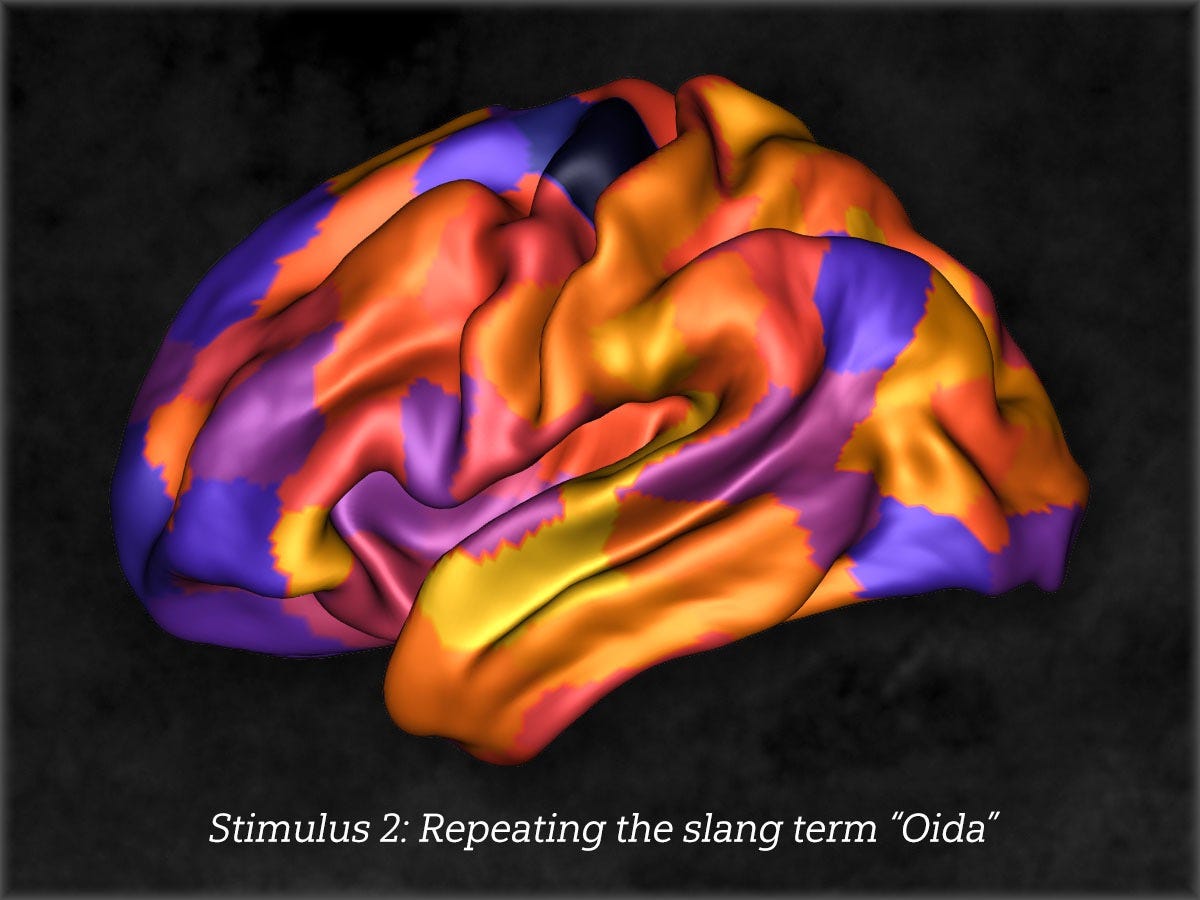
He told me about being scanned while thinking through different Austrian stimuli: a slang word, Falco, and the place connected to his family’s murder during the Holocaust. Listening to Rock Me Amadeus lit up his brain. Thinking about the trench where his grandmother was gassed made his brain effectively shut down. The scientists asked if he was meditating. He told them he was just extremely sad.
That line is devastating because it exposes the limit of the image. Neuroscience can show activity. It can show blood flow, region, response, intensity. It can produce those gorgeous medical colours that make everything look like truth has finally learned graphic design. But sadness is not a clean visual event. Grief doesn’t become less obscene because it appears on a scan.
This is where Garner’s work becomes more complicated than a clever art-science crossover. Scientific imagery carries authority in galleries. People trust the scan differently than they trust a painting. A brain image comes with the smell of evidence. It seems to arrive from somewhere less corruptible than art, which is of course part of the danger. The image appears objective while still being framed, edited, selected, aestheticised and installed.
When I asked him whether there was a risk of aestheticising Holocaust memory through neuroscience, he didn’t hide from it. He said it was aestheticising it. The colours are pleasing. The image is coded beautifully. That honesty is probably why the work survives its own premise. He isn’t pretending the science absolves the gesture. He is making the problem visible.
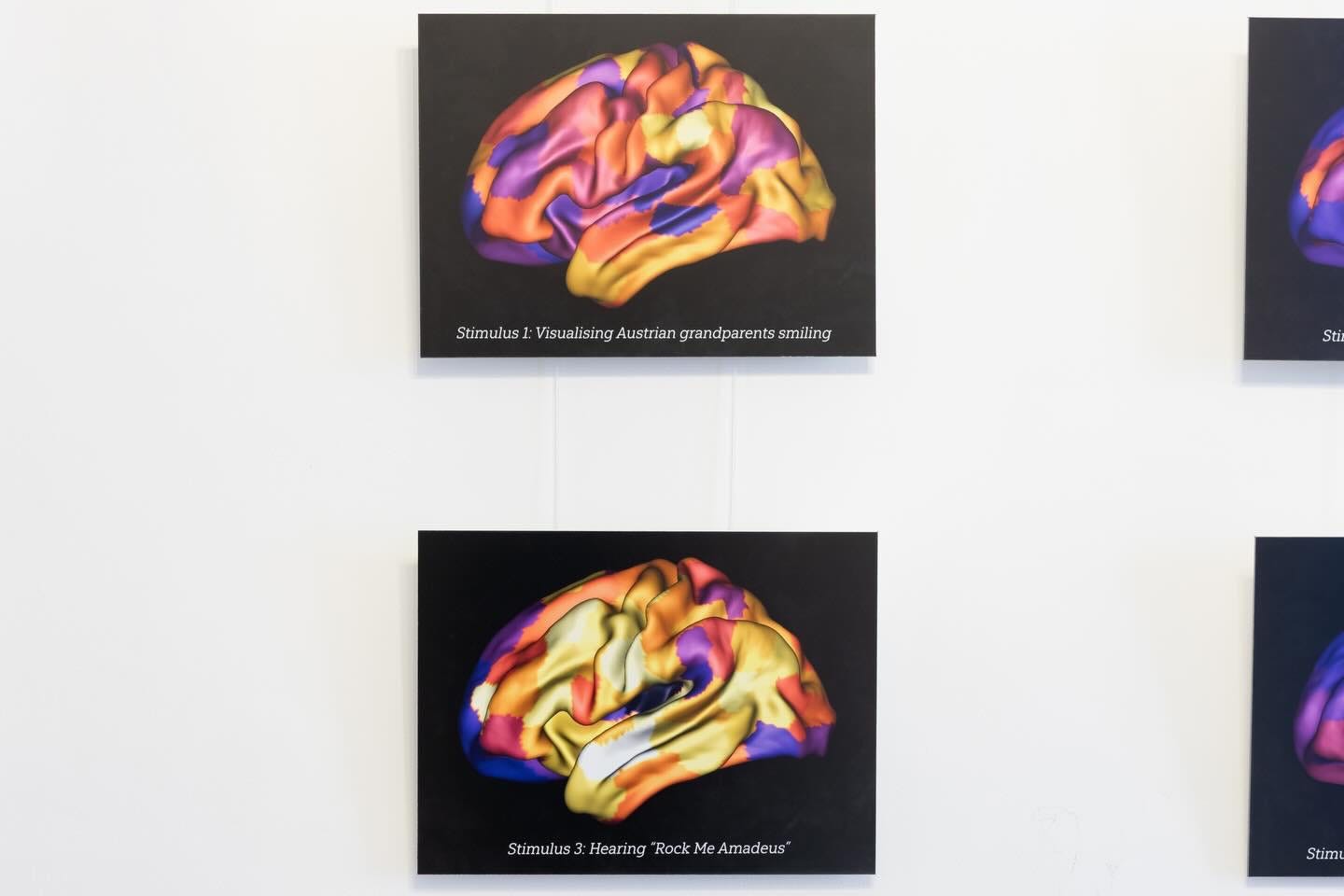
There is information in the image, but there is also seduction. That matters because we are living in a time where data gets treated like moral cleanliness. A graph appears and everyone briefly forgets who paid for the spreadsheet. A scan appears and the body becomes evidence. Garner’s work sits right in that uneasy gap between knowing more and understanding less.
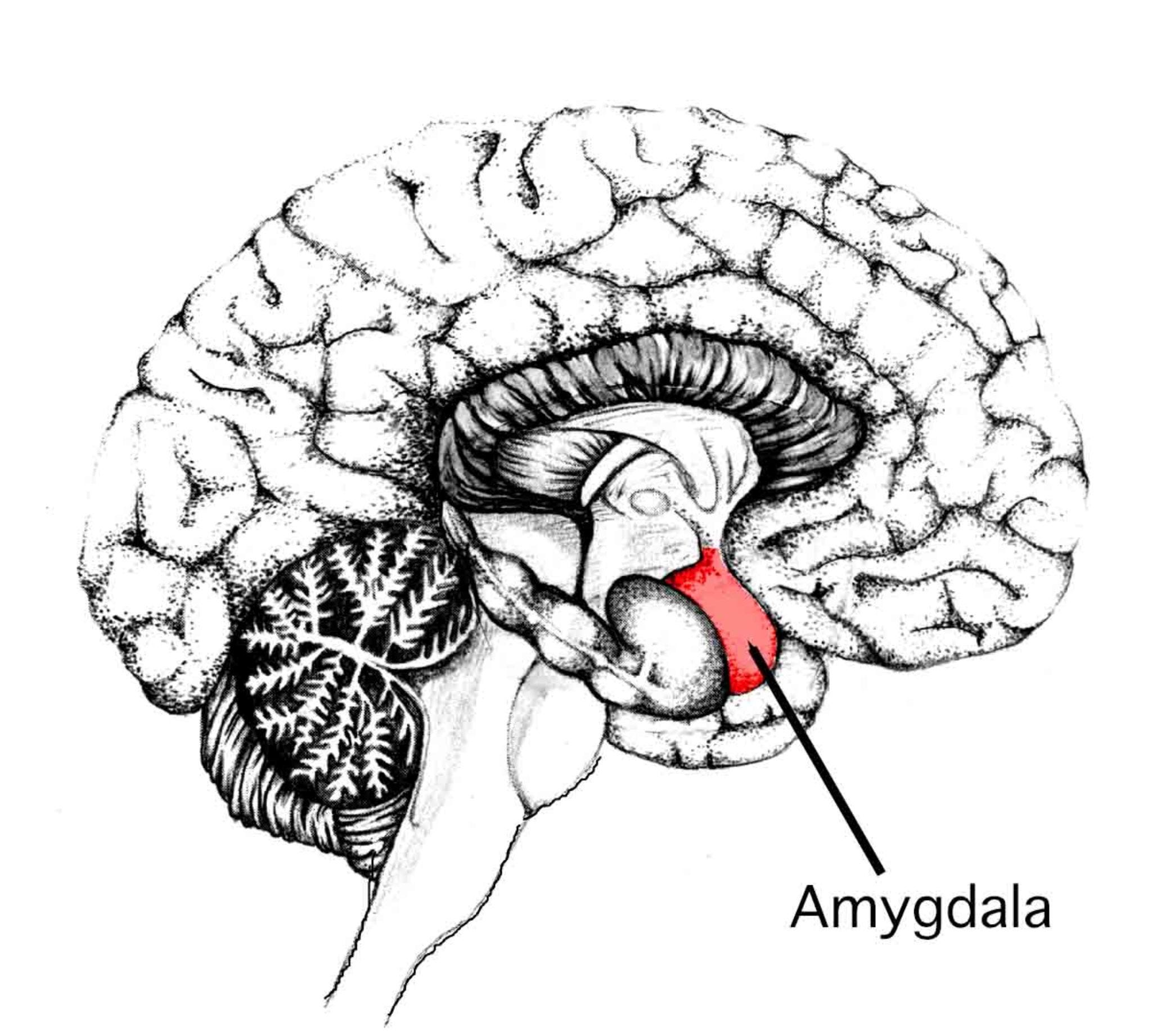
The amygdala is useful here, partly because it sounds like a prog rock band that would support King Crimson in 1974 but also because it gives a name to something running through the work. Fear. Salience. Threat. The little almond-shaped alarm system in the brain that helps decide what matters enough to panic about. Garner’s practice feels like it has been built by someone whose amygdala has spent years in conversation with institutions that specialise in secrecy.
That doesn’t mean the work is paranoid in some lazy dismissive sense. In his book, Garner is careful about the period where he recognises he was mentally ill, while also refusing the easy comfort of saying everything was simply illness. That distinction matters. People love to use mental health language as a way of closing down difficult institutional questions. The minute someone says paranoia, the system gets to quietly leave by the fire exit.
Garner doesn’t let it leave that easily.
His account of the “magic journal” is a perfect example. During CIA training, he kept a personal journal at home. Things he wrote privately seemed to be echoed back at work. Then, after typing something about maybe leaving the Agency, the journal began deleting itself word by word. He describes the detail carefully. It didn’t look like a stuck delete key. It erased words, not letters. He shut the laptop down to stop it. Whether you read that as malfunction, hacking, stress, surveillance, institutional theatre or the mind reaching the edge of what it could metabolise, the episode has the shape of his best work. Something happens. The proof is unstable. The body responds anyway.
Conversation with a Smoke Detector comes directly out of that world and turns it into a living episode of Black Mirror. While briefly undercover in East Asia, Garner found himself lying in a hotel room talking to himself when the smoke detector above him flashed irregularly, seemingly responding. He asked if it was listening. It flashed. Years later, he turned that experience into an interactive work: a smoke detector inhabited by an absurdist philosopher, answering questions through flashes. Ask whether life has meaning, and it flashes no. Ask whether we create meaning through our actions, and it flashes yes.
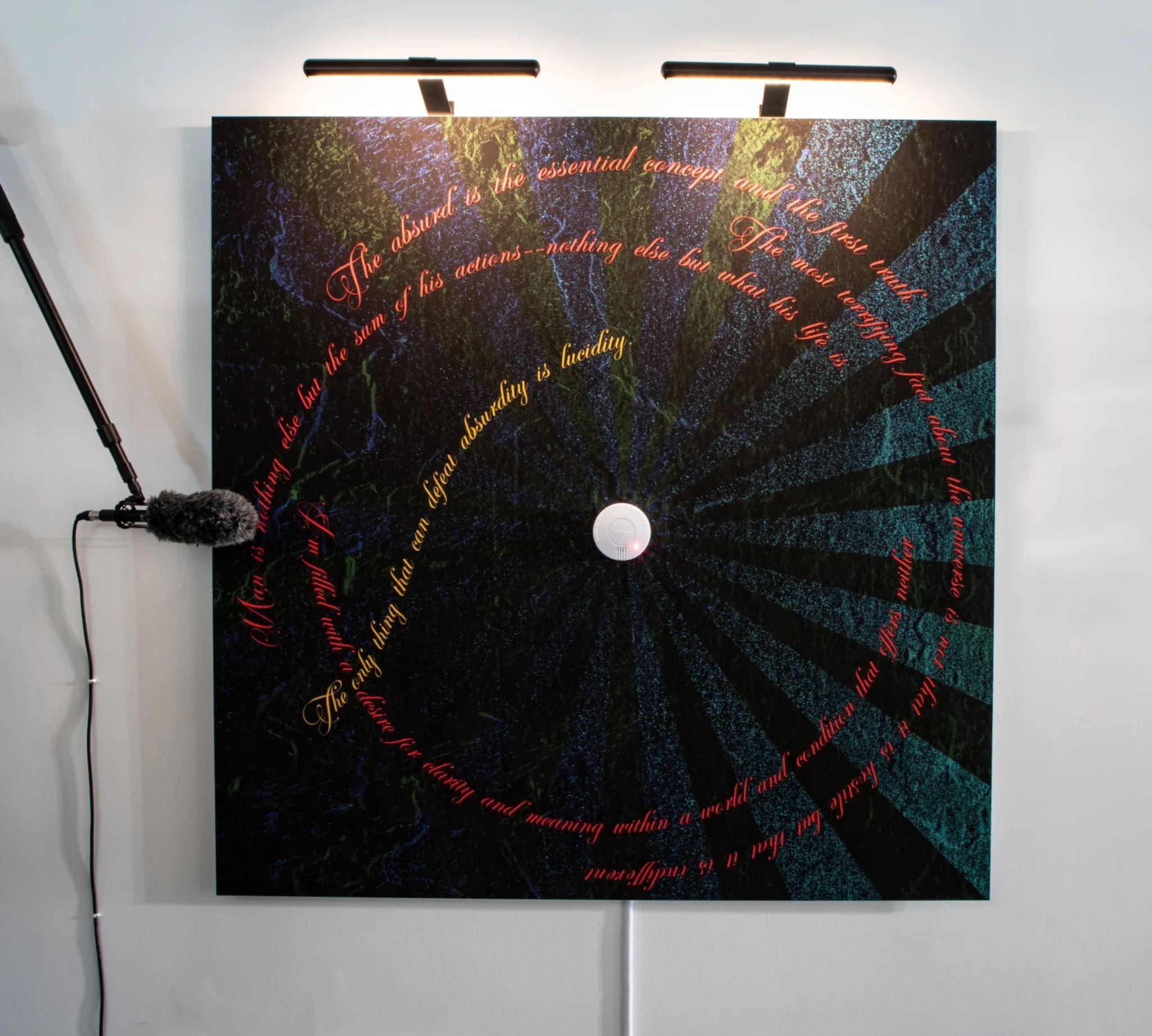
It’s funny, but not in a clean way. The smoke detector is such a perfect object because it already has one foot in care and one foot in suspicion. It is there to save you, but it is also above you, watching the room with its dead little plastic eye. It belongs to the domestic world, which makes it worse. Surveillance no longer needs a trench coat. It can sit on the ceiling, pretend to be safety infrastructure, and chirp at 3am until you consider leaving society entirely.
This is where Garner feels extremely contemporary. Surveillance has become soft. Convenient. Friendly. Doorbells, phones, smart speakers, location permissions, gallery analytics—all of it framed as service. We do not simply fear being watched. We increasingly participate in being watched because the watched version of life arrives with smoother admin.
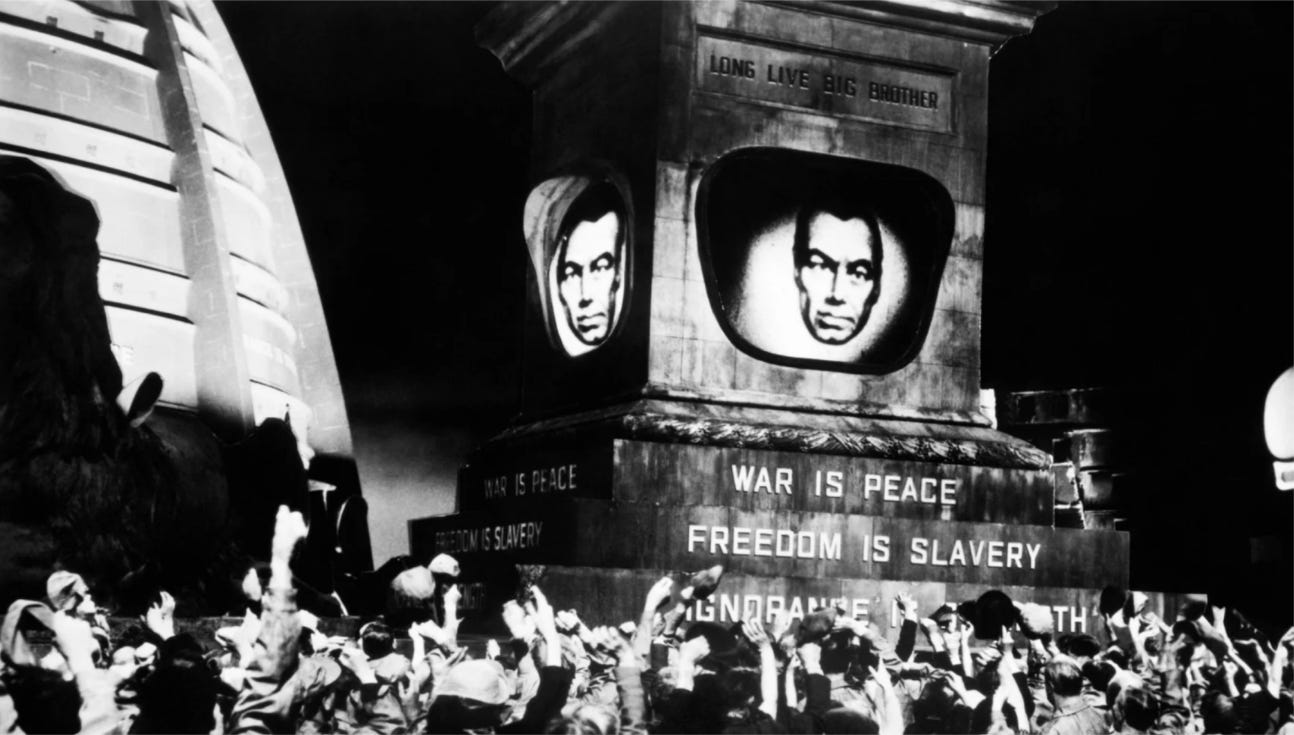
Shoshana Zuboff is useful here because she moves the conversation past the old bloke-in-a-room-watching-you model. Her phrase “surveillance capitalism” names a system where human experience is scraped, converted into behavioural data and sold back through prediction. It’s less George Orwell’s boot stamping on a face forever, more your Ring doorbell, NHS app, Tesco Clubcard and Instagram feed quietly building a behavioural weather report of you while calling it convenience. The telescreen has stopped barking orders from the wall. It now offers next day delivery, personalised recommendations and a smoother sign-in experience.
Nineteen Eighty-Four imagined the horror of not knowing when you were being watched, so you behaved as though you always were. The old panopticon relied on discipline through uncertainty. What we have now is stranger because the uncertainty has been gamified and outsourced into normal life. We install the cameras ourselves. We agree to the terms. We carry the tracker. We update the app. We let the device know where we sleep because otherwise the heating won’t work properly or the parcel won’t arrive. David Lyon’s point that no single metaphor can really sum up contemporary surveillance feels right here; Orwell and Bentham still give us clues, but neither quite captures the cosy little horror of voluntarily buying the cell furniture yourself. And this isn’t abstract paranoia anymore. The Met’s own Croydon live facial recognition pilot makes that fairly clear. From October 2025 to March 2026, static LFR cameras were mounted onto existing street furniture at the north and south ends of Croydon high street, with more than 470,000 people walking past them during the pilot. The Met says 173 arrests were made across 24 operations, which it frames as one arrest every 35 minutes, with crime in the area down 10.5 per cent compared with the same period the year before and violence against women and girls offences down 21 per cent. Lindsey Chiswick, the national and Met lead for live facial recognition, called it “a powerful tool when it’s used carefully, openly and in the right places.”
The Met says there was only one false alert among those 470,000 passers-by and that no one has ever been arrested because of a false LFR alert. Still, half a million people walked through a machine-readable public space so a police system could identify 173 people. Even when the system works as advertised, the wider civic question remains: what kind of city are we building when walking down a high street becomes an encounter with remote biometric sorting?
This is also where his Slow News Day works bite. Garner told me these newspaper pieces are among his most important. They are filled with carefully written articles about alternative futures, political absurdities and reality-bending thought experiments. One imagines VR headsets that filter out whatever makes you uncomfortable: a conservative sees two men holding hands and one becomes a woman; someone on the left sees a MAGA hat and it changes into something easier to tolerate; a war zone becomes beautiful trees.
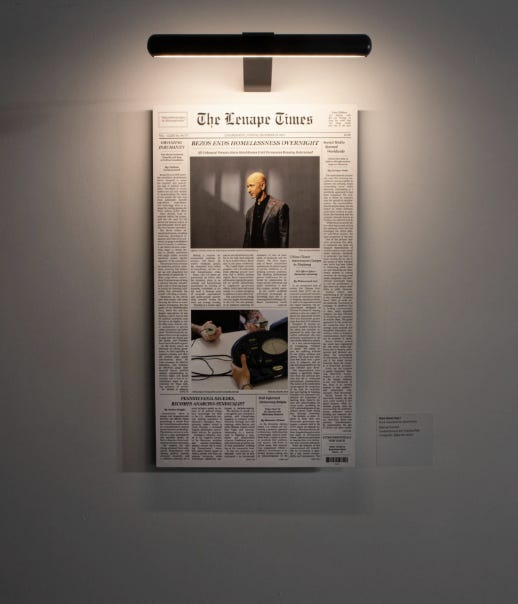
It sounds like satire until you remember that most satire now has the shelf life of milk left on a radiator. The world keeps overtaking the joke. Garner’s newspaper works are effective because they understand that the forms we used to trust,newsprint, classified language, medical imaging, official documents, now arrive already infected by doubt. People stand in front of Slow News Day and ask whether it is satire, fake news or real. That uncertainty is not a gimmick. It is the public mood.
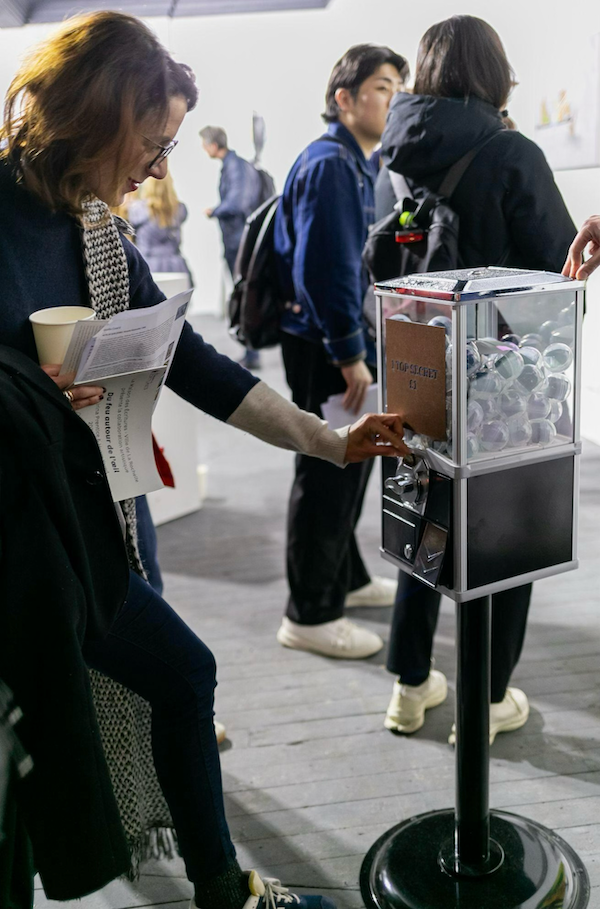
His vending machine piece, TS//HCS/SI//ORCON/NOFORN, does this with even more precision. You put in £1 and receive “top secret” information. The slips contain absurd classified claims, but the formatting gives them institutional flavour. This is secrecy as consumer product. Forbidden knowledge priced like a multipack of Space Raiders. It skewers intelligence culture, but it also skewers the wider economy of revelation we are all trapped in now. Pay money, get the truth they don’t want you to know. Buy the course. Subscribe to the newsletter. Unlock the hidden system. Welcome to paranoia capitalism, please insert coin.
What keeps all this from becoming smug is that Garner implicates himself. He has worked inside systems. CIA, State Department, Meta, NASA, Amnesty. Human rights and surveillance. Climate research and data infrastructure. He has seen how noble language and violent machinery can share a corridor. That gives the work a lived tension you can’t fake by reading three books on cybernetics and buying a black turtleneck.
His Root of Evil piece takes that tension into biology. The sculpture is based on the molecular structure of testosterone, with an audio element built from an interview with a scientist. The title pokes directly at toxic masculinity, billionaire alpha theatre, far-right body politics and the whole online lad-industrial complex of meat, money and grievance. But the work complicates its own bait. Testosterone can promote aggression, but it can also promote generosity. Garner described it as almost a status hormone. You can gain status by crushing people or by lifting them up.
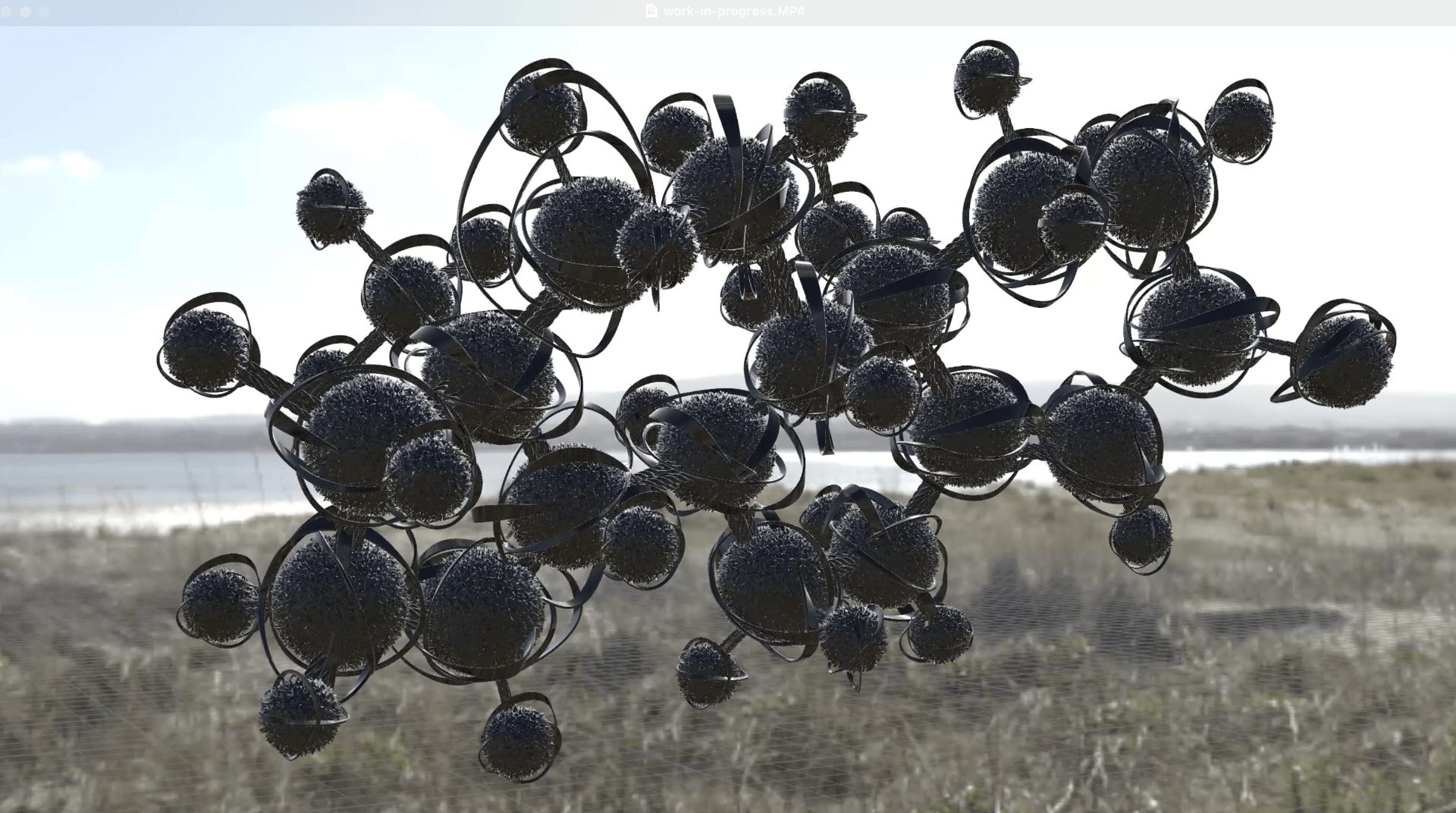
That is a sharper point than simply saying masculinity is bad. The question becomes what kinds of social systems reward which performance of status. In 2026, that feels painfully relevant. The culture is full of men trying to biologise their politics. Hormones as destiny. Fitness as morality. Wealth as proof of superiority. Garner’s molecule sits there like a diagram of a culture trying to excuse itself through chemistry.
If there is a critique of Garner’s practice, it is that the work can occasionally risk becoming overfed by its own intelligence. CIA memoir, neuroscience, neuroaesthetics, Austrian citizenship, Holocaust inheritance, testosterone, media satire, surveillance systems, cultural belief, existential philosophy. At times, you feel the analyst in him trying to map the whole building at once. Every door, pipe, camera, false wall, basement corridor. Some pieces need context to fully open, and context can be expensive in a gallery where attention is already on life support.
But that problem is also the work’s condition. Garner is not producing neat objects from one stable subject. He is making art from overlapping systems as they pass through a person. His strongest works find simple forms capable of carrying that pressure: a vending machine, a smoke detector, a newspaper, a molecule, a brain scan. Everyday formats with something wrong inside them.
That, for me, is where the work connects to a wider class and cultural question too. Garner spoke about the invisible hand of the art world, about challenging work often struggling to find platforms because the system bends towards the decorative, the confounding, the tolerably uncomfortable. That sounded painfully familiar. The art world, like the British screen sector, loves the language of risk while often starving the people who might actually take one. It will platform difficulty once it has been softened, branded, contextualised and made safe enough for the funding report.
Garner’s work refuses to be entirely safe because it keeps asking what happens when the systems we rely on to define reality become part of the breakdown. Science, news, intelligence, markets, galleries, nations, platforms. All of them promise clarity. All of them produce distortion.
And somewhere inside that distortion is a person trying to remain funny, precise and alive.
That is the real force of Michael Garner’s work. It doesn’t ask whether reality is constructed as some clever seminar question. It shows what constructed reality feels like when your brain, body and personal history have to live inside it. The joke lands, then the alarm goes off. The scan glows, then the grief leaks through. The smoke detector flashes, and for a second you are not sure whether the room is answering you or whether you have finally learned to hear the machinery.
In 2026, that feels less like paranoia than basic literacy.
