


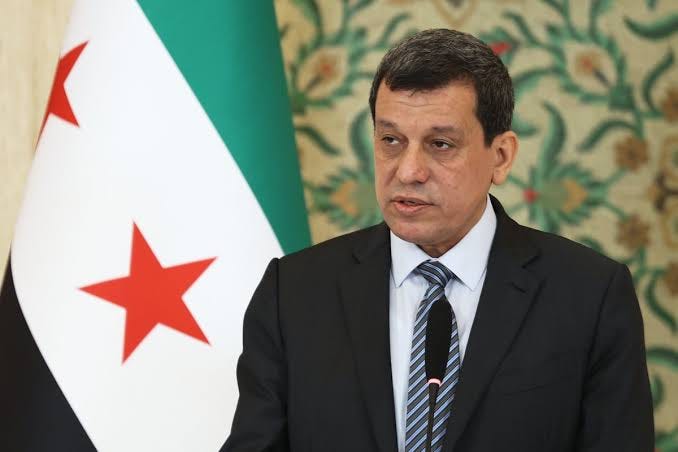
The People’s Palace: The End of One Experiment, the Beginning of a New Question
On 25 August 2026, Mazloum Abdi announced from the People’s Palace in Damascus that the mission of the Syrian Democratic Forces (SDF) had come to an end and that it was dissolving as an independent military force, along with the dissolution of the Autonomous Administration (Rojava) and of the military and civilian formations attached to it, all of them absorbed into the institutions of the Syrian state.
The announcement followed the broad military operation launched by government forces in January 2026, which cost the SDF large stretches of the territory it controlled and opened a negotiating track that ended in an agreement to integrate its forces and institutions into the Syrian state.
I regard this as a positive development, because it reduces the likelihood of devastating nationalist wars whose first victims are always workers and the labouring poor of every nationality. Yet while the successive agreements, from March 2025 to the comprehensive agreement of January 2026 and on to the announcement of dissolution, did lower the risk of war and spare the people of the region further destruction, they contained no provision whatsoever on the questions we fight for as leftist and progressive forces: women’s rights, the secular character of the state, an end to privatisation, protection of the public sector, guarantees for the rights of working women and men, the achievement of social justice, and democratic elections at all levels of government.
The model that a wide segment of the Kurdish and international left presented for years as a leftist social, feminist and grassroots democratic revolution ended by a decision taken at the top and announced from a presidential palace in Damascus, with no popular referendum and no declared decision by the councils and communes that the SDF had presented to the world as the bodies supposedly exercising popular sovereignty in what was called the “Autonomous Administration,” supposedly built on the power of the people.
The United States, which had been the principal military and political backer of the SDF while simultaneously supporting the political and military trajectory of the new authorities in Damascus, was a central party in shaping the course of the war and then the course of its resolution. That fact alone reveals where decision-making power actually sat the entire time, and how far a wager on the major imperialist powers can be trusted.
What stands out is how the costs were distributed. The new state absorbed a section of the military and party elite of the SDF, despite the class-based, religious and authoritarian character of the new political order. A number of SDF commanders were appointed to military posts, others received ranks and administrative positions, and they became an active part of the military, political, administrative and security apparatus of the Syrian government, and of its capitalist class structure. Meanwhile the working people—Kurds, Arabs, Syriacs and every other community—were left facing the same social, economic and political problems that preceded the war, now sharpened by years of conflict and destruction.
In parallel, decrees were issued recognising the Kurds as a constituent part of the Syrian people, recognising Kurdish as a national language and Newroz as a national holiday, and lifting the effects of the unjust 1962 Hasakah census.
These are real gains that generations struggled for. Yet the recognition came after the balance of power had been settled rather than before it, and rights granted by decree can be withdrawn by a counter-decree, all the more so under an undemocratic government resting on Islamist organisations with a history of repression and violence. What is required today is to turn these gains into binding constitutional text within a comprehensive political transition, so that they do not remain favours dispensed by an authoritarian power.
This warning carries double weight given the nature of the new authorities in Damascus, who have offered no clear and binding guarantees regarding the secular character of the state, women’s rights or public freedoms. On the contrary, their record of repression and documented violations raises fears of a new authoritarianism under a religious cover, no less dangerous than the one before it.
What Belongs in the Record, and What Cannot Be Buried
Objectivity requires that the positive side be recorded as well. In the Kurdistan Region of Iraq, international reports have documented the hosting of large numbers of displaced people from every Iraqi community, a level of stability and of social and religious freedom that in certain respects stood higher than in other parts of Iraq, and a role in protecting minorities from the threat of extermination during the rise of ISIS.
In north and east Syria, the Syrian Democratic Forces played an effective military role in the fight against ISIS and paid a heavy price in lives. Attempts were made to build a civil administrative model under conditions of war and siege, and relative progress was achieved in women’s participation, which is rare in the context of the region.
Against this, international human rights organisations have documented serious and systematic violations in the Kurdistan Region: the detention and torture of journalists and human rights defenders, the suppression of protests against unemployment, corruption and unpaid salaries, at times with live ammunition, and serious failures in protecting women from violence, alongside wider documented abuses. In north and east Syria, extensive violations by the Syrian Democratic Forces have likewise been documented, including the recruitment of children under the age of eighteen in breach of its repeated pledges, arbitrary detention and torture, and the suppression of demonstrations.
Human rights reports have also documented allegations of abuses against Arab residents and of forced displacement in some areas, as well as the closure of media offices and civil society organisations. Since the integration, United Nations investigators have continued to receive testimony concerning killings, enforced disappearances and arbitrary detention in Hasakah, while the humanitarian consequences of the fighting have been tracked by United Nations agencies, and the international commission of inquiry remains the body mandated to establish responsibility for such crimes.
The Gap Between Discourse and Practice, and the Wager on American Imperialism
The left, whether local or international, faces a complex challenge: how does it defend the legitimate rights of the Kurdish people while holding to consistent critical standards towards every authority without exception? That balance is the condition for the credibility of internationalist solidarity itself.
Solidarity with the oppressed Kurdish people and with all oppressed peoples is a basic principle of the left, grounded in values that reject national subjugation, class exploitation and every form of discrimination. The Kurdish people have been subjected to historic and continuing national oppression that has included genocide, forced displacement, the denial of cultural and linguistic rights, and political repression.
Such solidarity, however, does not rest on unconditional alignment. It has to draw a clear line between supporting the right of oppressed peoples to dignity, equality and self-determination, and offering unqualified endorsement to particular nationalist parties whose involvement in grave and documented violations has been established—parties that throughout their history have practised political assassination, arbitrary detention, enforced disappearance and torture against their opponents, many of them from the ranks of the left.
A large part of the left was drawn to the concept of “Democratic Confederalism“ and to the ideas of Abdullah Öcalan that influenced the Autonomous Administration as an alternative to the centralised nation-state. Practice on the ground, though, exposed a sharp contradiction. While the talk was of communes and grassroots popular democracy, military and financial decision-making was concentrated in the hands of unelected party and military cadres operating with a rigidly centralist mentality.
As for deploying the language of ecology, feminism and statelessness as a rhetorical cover, presented to Western and especially leftist public opinion, on behalf of a one-sided military authority working closely with American military and security institutions and receiving funding from them, my view is that this does no service to leftist thought. It empties that thought of its content and turns it into a force operating on behalf of those very institutions.
When movements that present themselves as revolutionary or liberationist come to depend on American financial and military resources, this is no passing tactical matter, since it gradually reshapes their internal nature. As the centre of gravity shifts from popular mobilisation to external funding, a movement changes from a social force rooted in a popular base into a military force dependent on external funding, and its survival becomes tied to the continuation of international support more than to the mass base that will ultimately decide its future.
The moment the backer’s priorities change, the structural fragility is exposed all at once. This is precisely what happened, and it is what I pointed to in earlier articles as far back as 2018.
Washington lifted sanctions on Damascus in May 2025, received Ahmed al-Sharaa at the White House in November 2025 and brought Syria into the international coalition against ISIS. The January 2026 campaign then unfolded amid American and Turkish understandings. The American envoy Tom Barrack stated openly that his country does not support federalism in Syria and that the original purpose of those forces had effectively come to an end, while a former American envoy refused to describe what happened as a betrayal, explaining that Washington had always regarded the alliance as temporary, tactical and transactional. The testimony of the decision-makers themselves makes any further analysis of the wager on the great capitalist powers unnecessary.
The structure presented as an alliance among the region’s communities also came apart at the first serious test. Before that, its leadership had accepted, as a matter of fact on the ground, the role of the Kurdistan Democratic Party (the Barzanis) as the primary national reference point for the Kurds, despite its family and tribal rule, its corruption and its hereditary transfer of power. This became plain when negotiations moved to Erbil and Masoud Barzani took on the role of mediator and guarantor.
This is not a conclusion I am advancing today, after the SDF experience has ended, since I wrote in this direction years ago.
In an article titled “The Nation-State? Or the State of Citizenship and Rights?" published in 2018,
I wrote the following about the experience of the Kurdish nationalist left in Syria:
In my view, the experience of the Kurdish nationalist left through the Democratic Union Party and its affiliates in Syria, however far it develops, will amount to reforms of a leftist and radical civil character, resembling the Baath Party’s rule in Iraq and Syria in the 1970s, which was among the most significant historical experiences of nationalist left government in the Middle East, and every one of those experiences turned into a corrupt dictatorial and authoritarian regime.
In the same article, I also warned about the nature of the alliance with the United States, writing:
America, as the largest capitalist power, supports most of the reactionary and racist regimes in the world, and has never once stood on the side of oppressed peoples or of humane and liberationist values. It is present in Syria solely to secure its strategic interests there and in the region and to counter Russian influence. In my view, America’s alliance with the Syrian Democratic Forces serves to fill an American gap, the absence of large ground forces of its own on Syrian territory, whether regular troops or security companies, so it relies on the human military capacity of the Syrian Democratic Forces to carry out its agenda inside Syria.
This alliance resembles the alliance that parts of the Iraqi opposition, through the Iraqi National Congress, formed with America politically and militarily on the eve of the overthrow of the Baathist dictatorship in Iraq. I believe it is a temporary and fragile alliance that follows American interests, that it lends legitimacy to American intervention and practices in Syria, and that it also helps to prettify America’s ugly and grim face locally, regionally and globally. America is known for abandoning its allies once their tasks are over, or when they conflict with its agenda, and we have many other examples of this. Its strategic interests with Turkey remain the most important and the decisive ones, and the matter is a question of time, nothing more.
Similar Nationalist Cliques Speaking Different Languages
I have noted in earlier texts that no fundamental differences exist among the ruling nationalist cliques, whether in the Kurdistan Region of Iraq or among those that governed north and east Syria, nor between them and the ruling nationalist regimes and bourgeoisies of the region, in Baghdad, Damascus or Ankara.
There are deep similarities in the nature of their power and in their class interests. What divides them concerns shares, influence, resources and the division of power, rather than the character of rule or the interests of the labouring classes, and all of them share, in varying degrees, in impoverishing the masses, suppressing freedoms and violating economic, social and political rights, whatever their national or religious starting point. Events and realities in both the Kurdistan Region of Iraq and Syria have confirmed this reading to a considerable extent.
It is therefore not enough for the left to declare its solidarity with “the Kurdish people” in the abstract. Peoples are not homogeneous blocs. They are class formations in which national contradictions intersect with class contradictions, and there is no pure people or ethnicity free of internal class struggle.
The left has to settle its position: which class of the Kurdish people does it stand with? With a rentier bourgeoisie and party elites that monopolise power and wealth, or with the working women and men among Kurds, Arabs, Turkmen and the other nationalities living in those areas—people who suffer authoritarian rule, poverty, unemployment, marginalisation and collapsing services, whose right to independent trade union and political organisation is restricted, and who alone pay the price of nationalist wars with their blood and with the future of their children?
What has happened in Syria, and what is happening in the Kurdistan Region, make this reassessment all the more urgent, and it does not concern Kurdish nationalists alone. Part of the left in the Arab world defended dictatorial regimes for years, among them the Baathist nationalist regimes in Iraq and Syria, while another part defended other nationalist models and parties. What is required, then, is not to abandon solidarity with peoples and their right to determine their own future.
It is to reconsider the relationship between the left and authoritarian nationalist parties and regimes, and to free that solidarity from the uncritical justification of violations and of the authorities and political forces committing them, whatever their national or ideological identity.
The Alternative: A Democratic Citizenship State and Social Justice
While I am fully convinced of the right of all oppressed peoples to self-determination, local, regional and international conditions and present realities do not allow for the formation of an independent Kurdish nation-state in the foreseeable future, and no serious international support exists for such a path.
The events of 2026 offered clear proof of this, when a quasi-state entity—the Autonomous Administration in Syria, backed by the largest imperialist military power in the world—effectively came to an end within months, as soon as the calculations of its funders shifted and the regional and international balance of forces changed. These developments could also be reflected in the Kurdistan Region of Iraq, in line with shifts in American interests and alliances and in regional and international power balances.
At the same time, I believe that humanity’s intellectual and legal development, and the growing weight of the values of human rights, social justice and citizenship, compel a rethinking of nation-state projects built on ethnic and religious loyalties. The more worthwhile struggle, in my view, is a common struggle of the Kurdish people together with the other peoples of the region and its labouring masses, aimed at moving beyond the exclusionary nation-state and at preventing workers and the labouring poor from being turned into fuel for destructive nationalist wars that ultimately serve the interests of nationalist bourgeoisies and elites.
The alternative, as I see it, concerns more than the Kurdish question alone, offering a framework for addressing the various national and religious problems of the region: the democratic citizenship state, resting on a constitution grounded in international human rights conventions, on the neutralisation of nationality and religion within the state, on guarantees of national and cultural equality for all communities, and on the rejection of every form of national domination.
It rests as well on a decentralised, democratic federal system with fair geographic and administrative foundations, allowing broad self-government within a unified state, alongside honest elections, party pluralism, separation of powers, an independent judiciary, freedom of the press and of trade union and politicalunions organisation, and a complete break with authoritarianism, hereditary power and family and tribal rule.
Such a state cannot be complete without social justice that guarantees the rights of the labouring masses of every nationality and religion, protects the public sector, and rejects privatisation and neoliberal policies that impoverish the masses and enrich the elites. Within this framework, the national and cultural rights of all nationalities, religions and communities can be secured, without placing any nationality or religious group above another.
The Kurdish cause is a just cause deserving genuine and principled solidarity. Genuine solidarity, however, does not mean granting nationalist parties and elites political or moral immunity. It means supporting the struggle of the Kurdish people and of all the peoples of the region for their rights, freedoms, dignity and social justice, and refusing to let the national question be turned into an instrument for entrenching the power of elites and protecting their class privileges.
I do not write these words from the position of an outside observer. I am of Kurdish origin, and in my youth, I was part of this struggle. I experienced its aspirations, hopes and contradictions at close range.
Criticising the SDF is therefore not criticism of Kurdish rights; criticising the ruling parties in the Kurdistan Region is not criticism of the Kurdish cause; and rejecting the nation-state is not a rejection of national identity or national rights. It is a call for a leftist and humanist alternative that moves beyond exclusionary nationalism towards a democratic citizenship state, social justice and a socialist horizon.