


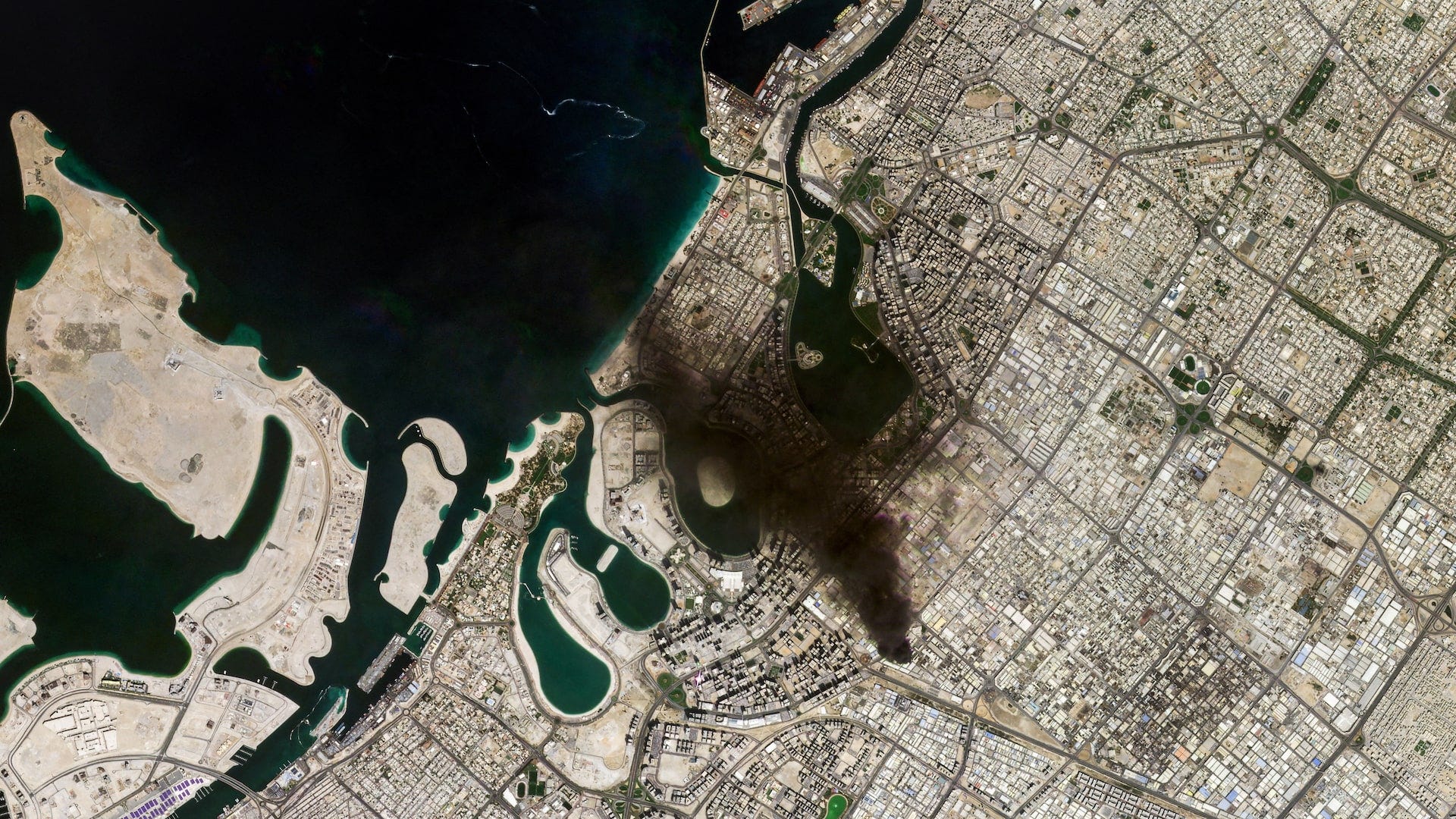
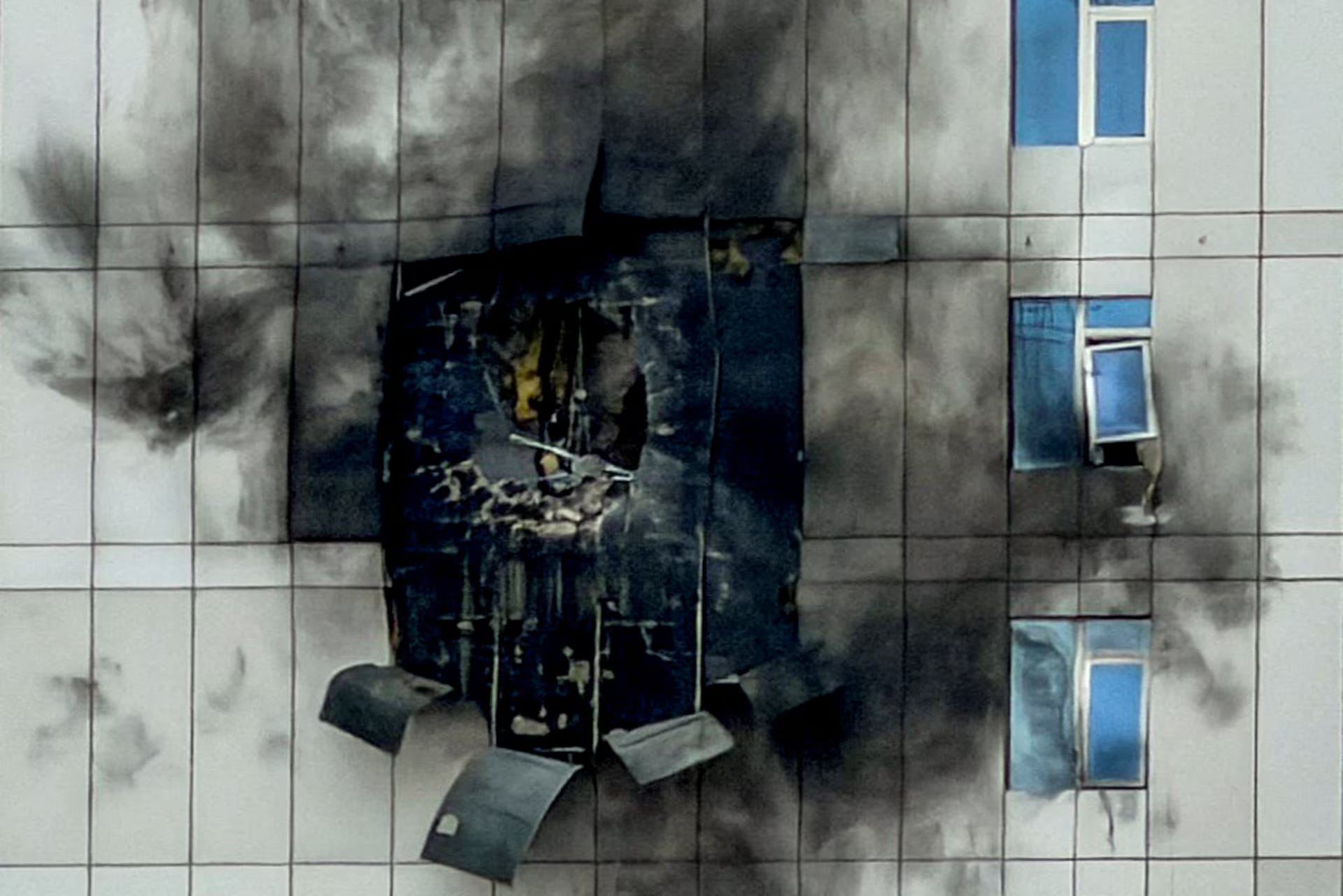
The blast that tore through the diplomatic quarter in Riyadh was not merely an explosion of steel and fire. It was an explosion of illusion. When Iranian drones struck the United States Embassy compound in one of the most heavily fortified precincts on earth, the message was unmistakable: deterrence in the Gulf is no longer a quiet equilibrium but a fraying wire, sparking dangerously above the world’s most vital energy corridor.
It’s confirmed that the strike caused a fire and material damage, though no casualties were reported. Saudi air defences intercepted additional drones in time to prevent a catastrophe. But symbolism often travels further than shrapnel. An embassy is sovereign soil under international law. To see smoke curling above it in Riyadh is to witness the erosion of long-standing assumptions about sanctuary and restraint.
This latest escalation follows Washington’s extraordinary decision to launch what President Donald Trump described as ‘major combat operations in Iran’, a coordinated US–Israel strike that, according to Atlantic Council experts, targeted regime and nuclear sites in an attempt to force ‘strategic submission’ in Tehran. Pentagon briefings later acknowledged there was no intelligence showing Iran was poised to attack US forces imminently, according to Reuters. The legal and moral argument for pre-emption remains deeply contested, with Just Security analysts warning such action risks breaching Article 2(4) of the UN Charter’s prohibition on the use of force.
Iran’s retaliation has been swift and multi-front. Iraqi Shiite militias aligned with Tehran have launched drone attacks against US facilities, as documented by the Long War Journal. Hezbollah has formally entered the conflict from Lebanon, firing missiles towards northern Israel. Yemen’s Houthis have targeted Israeli positions with ballistic missiles in coordination with Iran. The region is no longer a chessboard of proxies; it is a crowded theatre of open confrontation.

Amid this inferno, one position stands out for its deliberate restraint: Kuwait’s unequivocal declaration that no offensive strikes may be launched from its territory. Kuwaiti authorities have reportedly insisted that American forces stationed on their soil must not use bases there to initiate attacks against Iran without explicit host-state consent. In doing so, Kuwait has invoked a foundational but often overlooked principle of international law: sovereignty is not suspended by alliance.
Under the host-state consent doctrine, foreign military presence derives legitimacy solely from the continuing permission of the sovereign government. Consent can be conditioned, limited, or withdrawn. Kuwait’s stance is not defiance; it is doctrine. It reflects a small state’s assertion that alignment with Washington does not equate to carte blanche for war. In an era where major powers test the elasticity of norms, Kuwait has drawn a line in ink rather than blood.
This posture lays bare the fracture lines within the Gulf Cooperation Council, where American bases dot the landscape but national interests do not march in lockstep. Saudi Arabia, alongside the United Arab Emirates, Bahrain and Qatar, shelters significant US military infrastructure, yet each capital calculates risk through its own prism of survival. Riyadh has spoken the language of restraint, with Crown Prince Mohammed bin Salman warning that war with Iran would send oil prices to ‘unimaginably high numbers’ and rattle a fragile global economy already stretched thin.
At the same time, reports alleging private Saudi encouragement of tougher action against Tehran have stirred unease—claims the Kingdom has categorically denied, reaffirming its commitment to diplomacy, credible agreements and regional stability. That tension, between whispered realism and declared prudence, captures the Gulf’s defining dilemma: how to anchor alliance security without setting fire to the very region that sustains it.
The Strait of Hormuz carries roughly a fifth of global oil consumption—about 17 to 20 million barrels per day by most energy estimates. Even a temporary disruption reverberates across continents. When conflict threatens Hormuz, inflation in Sydney, Berlin and Nairobi is no abstraction. Insurance premiums spike. Tankers reroute. Markets tremble. An oil crisis in the Gulf is a tax on the world’s poor.
Iran is not simply a revolutionary outpost shaking its fist at the West; it is a sanctioned yet deeply embedded energy power, woven into global oil markets and regional trade lifelines. Its leadership has long oscillated between ideological defiance and cold-eyed pragmatism, as seen in its willingness to negotiate the Joint Comprehensive Plan of Action when survival demanded it.
Beneath the rhetoric lies a tradition of patient statecraft that favours endurance and calibrated retaliation over suicidal escalation. Watching closely is China, playing a deliberate long game—offering economic lifelines, discounted oil purchases and diplomatic cover, not out of sentiment but strategy. By tightening Tehran’s economic dependence while avoiding direct military entanglement, Beijing chips away at American dominance without firing a shot, reshaping the balance of power through quiet leverage rather than open confrontation.
The realist instinct across capitals argues that strength compels respect. Yet realism alone cannot account for the Islamic diplomatic tradition that also shapes Gulf behaviour. Within Islamic jurisprudence, non-aggression, treaty fidelity and protection of envoys are not Western inventions but embedded principles. The attack on a diplomatic compound jars not only with international law but with deeply rooted norms of sanctuary.
Kuwait’s insistence on limiting offensive operations from its territory reflects this fusion of realism and restraint. It recognises the security umbrella provided by Washington while affirming that participation in aggression would expose the state to retaliation and moral hazard. This is not hedging; it is sovereignty management.
For middle powers across every continent—from Southeast Asia to Latin America, from Africa to Europe—the lesson is stark and unsettling. The credibility of the rules-based international order is not preserved by eloquent speeches in multilateral halls, but by the disciplined, consistent application of its principles when they are inconvenient, costly, or politically uncomfortable. If pre-emptive force becomes normalised and host-state consent treated as a flexible technicality rather than a sovereign right, the message to smaller nations is unmistakable: security guarantees are conditional, and law bends before power.
In such a world, states will not sit idle. They will hedge, rearm, pursue their own deterrents, or pivot towards alternative patrons who promise protection without lectures. The result is not stability but quiet proliferation, not unity but fragmentation—a splintering of alliances into transactional blocs where fear replaces trust. And once trust in the system erodes, rebuilding it is far harder than defending it in the first place.
The Riyadh embassy strike should be read not as an isolated act of vengeance but as a warning flare. The Gulf’s security architecture is under strain from within and without. The more militarised the response, the more expansive the battlefield becomes—from Beirut’s southern suburbs to Iraqi airstrips and Yemeni ports.
Peace in the Middle East will not be conjured by sentiment. It will require a recalibration that honours sovereignty, restores credible diplomacy and recognises that economic interdependence is not weakness but leverage. Hormuz is not merely a chokepoint of oil; it is a chokepoint of trust.
A sustainable path forward demands immediate de-escalation, renewed multilateral talks that include regional stakeholders, and explicit reaffirmation that foreign bases operate under the clear and limited consent of their hosts. It demands that Washington weigh power against precedent, that Tehran balance resistance with responsibility, and that Gulf capitals continue to assert autonomy rather than drift into automaticity.
Smoke over Riyadh need not herald a generation of war. It can instead mark the moment when states remember that sovereignty is sacred, diplomacy is not capitulation, and peace—fragile, contested, imperfect—remains the only victory that endures.
