


When European powers in Germany, France, and the UK threatened to activate the snapback mechanism against Iran in 2025, most headlines confined the story to a familiar frame: nuclear noncompliance, diplomatic failure, another escalation in the Middle East.
But for the rest of the world, particularly the Global South, this moment lands quite differently. It does not read as a technical dispute over treaty obligations. It reads as confirmation. A confirmation that international law is no longer a shared framework, but instead a theater of selective enforcement where legal tools are used not to uphold justice, but to manage disobedience.
The snapback mechanism, embedded in UN Security Council Resolution 2231, allows any JCPOA (Joint Comprehensive Plan of Action) signatory to unilaterally reinstate multilateral sanctions without a new vote, should they judge Iran to be noncompliant. No consensus is required. No updated evidence is necessary. One state’s interpretation becomes the basis for global punishment.
The International Atomic Energy Agency has repeatedly found no proof that Iran is building nuclear weapons. Yet that has proven irrelevant. The West’s invocation of snapback is not based on law in any ethical sense. It is a ritual of dominance law, not as principle, but as performance.
The Ritual of Betrayal: From Baghdad to Tripoli
This performance is not new. The Global South has watched it unfold, again and again.
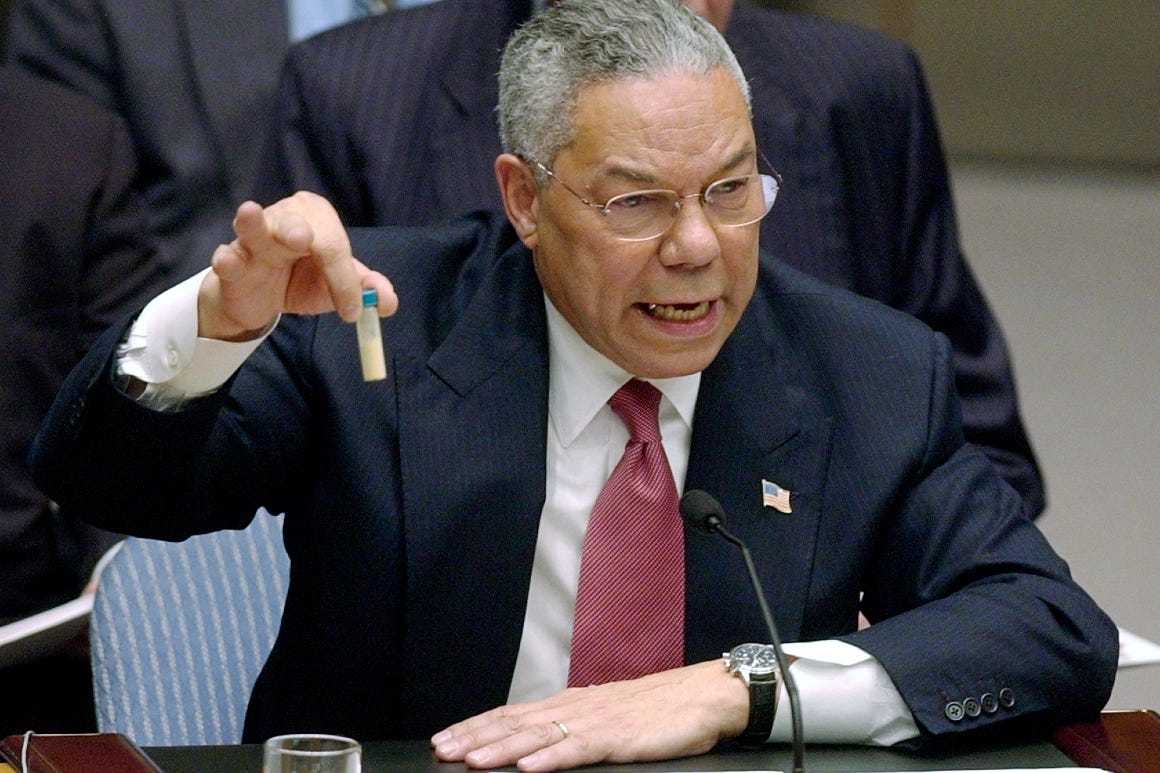
Saddam Hussein’s Iraq was subjected to one of the most destructive invasions of the 21st century, justified by weapons of mass destruction that never existed. Muammar Gaddafi’s Libya dismantled its nuclear program, normalized ties with the West, and was later bombed into chaos by NATO. Neither case was an accident. Both were outcomes of a logic that treats international cooperation as disposable once strategic utility expires.
Iran now faces the same script: comply, be sanctioned; resist, be isolated. No path to trust exists because the architecture of “trust” is designed to collapse when it no longer serves the West.
The lesson for the rest of us is chilling: no amount of legal cooperation protects you from becoming disposable.
Snapback is not a technicality. It is a mechanism of memory, a reminder of how international law has functioned for the past five decades. Snapback’s function is not to constrain power, but to dignify it. It lends moral texture to military coercion. It gives ritual shape to regime change.
And worst of all, it preserves the illusion of justice while emptying it of substance all while accusing the Global South of incoherence and authoritarianism, even as the West traffics in its own institutional contradictions.
The Global South’s Moment of Reckoning
This is why the snapback mechanism matters far beyond Iran. It is a mirror for every postcolonial state that once hoped international law might serve as a neutral safeguard. What snapback demonstrates is that the very concept of neutrality is dead (and perhaps it always was).
In Africa, Latin America, Southeast Asia, and West Asia, many states now see the rules-based international order as fundamentally untrustworthy. Agreements can be reversed unilaterally. Cooperation, no matter how extensive, does not guarantee protection. Disarmament does not bring peace. Alignment does not produce safety.
This is not a paranoid reading. It is the reading history demands. The cases of Gaddafi and Hussein are not distant memories; they are warnings written in blood. Even Ukraine, once promised NATO protection, was left to face Russia alone. The West delivered weapons, but not security while it still insists on calling this “solidarity.” What matters is not whether these countries complied with the rules, but whether they served Western interests at the right time.
The snapback is not a one-off. It is a template. A model of how global legal architecture can be activated by a few to discipline the many without deliberation, without oversight, and without consequence.
For the Global South, this is the moment to decide: do we still believe in this system? Or are we simply trapped inside it?
After Legitimacy: What Comes Next?
What follows the collapse of belief in international legitimacy is not necessarily chaos. It can also be the beginning of a post-hegemonic political consciousness.
This new orientation is not about switching alliances or choosing another empire. It is about no longer building national futures on the assumption that the existing international system is reformable or reliable. It is about reclaiming sovereignty as a political rather than legal category.
This means creating regional alliances based on shared histories of exploitation, not abstract commitments to "the international community." It means treating law as a site of contestation, not deference. And most importantly, it means trusting memory over promises.
Because if there is one thing the Global South has earned, it is memory. Memory of betrayal. Memory of sanctions regimes that crushed civilians. Memory of coups and wars dressed up as liberation. Memory of the gap between words like “accountability” and the drone strikes that follow them.
The snapback mechanism, in this context, is only the latest betrayal. It tells us that international legitimacy was never about law it was about compliance. That treaties can be tools of entrapment. That multilateralism is a story Western powers tell the world when they want to be obeyed, and then discard when they want to act alone.
Conclusion: From Spectacle to Clarity
What the West calls “snapback” is, in truth, a snap, a break in the symbolic grammar of international law. It reveals that what we call “order” has been a performance all along:
Law without principle
Justice without universality
Treaties without trust
For Iran, snapback may trigger new sanctions. But for the Global South, it triggers something far deeper: the realization that belief in the existing world order is not only naïve it is dangerous.
We do not yet know what comes after this disillusionment. But we do know this: if the South does not build something new, it will be rebuilt by those who broke the old.
The snapback is not a return to sanctions.
It is the end of pretending.

Thank you for publishing this piece of mine. It’s an honor to contribute to Savage Minds.
Looking forward to the conversation and feedback from readers!