


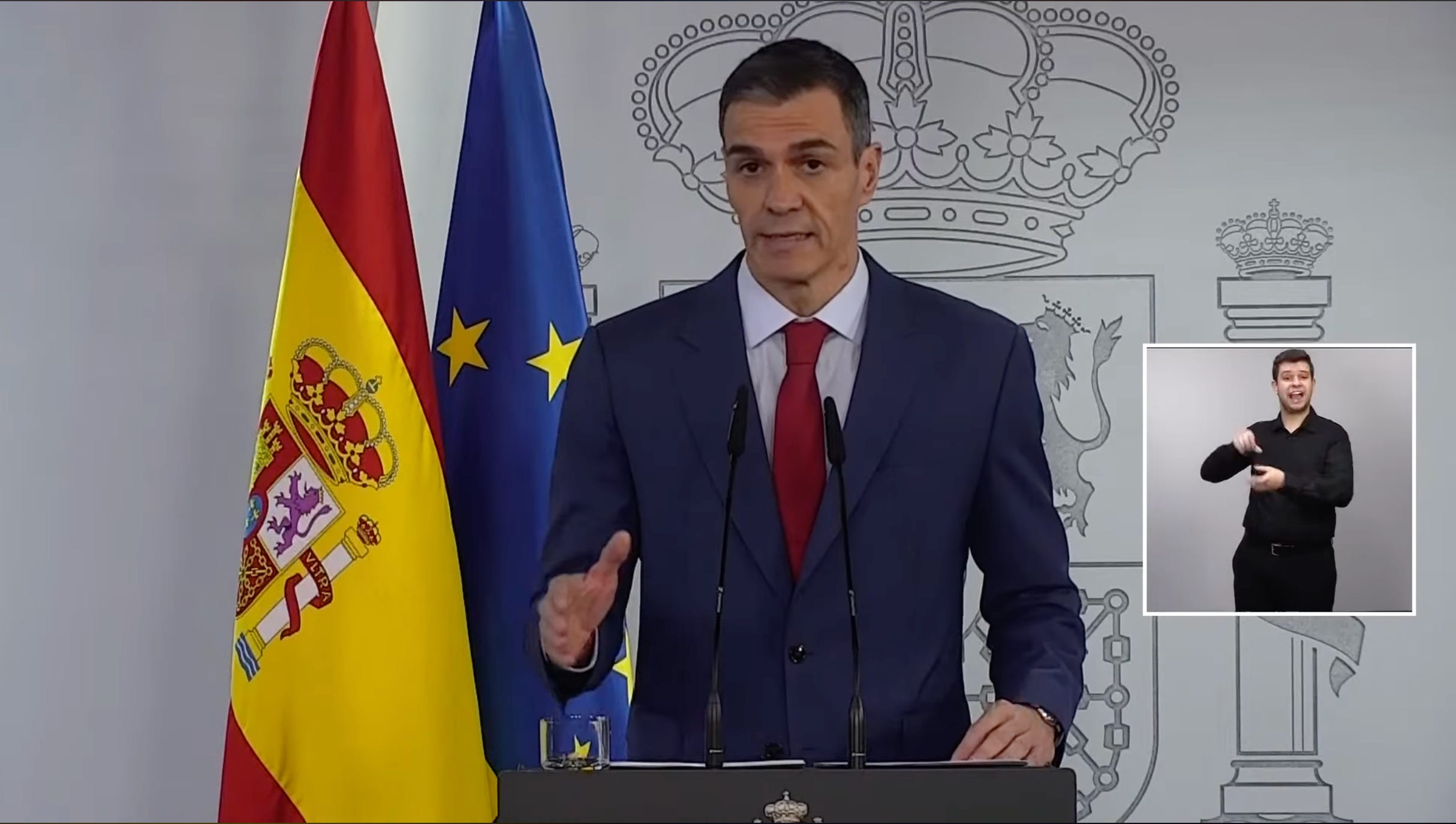
In a season of raw power politics, a single act of refusal can sound like thunder. When Washington reportedly threatened to ‘cut off all trade’ with Spain after Madrid declined to allow US bases on its soil to be used for strikes on Iran, the expectation was compliance. Instead, Spain invoked international law and European Union treaties, calmly insisting that any change in relations must respect legal obligations and multilateral agreements. In an era where middle powers are often assumed to bow before superpower fury, Spain chose a different script.
The backdrop was incendiary. In late February 2026, coordinated US–Israeli airstrikes hit Iranian targets, reportedly killing senior officials, including Supreme Leader Ali Khamenei, and shattering already fragile diplomatic efforts to contain Tehran’s nuclear program. Iran retaliated with missiles and drones against US assets in the Gulf, killing American personnel and driving oil prices sharply upward.
The United Nations Secretary-General warned that the cycle of attack and reprisal ‘undermines international peace and security’. China’s foreign ministry described the strikes as a ‘flagrant violation of the UN Charter’, while Brazil condemned the assault as occurring ‘amid a negotiation process’ that was the only viable path to peace. Malaysia’s parliament united in rare unanimity to denounce the action, and Indonesia offered to mediate, urging respect for international law.
Spain’s response was precise and unambiguous. Defence Minister Margarita Robles stated there had been ‘absolutely none’ assistance from Spanish bases for offensive operations, emphasising that any use of facilities must comply with international legal frameworks.
Prime Minister Pedro Sánchez described the strikes as ‘unjustifiable’ and called for restraint and dialogue. Crucially, Madrid underscored that trade relations are governed by EU competence and bilateral agreements, not presidential fiat. The European Commission swiftly declared it would ‘ensure that the interests of the European Union are fully protected’. In that moment, sovereignty and supranational law fused into a shield.
This was more than a bilateral spat. It was a snapshot of a world sliding from unipolar certainty into what scholars now call ‘post-hegemonic turbulence’. The United States still commands roughly 40 per cent of global military expenditure, yet its capacity to dictate outcomes is constrained by rising powers and increasingly assertive middle states. China’s GDP, measured by purchasing power parity, now rivals that of the United States. Russia, though economically diminished, has weaponised energy and regional instability.
Meanwhile, middle powers from Indonesia to South Africa are finding a voice in multilateral forums. According to a 2026 Carnegie Endowment analysis, the ‘middle power moment’ reflects a diffusion of influence in which no single actor can impose order unilaterally.
Europe’s own evolution forms part of this story. Since Russia invaded Ukraine, EU defence spending has climbed sharply, with Germany announcing a €100 billion special fund and the European Commission outlining new industrial strategies to bolster strategic autonomy. The European Parliament’s research service has documented intensified debate about Europe’s capacity to act independently should American guarantees falter. Spain’s defiance sits within this broader recalibration — not anti-Americanism, but an insistence that alliance does not erase agency.
International law, long dismissed in some capitals as ornamental, suddenly looked muscular. The UN Charter’s prohibition on the use of force except in self-defence or with Security Council authorisation remains the bedrock of global order. When that norm is eroded, smaller states feel the tremor first. Spain’s appeal to legality was not naïve idealism; it was self-preservation in a system where rules are the only equaliser. As Hannah Arendt argued, power rooted in shared principles outlasts violence imposed by decree. Legitimacy, once squandered, is painfully difficult to reclaim.
Yet the silence of many capitals reveals the constraints of interdependence. The Brookings Institution has described how global economic networks enable ‘weaponised interdependence’, allowing dominant states to exploit choke points in finance and trade.
The United States wields the dollar-based system and sanctions architecture with formidable reach. China controls critical mineral supply chains and technological infrastructure. For many governments, speaking too loudly risks economic reprisal or security jeopardy. Japan and South Korea expressed concern but avoided direct condemnation. India called for restraint and protection of civilians, balancing ties with Washington and Tehran. Prudence often trumps principle when livelihoods are at stake.
Spain’s relative insulation stems from collective European heft. The EU remains the world’s largest single market, accounting for around 14 per cent of global trade. Trade policy is negotiated in Brussels, giving Madrid a buffer against unilateral threats. That institutional armour enabled Spain to articulate what others may privately believe: that alliances cannot become instruments of coercion.
For the Middle East, the implications are profound. The region has endured cycles of intervention, proxy conflict and shattered diplomacy for decades. The Iraq invasion in 2003 destabilised a generation. Libya’s collapse reverberated across North Africa. The latest strikes risk widening an already combustible theatre stretching from Gaza to the Gulf. Sustainable security will not emerge from decapitation strikes alone. It requires credible diplomacy, regional dialogue, and renewed commitment to non-proliferation frameworks. Middle powers, less encumbered by hegemonic rivalry, may be uniquely positioned to convene such efforts.
Global policymakers would be wise to absorb a deeper, more urgent message from this moment of fracture and possibility. Above all, multilateral institutions must be renewed with courage rather than quietly circumvented; paralysis within the Security Council cannot become a convenient alibi for discarding the very Charter designed to shield humanity from the scourge of war. The answer to institutional weakness is reform and reinvestment, not abandonment.
At the same time, nations must cultivate economic breadth and regional interconnection, building diversified trade networks and resilient supply chains that reduce vulnerability to coercive pressure and grant governments the confidence to pursue diplomacy anchored in principle rather than fear. And beyond the orbit of great-power rivalry, a quiet but determined constellation of middle powers — stretching from Europe to Southeast Asia, from Africa to Latin America — could breathe new life into stalled negotiations by forming agile, issue-driven coalitions committed to de-escalation, nuclear restraint, and an inclusive regional security architecture for the Middle East.
Such cooperation would not be an act of defiance, but an act of guardianship: a collective affirmation that legality, dialogue and shared responsibility remain the only durable foundations for peace in a century already burdened by too many wars.
Spain’s stance will not, on its own, redraw the strategic map. But symbols matter in international affairs. When a mid-sized democracy refuses to be cowed, it signals that hierarchy is not destiny. It invites others to consider that adherence to law is not a weakness but a strength. In a century shadowed by fragmentation and mistrust, such moments accumulate into narrative shifts.
The Middle East’s future cannot be hostage to perpetual brinkmanship. Nor can the global order survive if rules are applied selectively. Spain’s quiet refusal illuminated an alternative: fidelity to law, solidarity within alliances, and courage without bombast. For a region yearning for stability and a world searching for equilibrium, that example resonates far beyond Madrid’s air bases.
