


The Strait of Hormuz has always been more than a shipping lane. It is the world's exposed artery—narrow, tense, and perpetually one miscalculation away from cardiac arrest. What unfolded during the United States—Israel war on Iran was not merely another Middle Eastern confrontation. It was a strategic earthquake whose aftershocks are now shaking Beirut apartments, Tehran hospitals, Gulf sovereign wealth funds, and petrol stations in Sydney, Singapore, and São Paulo alike.
Washington may call it over. US Secretary of State Marco Rubio declared on 5 May that the offensive phase of “Operation Epic Fury” had concluded, with the United States shifting into a supposedly defensive posture under “Project Freedom” to protect commercial shipping through Hormuz. President Donald Trump, with characteristic understatement, called it a “mini-war,” assuring Americans it was merely a manageable detour. Yet wars do not end because leaders rename them. They end when the dead stop arriving and when the displaced can go home. Neither has happened.
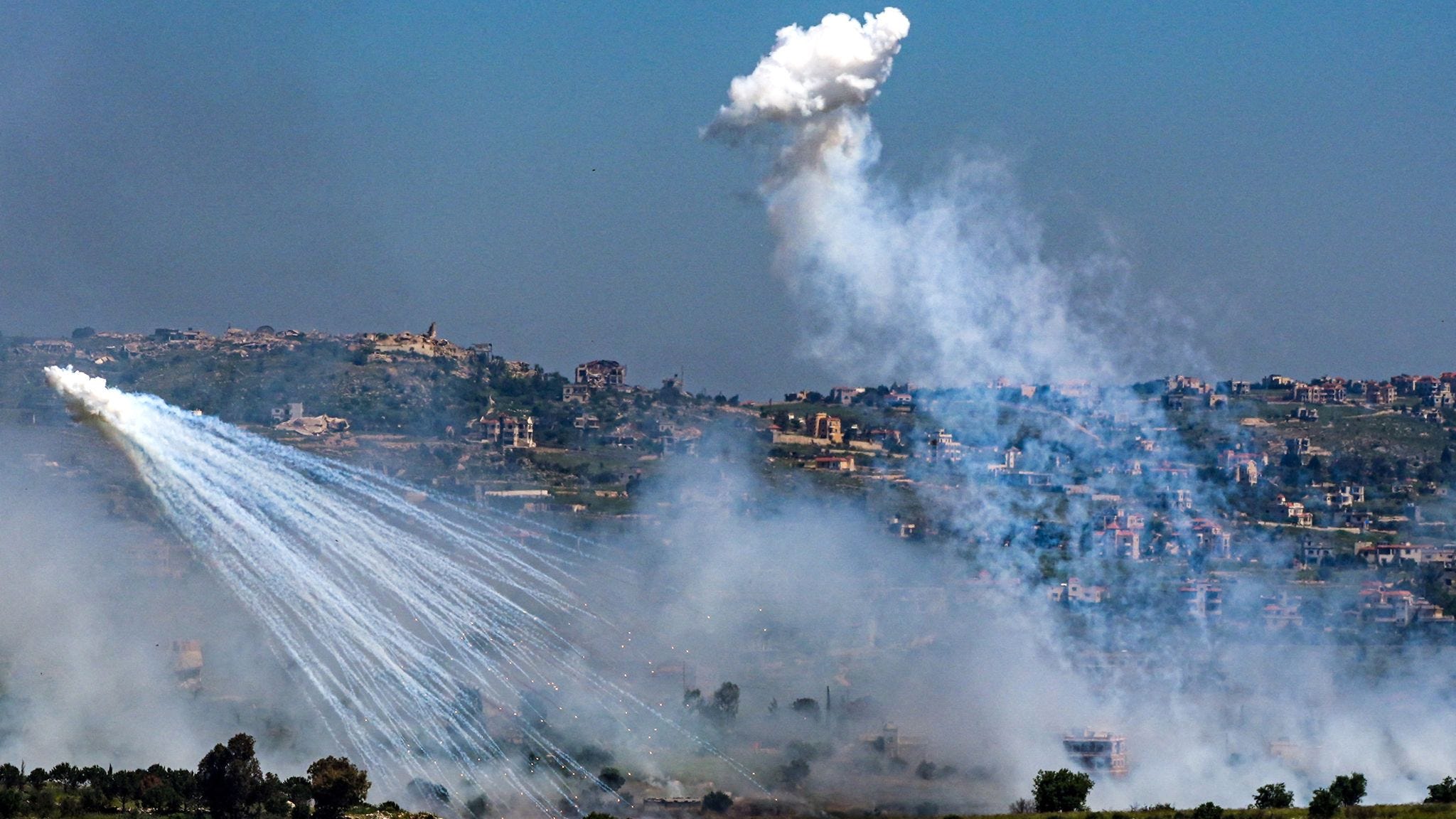
Lebanon has become the clearest moral indictment. Israeli strikes have killed more than 2,600 people and displaced approximately 1.2 million—nearly one-fifth of the population. Entire villages have been emptied. Schools, hospitals, water plants, bridges, and electricity grids have been reduced to rubble. The World Bank had already committed US$250 million for Lebanon's emergency reconstruction before this latest escalation, but even that now feels like bringing a bandage to an amputation.
Iran's losses are no abstraction either. Tehran's forensic chief reported more than 3,000 fatalities nationwide, while Iran's UN envoy counted at least 1,332 civilian deaths by early March. Residential districts, factories, schools, and financial infrastructure have been shattered. Tehran now estimates war losses at US$270 billion. Those numbers are not simply economic indicators; they are a map of human interruption—lives suspended, futures cancelled.
Yet the world's most consequential damage may be economic rather than kinetic. The International Energy Agency described the crisis as “the largest supply disruption in the history of the global oil market.” Roughly 8 million barrels per day—about 8 per cent of global demand—disappeared from supply chains in March 2026 alone. Oil surged beyond US$100—120 per barrel.
The IMF recorded a 40 per cent rise in prices between February and March, cutting projected global growth to 3.1 per cent for 2026. In Washington, petrol prices jumped from around US$3 to more than US$4.45 per gallon. In poorer states, fertiliser costs soared, threatening food security from East Africa to South Asia.
This is where the strategic language of deterrence collides with the moral language of responsibility. If military force destroys the life-support systems of societies—water, electricity, hospitals, schools—can victory ever be declared without rebuilding them?
International law is unambiguous in principle, if weak in enforcement. The Hague Convention and Article 91 of Additional Protocol I to the Geneva Conventions establish that belligerents responsible for unlawful destruction are liable for compensation. The UN's Articles on State Responsibility are even clearer: states responsible for internationally wrongful acts must provide full reparation. This is not radical jurisprudence; it is the architecture of the post-1945 order.
The deeper question is philosophical. Just war theory does not end with jus ad bellum—the justice of going to war—or jus in bello—justice in conduct. It ends with jus post bellum: justice after war. A conflict cannot be morally defensible if it leaves behind only ruins and strategic talking points. As scholars of post-war ethics argue, victory without restoration transforms tactical success into permanent humanitarian crime.
This matters because the United States and Israel are not merely participants; they are the dominant causal agents. They possess the overwhelming kinetic power, the financial capacity, and the diplomatic leverage. That creates not only legal exposure but moral stewardship. If advanced weaponry supplied by allies helps destroy civilian infrastructure, responsibility does not evaporate at the ceasefire line.
There is an uncomfortable double standard here. Western capitals insist—rightly—that Russia must help pay for Ukraine's reconstruction. Frozen Russian assets are being discussed as instruments of justice. Yet when destruction is caused by allies, the moral vocabulary becomes strangely evasive. Qatar's Prime Minister recently pointed to this contradiction: if the rules-based order applies only to adversaries, it ceases to be rules-based at all.
History offers precedent. The Marshall Plan was not charity; it was strategic realism wrapped in moral clarity. Post-war reconstruction of Europe and Japan recognised that stability cannot be bombed into existence. By contrast, Iraq and Afghanistan revealed the opposite lesson: intervention without credible reconstruction breeds institutional collapse, radicalisation, and generational resentment.
The fear now whispered across policy circles is “Houthification”—the Yemen model exported westward. A permanently devastated Lebanon and an economically strangled Iran would not produce peace; they would produce endless militia politics, transnational radicalisation, and perpetual proxy war. Reconstruction is not humanitarian sentimentality. It is a hard security policy.
There are pathways. A UN-backed donor conference for Lebanon and Iran could establish transparent reconstruction mechanisms. Frozen Iranian assets—exceeding US$100 billion in embargoed reserves—could be partially released into supervised trusts for civilian rebuilding. Regional actors such as Qatar, the UAE, Turkey, and Kuwait could co-finance recovery through the Islamic Development Bank and innovative instruments such as green sukuk, linking reconstruction with climate-resilient infrastructure. UNESCO should be involved not only for heritage preservation but because rebuilding mosques, schools, and libraries restores civic dignity, not just concrete.
Aid should not become another theatre of coercive diplomacy. Conditionality tied to political reform or Hezbollah disarmament may appeal strategically, but humanitarian restoration cannot wait for perfect politics. Hospitals cannot be negotiated like ceasefire clauses.
This is more than a mere test—it's a trial of moral leadership. If Washington and Jerusalem embrace accountability, reconstruction, and true post-war stewardship, they might yet salvage credibility in the Global South and with wary middle powers. But if they cling to the belief that victory frees them from responsibility, the fallout won't stop at the Middle East. It will erode the very foundations of the international order they claim to uphold.
The war may be called a “mini-war” in Washington. In Beirut and Tehran, there is nothing mini about mass graves, collapsed schools, or children learning the geography of drones before they learn arithmetic.
Power is never judged only by what it can destroy. History remembers whether it chose to rebuild.
