


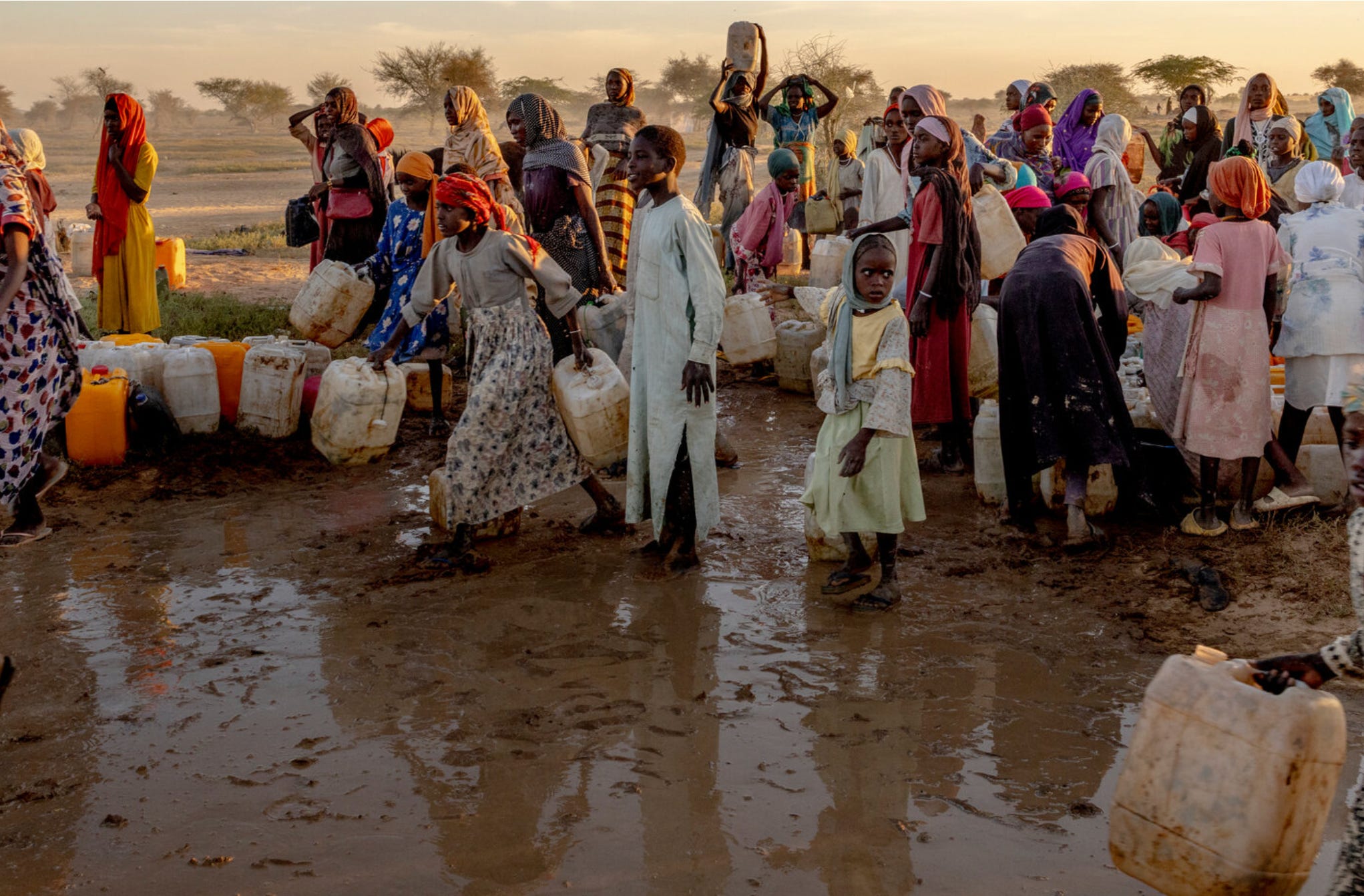
Since April 2023, the Sudanese Armed Forces (SAF) and the Rapid Support Forces (RSF) have engaged in a zero-sum war for control of the nation, fuelled by support from powerful business interests. Twenty-two years ago, during a war in Darfur that US Secretary of State Colin Powell and the International Criminal Court characterised as a genocide, I began studying the phenomenon of a nation constantly at war with itself.
The UN Independent International Fact-Finding Mission for Sudan concluded in September 2025 that both combatants have committed extensive war crimes. In their wake lies a humanitarian crisis that António Guterres, the UN Secretary-General, has repeatedly referred to as the world’s largest humanitarian and displacement crisis. The conflict draws periodic, even lavish media coverage (Vanity Fair, Summer 2026). Still, the alliances that perpetuate the destruction operate efficiently and without substantive interference by the global community. Sudan’s misery rises from war crimes for profit.
Background
The majority of Sudan’s population is Arab. Non-Arab minorities include the Fur, Beja, Nuba, Zaghawa, Masalit and Fallata ethnic groups. Despite intermarriage that blurs tribal affiliations, the political marginalisation of non-Arab groups repeatedly kindles conflict.
The RSF is a paramilitary force of primarily Baggara Arabs. The European Union Agency for Asylum documented their forced recruitment campaigns of young men and boys, particularly in displaced persons camps. The UN Special Rapporteur on Trafficking in Persons reported in October 2023 that RSF targeted unaccompanied and impoverished children from the outskirts of Khartoum, as well as those from Arab tribes in Darfur and West Kordofan. She received information that children as young as ten have been armed with loaded automatic rifles.
The Sudan Tribune reported in January 2026 that a network of fake female social media accounts is being used to conduct a large-scale propaganda campaign in support of the Rapid Support Forces. This tactic employs emotional discourse to bypass direct resistance, preventing message tracing and evading legal accountability. According to ReliefWeb in April 2017, the RSF also patrols the border with Libya, rounding up Eritrean and Ethiopian refugees to satisfy an initiative between European and African states, including Sudan, to reduce the flow of migrants to Europe. This activity suggests other nations don’t mind RSF’s methods if they help fix migration headaches.
The SAF and their allied militia, including radical Islamist elements, have likewise targeted civilians. SAF warplanes and artillery have carried out wide-area bombardments on densely populated residential neighbourhoods, public markets, hospitals, and medical facilities. Their activities have been documented by Amnesty International, Human Rights Watch, and USAID.
More than three years of chaos has induced powerful patrons to continue exploiting profitable business opportunities for the deployment of advanced weapons.
Business Interests
The economic linchpins of the war: RSF forces took control of gold mines in the Darfur region in November 2017. Their leader, Mohamed Hamdan Dagalo, known as Hemedti, became one of the richest men in Sudan by 2019. Hemedti’s brother Abdul Rahim, deputy head of RSF, controls Al Junaid, the corporation involved in gold mining and trading in Sudan.
A December 2019 investigation by Global Witness found that the RSF controls a large part of the country’s gold industry. Leaked bank data and corporate documents show they run two front companies: GSK, a Sudanese technology company, and Tradive General Trading LLC, a United Arab Emirates-based company, both controlled by Hemedti’s younger brother Algoney Hamdan Dagalo. The RSF’s relations with other neighbouring and allied states are complicated arrangements where political expediency and economic needs are leveraged for movement of weapons and mercenaries.
The RSF’s most powerful patron is the United Arab Emirates (UAE). The UAE government has consistently denied supplying weapons, funding, or facilitating foreign fighters for the RSF, insisting their involvement is humanitarian in nature.
The President of the United Arab Emirates is also the Supreme Commander of the UAE Armed Forces. The UAE Minister of Defence is the Crown Prince of Dubai and Deputy Prime Minister of the UAE. Together with H.E. Faisal Al Bannai, Chairman of the Board of Directors for EDGE Group, they are overseeing an aggressive transition from a major global arms importer into an industrial competitor.
The UAE-backed EDGE Group, through various international joint ventures, manufactures and exports drones, missiles, armoured vehicles, and small arms to diversify its economy away from oil and to build sovereign military capabilities. According to the Center for International Policy, UN investigators and flight-tracking analysts traced a supply line running through Bosaso in Puntland, al-Kufra in eastern Libya, and Ethiopian military airfields. The UN Panel of Experts found that Ethiopian territory served as a supply conduit for the Rapid Support Forces (RSF). A UN fact-finding mission counts at least 350 and as many as 2,000 Colombian military contractors operating alongside RSF units, recruited through private security firms and trained at Emirati bases, according to Human Rights Watch.
However, the types of weapons, notably Chinese manufactured, lead investigators to make qualified statements: “The weapons were almost certainly re-exported to Sudan by the UAE.” Deniability has been fastidiously maintained by the UAE government.
American firms increasingly are meeting the demand for drones by producing or co-producing them in the Gulf rather than exporting finished systems. While the US maintains a formal arms embargo on Sudan, it circumvents regulatory scrutiny and domestic oversight through a “proxy pipeline,” utilising third-party state sponsors—primarily the United Arab Emirates (UAE). This arrangement places the end products closer to their deployment areas for quick resupply and, according to a US House Foreign Affairs Committee statement, circumvents weapons transfer oversight in the US.
The SAF is led by Lieutenant General Abdel Fattah al-Burhan, President of the Transitional Sovereignty Council, acting head of state, and commander-in-chief of the military. Supporters are major powerbrokers in the region. Saudi Arabia provides high-level political legitimacy that escalates tensions with the UAE. Iran provides drone technology. According to Reuters, 10 April 2024, the introduction of these drones helped the Sudanese Army prevent advances by the RSF and retake territory in Omdurman and Khartoum early in the war.
The conflict has notably increased gold exports from northern Sudan into Egypt through military-linked arrangements with the informal mining sector. Egypt also provides weapons, ammunition, armoured vehicles, and combat drones according to Middle East Eye as well as intelligence sharing networks in cooperation with Turkey.
Sudan’s war has galvanised alliances of convenience among key military organisations and weapons manufacturers primarily in the Middle East. Wealthy powerful men and companies enjoy freedom from restrictions on activities that help destabilise the “neighbourhood” and allow the Sudanese, theoretically, to fight to the last man standing.
Losses
Agriculture: Al Jazeera (4 May 2026) used satellite imagery to show central farming zones turned into barren ground. World Vision reported in its study, The Hollowed Earth (July 2026), that the conflict has degraded or lost at least 38,918 square kilometres of farmable land and that irrigation systems, storage facilities, and trade routes are ruined. Dry spells and low water levels along the Nile worsened the collapse of staple crops like sorghum and sesame.
The Gezira Scheme, once the largest irrigated farm under single management in the world, collapsed with the destruction of the canal network, leaving fields, farmers and institutions without water. Transport costs inflated by 300%—500% in several states—erasing the profit from produce that reached markets. Al Jazeera (12 October 2026) reported that El Niño-induced drought in Sudan is compounding the effects of war and displacement by inducing famine.
Education: Sources diverge on statistics. In February 2026, the Geneva Global Hub for Education reported that 10,400 schools were closed in October 2023, but approximately 65% were reopened in January 2026. Approximately 7.9 million children remain out of school and have missed over three years of learning. Where schools have gradually reopened after months of closure, ReliefWeb reports (October 2025), they lack basic infrastructure and learning materials.
Health System: The WHO reported that as of 14 April 2026, 37% of health facilities across Sudan were non-functional, with hospitals only partially functioning or closed in conflict-affected areas. There are widespread power outages, looting, and critical shortages of essential medicines and diagnostic tools. The destruction of water, sanitation, and waste collection systems has triggered outbreaks of preventable diseases, including cholera, dengue fever, malaria, and measles. The WHO also documented 217 separate attacks on healthcare infrastructure and personnel, resulting in 2,052 deaths.
Human Cost: The Council on Foreign Relations estimates over 33 million Sudanese, nearly two-thirds of the population, require urgent assistance to continue surviving. A UNDP analysis (28 April 2026) found that Sudan’s war has shrunk the economy by 29.4%, with revenue losses exceeding 50% in high-conflict areas. Some 19 million face acute food insecurity. Over 13 million are displaced.
Statistics of the dead and injured are so alarming as to defy adequate collection efforts. The scale of civilian losses—people, land, food, water, and public services—is catastrophic. All in service to profiteers.
Sexual Violence as a Weapon of War
International bodies, including the UN, humanitarian agencies, and foreign governments, have responded to the epidemic of sexual violence in Sudan with formal investigations, diplomatic pressure, humanitarian aid, and targeted sanctions rather than physical or military intervention.
The UN Human Rights Office (OHCHR) and a UN Fact-Finding Mission for Sudan have documented hundreds of atrocities and formally declared that the widespread use of rape, gang rape, and sexual slavery in Sudan constitutes war crimes and crimes against humanity. However, the United Nations and other bodies lack a physical civilian protection force on the ground; thus, the epidemic of sexual violence—perpetrated by RSF and SAF forces—continues to escalate, as the UN Security Council reported on 15 October 2026.
The UN Office on Sexual Violence in Conflict has signed a Framework of Cooperation with the Sudanese government to legally prioritise survivor services and build local capacity to investigate and prosecute commanders. This is the same government, in the form of the SAF, that stands accused of these war crimes.
Médecins Sans Frontières (MSF) provides urgent gynaecological and psychological treatment. However, aid groups frequently state that their access is heavily restricted in active conflict zones; they are targets for RSF looting and administrative aid blocking by the SAF.
The UN Population Fund (UNFPA) operates roughly 90 mobile health teams, 120 facilities, and 51 specialised safe spaces across Sudan, even as humanitarian operations suffer from severe funding shortages and direct attacks on healthcare workers.
UN Women reported in April 2026 the number of people, mostly women and girls, needing support for sexual and gender-based violence has quadrupled since the start of the war. Official estimates are usually just the “tip of the iceberg.” Anna Mutavati, UN Women Regional Director for East and Southern Africa, stated, ”Women and girls are being raped and killed in their homes, and as they flee, seeking food, water and medical care. The use of sexual violence has been embedded in the blueprint of Sudan’s war.”
Gang rape is almost a quarter of verified incidents, according to UN News (23 June 2026). Other violations include sexual slavery, forced marriage, human trafficking, and sexual torture.
Survivors face grievous physical injuries, unwanted pregnancies, HIV and sexually transmitted diseases, and profound psychological trauma, exacerbated by a collapsed national healthcare system.
To its credit, UN Women partners with over 45 local, Sudanese women-led organisations to deliver emergency kits, psychological first aid, and safe extraction for women fleeing targeted ethnic violence. The UN verified just 546 cases of sexual violence in 2025. Underreporting of rape is pervasive worldwide, with estimates suggesting that fewer than 10% of sexual assault victims in many regions ever seek law enforcement intervention.
The unverified violations of possibly thousands of women and girls over the course of this violence in Sudan have resulted in vanishingly few options for continuing treatment of survivors or accountability of the perpetrators.
The women of Sudan, the ones best able to step up for peacemaking and rebuilding, may be sidelined for some time by the underwhelming response to their profound traumas.
Humanitarian Aid: The Resource Gaps
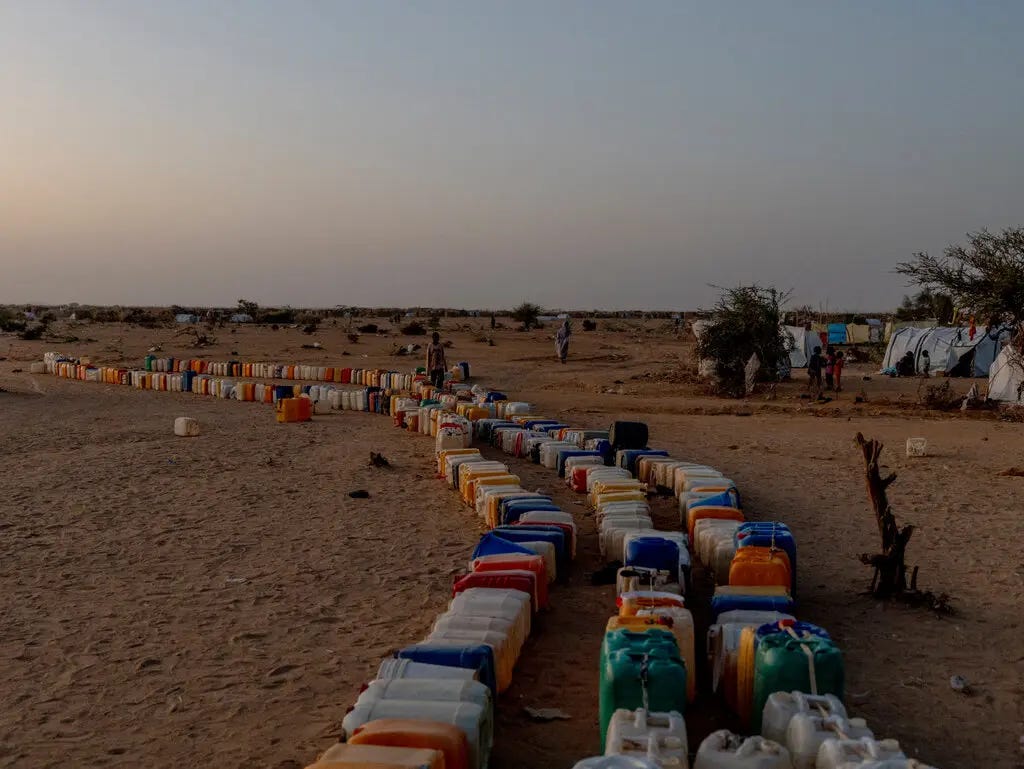
The United Nations 2026 humanitarian response appeal for approximately $2.9 billion remains only 14% funded (as of 23 September), threatening basic pipelines for food, clean water, medical care, and shelter. Moving aid through active combat corridors remains dangerous for UN and other aid personnel. Arbitrary delays, financial extortion, sovereign posturing, and seasonal flooding severely restrict humanitarian corridors into regions like Darfur, Kordofan, and Khartoum. International NGOs must heavily leverage locally based community partners to access volatile areas.
This “leveraging” is a significant and relatively new reality of humanitarian aid. Local Sudanese mutual aid networks, those able to operate well in familiar territory, have increasingly stepped up critical services and supplies. This bodes well for post-war restoration of local governance mechanisms. However, the killing of humanitarian workers in Sudan, reported by the Aid Worker Security Database (AWSD) to be fewer than 12 in 2006, the peak of the Darfur conflict, escalated to 71 in 2025, with the war total of at least 139 workers. Local staff are especially at risk from aerial bombing, shootings, and detentions and arrests. Humanitarian personnel are considered civilians under International Humanitarian Law (IHL). Wilful killing of protected persons is prohibited under Common Article 3 of the Geneva Conventions and Additional Protocols I and II (1977). This is another of many examples of the continuing erosion of accountability for war crimes in Sudan.
Peace Efforts
The US and Saudi Arabia mediated the first major initiative, the Jeddah Declaration, in May 2023. It temporarily facilitated limited humanitarian access to affected communities, but both factions repeatedly violated the terms. A 2024 effort to bring the warring parties to peace talks in Geneva was convened by the US and co-hosted by Switzerland and Saudi Arabia, with the UN, African Union, Egypt, and UAE as observers. The RSF attended, but the SAF did not. Regional efforts via the Intergovernmental Authority on Development and the African Union similarly failed when short-term truces broke down.
The fall of El Fasher, the capital of North Darfur, in October 2025 marked a bloody triumph for the RSF and a critical point in the war. During the Darfur genocide, I made frequent visits to El Fasher and had many contacts there. To read accounts of the RSF’s assault made me weep. “The paramilitary, killing people faster than it can bury them, resorted to mass graves.” The brutality against the living amounted to a catalogue of war crimes.
Fighting continues on multiple fronts: the SAF repelled an attack by the RSF in Blue Nile state. On 18 September, the RSF claimed a major victory over the SAF and its allies in Abu Qaoud, west of El Obeid. Battlefield claims from both the RSF and the SAF in the Kordofan region are difficult to verify independently due to restricted access. Unlike past more localised conflict, this war has engulfed much of the southwest and eastern areas of the country.
In June, US bipartisan Congressional support emerged for the Preventing External Aggression and Conflict Escalation (PEACE) in the Sudan Act of 2026. On 23 September 2026, the African Union (AU) and the United States co-chaired an unprecedented joint meeting of the Quad and Quintet mechanisms on the sidelines of the UN General Assembly in New York. This marked the first time the two principal international mediation platforms formally converged to build a systematic, operational roadmap for peace.
The effort brings together nine major regional and global entities: The Quad includes US, Saudi Arabia (aligned with the SAF), Egypt (aligned with the SAF) and the United Arab Emirates (aligned with the RSF), focusing on ceasefires and humanitarian access. That some mediators are militarily aligned with the warring parties can only be a destructive conflict of interest.
The Quintet includes the African Union, IGAD (Intergovernmental Authority on Development), the European Union, the United Nations, and the League of Arab States. Together they are to pursue consultations with stakeholders for a civilian-led government.
During the Darfur genocide in the mid-2000s, protests in the US and the engagement of celebrities like George Clooney informed public opinion and probably helped promote political détente. There is little such public engagement this time.
Possibly the new high-level African Union–US collaboration will deliver an end to the profound suffering of the Sudanese people. Three-and-a-half years into the latest iteration of Sudan’s descent into hell, peace negotiations cannot be simply about stopping the violence. They will have to create political and security mechanisms that render continuing the war less advantageous—less profitable—than rebuilding in peace.
The overarching questions: In the regional and internal chaos spawned by this conflict, how can the international community rein in the cabal of powerful men profiting from an environment rife with war crimes? Who in the international community can help the Sudanese create a new and better normal in the wake of such pervasive destruction and persistent trauma?
The carnage and chaos have been breathtaking, but there’s not much leverage in being a stupefied spectator. Political will to banish the profiteers must find serious new champions in the international community and especially in Sudan.