


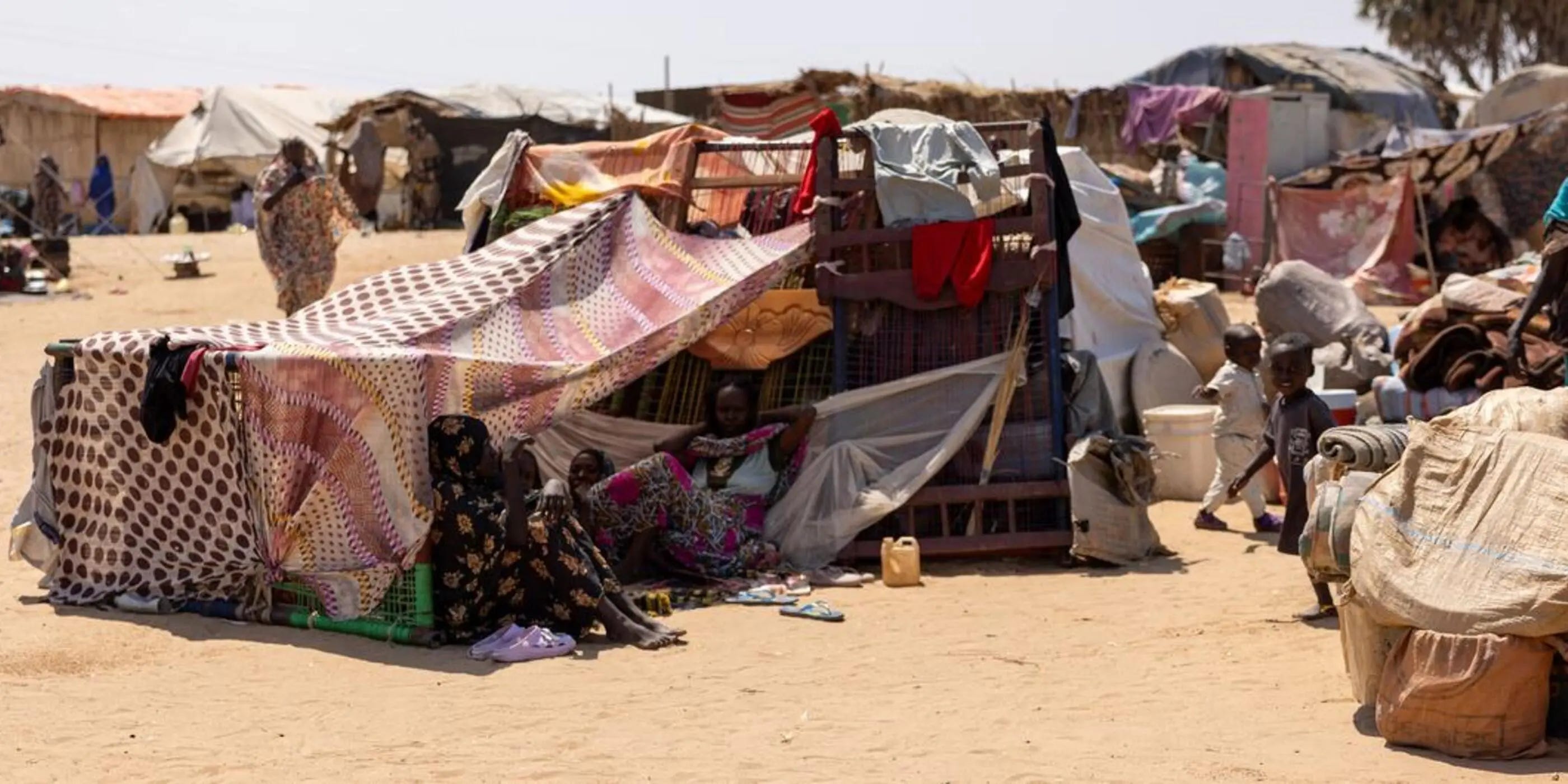
The European Union banned Sudanese gold on Monday. The announcement landed in Brussels with the solemn weight of moral conviction—a clean, decisive blow against a conflict economy that has displaced more than 14 million people and pushed 28 million toward acute hunger. Mercury and cyanide exports were cut off too, choking the chemicals that turn Sudan’s earth into liquid war finance.
The EU Council declared gold “a key source of revenue sustaining the conflict” and promised to “reduce the resources available to those responsible for perpetuating the violence”. Admirable words. Entirely correct sentiment. And utterly irrelevant to the physics of blood and bullion that actually governs Sudan’s fate.
Because here is the uncomfortable truth that no Brussels press release can melt away: an estimated 90 per cent of Sudan’s gold exports already flow through the United Arab Emirates before they ever glimpse European shores. The EU ban is a noble gesture aimed at a door through which the trade long ago stopped passing.
The real financial engine of this war—the furnace where Sudanese suffering is transmuted into Dubai’s liquidity—sits comfortably beyond European jurisdiction, its furnaces glowing, its refineries humming, its moral accounting forever balanced by the alchemy of the melt.
Consider the arithmetic of atrocity. In 2024, the UAE imported 29 tonnes of gold directly from Sudan—up from 17 tonnes the previous year—alongside 27 tonnes via Egypt, 18 tonnes through Chad, and 9 tonnes from Libya. These neighbouring countries are not producers; they are exit points, laundering corridors through which the Rapid Support Forces’ conflict gold is rinsed before it reaches Dubai’s refineries.
Switzerland, a nation that has built an entire civilisational identity on precision and probity, imported 316 tonnes of gold from the UAE between January and September 2025 alone—more than double usual annual volumes, valued at 27 billion Swiss francs. The gold that emerges from Swiss vaults is chemically identical to the gold that left Darfur. But its history has been erased. The furnace performs what no court can: ontological exoneration.
This is not a failure of enforcement. This is the system working as intended. Between 2012 and 2024, at least 400 tonnes of Sudanese gold were smuggled out of the country. More than half—by some estimates as much as 70 per cent—of Sudan’s annual gold production vanishes into illicit networks before any export declaration is filed. The EU’s due diligence regime demands paper trails; the Gulf’s refineries provide them, stamped, certified, and utterly fictional.
The compliance industry has become an epistemic machine that produces knowledge designed not to change outcomes but to render ethics structurally irrelevant. A blockchain ledger attached to a gold bar is meaningless once that bar is melted and recast in a jurisdiction where questions are not asked. The violence is not purified; it is merely rendered invisible.
Meanwhile, the battle for El-Obeid enters its most dangerous phase. The city of half a million people—capital of North Kordofan, gateway between Khartoum and the vast RSF-controlled territories of Darfur—has endured 27 drone strikes in a single month, the highest monthly total since the conflict began. At least 45 people were killed and 41 injured in 22 days in June alone. The UN human rights chief has warned that “another human rights catastrophe is unfolding”. A doctor in the city told the BBC of a seven-month-old baby whose hand had to be amputated; the child did not survive.
If El-Obeid falls—if the RSF secures this strategic axis—the military logic is inexorable. The paramilitary force will establish an uninterrupted territorial arc from the West African borders through Darfur and Kordofan straight to the doors of Khartoum. The Sudanese Armed Forces will be forced into a retreat toward Port Sudan, effectively ceding the capital and cementing a de facto partition of the country.
But here is the deeper truth that strategists worldwide must confront: this partition is not an unintended tragedy. For certain Gulf actors, it is a structurally preferred equilibrium.
A unified Sudan with a strong central government would regulate its own gold exports, negotiate hard on Red Sea access, and potentially align with rival power blocs. A fragmented Sudan—weak, resource-dependent, perpetually reliant on external patrons—offers stable extraction corridors, exclusive spheres of influence, and the perpetual deniability that comes from dealing with warlords rather than states.
The UAE’s support for the RSF, documented in UN reports and European Parliament resolutions, is not a deviation from Gulf statecraft; it is Gulf statecraft in its purest form. Saudi Arabia’s emerging role as an alternative gold buyer for the SAF is not humanitarian diversification; it is competitive death funding, a Riyadh-versus-Abu Dhabi proxy war fought on Sudanese soil with Sudanese blood.
And so the Responsibility to Protect—that noble doctrine adopted by the UN in 2005, the moral compass that was supposed to ensure never again—lies in ruins. Twenty years after its adoption, the international community is failing the Sudanese population. Not because the doctrine is weak, but because the states whose votes are needed to operationalise it are the same states most deeply implicated in the war economy that sustains the atrocities.
The UAE holds a seat on the UN Security Council. The UAE is the primary financial enabler of the RSF. The same body that could authorise intervention is structurally incapable of acting against its own member’s material interests. R2P was philosophically stillborn: it tried to graft a moral duty onto a political body whose DNA is self-interest.
This is the global system failure that the EU’s gold ban cannot address. The crisis in Sudan is not a commodity crisis. It is not a governance crisis. It is a crisis of the entire architecture of international order—an order that still treats sovereignty as a shield for tyrants, that still permits the melting of atrocity into profit, that still allows the bodies of the Sudanese to be priced as externalities in the global gold market.
The physics of this system are brutally simple: gold from Darfur enters Dubai, is melted, recast, and sold to Switzerland. The blood is washed away by fire. The guilt evaporates with the smoke. And the world watches, commissions reports, passes sanctions, and moves on.
The question for global strategists and policymakers is no longer whether to sanction Sudan’s gold. It is whether the international system can summon the courage to sanction the refineries that launder it, the banks that finance it, and the states that facilitate it.
Until that day comes, the gold will keep flowing. El-Obeid will keep burning. And the world will keep pretending that a piece of paper from Brussels can stop a war that Dubai’s furnaces are paid to sustain.
