


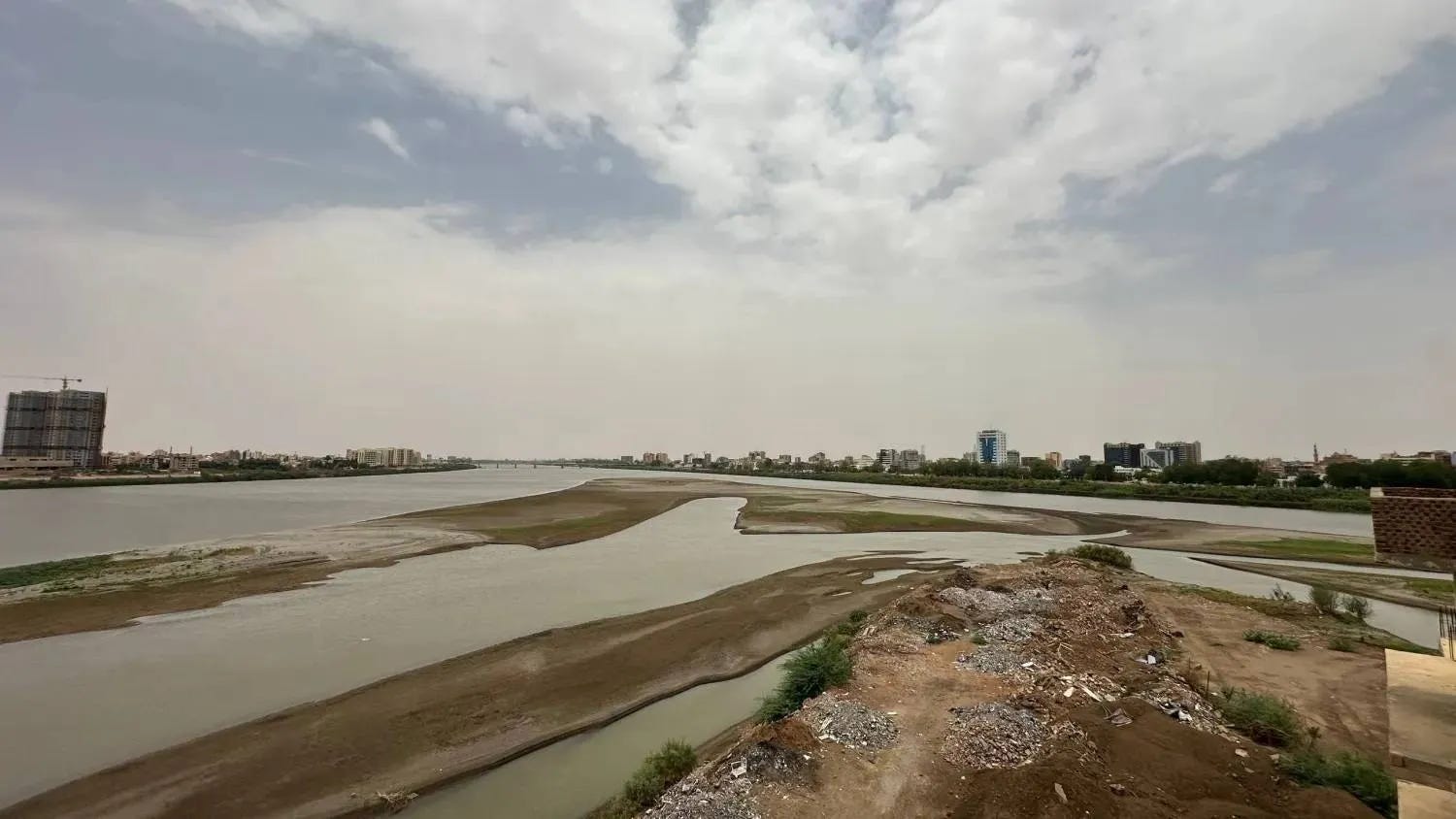
The world’s worst hunger crisis unfolding in war-torn Sudan is set to worsen as El Niño parches the riverbanks of the Nile.
A climate pattern caused by periodic warming of surface water temperatures in the central and eastern equatorial Pacific Ocean, El Niño disrupts atmospheric circulation, causing droughts, floods, and extreme temperatures worldwide. Its effects, made more acute by global warming, vary regionally.
In western parts of East Africa, including Sudan, South Sudan, northern Uganda, western and central Ethiopia, Djibouti, and Eritrea, “El Niño is associated with below-average rainfall during the main rainy season (June to September),” FAO explained. Some regions of these countries “have received less than 60 per cent of normal rainfall.”
Its impact is especially acute on Sudan, where the war between its army and the paramilitary, now in its fourth year, has pushed nearly 20 million people, over 40% of its population, into “crisis levels of food insecurity.”
Amid this protracted hunger crisis, exacerbated by the rising fuel and fertiliser costs due to the US-Israeli war on Iran, Sudan is now hit by the dry spell cast by the strongest El Niño in 75 years.
It is expected to peak into a “super El Niño” between November and February, but its impact is already forbidding. “I’m 63, and I have never seen the Nile this low in August,” a farmer in Al Jazeera state, a breadbasket of Sudan, told the AFP. In its neighbouring Gedaref state, also a major agricultural producer, fields that are usually green with crops in August are still brown, AFP reported.
Further east, across the border in Ethiopia, where the Blue Nile flows into Sudan, the water level in the Grand Renaissance Dam in July was six metres lower than at the same time last year.
The Blue Nile joins the White Nile—flowing in from South Sudan—in Sudan’s capital, Khartoum, to form the Nile River, which flows north into Egypt. Fields along the river, from the north to the southeast, are cracked, dry and fallow.
